Spices & Dried Aromatics
Bitter Kola
Also: Garcinia kola, false kola, orogbo (Yoruba), aki ilu (Igbo), bini kola
West Africa's most ceremonially loaded seed — intensely bitter, medicinal, and astringent, bitter kola occupies the intersection of spice rack, medicine cabinet, and sacred tradition.
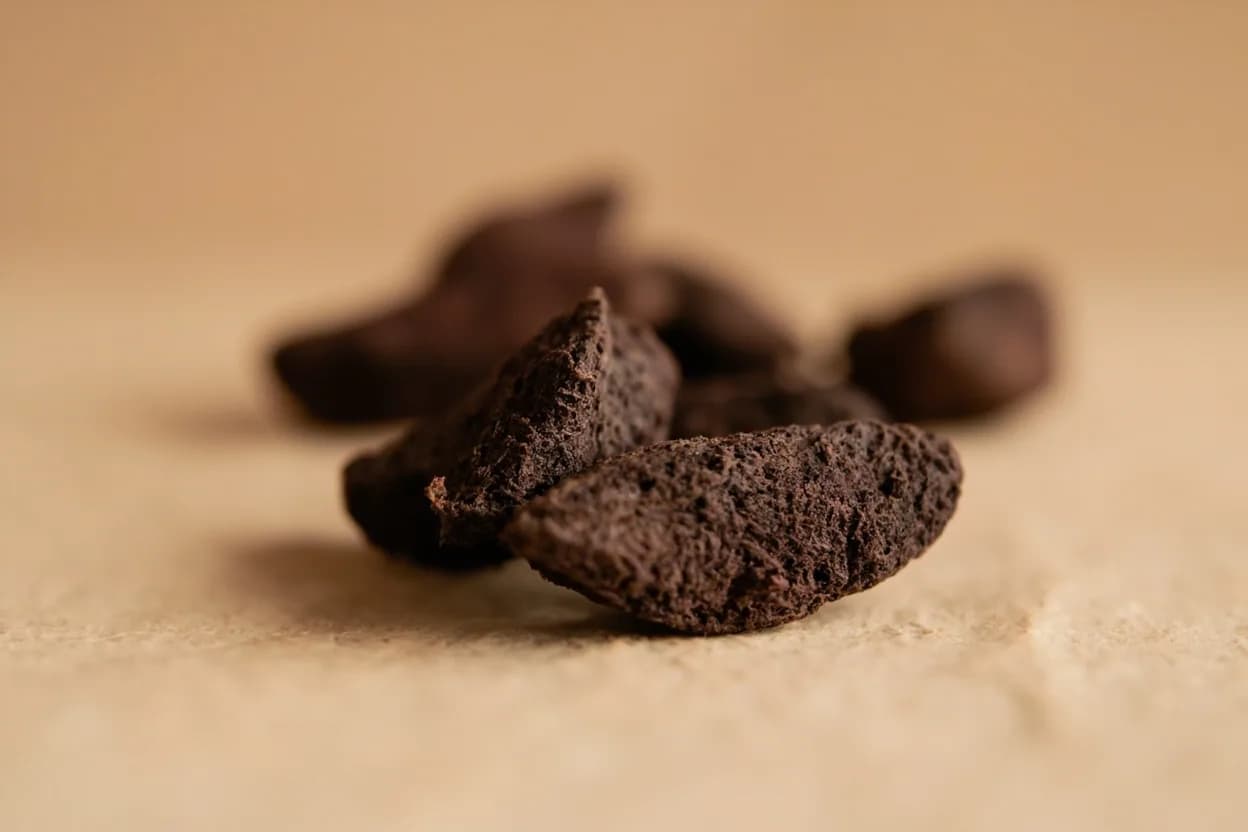
Bitter kola (Garcinia kola) is a flowering tree native to the humid tropical forests of West and Central Africa. Its seeds — the consumable 'nut' — are lobular, amber-brown, and enclosed in a white papery sheath. When chewed raw, they release a cascade of intensely bitter phytochemicals, primarily kolaviron and other biflavonoids, followed by a persistent astringency and a subtle aromatic warmth. Unlike the caffeine-dominant flavor of true kola nut (Cola acuminata), bitter kola's defining character is its medicinal bitterness, which is prized for its purported health properties across Nigeria, Ghana, Cameroon, and Benin. Culinary use is more restrained than ceremonial use but includes spicing palm wine, fermented drinks, and certain soups.
In photos
Flavour profile
Classic pairings
- Palm wineWest African (Nigerian, Ghanaian)
The most traditional West African pairing: bitter kola is chewed before or alongside freshly tapped palm wine to slow fermentation (its antimicrobial properties) and cleanse the palate between sips.
- Kola nut (Cola acuminata)Nigerian (Yoruba / Igbo ceremonial)
Bitter kola and true kola nut are served together in Yoruba and Igbo ceremonial settings; the contrast between kola's caffeine-forward earthiness and bitter kola's medicinal intensity defines the traditional kola ceremony.
- Ofe onugbu (bitter leaf soup)Nigerian (Igbo)
In Igbo cooking, a small quantity of grated bitter kola seed is used to fortify the bitter dimension of ofe onugbu; its bitterness compounds the washed bitter leaf (Vernonia amygdalina) without overwhelming the egusi or stockfish.
- Peppersoup spice blendNigerian (Edo / Delta)
In some Edo and Delta state traditions, a sliver of bitter kola is added to the pepper soup spice blend; its bitterness bridges uda pod's smoke and uziza's sharpness, adding a medicinal register.
- Zobo (hibiscus drink)Nigerian
Bitter kola steeped in zobo reduces the drink's tartness while adding a herbal bitterness that makes the beverage more complex; a traditional prep in northern Nigeria.
- Fermented locust beans (iru / dawadawa)West African
A pairing of bitters: bitter kola's medicinal astringency and iru's pungent fermented umami both belong to West African palatesthat can hold complex, challenging flavors simultaneously.
Adventurous pairings
- Dark amaro or herbal digestif (Campari, Fernet)
Bitter kola's kolaviron profile is structurally similar to the gentian and quinine families that underpin Italian amari; a bitter kola-infused spirit or a pairing with Campari for a West African-Italian aperitivo is a natural extension.
- Cacao (raw or 85%+ dark chocolate)
Two ancient bitter seeds from tropical forests: bitter kola chewed before eating dark chocolate transforms perception of the chocolate's sweetness much as coffee does; their shared bitter register also works in a West African spiced chocolate drink.
- Ginger and honey tisane
Grating a small amount of bitter kola into ginger-honey tea produces a medicinal warming drink whose bitterness is moderated by both the honey's sweetness and ginger's heat — a common Nigerian home remedy repurposed as a flavored drink.
- Tamarind-based sauces
Tamarind's tartness and bitter kola's bitterness create an intriguing tension that might underpin a West African-influenced BBQ or dipping sauce; molasses or palm sugar is needed as a sweetening mediator.
Tread carefully
- Dairy milk or creamavoid
Bitter kola's tannins precipitate milk proteins, curdling both flavor and texture; avoid in any creamy sauce or dairy-based beverage.
- Delicate white fish or seafood cooked gentlyavoid
The aggressive medicinal bitterness overwhelms any subtle sweetness in shrimp, sole, or scallops; bitter kola belongs with hearty, long-cooked proteins and fermented bases.
- Sweet desserts (pastries, fruit compotes, delicate custards)avoid
Bitter kola's astringency attacks the sugar matrix in sweet preparations, leaving a harsh, medicinal aftertaste with no contrasting element to resolve it.
- Very tannic red wineavoid
A tannin-on-tannin collision: bitter kola's own astringency plus high-tannin wine creates a mouth-drying effect that suppresses all other flavors and becomes unpleasant quickly.
How to use it
- Chew raw before a meal as a palate primer or digestive stimulant — the traditional ceremonial preparation
- Grate or finely slice a small quantity into slow-cooked soups or broths early in the cooking process; long heat mellows the bitterness significantly
- Steep in palm wine, zobo, or spirits to extract flavor and antimicrobial compounds
- Combine with other bitter ingredients (bitter leaf, uda) in small ratios — it amplifies rather than simply adding bitterness
- Grind dried bitter kola into a spice blend alongside ehuru, uda, and uziza for an intensified pepper soup spice
Appears in
Related flavours
- Kola Nut (Cola acuminata)
The ceremonial companion — less bitter, caffeine-forward, chewed alongside bitter kola in West African kola rites
- Uziza Seed
Both belong to the West African medicinal-spice continuum; uziza contributes sharp pepper heat where bitter kola contributes medicinal bitterness
- Uda Pod (Negro Pepper)
Fellow West African spice with woody, aromatic complexity that bridges well with bitter kola's resinous depth in long-cooked soups
- Gentian Root
A European botanical with a structurally similar bitter-compound profile (secoiridoids); often used in amaro production — bitter kola occupies the same functional niche in West African traditional drinks
References
- 1.African Herbs and Spices: Uses and Properties — Joseph Kariuki Gichuru (2003)
- 2.The Oxford Companion to Food — Alan Davidson (3rd ed., 2014)
- 3.Medicinal Plants of West Africa — volume covering Garcinia kola (Daniel Abbiw, 1990)
- 4.Zoe's Ghana Kitchen — Zoe Adjonyoh (2017)
Confidence: medium
Notes
Ceremony before cuisine
Bitter kola holds deep ceremonial significance across Yoruba, Igbo, Hausa, and Edo cultures in Nigeria, as well as among Akan peoples in Ghana. Its presence at weddings, naming ceremonies, funerals, negotiations, and community gatherings is not merely symbolic — the act of breaking and sharing kola nuts (and bitter kola alongside them) constitutes a form of communal blessing and social contract. Understanding this context matters when working with the ingredient: it carries weight beyond flavor. Its culinary uses in soups and drinks exist in the same cultural universe as its ceremonial ones.
Medicinal character shapes flavor strategy
Bitter kola's bioactive compounds (kolaviron, biflavonoids, xanthones) are the same compounds responsible for its well-documented antimicrobial, anti-inflammatory, and bitter tonic properties. This means that how it is used culinarily mirrors how it is used medicinally: in small quantities, for long-cooked preparations, rarely as a dominant flavor but always as a modifier. Approaching it as a culinary analogue to a digestive bitter (like Campari's gentian or tonic water's quinine) is a useful framework for non-West-African cooks encountering it for the first time.