Spices & Dried Aromatics
Black Pepper (Whole)
Also: Piper nigrum, whole peppercorns, black peppercorns, poivre noir en grains, kali mirch
The world's most traded spice in its whole form — essential for stock, charcuterie cures, and any preparation where slow-release heat and full terpene complexity are needed.
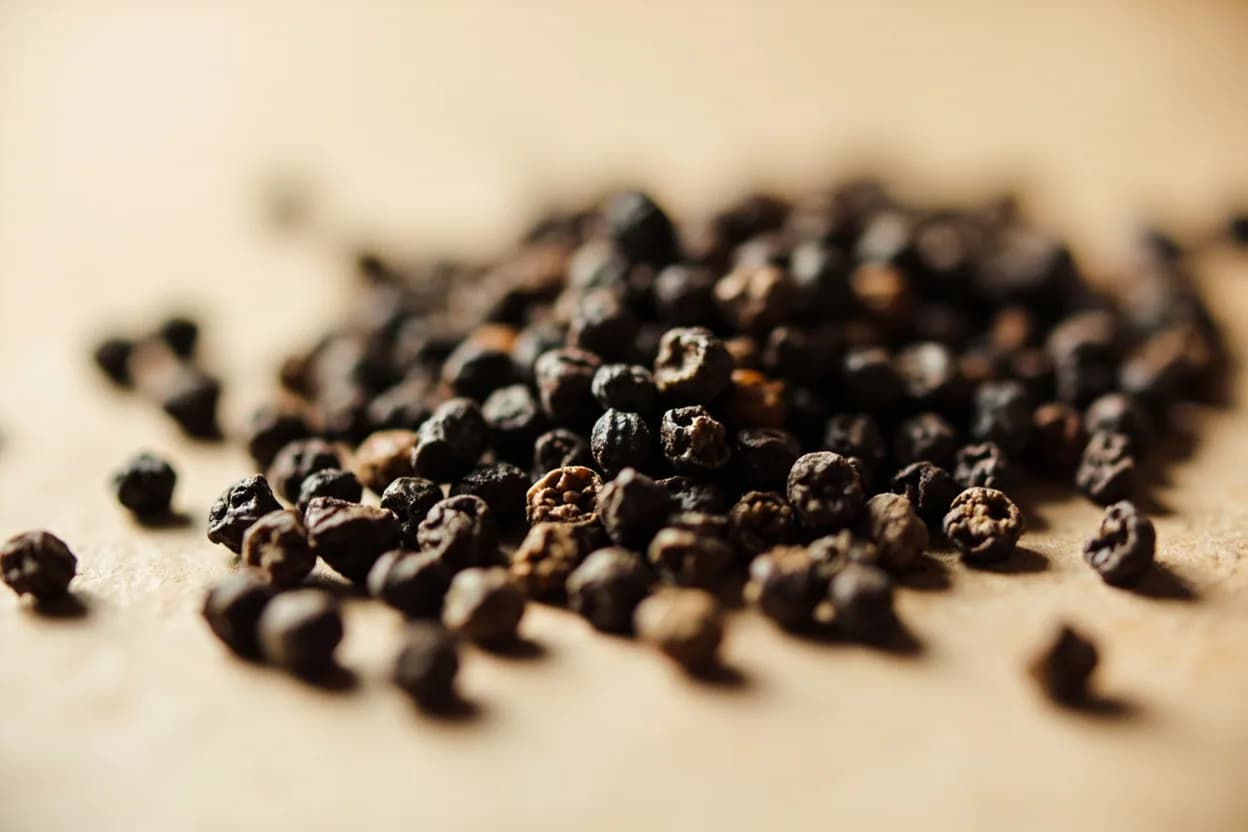
Whole black pepper consists of fully dried Piper nigrum berries harvested slightly underripe and dried in the sun until the outer pericarp shrivels and blackens. Unlike ground pepper, whole corns keep their complete volatile oil profile — dominated by sabinene, β-caryophyllene, and limonene — and release both their aromatic terpenes and pungent piperine heat slowly during long cooking. This makes whole pepper the standard for stocks, braises, pickling brines, charcuterie cures, and any preparation where sustained, even-distributed heat and fragrance are required rather than a sharp immediate spike. Cracking or crushing releases more volatile oils immediately; simmering gently releases them over hours.
In photos
Flavour profile
Classic pairings
- Court-bouillon and stock (veal, chicken, fish)French classical
Whole peppercorns simmer for hours in stocks, releasing heat and terpenes gradually into the base without ever becoming overpowering — removal at the end keeps the broth clean.
- Charcuterie cure (salt + pepper + herbs)Italian, French charcuterie
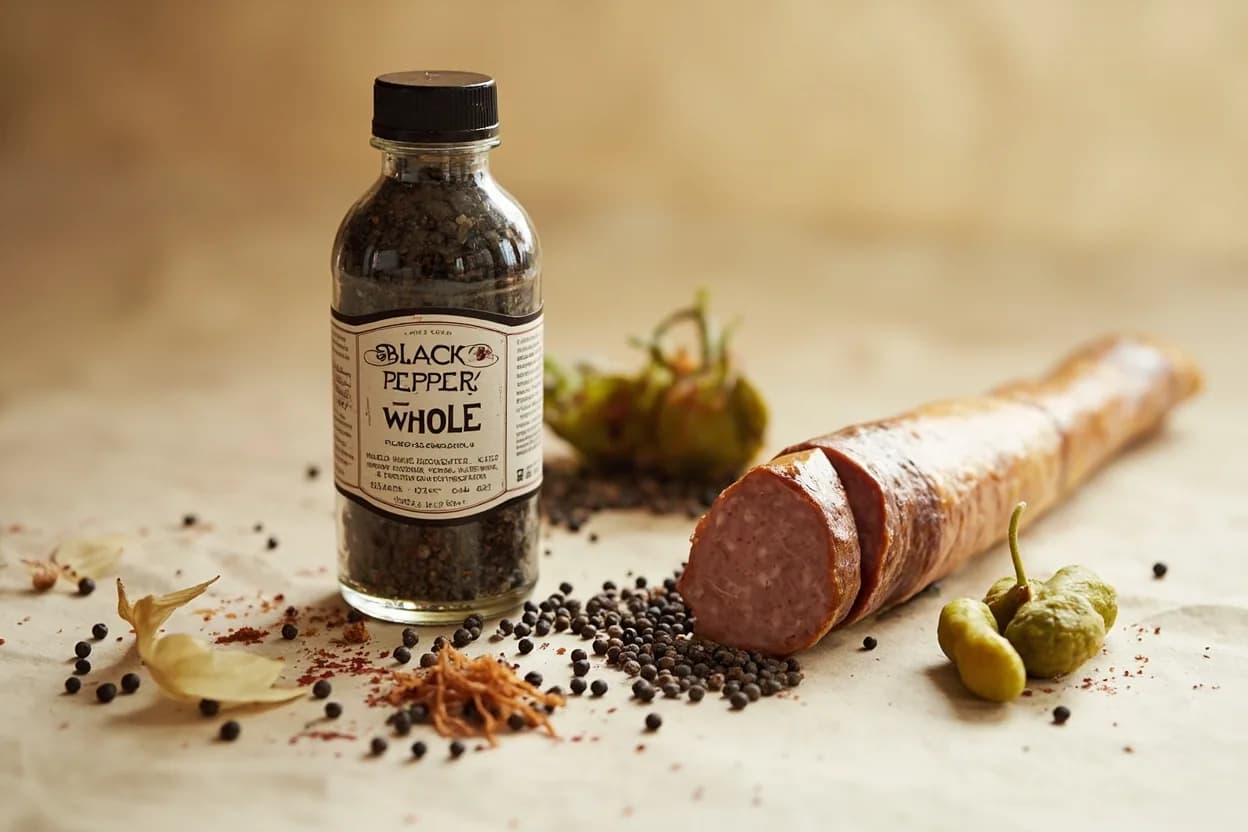
In pancetta, coppa, and dry-cured salumi, whole or cracked black pepper is pressed into the exterior; it provides a protective aromatic crust and slowly perfumes the meat during maturation.
- Pickling brine (cornichons, bread-and-butter pickles)French, American, Eastern European
Whole peppercorns in a brine contribute slow-released heat and resinous complexity that ties together the vinegar-sugar balance over weeks of steeping.
- Steak au poivre (cracked)French
Crushed whole peppercorns provide the explosive terpene-piperine blast that defines the crust; the Maillard reaction on the meat and the pepper's volatile oils amplify each other.
- Cacio e pepe (freshly cracked)Roman Italian
One of history's most celebrated three-ingredient dishes: coarsely cracked whole pepper bloomed in pasta water and fat forms the backbone of this Roman classic.
- Bay leaf and thyme (bouquet garni)French classical
Whole pepper is a standard component of bouquet garni and its dried herb analogs; the peppercorn's terpenes harmonize with thyme's thymol and bay's cineol.
- Beef (braise or pot-roast)French, American, British
Long braising with whole pepper produces a savory base note throughout the meat; the piperine slowly diffuses into the braising liquid, building background heat.
- Smoked salmon cureNordic, Ashkenazi Jewish
Cracked black pepper is a universal component of salmon gravlax and smoke cures — its resinous oils bridge the gap between dill's freshness and the fish's fat.
Adventurous pairings
- Fresh strawberries
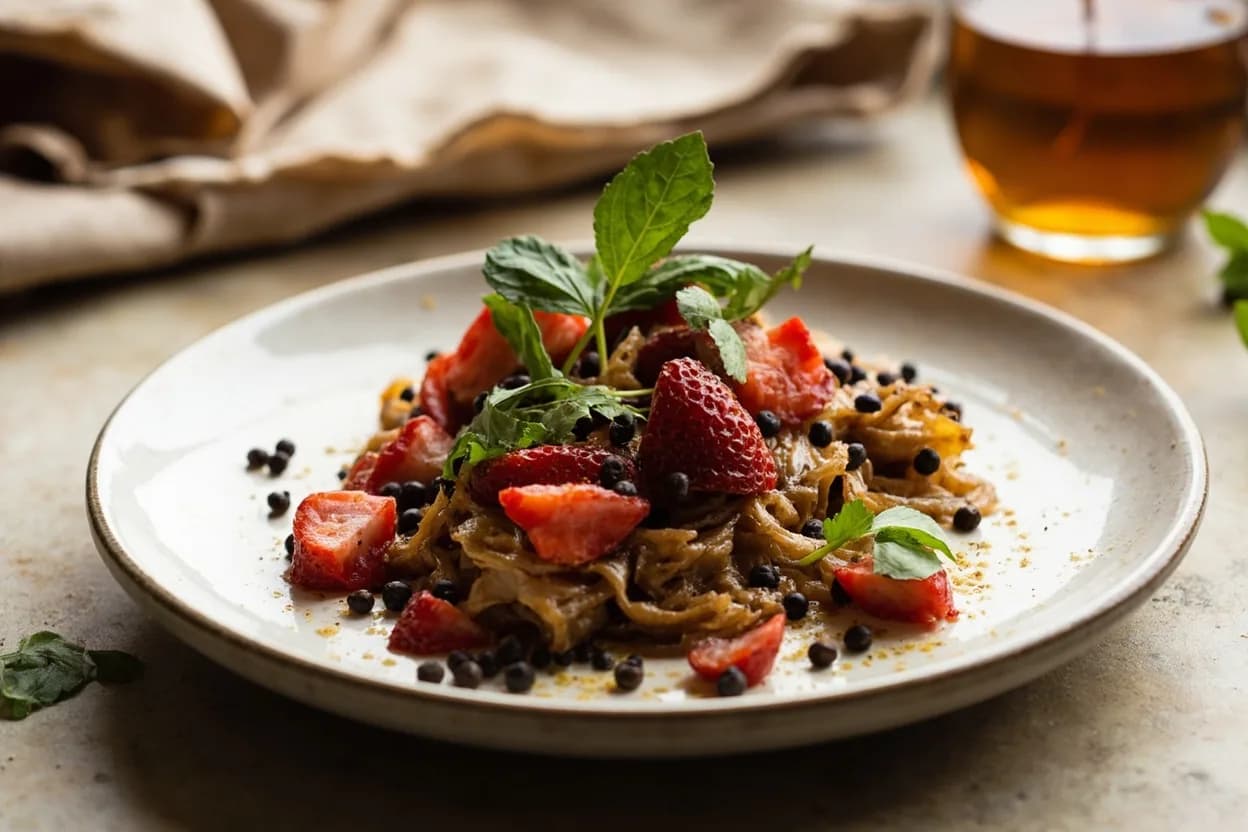
A classic modernist pairing: piperine's warmth activates receptors that amplify perceived sweetness in strawberry's DMHF (furaneol) compounds — crack very coarsely for textural interest.
- Dark chocolate ganache
Whole peppercorns steeped in cream then strained before making ganache impart a slow heat and woody depth that elevates dark chocolate without adding sharp spice notes.
- Mango (ripe)
The limonene in black pepper terpenes harmonizes with mango's monoterpene suite; a light crack of black pepper over ripe mango enhances its citrus-floral character.
- Blue cheese (Gorgonzola, Roquefort)
The pepper's piney terpenes cut through the fatty, lactic richness of blue cheese and counteract its ammoniated funk; the pairing is common in Northern Italian antipasto.
- Honey
Whole pepper simmered briefly in honey produces a spiced condiment where piperine's heat and the volatiles' complexity mellow into the floral base — a Georgian (satsivi-adjacent) approach.
- Watermelon (raw, with salt)
The classic Senegalese-West African combination of salt, pepper, and fresh fruit: the pepper's terpenes make watermelon's subtle complexity more pronounced.
Tread carefully
- Applications requiring visual cleanlinessavoid
White sauces, cream purées, and pale dumpling fillings call for white pepper — black specs in these dishes violate the visual contract of the preparation.
- Very high heat (deep frying, very hot stir-fry with raw pepper)avoid
At frying temperatures, whole peppercorns scorch and release bitter, acrid compounds; if adding to hot fat, do so briefly and remove or use already-ground pepper.
- Unground in salad dressingsavoid
Whole peppercorns are a hazard and won't distribute heat; dressings require freshly cracked or ground pepper for even coating.
How to use it
- Add whole to stocks, braises, and brines at the start of cooking; strain out at the end
- Toast in a dry pan over medium heat until fragrant before cracking — releases oils and sharpens flavor
- Crack in a mortar for steak crust — varying sizes give textural contrast between fine dust and chunky pieces
- Bloom cracked pepper in butter or oil at the start of a pan sauce to build the base layer
- Steep whole peppercorns in warm cream for 15–20 minutes before straining into dessert applications
- Store whole in an airtight container away from light; whole peppercorns retain quality for up to 3 years
Appears in
Related flavours
Same species, different processing — white pepper strips the terpenes and gains fermented depth; shows what is gained and lost by husking.
- Bay Leaf
A natural companion in stocks and braises; bay's cineol and black pepper's sabinene share a resinous herbal register that creates a foundational savory profile.
Both appear in charcuterie and game marinades; juniper's piney α-pinene and pepper's β-caryophyllene are complementary resinous compounds.
No botanical relationship but shares the 'pepper' culinary role; useful contrast showing how numbing effect (hydroxy-alpha-sanshool) differs from pungent heat (piperine).
References
- 1.On Food and Cooking — Harold McGee
- 2.The Flavour Thesaurus — Niki Segnit
- 3.Charcuterie: The Craft of Salting, Smoking, and Curing — Michael Ruhlman & Brian Polcyn
- 4.Sauces: Classical and Contemporary Sauce Making — James Peterson
- 5.The Complete Nose to Tail — Fergus Henderson
Confidence: high
Notes
Whole vs. Ground
The case for buying whole pepper and grinding to order is simple chemistry: the volatile terpenes (responsible for pepper's fresh, complex aroma) begin oxidizing and evaporating as soon as the corn is cracked. Pre-ground pepper that has sat in a can retains only piperine — heat with no complexity. For finishing and seasoning, freshly ground whole pepper is categorically different from anything pre-ground.
Terroir
Tellicherry (large Malabar berries allowed to fully ripen), Kampot (Cambodian, silkier and more complex), and Sarawak (Malaysian, bright and slightly floral) are the most praised cultivars. Tellicherry is the benchmark for Western fine-dining kitchens; Kampot carries Protected Geographical Indication status and commands a premium for its refined complexity.