Spices & Dried Aromatics
White Pepper
Also: Piper nigrum (ripe, husked), bai jiao, poivre blanc, prik thai khao
The cleaner, more fermented heat preferred across Cantonese and Thai kitchens where a black speck would be wrong.
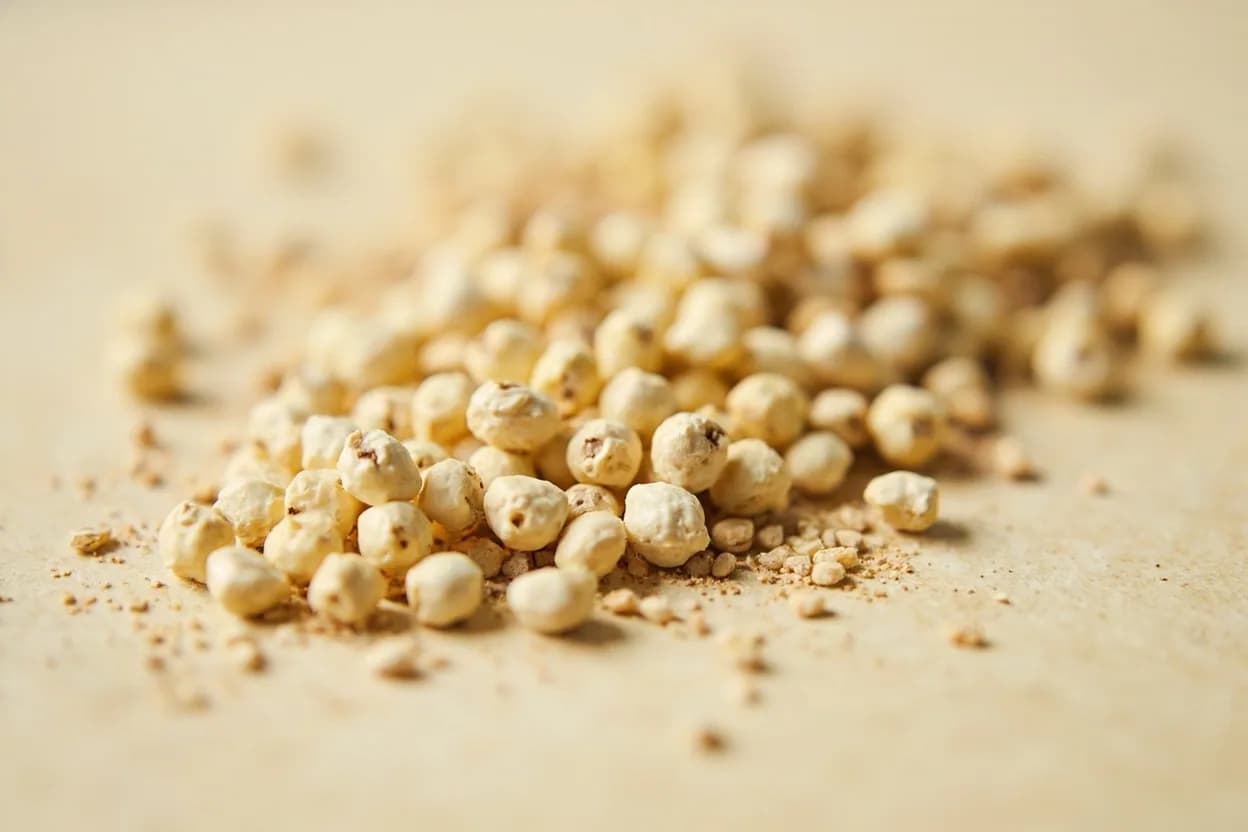
White pepper is made from fully ripe Piper nigrum berries that have been soaked to remove the dark outer pericarp before drying. The soaking process triggers fermentation that degrades the outer skin but also generates distinctive flavor compounds — primarily indole, p-cresol, and skatole — producing a musty, barnyard, slightly earthy character absent from black pepper. Piperine (the heat compound) remains, but the fragrant terpenes (such as sabinene and β-caryophyllene) that give black pepper its fruity-fresh lift are stripped away. The result is a hotter, more pungent, fermented heat that is valued wherever visual cleanliness is paramount (white sauces, consommés, pale dumplings) or where that earthy funk is desirable in its own right.
In photos
Flavour profile
Classic pairings
- Cantonese wonton soup / clear brothsCantonese Chinese
White pepper's clean heat seasons clear broths without adding dark specks or the fruity terpenes that would pull the broth away from its delicate character.
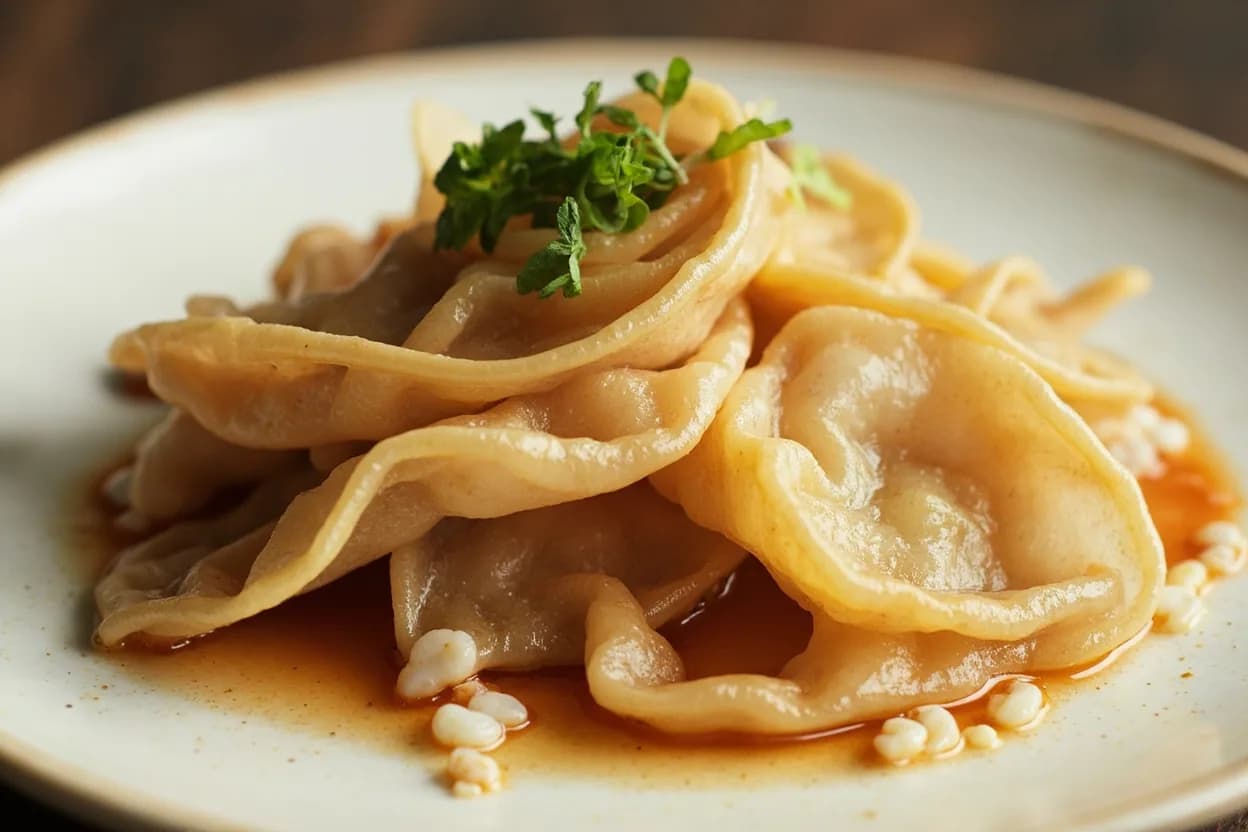
- Har gow (shrimp dumplings)Cantonese Chinese (dim sum)
Wrappers must be white; white pepper seasons the prawn filling without visual contamination; its fermented-heat note harmonizes with raw shrimp's ocean sweetness.
- Thai crab omelette (khai jiao pu)Thai
White pepper is the definitive Thai egg seasoning — its funk bridges egg's sulfurous richness and the crab's delicate sweetness in a way black pepper cannot.
- French béchamel / veloutéFrench classical
Classical French technique specifies white pepper for white sauces to preserve color; the earthy note actually rounds out dairy's flat richness.
- Pork (ground, forcemeat)Cantonese, French charcuterie
White pepper is the standard seasoning for Cantonese char siu, siu mai, and many European charcuterie traditions — its heat is even-distributed through ground meat without dominating.
- Fish (steamed whole)Cantonese Chinese
Cantonese steamed fish relies on white pepper in the marinade; its fermented-earthy note offsets fish's potential mustiness while black pepper's terpenes would overwhelm delicacy.
- Potato and leek soup (vichyssoise)French
White pepper is the canonical choice in vichyssoise — the light fermented note adds complexity to the mild potato base without adding visual blemish to a cream-white purée.
Adventurous pairings
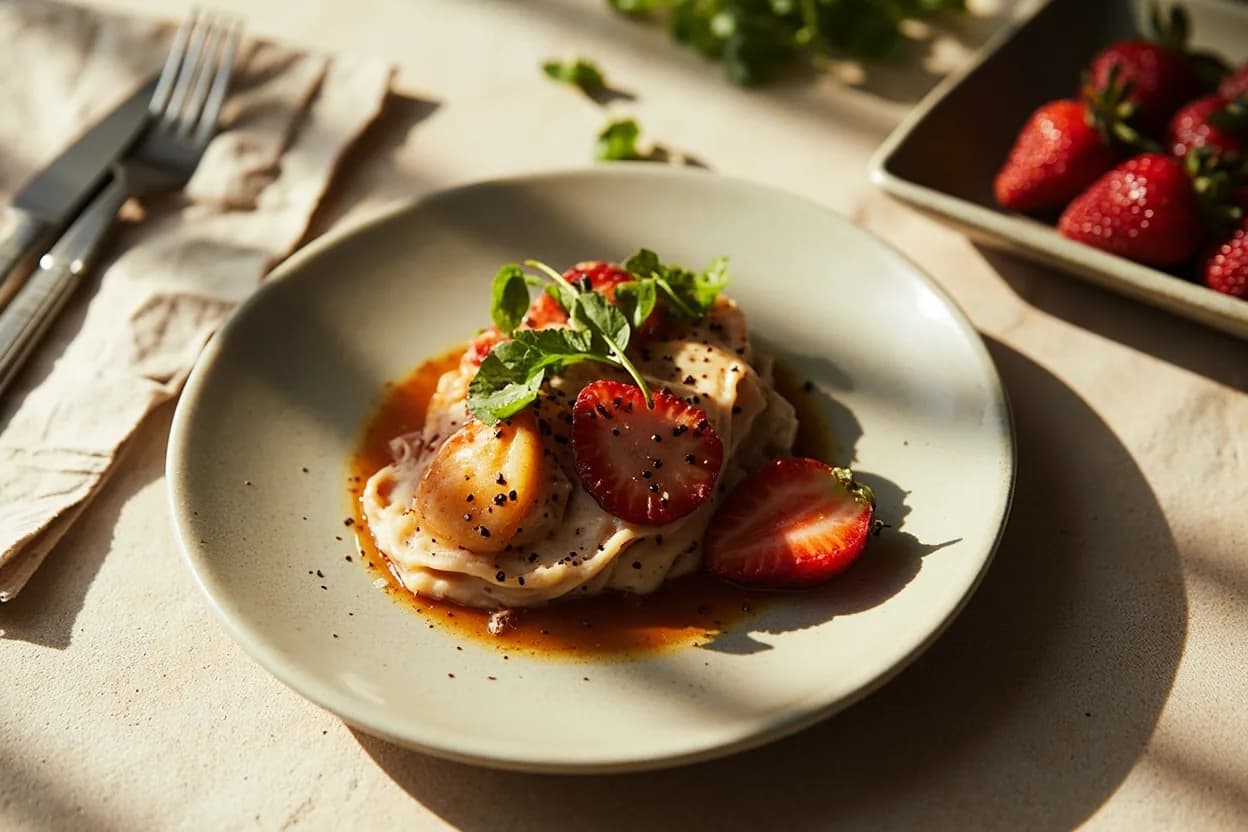
- Strawberry
White pepper's musty warmth amplifies strawberry's furanone character; the combination appears in modernist desserts and strawberry-pepper jam where black pepper would overwhelm.
- White chocolate
The cocoa butter sweetness and milk solids of white chocolate are complemented by white pepper's earthy heat; together they create a more complex, less cloying confection.
- Steamed tofu with ginger and scallion
A teaspoon of freshly ground white pepper over the soy-ginger dressing of Cantonese steamed tofu activates the dish's clean umami in a way that reads as depth rather than spice.
- Crab bisque
White pepper's fermented note harmonizes with the iodine-sweet character of crab; its heat integrates more smoothly into cream-based bisque than black pepper's sharp terpenes.
- Pineapple (grilled or fresh)
The bromelain-rich, acidic sweetness of pineapple is brightened by white pepper's direct heat — a Thai-inflected pairing seen in fruit salads and grilled skewer garnishes.
Tread carefully
- Dishes where 'pepper' aromatics are the pointavoid
Steak au poivre, Sichuan-style pepper dishes, or anything showcasing pepper's fruity-fresh character — white pepper's stripped terpene profile makes it a poor substitute in these contexts.
- Freshly ground on a cheeseboard or salad (finishing)avoid
Its aroma lacks the freshness and complexity of freshly cracked black, pink, or green pepper; on raw finishing applications, its barnyard notes can read as off.
- Very delicate floral dishesavoid
The indole character in white pepper can clash with highly floral ingredients (rose, elderflower, jasmine) where a neutral or absent pepper is preferred.
How to use it
- Grind fresh — white pepper's volatile fermented compounds fade rapidly after grinding; pre-ground canned white pepper is notably inferior
- Use in marinades and meat mixes where even heat distribution matters more than aromatic impact
- Season white sauces, consommés, and pale purées where color purity is required
- Combine with salt early in cooking to allow the earthy notes to mellow into the dish
- Toast whole berries briefly before grinding to slightly moderate the musty character
- In Thai cooking, white pepper is often used raw in nam jim dressings and marinades alongside fish sauce and lime
Appears in
Related flavours
The same species processed differently — black retains all terpenes for freshness and complexity; white loses them but gains fermented depth and visual neutrality.
A close ally in Cantonese cooking where both provide warming heat without the visual disruption of dark spices; they layer their different heat mechanisms (piperine + gingerol).
White pepper and fish sauce are fundamental to Thai seasoning; the pepper's fermented indole compounds harmonize with fish sauce's own fermented umami.
References
- 1.On Food and Cooking — Harold McGee
- 2.The Flavour Thesaurus — Niki Segnit
- 3.Thai Food — David Thompson
- 4.Breath of a Wok — Grace Young
Confidence: high
Notes
The Fermented Note
The distinctive mustiness of white pepper — sometimes described as 'barnyard' or 'funky' — comes from indole and skatole produced during the soaking/fermentation process used to remove the berry's husk. This character is considered an asset in Cantonese and Thai cooking, where it adds a savory depth unachievable with black pepper. In European classical cooking it is tolerated as an invisible necessity; in modernist cooking it is increasingly used as a deliberate flavor choice.
Regional Preferences
Sarawak (Malaysian Borneo), Muntok (Indonesian Bangka Island), and Vietnamese white peppers each carry distinct terroir. Muntok is notably musty and earthy; Sarawak tends toward a cleaner, more direct heat. For Cantonese applications, freshly ground Muntok is often preferred for its authentic funk; for French classical work, a cleaner variety is usually specified.