Nuts & Seeds
White Sesame
Also: white sesame seeds, goma (白ごま), simsim, til, Sesamum indicum
Toasted white sesame brings a delicate, milky nuttiness and lingering warmth that quietly ties together Asian dressings, rice, and baked goods.
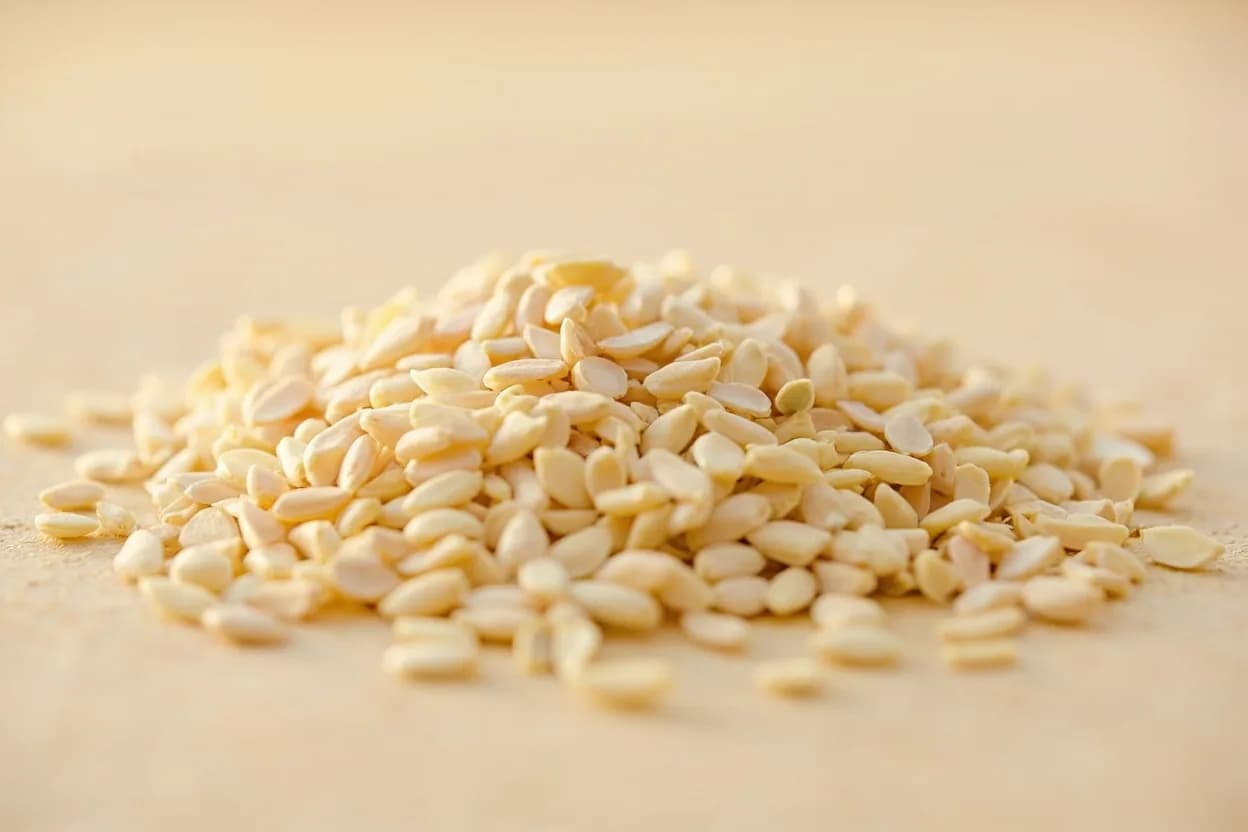
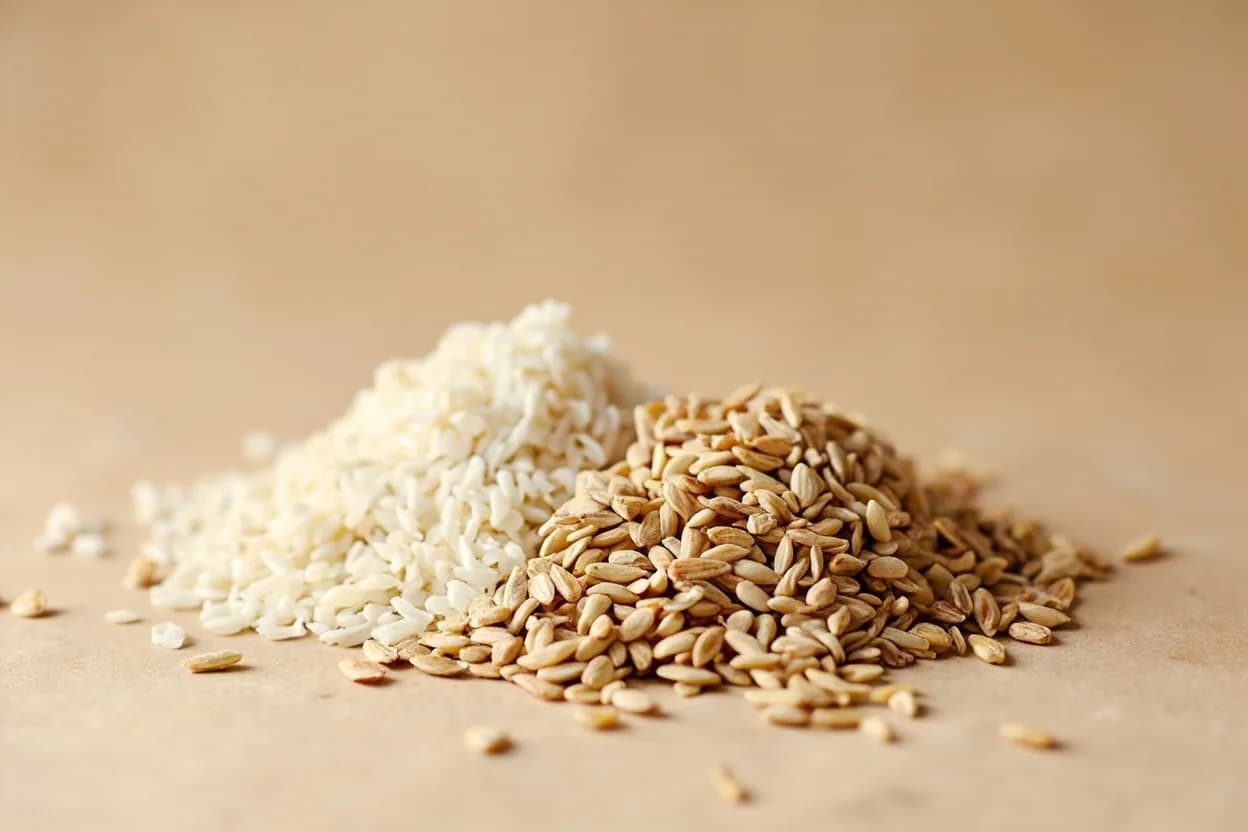
White sesame seeds are the hulled, cream-to-ivory seeds of Sesamum indicum, the oldest known oilseed plant, cultivated across Asia, Africa, and the Middle East for over 3,500 years. Compared to black sesame, white sesame has a milder, sweeter, more milky flavor with less bitterness — hulling removes the dark seed coat and much of its tannin. Raw, they are almost neutral with a faint nuttiness; lightly toasted, they bloom into warm, popcorn-adjacent nuttiness with sesame oil's distinctive nutty character. Ground into tahini or sesame paste, they become creamy and rich. They contain sesamol and sesamin, naturally occurring antioxidants that give the oil extraordinary shelf stability.
In photos
Flavour profile
Classic pairings
- Sushi riceJapanese
White sesame scattered through or over sushi rice adds a subtle nutty crunch and visual highlight; standard in maki, onigiri, and chirashi.
- MisoJapanese
Ground sesame paste (nerigoma) in miso-based dressings for spinach (horenso no goma ae) creates the silky, earthy, savory dressing central to Japanese vegetable cookery.
- Soy sauceJapanese / Korean / Chinese
Sesame and soy are co-pillars of East Asian flavor; sesame oil or seeds in soy-based dressings, marinades, and dipping sauces adds richness and rounds salinity.
- HoneyMiddle Eastern / Greek / Korean
Sesame and honey are foundational to halva, sesame brittle (pasteli, simsimiyya), and Korean sesame rice cakes; sweetness balances the seed's natural bitterness and fat.
- EggplantMiddle Eastern / Japanese
Roasted eggplant's smoky, yielding flesh is the classic counterpart to tahini (sesame paste) across hummus bi tahini, baba ghanoush, and Japanese nasu dengaku.
- GingerChinese / Japanese / Korean
Ginger's sharp warmth is amplified and mellowed by sesame oil's richness; a fundamental pairing in Asian stir-fry finishing, cold noodle dressings, and marinades.
- CucumberJapanese / Chinese
The cool, watery crispness of cucumber is classically dressed with sesame oil, soy, and rice vinegar in Japanese sunomono and Chinese smashed cucumber salads.
Adventurous pairings
- Strawberries
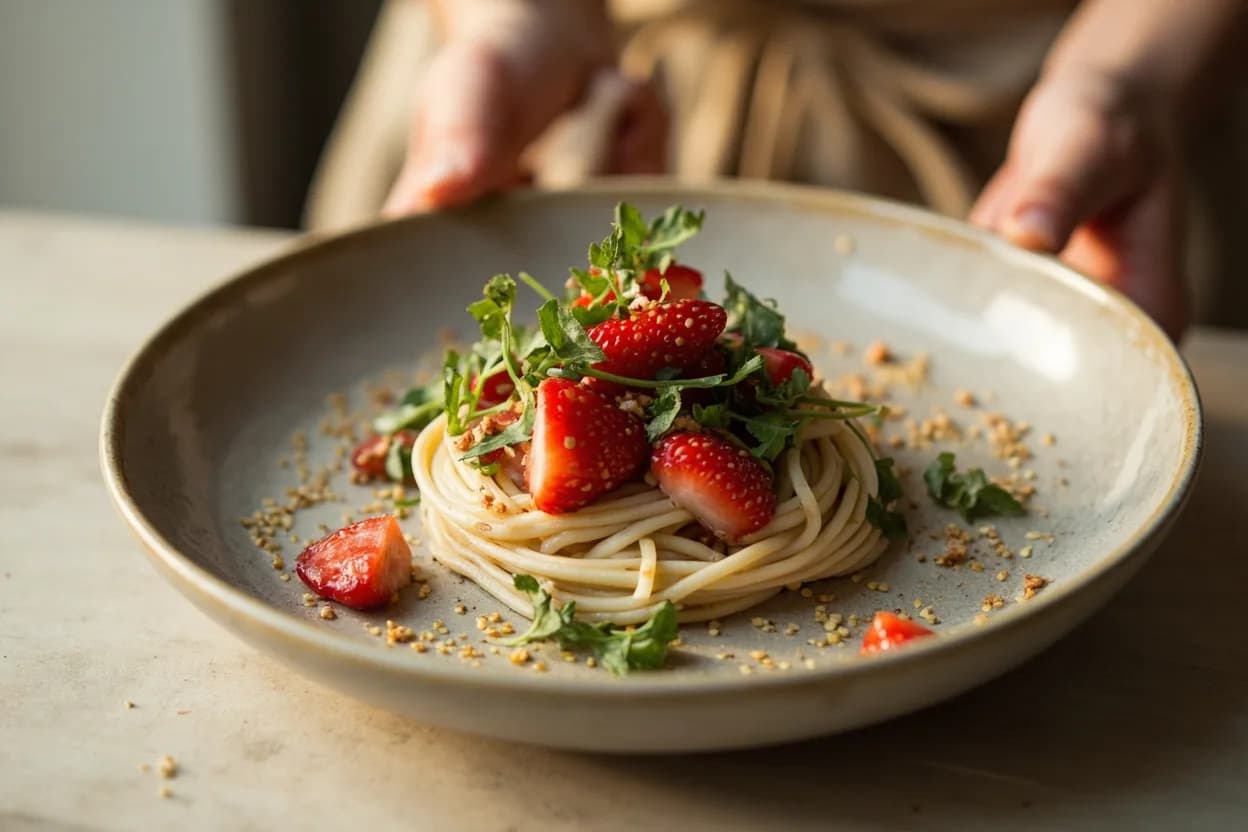
Strawberries dressed with a few drops of sesame oil and a pinch of flake salt is a surprising Japanese-inspired pairing; the nut's warmth and richness make the fruit's sweetness more complex and less one-dimensional.
- Goat cheese
Sesame-crusted goat cheese rounds rolled in toasted white sesame and pan-fried until golden — the seed's nuttiness and fat complement the cheese's lactic tang beautifully.
- Lemon zest and olive oil
White sesame with lemon and high-quality olive oil in a paste or dressing bridges Middle Eastern and Mediterranean registers; excellent over grilled fish or roasted cauliflower.
Sesame brittle or halva dipped in dark chocolate is a Middle Eastern confectionery tradition; the seeds' nuttiness and the chocolate's roasted bitterness share terpene compounds.
Tread carefully
- Delicate floral desserts (violet, elderflower)avoid
White sesame's oily warmth competes with and blunts the most delicate floral aromatics; better paired with robust flavor profiles.
- Raw (untoasted) in hot applications as a finishavoid
Raw sesame seeds lack the aromatic development that makes the flavor worthwhile; always toast before using as a garnish or finishing element — even 90 seconds in a dry pan matters enormously.
How to use it
- Toast in a dry skillet over medium heat, shaking, for 2–3 minutes until golden and fragrant — do not walk away, they burn fast
- Grind toasted seeds to a paste (nerigoma/tahini) in a food processor; add a neutral oil to adjust consistency
- Use whole as a garnish scattered over finished dishes, rice, or noodles
- Press into sesame oil for a finishing drizzle (unfiltered roasted sesame oil is separate from neutral sesame oil)
- Fold into dough for sesame bagels, ring bread (simit), or sesame shortbread
Appears in
Related flavours
Black sesame has the same oil richness but a more bitter, earthy, almost roasted-coffee character; used where a more dramatic visual and flavor impact is wanted.
Tahini is simply ground white sesame; specifying the whole seed vs. paste form changes texture and application but the flavor direction is identical.
- Pine nuts
Both white sesame and pine nuts serve as mild, oily, toastable garnishes in Middle Eastern cooking; pine nuts are used where crunch and size matter more.
References
- 1.Jerusalem — Yotam Ottolenghi & Sami Tamimi (Ten Speed Press, 2012)
- 2.Japanese Farm Food — Nancy Singleton Hachisu
- 3.On Food and Cooking — Harold McGee (Scribner, 2004)
- 4.The Oxford Companion to Food — Alan Davidson (3rd ed.)
- 5.Zaitoun: Recipes and Stories from the Palestinian Kitchen — Yasmin Khan
Confidence: high
Notes
Tahini Is Sesame — No Shortcut
Tahini is simply sesame seeds ground to a paste — nothing more. The variation in quality between a thin, bitter commercial tahini and a slow-stone-ground Lebanese or Israeli artisan version is enormous. Good tahini should be pourable, deeply nutty without bitterness, and made exclusively from hulled sesame seeds. When a recipe calls for sesame paste and tahini interchangeably, note that Chinese sesame paste (zhima jiang) is typically made from toasted unhulled seeds and is darker, more bitter, and less fluid than Middle Eastern tahini.
Sesame Oil — Two Products
There are two distinct sesame oils. Neutral (light) sesame oil is pressed from raw seeds and has a high smoke point; it is a cooking medium, not a flavor agent. Roasted (toasted) sesame oil — the dark amber variety — is pressed from toasted seeds and has an intense, irreplaceable nutty flavor but a low smoke point. Use it strictly as a finishing oil, not for cooking. Most recipes that call for 'sesame oil' mean the roasted variety.