Alcohols & Vinegars
White Wine
Also: dry white wine, vin blanc, vino blanco
The great culinary acid — white wine's fruit, alcohol, and tartness build French sauces, coax open shellfish, and deglaze the fond that defines risotto.
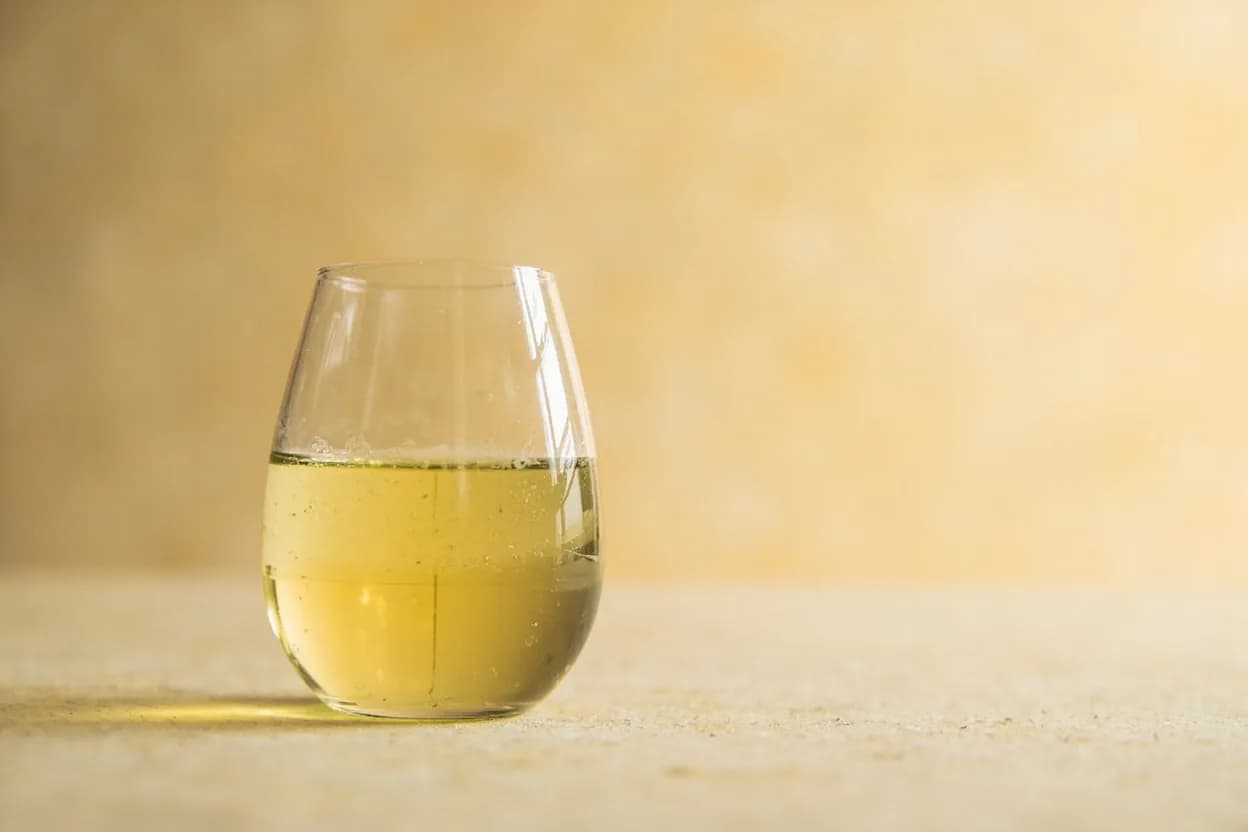
In culinary contexts, 'white wine' means dry to off-dry fermented grape juice — typically Chardonnay, Sauvignon Blanc, Pinot Grigio, or Muscadet — added to food during cooking to provide acid, fruit aromatics, and alcohol. Unlike table wine service, cooking white wine is judged by its acid structure (tartaric and malic acids), sugar level (dry is almost always preferred), and body. The alcohol volatilizes quickly under heat, leaving behind the acids and fruit-forward esters that build the backbone of French beurre blanc, Italian risotto, and Spanish clam sauces. Its role is structural — adding brightness, cutting fat, and lifting flavors rather than adding wine flavor per se.
In photos
Flavour profile
Classic pairings
- Butter (beurre blanc, beurre nantais)French
The acid in white wine prevents butter emulsions from breaking by lowering the pH — the classic French butter sauce is structurally impossible without it.
- Clams and musselsFrench, Italian
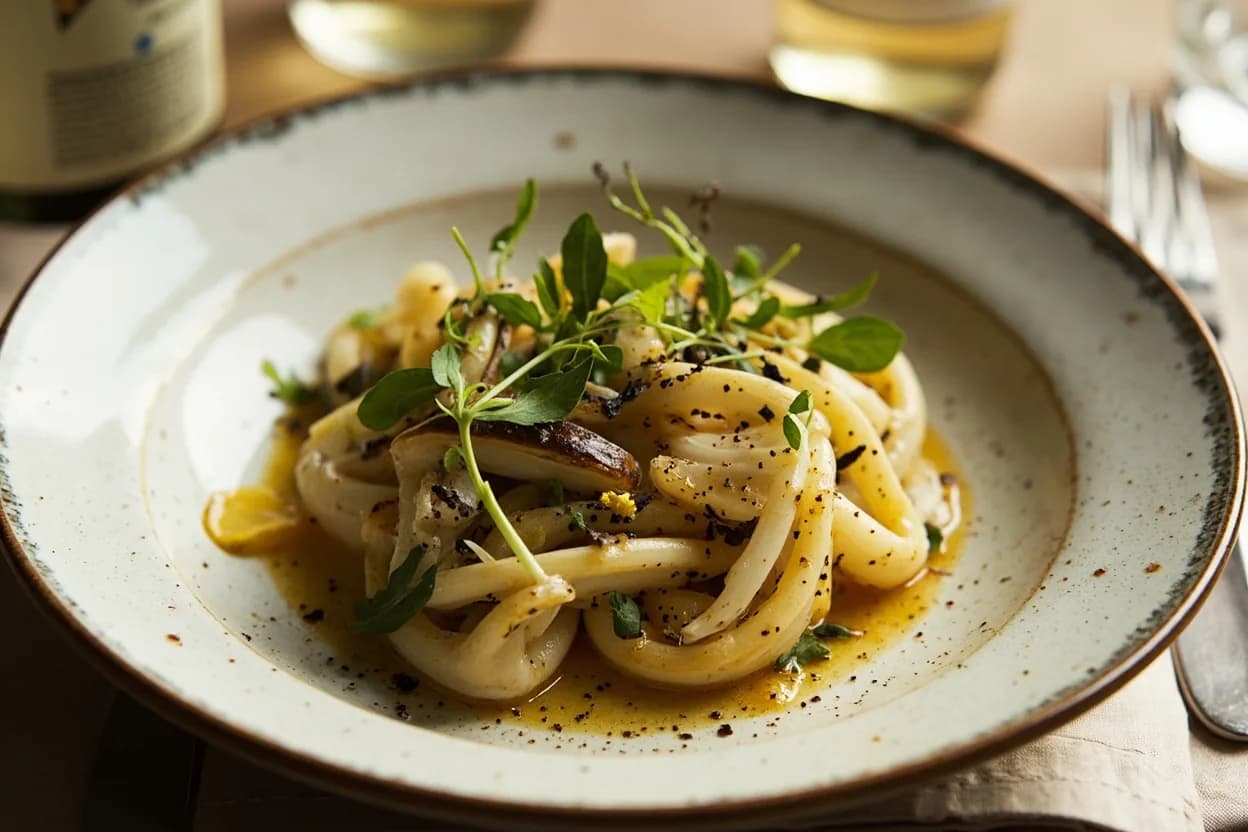
Steamed in white wine with garlic and herbs, bivalves release their liquor into the wine to create a self-sufficient briny broth — the wine's acid and alcohol steam-open the shells and season the sauce.
- ShallotsFrench
White wine sweats shallots into translucent sweetness and forms the base of reduction sauces (vin blanc), pan sauces, and beurre blanc — the two are inseparable in French cooking.
- Risotto (Arborio or Carnaroli rice)Italian
A full glass of dry white wine is added after toasting the rice — it absorbs into the grain, adding acid that counterpoints the richness of butter and Parmesan as the dish builds.
- Fish (sole, cod, sea bass)French
White wine is the poaching and en papillote liquid of choice for white fish — its acid gently firms the protein while creating a court-bouillon-style cooking medium that doubles as a pan sauce.
- Herbs (thyme, tarragon, parsley)French
White wine carries and fixes delicate herb aromatics in slow-cooked applications; the tartness of wine keeps herbal brightness from turning muddy with prolonged heat.
- Chicken (pan-roasted, braised)French
Deglazing a chicken pan with white wine lifts the fond into a concentrated fond that forms the base of classic French poulet au vin blanc — the acid tenderizes as well as seasons.
Adventurous pairings
- Fennel and saffron
A Provençal pairing: white wine, fennel, and a pinch of saffron poaching shellfish or white fish create a bouillabaisse-adjacent broth with Andalusian resonance.
- Goat cheese
Sauvignon Blanc's grassiness and high acid mirror goat cheese's lactic tang — they reinforce each other in a pan sauce for seared chicken or a warm salad dressing.
A splash of dry white wine in a kimchi jjigae or kimchi-braised pork adds bright acid that reinforces the fermented cabbage's tartness without the sweetness of sake or mirin.
- Green mango
Reducing white wine with green mango, shallots, and fish sauce creates a Southeast Asian-French hybrid beurre blanc for grilled shrimp or scallops.
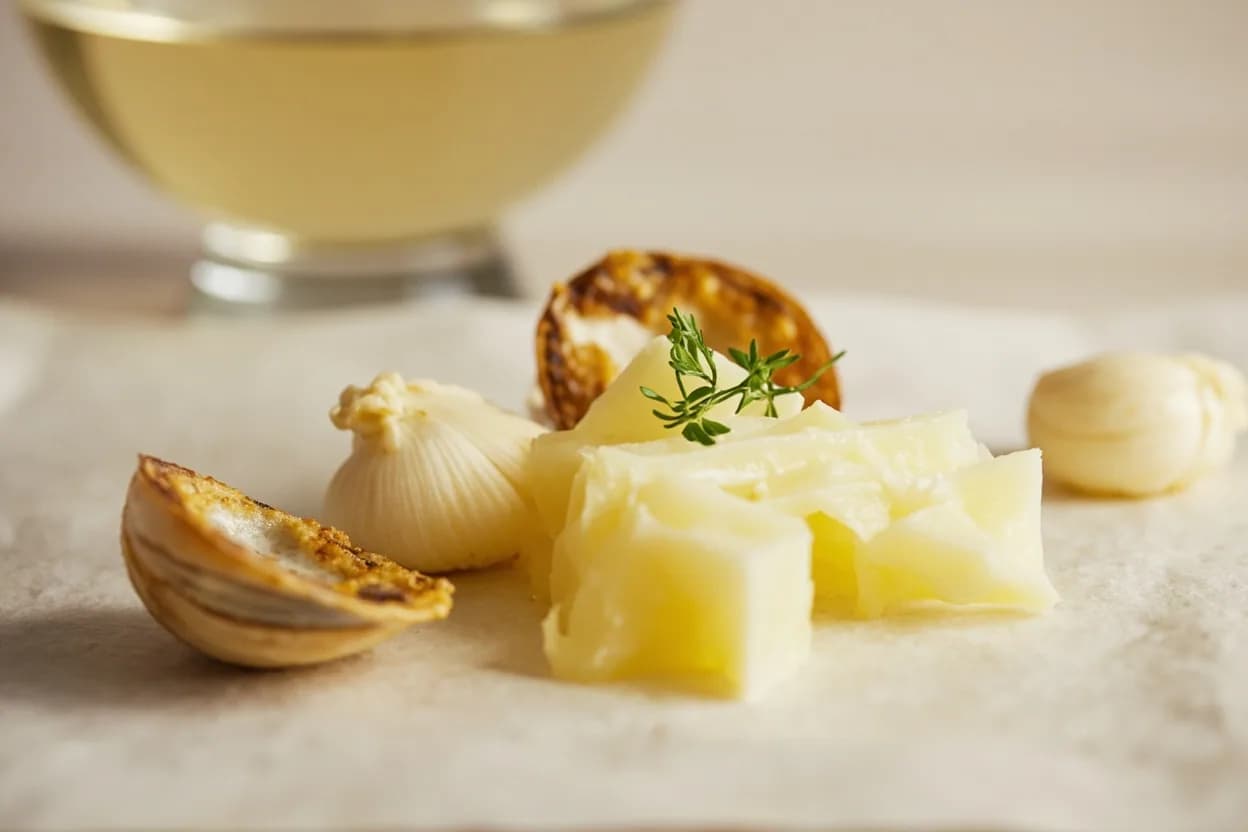
- Aged Gruyère
The classic fondue combination: dry white wine (typically Chasselas or Pinot Gris in Alsace) stabilizes melted cheese via tartaric acid, preventing protein stranding that makes fondue grainy.
Tread carefully
- Beef red braises (boeuf bourguignon)avoid
White wine's delicate fruit and acid structure are lost — and imbalanced — in long, iron-rich red meat braises; red wine's tannins and body are required to stand up to the meat.
- Spicy dishes seeking balanceavoid
White wine's acid amplifies the perception of capsaicin heat rather than calming it; off-dry wines may seem helpful but create a muddled sweet-hot dynamic.
- Tomato-heavy saucesavoid
Tomato already provides abundant acid; white wine in a long-cooked tomato sauce contributes redundant acidity and thin body — red wine or none is more appropriate.
How to use it
- Deglazing: pour cold white wine into a hot pan after searing protein; the thermal shock releases fond and begins the sauce, evaporating alcohol in 30–60 seconds
- Reduction: simmer white wine with shallots until syrupy (au sec) before mounting with cold butter — the concentrated acid and sugars form the beurre blanc base
- Poaching: combine with water, aromatic vegetables, and herbs for court-bouillon to gently cook fish and shellfish at 80–85°C
- En papillote: add a splash over fish in parchment parcels — steam pressure opens shellfish and creates an instant sauce in the packet
- Risotto hydration: add after toasting rice, before stock — the wine absorbs into dry grain more completely than into stock-saturated rice, evenly distributing acidity
Appears in
Related flavours
Japan's analogous culinary alcohol — cleaner and less acidic; substitutable in delicate applications but lacks wine's tartaric acid
- Vermouth (dry)
Concentrated, herb-infused white wine — a few tablespoons replace a cup of wine in pan sauces, adding herbaceous complexity
- Shallots
The default aromatic companion in French white-wine reductions and sauces
- Lemon juice
Used alongside white wine when extra acidity is needed; lemon's citric acid is brighter and sharper than wine's tartaric
References
- 1.The French Laundry Cookbook — Thomas Keller
- 2.Mastering the Art of French Cooking — Julia Child
- 3.On Food and Cooking: The Science and Lore of the Kitchen — Harold McGee
- 4.The Essentials of Classic Italian Cooking — Marcella Hazan
- 5.Wine with Food: A Guide to Entertaining through the Seasons — Joanna Simon
Confidence: high
Notes
Cook with wine you'd drink
The adage is correct — not because cheap wine ruins a dish (it rarely does catastrophically), but because cooking concentrates everything: cooking wine that is acidic, salty, or oxidized before it goes in will be more so after reduction. A modest but drinkable bottle is always the floor.
Which variety to use
Sauvignon Blanc and Pinot Grigio are the most versatile cooking whites — dry, high-acid, fruit-neutral. Oaked Chardonnay can overwhelm delicate preparations with vanilla and butter notes. Avoid sweeter wines (Riesling Spätlese, Gewürztraminer) unless the recipe specifically calls for sweetness. Muscadet is the traditional choice for moules marinières; Chablis for beurre blanc.