Fats, Pastes & Condiments
Whole-Grain Mustard
Also: grainy mustard, moutarde à l'ancienne, seed mustard, coarse mustard
Rustic, pop-on-the-tongue seed mustard with a milder punch and a visual appeal Dijon can't match.
Whole-grain mustard is made from partially crushed or whole yellow and brown mustard seeds (Brassica alba and B. juncea) macerated in wine, cider, or vinegar. Because many seeds remain intact, the enzyme that generates isothiocyanates — mustard's primary heat compound — is never fully activated; the result is gentler and more nuanced than smooth Dijon. When chewed, seeds pop and release brief, clean heat in bursts. The paste's speckled appearance and textured mouthfeel make it visually appealing on a board or in a dressing. French moutarde à l'ancienne and some British country-style mustards follow this tradition.
In photos
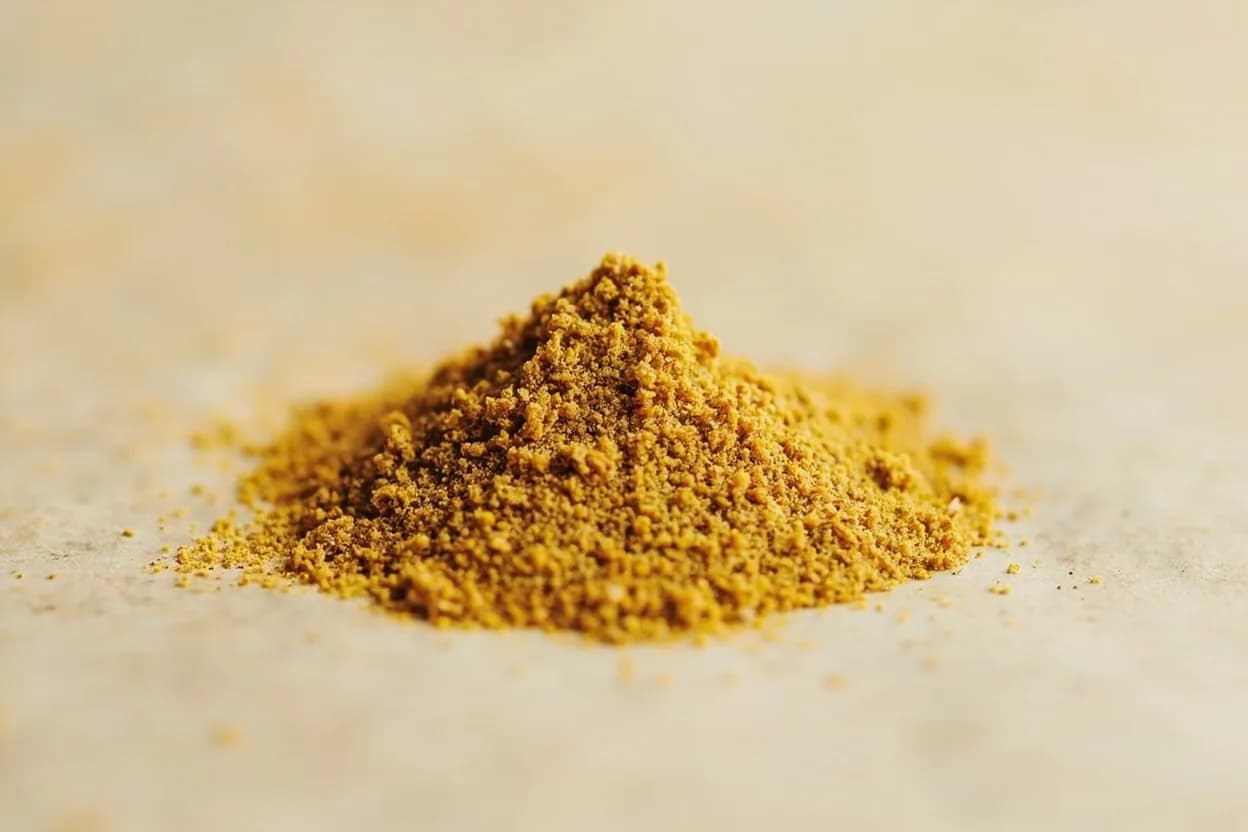
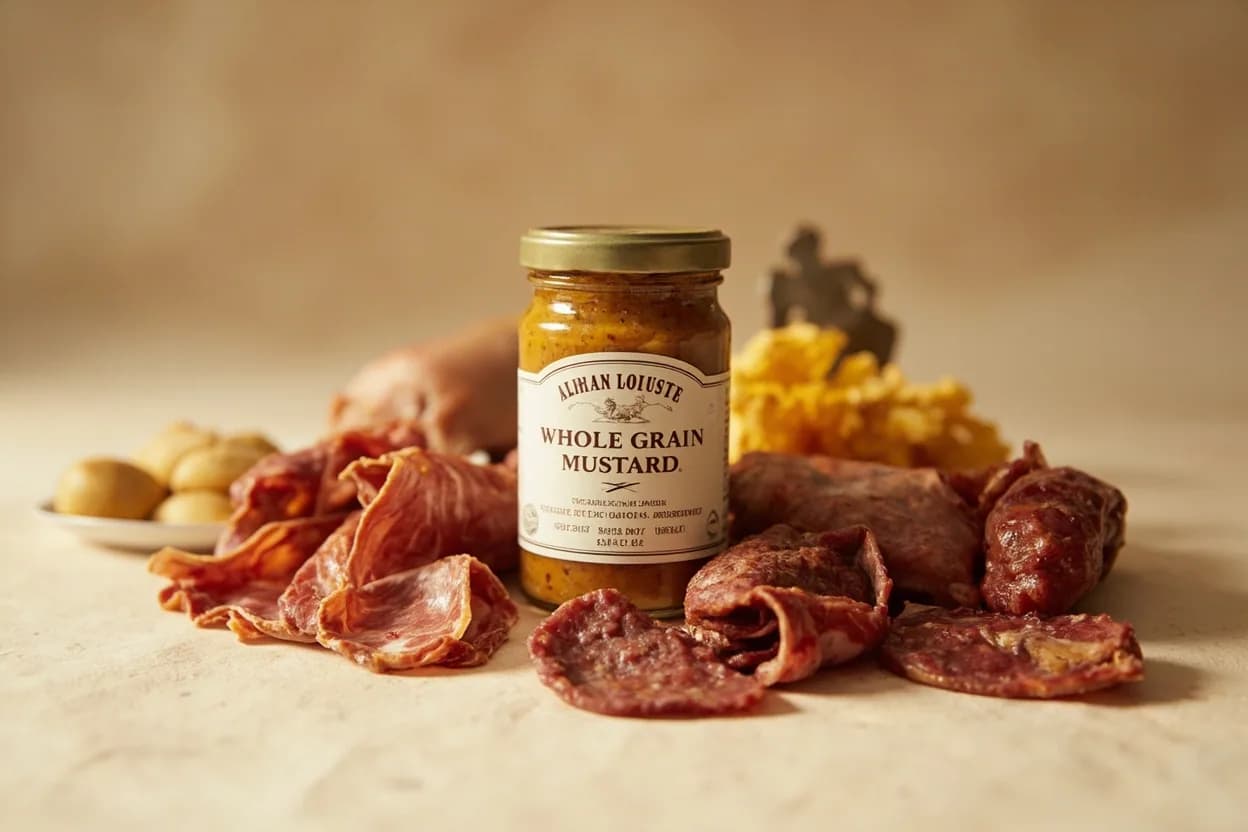
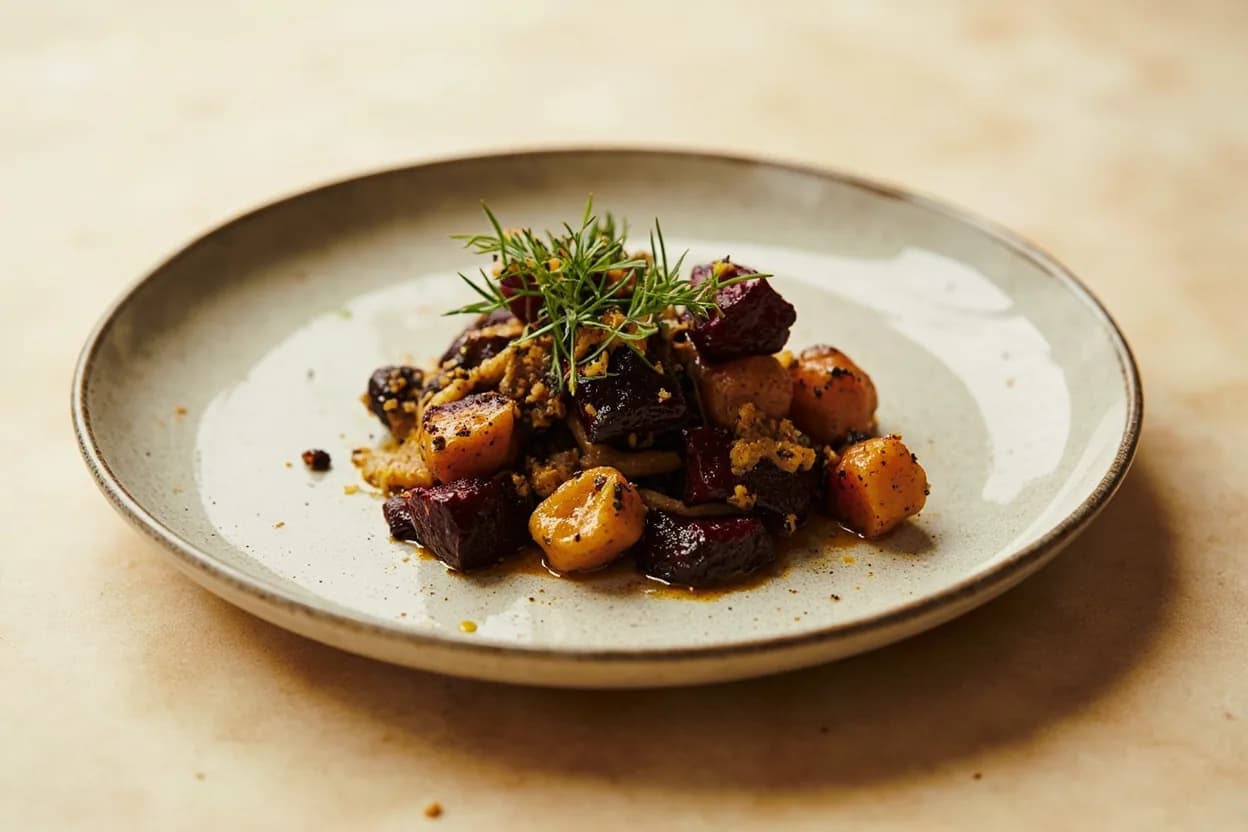
Flavour profile
Classic pairings
- charcuterie and cured meatsFrench
Smeared alongside pâté de campagne, saucisson, or jambon; the pop of seeds and mild heat cut through fat without overwhelming.
- cold roast chickenFrench
The grainy texture clings to meat slices; its mildness flatters poultry's delicate flavour.
- sausagesGerman/British
A natural partner for bratwurst, merguez, or British pork sausages — the seeds provide textural contrast to the smooth casing.
- cider vinegarFrench
Mirrors the cider notes often used in the mustard itself; together they make a Normand-style dressing for warm potato salad.
- honeyBritish
Honey's floral sweetness tames the seed burst into a glaze ideal for baked ham or roast root vegetables.
- crème fraîcheFrench
The combination makes a speckled, milder sauce for salmon, rabbit, or leeks — less sharp than a Dijon version.
- smoked salmonScandinavian
Grainy mustard is a classic Scandinavian accompaniment to gravlax; the seed texture mimics caviar visually and adds gentle heat.
Adventurous pairings
- roasted beets
Seed burst and earthy sweetness are unexpected friends; a vinaigrette of whole-grain mustard, sherry vinegar, and walnut oil over roasted beets is a revelation.
- aged cheddar
The mustard's acidity cuts through fat and amplifies the cheddar's sharpness — use in a ploughman's lunch or melt into a rarebit.
Tart-sweet molasses amplifies the seed-burst acidity; together they make a startling glaze for lamb chops.
- miso and sesame
Stirring whole-grain mustard into a miso-sesame dressing gives familiar Asian flavours a textured, fermented European twist.
- pickled green tomatoes
Two acidic, assertive condiments combine into a relish-style topping for grilled pork or smoked fish.
Tread carefully
- very delicate emulsified saucesavoid
Whole seeds disrupt the texture of hollandaise or smooth beurre blanc; use smooth Dijon instead.
- light custard-based dessertsavoid
Even gentle mustard acidity clashes with sweet dairy; no culinary overlap here.
How to use it
- Dressing base: whisk into vinaigrettes — seeds provide texture and act as partial emulsifier
- Glaze: combine with honey or maple syrup, brush onto meat in the final 15 minutes of roasting
- Crust: press onto cheese or ham before a bread-crumb coat — seeds toast and add nutty depth
- Condiment table service: serve unstirred at room temperature so seeds remain plump and distinct
- Stir into cream sauces off the heat to preserve seed texture and avoid bitterness
Appears in
Related flavours
Smoother, more pungent sibling; better for emulsified sauces where texture would be disruptive
- Honey
The sweet partner that turns grainy mustard into a balanced glaze
- Smoked Salmon
Canonical Scandinavian pairing alongside gravlax and mustard-dill sauce
References
- 1.Larousse Gastronomique, Éditions Larousse
- 2.The Flavor Bible — Karen Page & Andrew Dornenburg
- 3.On Food and Cooking — Harold McGee
Confidence: high
Notes
Moutarde à l'ancienne
The French 'old-style' mustard uses the same coarse-grind technique and often incorporates Burgundy wine or Champagne vinegar. The style predates the smooth grinding process invented in Dijon in the 18th century.
Visual appeal
Unlike any other mustard, whole-grain's speckled appearance makes it a natural garnish — a spoonful on a plate adds colour and texture as much as flavour.