Fermented Pastes & Sauces
Ssamjang
Also: 쌈장, ssam paste, Korean wrap paste
Korea's definitive wrap paste — a thick, punchy blend of doenjang and gochujang that turns any grilled bite into a complete flavor event.
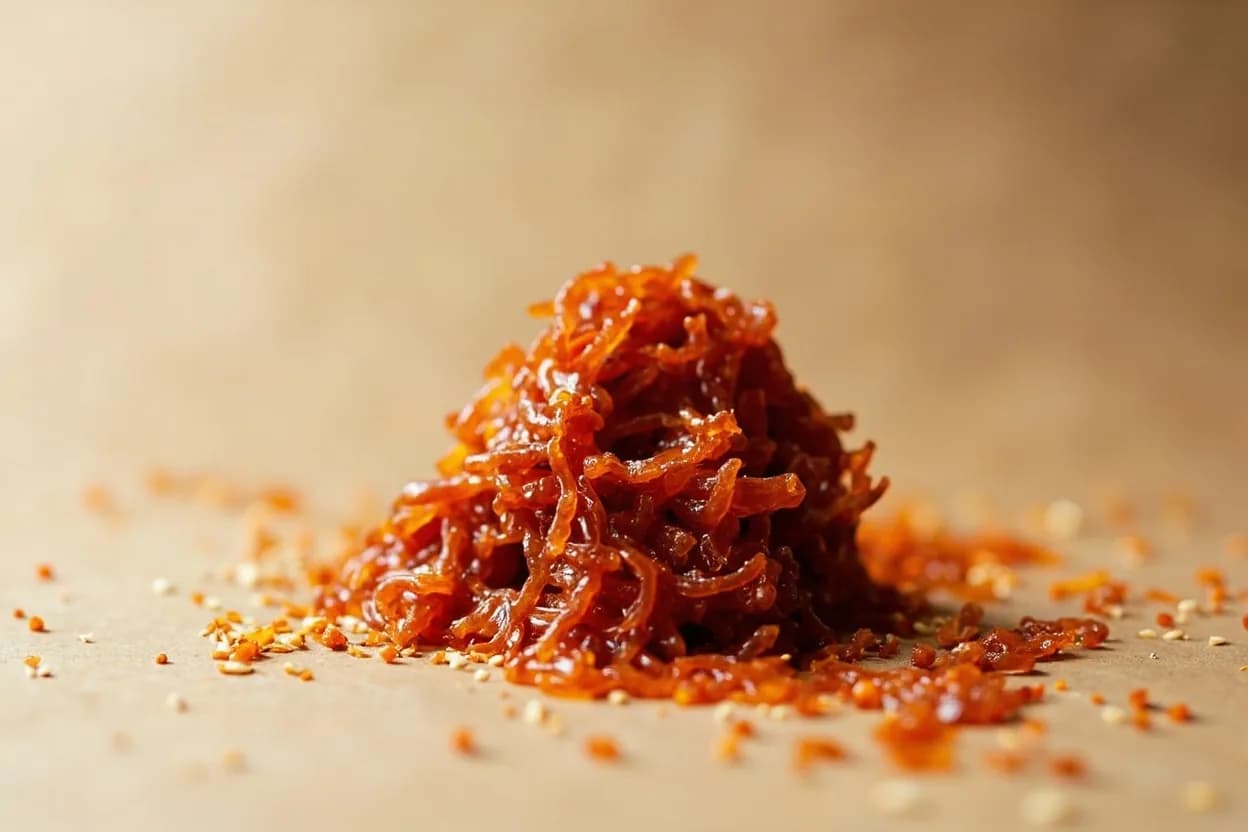
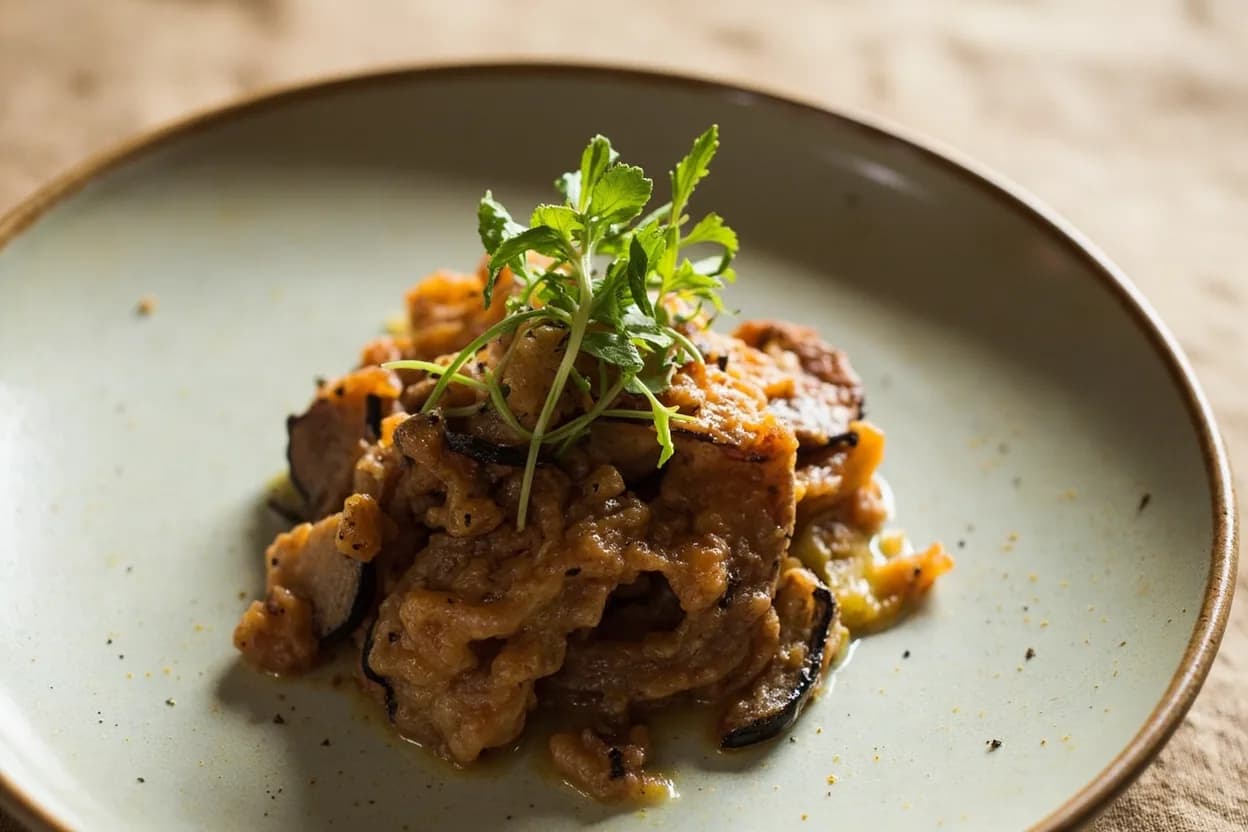
Ssamjang (쌈장) is a Korean condiment paste made by combining doenjang (fermented soybean paste), gochujang (fermented chili-rice paste), sesame oil, garlic, green onion, sugar, and sometimes toasted sesame seeds. The name means 'wrap paste' (ssam = wrap, jang = paste/sauce), referencing its role as the essential condiment in ssam — the Korean tradition of wrapping grilled meats or rice in leafy greens. Unlike doenjang alone (pungent and funky) or gochujang alone (sweet-spicy and bright), ssamjang occupies a balanced middle register: savory and fermented from the doenjang, pleasantly spicy-sweet from the gochujang, aromatic from sesame and garlic, with a thicker, spreadable consistency. It is used raw, directly on wraps, never cooked.
In photos
Flavour profile
Classic pairings
- Samgyeopsal (grilled pork belly)Korean
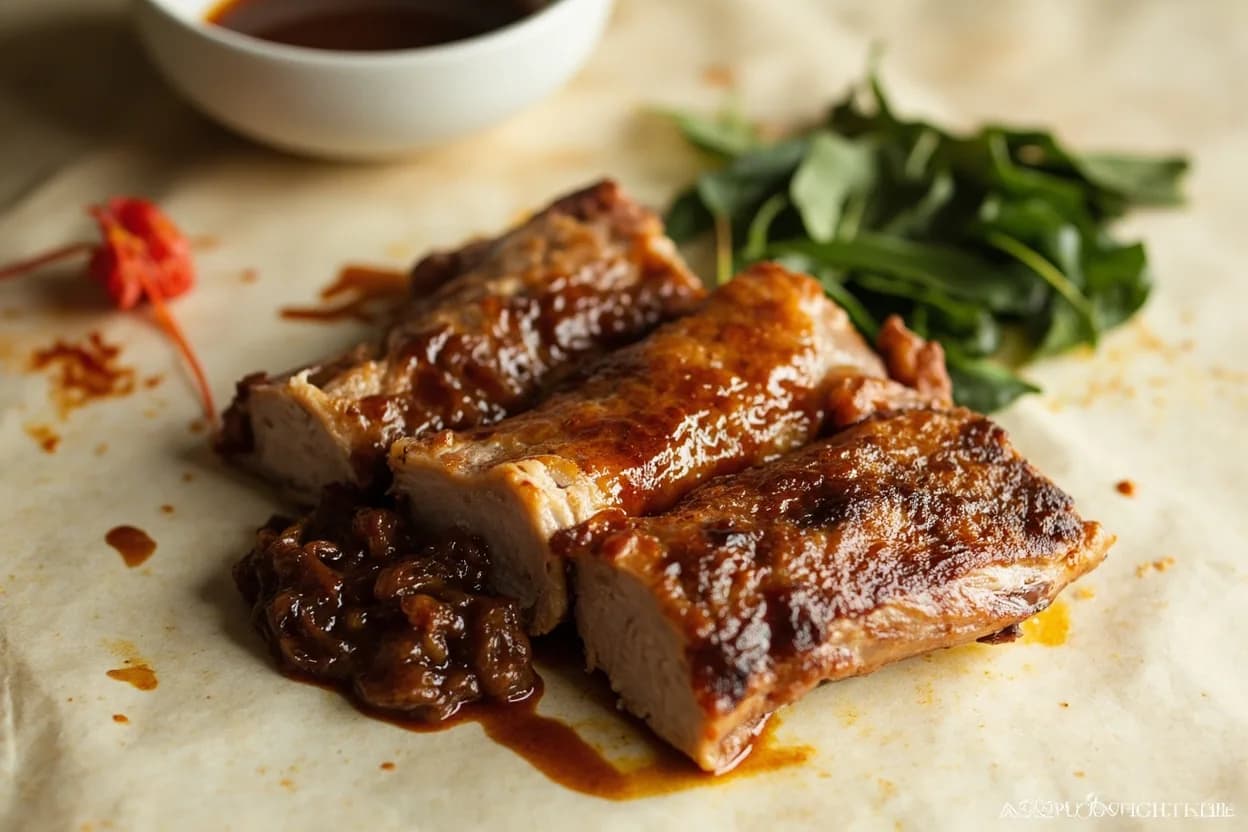
The paradigmatic ssam pairing: fatty, charred pork belly wrapped in perilla or lettuce with ssamjang. The paste's fermented sharpness cuts through the fat while its sweetness reinforces the caramelized meat crust.
- Bulgogi (grilled marinated beef)Korean
Ssamjang bridges the gap between bulgogi's soy-sesame-sweet marinade and the bitter green of the wrap leaf; its fermented depth adds complexity that sweet bulgogi alone lacks.
- Perilla leaves (kkaennip)Korean
Perilla's anise-mint-clove character is the essential green for ssam — its assertive herbal notes are one of the few greens strong enough to hold up against ssamjang's intensity.
- Butter lettuce / romaineKorean
The cool, watery crunch of lettuce provides textural contrast and a neutral backdrop that lets ssamjang and grilled meat flavors lead without competition.
- Steamed white riceKorean
A small amount of rice in the ssam wrap absorbs and dilutes the paste's intensity, creating a satisfying balance of starch, fat, and fermented umami in each bite.
- Garlic (chargrilled cloves)Korean
Whole garlic cloves charred directly on the grill alongside pork belly are a traditional ssam companion — the roasted sweetness pairs with and amplifies the raw garlic already in the paste.
- Grilled green peppers (Korean gochu)Korean
Mild Korean chili peppers char and blister on the grill; eating them with ssamjang and pork is a classic table ritual, adding fresh vegetal heat to the fat-rich bite.
Adventurous pairings
- Grilled eggplant
Fire-charred eggplant develops smoky, creamy flesh that absorbs ssamjang beautifully — a vegetarian ssam alternative that rivals grilled pork in satisfaction. Grill whole until collapsed, split and drizzle.
- Burgers (beef or mushroom)
Ssamjang as a burger condiment replaces ketchup and mustard in one stroke — its fermented umami acts like a concentrated condiment that pairs naturally with charred beef and brioche.
- Raw vegetables (crudités)
As a dipping paste for carrots, cucumber, and daikon, ssamjang functions like a powerfully savory hummus; the raw crunch resolves the paste's density.
- Fried tofu (dubu jorim base)
Thinning ssamjang with soy sauce and sesame oil creates an instant braising sauce for pan-fried tofu that needs no additional seasoning.
- Avocado toast
A thin smear of ssamjang under sliced avocado introduces fermented depth and heat that elevates the dish far beyond salt-and-chili-flake convention.
Tread carefully
- Delicate raw fish (sashimi)avoid
Ssamjang's dominant fermented character overwhelms the subtle sweetness and texture of raw fish; use a lighter soy-wasabi or citrus-ponzu approach instead.
- Cooked applications (as a cooking sauce)avoid
Heating ssamjang destroys the fresh garlic, sesame aroma, and volatile fermented notes it's known for; it's a raw condiment applied at the table, not a braising agent.
- Neutral dairy (cream, fresh mozzarella)avoid
The paste's pungency and fermentation acids clash with milk proteins, and the visual result is unappetizing; there's no culinary tradition of combining them.
How to use it
- Serve at room temperature — refrigerator-cold paste loses aroma and spreadability
- Use as a table condiment, never cooked into a dish; heat destroys its fresh garlic and sesame aromatics
- Adjust the doenjang:gochujang ratio to personal taste — more doenjang = earthier and more pungent; more gochujang = sweeter and spicier
- A drop of honey or a pinch of sugar softens the paste for guests who find the fermented funk too aggressive
- For the fullest ssam experience: a pinch of rice, a sliver of raw garlic, and a piece of grilled meat with ssamjang in one leaf
Appears in
Related flavours
The fermented soybean base component of ssamjang; earthier, pungent, and the primary source of umami
The chili-rice paste component; without it ssamjang would be doenjang; the sweetness and heat come from gochujang
- Sesame oil
Finishing oil that ties the paste together; its nuttiness is essential to the finished flavor
The preferred wrap green — herbal enough to be a genuine flavor partner, not just a vehicle
References
- 1.Korean: Simple Recipes for Home Cooks — Sohui Kim (Ten Speed Press, 2015)
- 2.My Korea — Hooni Kim (W. W. Norton, 2020)
- 3.The Korean Table — Taekyung Chung (Tuttle Publishing, 2008)
- 4.Koreaworld — Deuki Hong & Matt Rodbard (Crown, 2023)
Confidence: high
Notes
Making vs. buying
Commercial ssamjang (brands like Haechandle or Chungjungone) is widely available and perfectly acceptable. But making it fresh — 2 parts doenjang, 1 part gochujang, sesame oil, garlic, green onion, a pinch of sugar — takes under 5 minutes and produces a paste with noticeably brighter garlic and sesame notes, since these aromatics fade in a jar over time.
The ssam ritual
In Korean BBQ culture, ssam is as much ritual as eating. A leaf goes in the palm; rice and grilled meat are placed on top; a dab of ssamjang, perhaps a sliver of raw garlic or a piece of kimchi; then the leaf is folded and eaten whole in one or two bites. This single-bite unitization means ssamjang must season an entire miniature meal, which explains why it's so intensely flavored.