Herbs
Perilla (Kkaennip)
Also: kkaennip, Korean perilla, beefsteak plant, Perilla frutescens, 들깨잎, wild sesame leaf
Korea's bold, purple-edged leaf: a collision of anise, mint, and basil that wraps grilled meat and lights up raw salads.
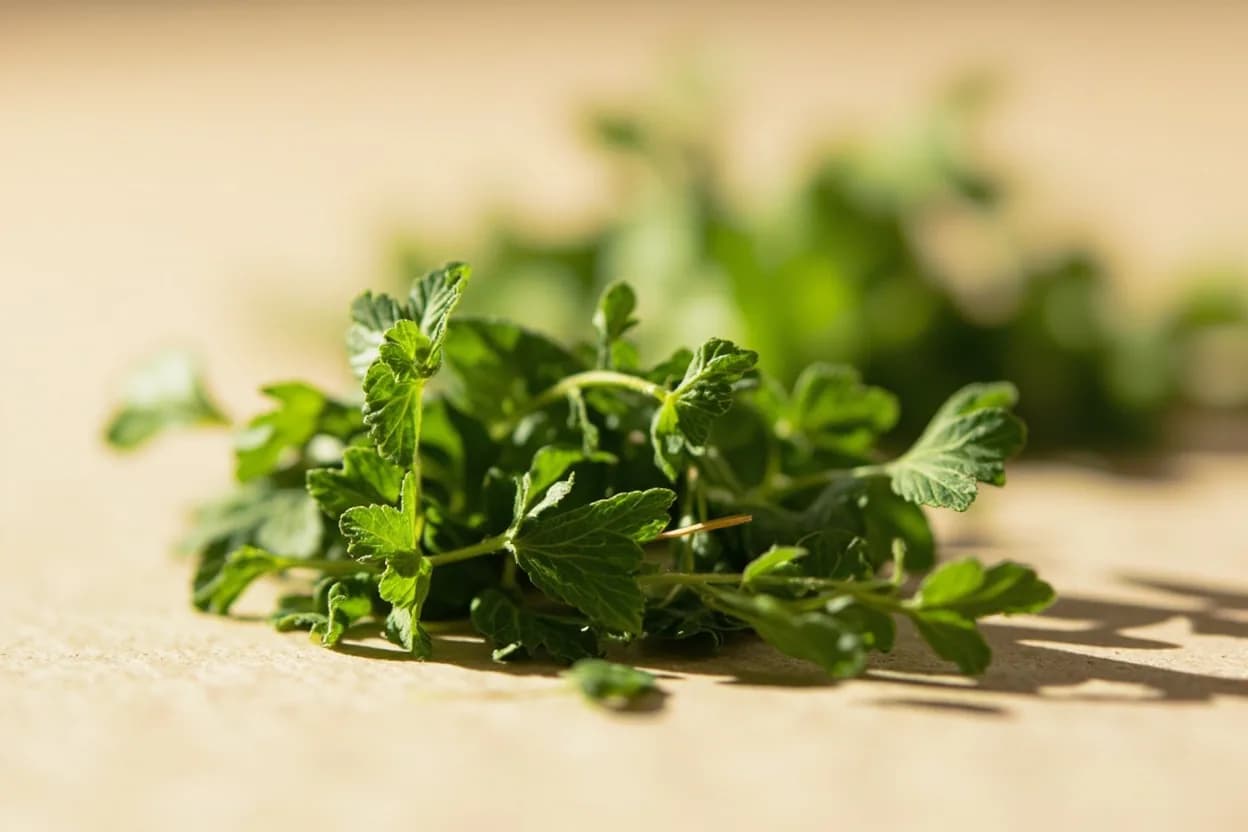
Kkaennip is the large, serrated leaf of the Korean perilla plant (Perilla frutescens var. frutescens), distinct from the smaller Japanese shiso (P. frutescens var. crispa) by its deeper anise intensity, thicker texture, and more pronounced peppery bite. The aroma combines fresh basil, spearmint, and star anise with an earthy, faintly grassy undertone. In Korean cuisine, kkaennip plays three roles simultaneously: ssam wrap leaf (encasing grilled meat with condiments), banchan ingredient (marinated in soy-sesame dressings), and raw herb scattered over bibimbap and cold noodles. Its size — palms can be 5–8 cm across — and structural integrity make it the most versatile edible wrap in Korean cooking.
In photos
Flavour profile
Classic pairings
- Samgyeopsal (pork belly)Korean
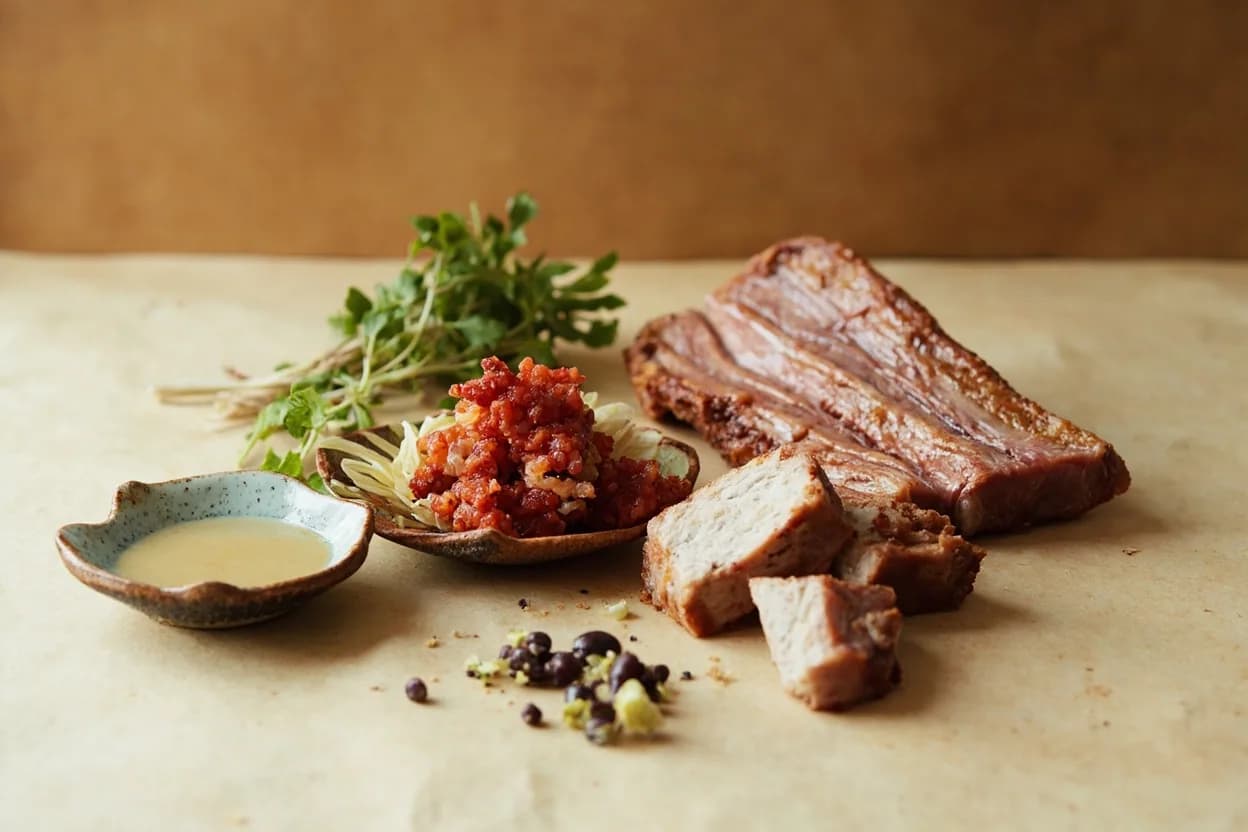
The canonical ssam pairing: grilled pork belly folded in kkaennip with doenjang, garlic, and green onion. The leaf's anise-mint cuts pork fat brilliantly.
- Galbi (beef short rib)Korean
Kkaennip's herbal punch stands up to soy-marinated char-grilled beef; the leaf's size allows full wrapping with rice and fermented condiments.
- Doenjang (fermented soybean paste)Korean
The pungent, earthy depth of doenjang matches kkaennip's assertive anise; together they anchor the classic ssam condiment plate.
- Sesame oil and soy sauceKorean
Marinated kkaennip banchan — leaves layered with soy, sesame oil, garlic, and gochugaru — is one of Korea's most beloved preserved side dishes.
- Raw garlicKorean
Eaten together in ssam, raw garlic and kkaennip are flavor allies — both pungent and sulfurous, the herb's anise note softening garlic's sharpness.
- Naengmyeon (cold buckwheat noodles)Korean
Julienned kkaennip scattered over cold noodles adds herbal complexity and fresh aroma to the icy, vinegared broth.
- BibimbapKorean
Whole leaves or chiffonade folded into the mixed rice bowl provide green herbal contrast to the gochujang heat and egg richness.
Adventurous pairings
- Lamb chops
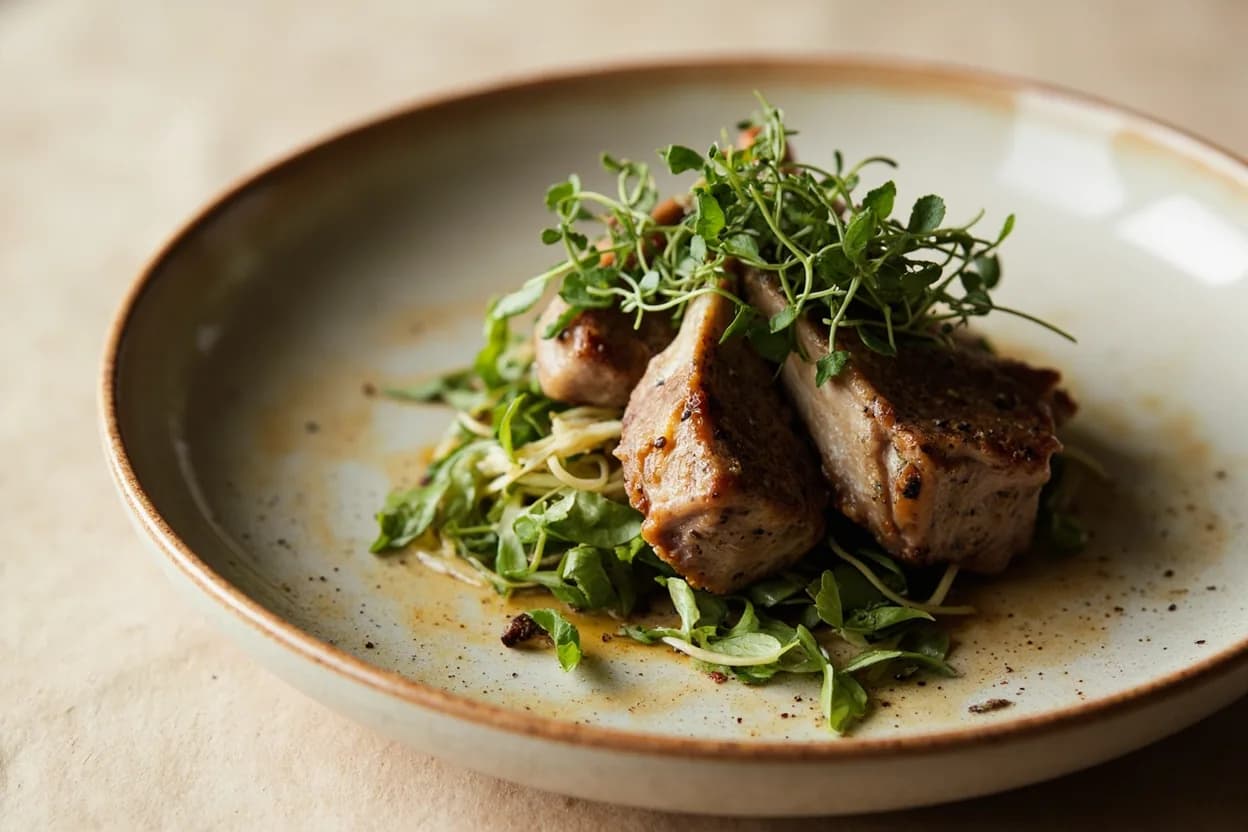
Kkaennip's anise register resonates with lamb's gaminess the way rosemary does — use as a wrap herb or muddle into a chimichurri-style sauce with rice vinegar and sesame oil.
Large kkaennip leaves cradling torn burrata, drizzled with perilla oil and flaky salt, is a stunning summer appetizer — the anise-dairy contrast is more nuanced than basil.
- Avocado
Kkaennip replaces nori as the wrapper in a Korean-inflected temaki-style roll with avocado and seasoned rice; the fat avocado amplifies the leaf's fragrant oils.
- Dark chocolate (70%+)
Perilla's anise compound (estragole) shares flavor chemistry with the star-anise notes found in dark chocolate; kkaennip-infused ganache or a leaf laid on a truffle is genuinely surprising.
- Watermelon
Kkaennip chiffonade over watermelon with gochugaru, lime, and flaky salt — a Korean riff on the Thai papaya-herb motif that showcases the leaf's cooling mint register.
Tread carefully
- Cream-based French saucesavoid
Kkaennip's assertive anise overwhelms the subtlety of beurre blanc or velouté without adding elegance; shiso is a gentler substitute in French-Japanese contexts.
- Lemon or lime (large quantities)avoid
High citric acid flattens kkaennip's aromatic complexity into a one-dimensional bitterness; use rice vinegar instead for acidity.
- Prolonged cookingavoid
Kkaennip wilts and turns bitter when cooked more than 30 seconds; always add raw, as a garnish, or very briefly at the end of a braise.
How to use it
- Stack leaves and roll tightly into a cylinder before chiffonading for even, thin ribbons
- Make perilla oil: blend raw leaves with neutral oil, strain through muslin for vivid green finishing oil
- Layer whole leaves with soy, sesame oil, sugar, garlic, and gochugaru in a jar for marinated banchan (ready in 24 hours)
- Use large whole leaves as ssam wrappers — place rice, meat, and condiments in the center, fold and eat in one bite
- Bruise leaves by clapping between palms to release volatile oils before scattering over noodles or salads
Appears in
Related flavours
- Shiso
Japanese botanical sibling — smaller, with lighter anise and more mint; milder and more decorative where kkaennip is assertive and structural
- Gochugaru (Korean red pepper flakes)
The heat partner in marinated kkaennip banchan; the fruity, smoky chili balances rather than fights the anise
- Sesame oil
Nutty sesame oil and kkaennip are inseparable in Korean cuisine; the fat carries and amplifies the leaf's aromatic compounds
Shares the estragole compound responsible for anise flavor; can substitute in non-Korean applications, though kkaennip is thicker and more vegetal
References
- 1.The Korean Cookbook — Junghyun Park & Jungyoon Choi (Phaidon, 2023)
- 2.My Korea — Hooni Kim (W.W. Norton, 2020)
- 3.Korean Home Cooking — Sohui Kim (Abrams, 2018)
- 4.The Flavor Bible — Karen Page & Andrew Dornenburg (Little Brown, 2008)
Confidence: high
Notes
Kkaennip vs. shiso: a critical distinction
Korean kkaennip (P. frutescens var. frutescens) and Japanese shiso (P. frutescens var. crispa) are distinct cultivars. Kkaennip is larger (often 8–10 cm), darker green with a purple underside, and significantly more pungent — its anise and mint character is approximately twice as intense. Japanese recipes and Korean recipes are not interchangeable; substituting shiso for kkaennip in a ssam makes the wrap flavor disappear. In Western markets they are sometimes mislabeled as each other.
Perilla seed oil (들기름, deulgireum)
The seeds of the kkaennip plant are cold-pressed into perilla oil (deulgireum), a rich, nutty finishing oil with high omega-3 content used in Korean namul salads. It is chemically and flavourally distinct from Japanese shiso oil. When a recipe calls for perilla oil, it means this Korean seed oil — not an oil infused with the leaves.