Fermented Vegetables & Pickles
Pickled Ginger (Gari)
Also: gari, sushi ginger, amazu shoga, vinegared ginger
Japan's palate-cleanser par excellence — petal-thin slices of young ginger cured in sweetened rice vinegar until they blush pink and bite clean.
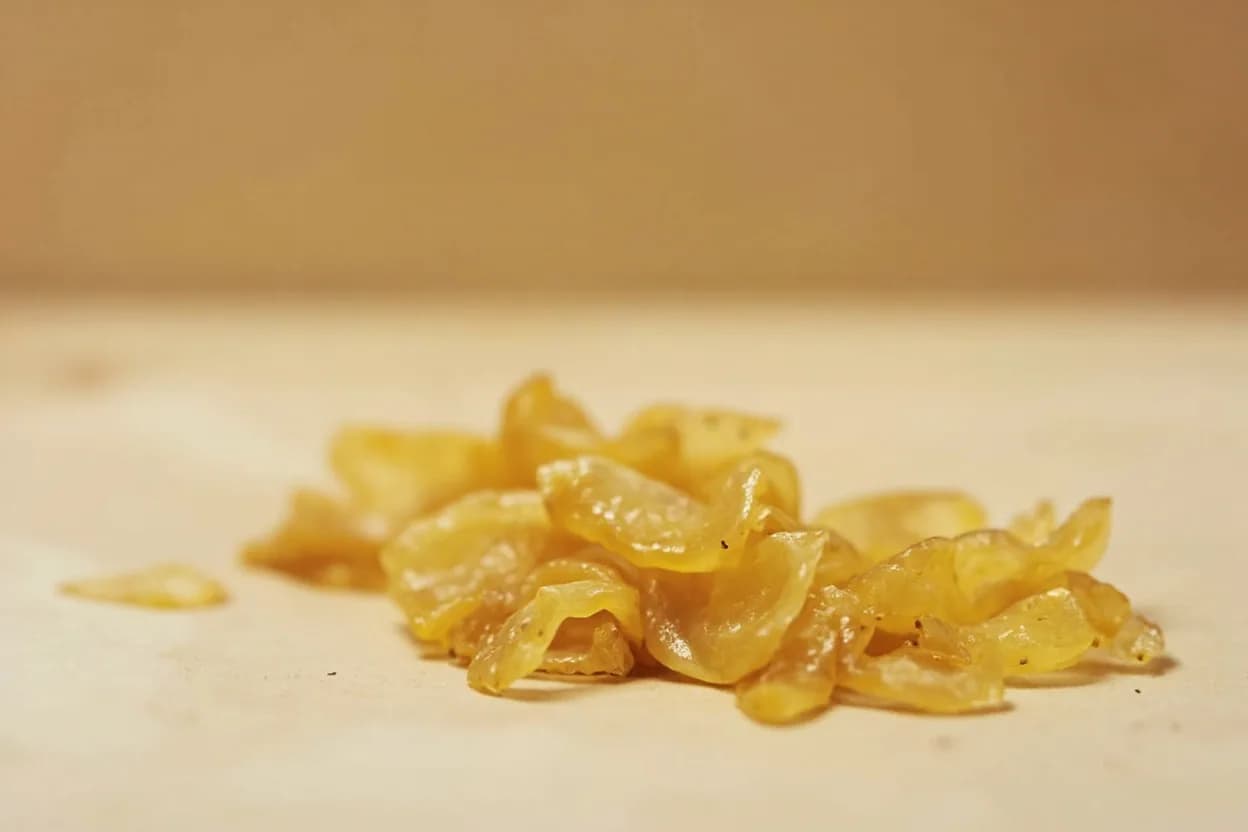
Gari is young ginger (shin-shoga) sliced paper-thin and pickled in a brine of rice vinegar and sugar, sometimes with a touch of salt. The young rhizome lacks the fibrous heat of mature ginger; pickling converts its sharper volatiles into a mellow, tingly brightness. The signature pale-pink colour develops naturally from the slight anthocyanin reaction between the fresh ginger and the acid — commercial versions often use beet or red shiso to deepen it. The result is crunchy, sweet-tart, and gently fiery, with a clean finish that wipes the palate between bites.
In photos
Flavour profile
Classic pairings
- Nigiri and maki sushiJapanese
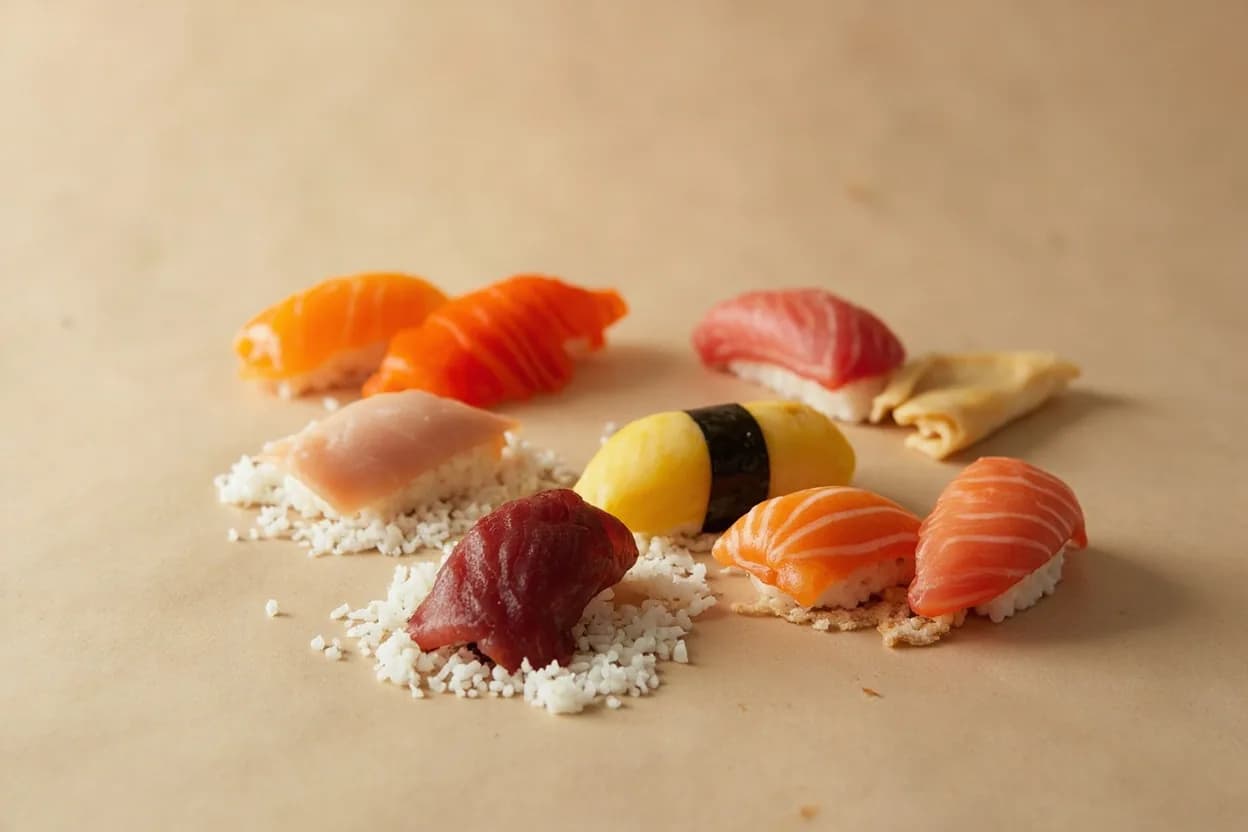
The canonical use: a sliver of gari between pieces resets the palate so each fish reads distinctly.
- SashimiJapanese
Its acidity cuts the rich fat of salmon or tuna and tempers any faint fishiness.
- Steamed white riceJapanese
A few strips alongside plain rice add brightness and encourage appetite — standard in Japanese home cooking.
- TempuraJapanese
Gari's sweet tartness contrasts fried batter's richness, functioning like the lemon wedge in Western frying traditions.
- Grilled oily fish (saba, aji)Japanese
Vinegar in the pickle mirrors the shime treatment used on mackerel; together they lift heavy, oceanic flavours.
- Pork gyozaJapanese
The bright acidity cuts pork fat while ginger's heat echoes the filling's own ginger seasoning.
Adventurous pairings
Ginger's spice and the vinegar's brightness contrast chocolate's bitter depth; use gari finely minced into ganache or as a garnish.
- Avocado
Gari's acid and heat cut through avocado's buttery fat — compelling in fusion rolls or a deconstructed tartare.
- Gin cocktails
Muddled gari in a gimlet or martini adds layered spice and a Japanese pickling note that botanical gins can't replicate.
- Burrata or fresh mozzarella
Sliced over mild, creamy cheese with a drizzle of good olive oil — the acid does what balsamic does but with ginger heat.
- Watermelon
A summer pairing: gari's sharpness intensifies watermelon's sweetness; finish with flake salt and shiso for a full Japanese-summer dessert plate.
Tread carefully
- Delicate white fish with subtle flavor (e.g., flounder, hirame)avoid
Eaten simultaneously rather than used as a palate-cleanser, gari's sharpness overwhelms the fish's nuance — taste the fish first.
- Dishes dressed with sesame oilavoid
Sesame's toasty, nutty depth can clash with gari's vinegar brightness, muddying both flavours.
- Strong aged vinegars (sherry, balsamic)avoid
Acidic overload; the pickle is already vinegar-forward — stacking more acid without a fat or starchy buffer makes the dish one-dimensional.
How to use it
- Use as a palate cleanser between bites — consume alone, not simultaneously with sushi
- Mince finely and fold into rice vinegar dressings for instant ginger-pickle character
- Julienne and toss through noodle salads to add crunch and brightness without heating
- Blend with rice vinegar and a little sugar to make a quick gari ponzu-style dipping sauce
- Layer under seared fish in the last minute of cooking to warm without losing pickle brightness
- Dehydrate slices into crisp chips for garnish on cream-based soups or carpaccio
Appears in
Related flavours
- Fresh Ginger
Same rhizome; fresh ginger is hotter and more pungent — gari is the mellow, acid-tamed version
Traditional sushi tablemates; wasabi brings sinus heat while gari cleanses — they rarely function simultaneously
The pickling medium; its mild acidity is the defining contrast agent in gari's flavour
Often used to colour gari and appears alongside it in Japanese pickles; similar palate-refreshing role
References
- 1.Japanese Farm Food — Nancy Singleton Hachisu
- 2.The Japanese Kitchen — Hiroko Shimbo
- 3.On Food and Cooking — Harold McGee
- 4.Sushi: Taste and Technique — Kimiko Barber & Hiroki Takemura
Confidence: high
Notes
Why gari turns pink
Genuine young ginger pickled in rice vinegar without added colouring turns a very pale blush naturally — the acid reacts with trace anthocyanins in the rhizome. The vivid magenta gari found in budget supermarkets and cheaper restaurants is artificially coloured with beet extract or red shiso. Both taste essentially the same; the pale version signals younger, less fibrous ginger.
Palate cleanser vs. condiment
A persistent misunderstanding in non-Japanese dining is piling gari onto sushi and eating both together. In the kaiseki tradition and in good sushi-ya, gari is eaten alone between pieces — never on top of the fish. Its job is enzymatic and sensory reset, not added seasoning.