Nuts & Seeds
Pepitas (Pumpkin Seeds)
Also: pepitas, pumpkin seeds, semillas de calabaza, Cucurbita pepo seeds
Toasted pepitas bring a nutty, grassy richness and satisfying crunch that anchors Mexican moles, salads, and soups.
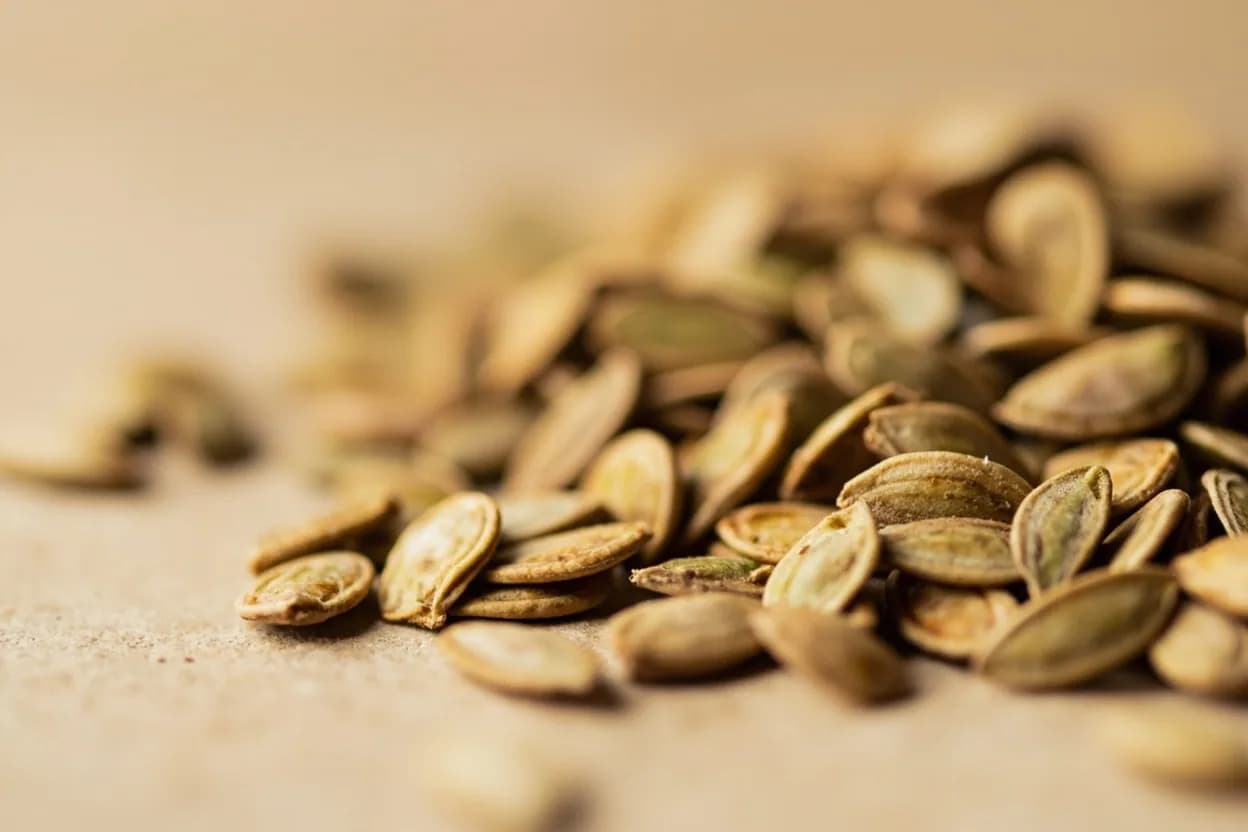
Pepitas are the hull-less inner seeds of certain Cucurbita pumpkin varieties, primarily Styrian or naked-seed pumpkins grown specifically for their edible, dark-green kernels. (Regular pumpkin seeds have a white fibrous hull; pepitas are the seed without it.) Raw pepitas are mild, slightly grassy, and rich; toasting in a dry pan transforms them — they puff and darken, developing a deep, popcorn-like nuttiness with pleasant bitterness. They are nutritionally dense in zinc, magnesium, and plant protein. In Mexican and Central American cuisine they are ground into moles, blended into pipián sauces, and served whole as garnishes, snacks, and toppings.
In photos
Flavour profile
Classic pairings
- TomatillosMexican
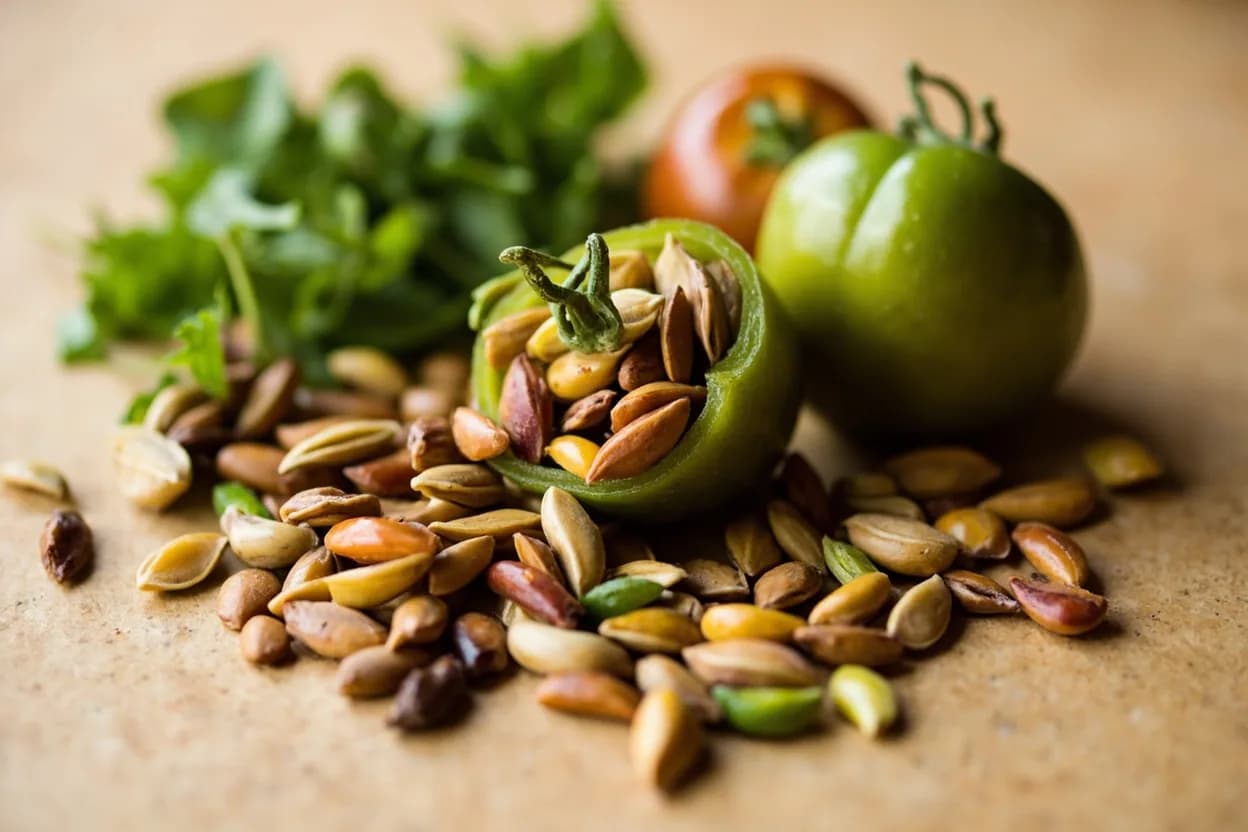
Ground pepitas thicken and enrich tomatillo-based pipián verde — the seed's fat absorbs tomatillo's acidity and softens it into a voluptuous sauce.
- Chili (mulato, pasilla, ancho)Mexican / Oaxacan
In mole negro and pipián rojo, toasted pepitas are ground alongside dried chilies; the nut's richness tempers chili heat and adds body to the sauce.
- CilantroMexican
Cilantro's bright, herbaceous punch lifts and balances pepitas' oily richness in sauces, salads, and garnishes.
- LimeMexican
A squeeze of lime over toasted pepitas — as a snack or salad topping — cuts through their fat and brightens their grassiness; a ubiquitous Mexican street combination.
- Roasted squash (butternut, acorn)American / Mexican
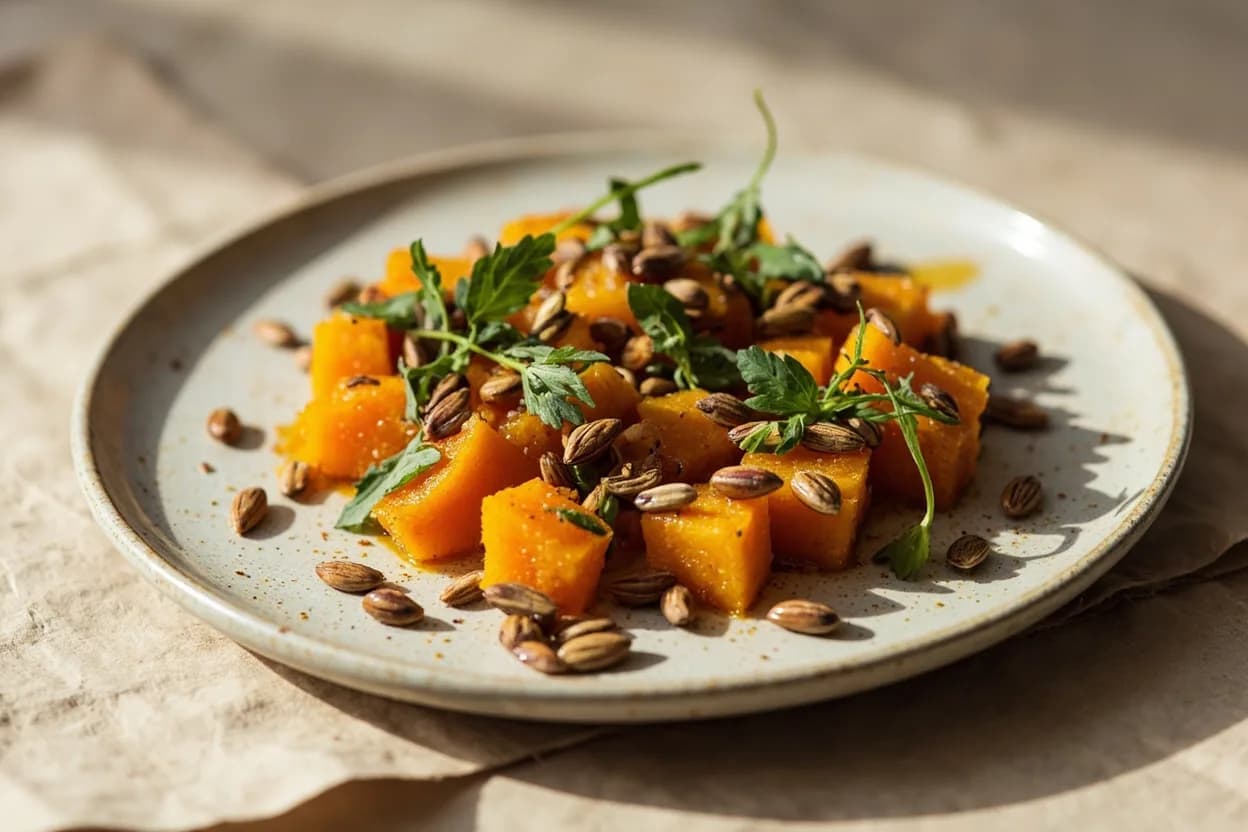
Pepitas mirror and amplify the natural flavor of squash; scattered over roasted squash soup or puree they echo the vegetable's sweet nuttiness.
- Pomegranate molassesLevantine
Toasted pepitas with pomegranate molasses, a classic combination in Levantine and Persian salads, plays the nut's richness against sharp, fruity acidity.
- EpazoteMexican / Oaxacan
Epazote's pungent, medicinal herbal note is a traditional companion in pepita-based mole sauces, tempering the nut's richness with a wild herbal edge.
Adventurous pairings
- Miso and maple syrup
Pepitas tossed with white miso, maple syrup, and a little cayenne and roasted until lacquered create a deeply umami-sweet-spicy snack that transcends their usual Mexican context.
Toasted pepitas scattered over dark chocolate bark — a Mexican culinary logic that pairs two products of the same pre-Columbian foodways; the crunch and slight bitterness enhance cacao's depth.
Blended together into a dip or dressing, pepita paste and tahini create a double-sesame effect with added greenness; works beautifully over grain bowls and roasted vegetables.
- Smoked paprika and honey
Pepitas glazed with smoked paprika and honey and roasted until crispy offer a Spanish-influenced take — smoky, sweet, and crunchier than almonds in the same role.
Tread carefully
- Very delicate raw salads without textural counterbalanceavoid
Raw (untoasted) pepitas can be chewy and grassy in a way that overwhelms delicate leaves; always toast before using as a salad topping.
- High-heat stir-frying as the primary fatavoid
Pepita oil has a low smoke point; using pepitas directly in high-heat wok cooking will scorch them and produce bitterness. Add as a finishing element only.
How to use it
- Toast in a dry cast-iron pan over medium heat, shaking constantly, until puffed and golden — 3 to 5 minutes
- Grind raw or lightly toasted in a blender to create pipián or mole base
- Salt, spice, and roast on a sheet pan at 160°C for 15 minutes for snacking or garnishing
- Press into cold-pressed pumpkin seed oil (Styrian tradition) for finishing salads
- Blend into a smooth pepita cream (crema de pepita) as an alternative to tahini or nut butters
Appears in
Related flavours
- Sunflower seeds
Sunflower seeds share pepitas' role as a crunchy, nutty salad topping and can substitute in most non-sauce applications.
- Pine nuts
Pine nuts occupy a similar 'rich, mild, oily nut' role in European cooking that pepitas play in Mexican cooking; both ground into sauces or scattered as garnish.
- Sesame seeds
Like sesame, pepitas serve as both a whole topping and a ground paste base; the two appear together in some Oaxacan mole recipes.
References
- 1.Oaxaca: Home Cooking from the Heart of Mexico — Bricia Lopez & Javier Cabral
- 2.Mexico: The Cookbook — Margarita Carrillo Arronte (Phaidon)
- 3.The Flavor Bible — Karen Page & Andrew Dornenburg (Little, Brown & Company)
- 4.Truly Mexican — Roberto Santibañez (Wiley)
Confidence: high
Notes
Pipián vs. Mole
Pipián is the family of Mexican sauces thickened primarily with ground seeds — usually pepitas (pipián verde) or a mix of sesame and pepitas (pipián rojo). Mole is broader, encompassing many thickeners including nuts, seeds, dried chili, chocolate, and even bread or tortilla. Pipián is effectively the seed-forward subcategory of mole; most pipianes are technically moles, but not all moles are pipianes.
Styrian Pumpkin Seed Oil
Austria's Styria region produces a protected cold-pressed oil (Steirisches Kürbiskernöl g.g.A.) from hull-less pumpkin seeds that is nearly black in the bottle and deep ruby-green in a thin layer. Its flavor is intensely nutty and toasty — used only as a finishing oil drizzled over Kürbiscremesuppe (pumpkin soup) or Styrian potato salad. It has no substitute.