Cheeses
Pecorino Romano
Also: Romano, Pecorino, cacio
The sharp, salty sheep's milk engine behind Rome's greatest pasta dishes.
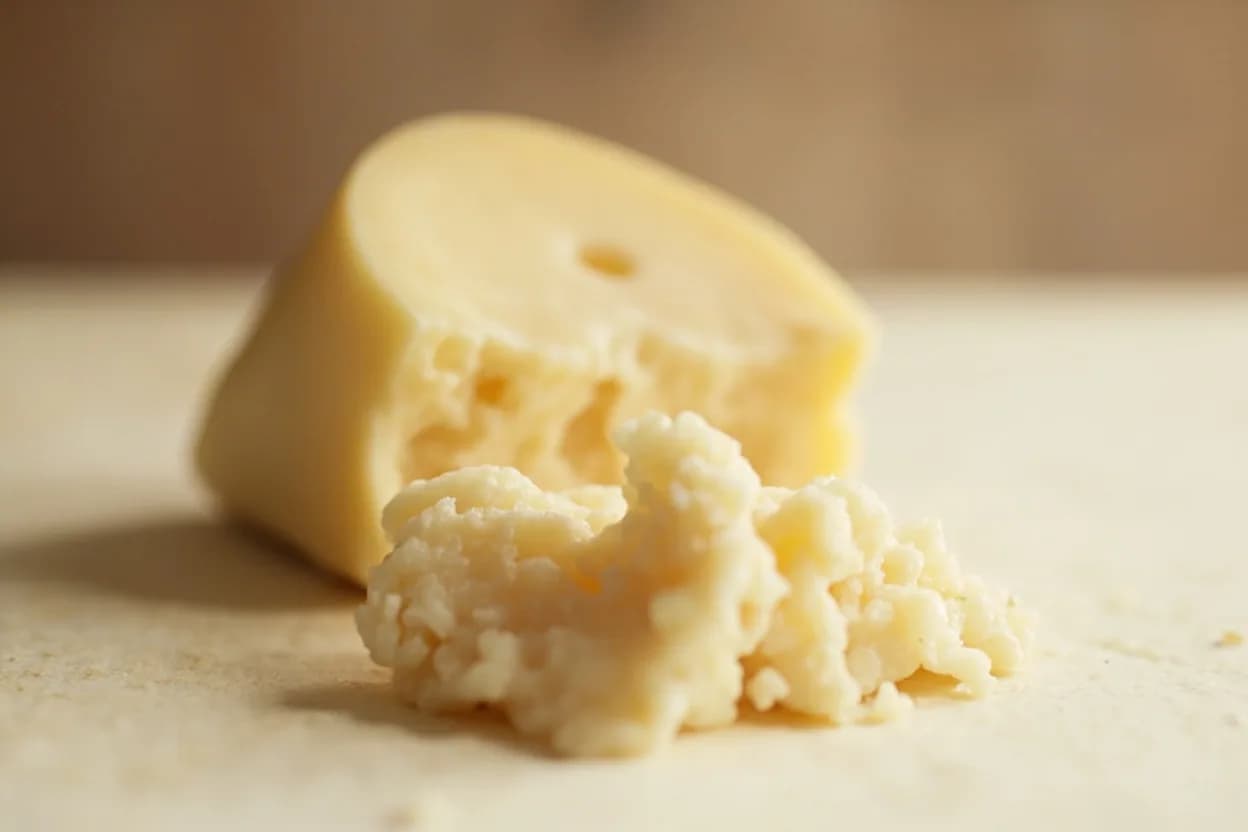
Pecorino Romano is a hard, aged sheep's milk cheese (pecora = sheep) produced under PDO regulations in Lazio, Sardinia, and Grosseto. Aged a minimum of 8 months for grating, it delivers an aggressive saltiness, a pronounced lanolin-forward tang, and a dry, granular paste that dissolves into fat and starch with remarkable efficiency. Its flavour is markedly sharper and more assertive than Parmigiano-Reggiano — funkier, saltier, and less sweet.
In photos
Flavour profile
Classic pairings
- Black pepperRoman
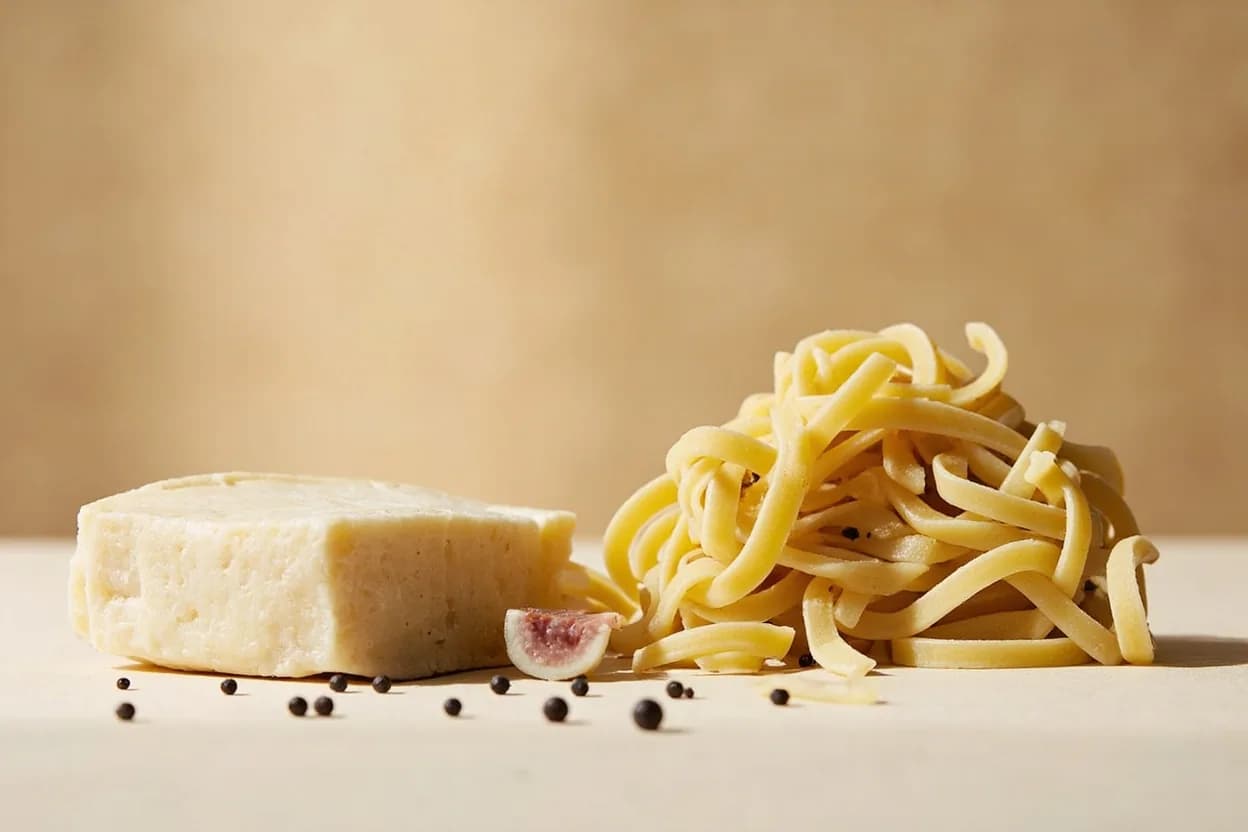
The foundational pairing: coarsely cracked pepper's volatile oils cut through Pecorino's fat while its heat amplifies the cheese's salinity. The entire point of cacio e pepe.
- GuancialeRoman
Cured pork cheek's rendered fat carries Pecorino's salt and tang into every strand of pasta; the proteins bind the emulsion in carbonara and amatriciana.
- Pasta (tonnarelli, spaghetti, rigatoni)Roman
The starch water from short, thick pastas is the emulsifier that turns Pecorino from grainy clumps into a glossy, coating sauce.
- Fava beansRoman
Vignarola and the classic Roman spring antipasto of raw fava beans eaten with Pecorino: the beans' vegetal sweetness is a natural foil to the cheese's salt.
- Canned San Marzano tomatoesRoman
In amatriciana, Pecorino grates over a sweet-acidic tomato sauce; the salt rounds the tomato's edge while the funky sheep note adds body.
- Honey (chestnut or acacia)Sardinian
Sardinian tradition pairs wedges of aged Pecorino with local honey; sweetness neutralises the salt and lets the complex milk solids bloom.
- EggsRoman
Egg yolks and Pecorino Romano are the two emulsifiers in carbonara; the lecithin in yolk binds the grated cheese into a velvety coating sauce.
Adventurous pairings
- Dark chocolate (70%+)
Salt and bitterness are natural amplifiers; a chip of aged Pecorino alongside a square of dark chocolate produces a savoury-sweet contrast similar to salted caramel but more complex.
- Mezcal
The smoke and agave vegetal note of mezcal rhymes with Pecorino's barnyard funk; the alcohol cuts the fat and the minerality bridges to the cheese's lanolin.
- White anchovy (boquerones)
Double-salt umami — both ingredients are glutamate-rich; together they create an intense savoury platform for flatbreads or bruschetta, balanced by a drizzle of good olive oil.
- Quince paste (membrillo)
The Spanish tradition of quince with cured sheep's milk cheese translates perfectly to Pecorino Romano — tart pectin sweetness against the salty, funky paste.
The fermented citrus rind shares Pecorino's salt-forward, funky profile; together in a pasta or grain dish they layer salinity in two different registers.
Tread carefully
- Delicate white fish (sole, turbot)avoid
Pecorino's aggressive salt and barnyard character overwhelms the subtle sweetness of fine white fish; use a milder grating cheese or none at all.
- Cream-based saucesavoid
The cheese's high moisture-to-fat ratio and sharp acidity can cause cream sauces to break and turn grainy; Parmigiano or Gruyère behave better in cream.
- Sweet dessert winesavoid
Very sweet wines amplify the barnyard funk to an unpleasant degree; dry, saline wines (Vermentino, Frascati) are the right match.
How to use it
- Grate finely on a Microplane directly over hot pasta — never pre-grate and leave out, as it dries and clumps
- Temper with pasta water off the heat before incorporating to avoid breaking the emulsion
- Mix with Parmigiano-Reggiano in a 60/40 ratio to soften saltiness in longer-baked dishes
- Serve wedges at room temperature to allow the lanolin aromas to open fully
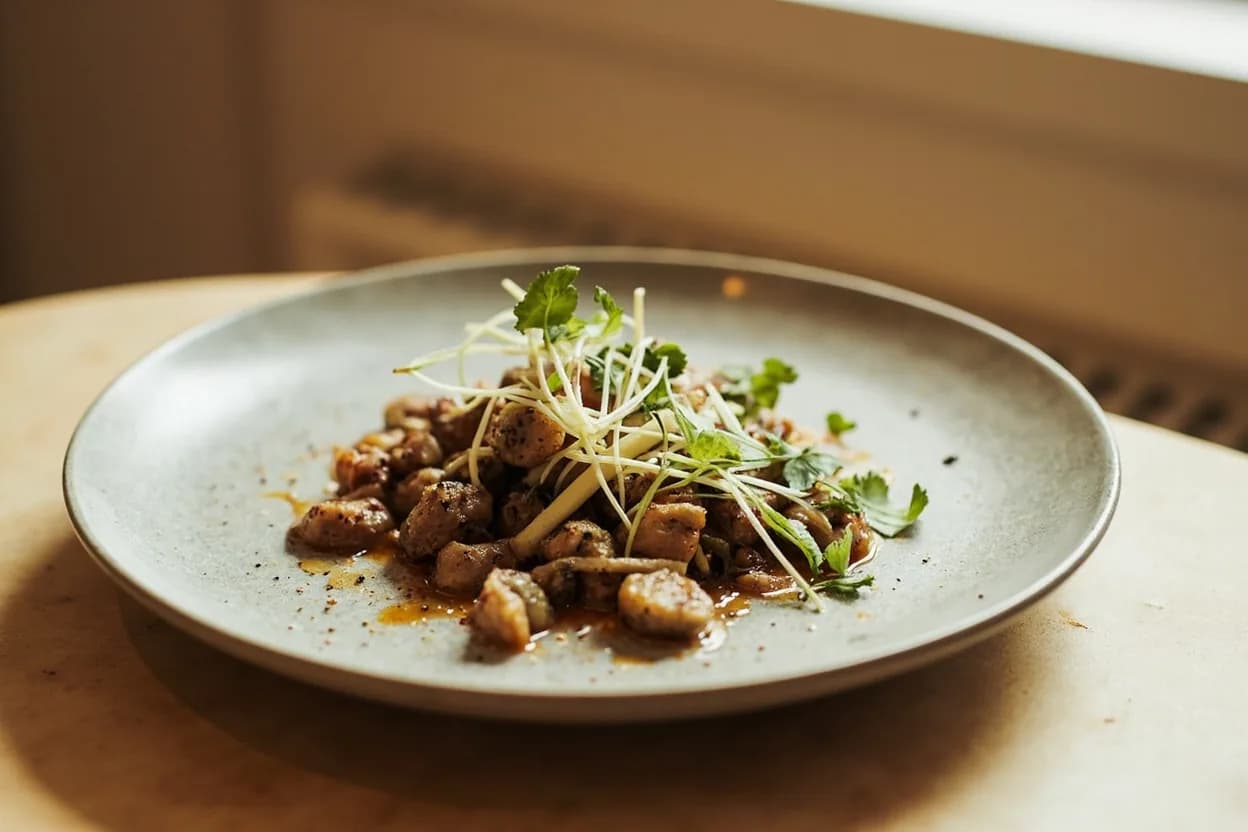
- Shave thinly with a peeler over salads and raw vegetables for a savoury finish without gumminess
Appears in
Related flavours
The sweeter, more mellow cow's milk counterpart; often blended with Pecorino to dial back sharpness
Another aged PDO sheep's milk cheese; shares lanolin notes but is milder and butterier
A brined sheep's milk cousin — shares saltiness and tang but is wet, crumbly, and used very differently
References
- 1.Marcella Hazan — Essentials of Classic Italian Cooking
- 2.Rachel Roddy — Two Kitchens: Family Recipes from Sicily and Rome
- 3.Consorzio per la Tutela del Formaggio Pecorino Romano — PDO Specification
- 4.Harold McGee — On Food and Cooking
Confidence: high
Notes
Salt before you season
Pecorino Romano is significantly saltier than Parmigiano-Reggiano — it contains up to 6–7 g of salt per 100 g versus about 1.4 g in Parmigiano. In recipes that call for both, hold back on additional salt until you taste the finished dish.
Sardinian versus Lazio production
Although 'Romano' evokes Rome, the vast majority of Pecorino Romano is produced in Sardinia today. Lazio and Grosseto producers tend to be smaller and sometimes saltier; look for the PDO wheel with the sheep's head stamp to confirm authenticity.