Cheeses
Feta
Also: feta PDO, Greek feta, white brine cheese
A crumbly, salty, tangy brine-aged cheese whose assertive salinity and acid backbone anchor Mediterranean salads, pastries, and roasted vegetables.
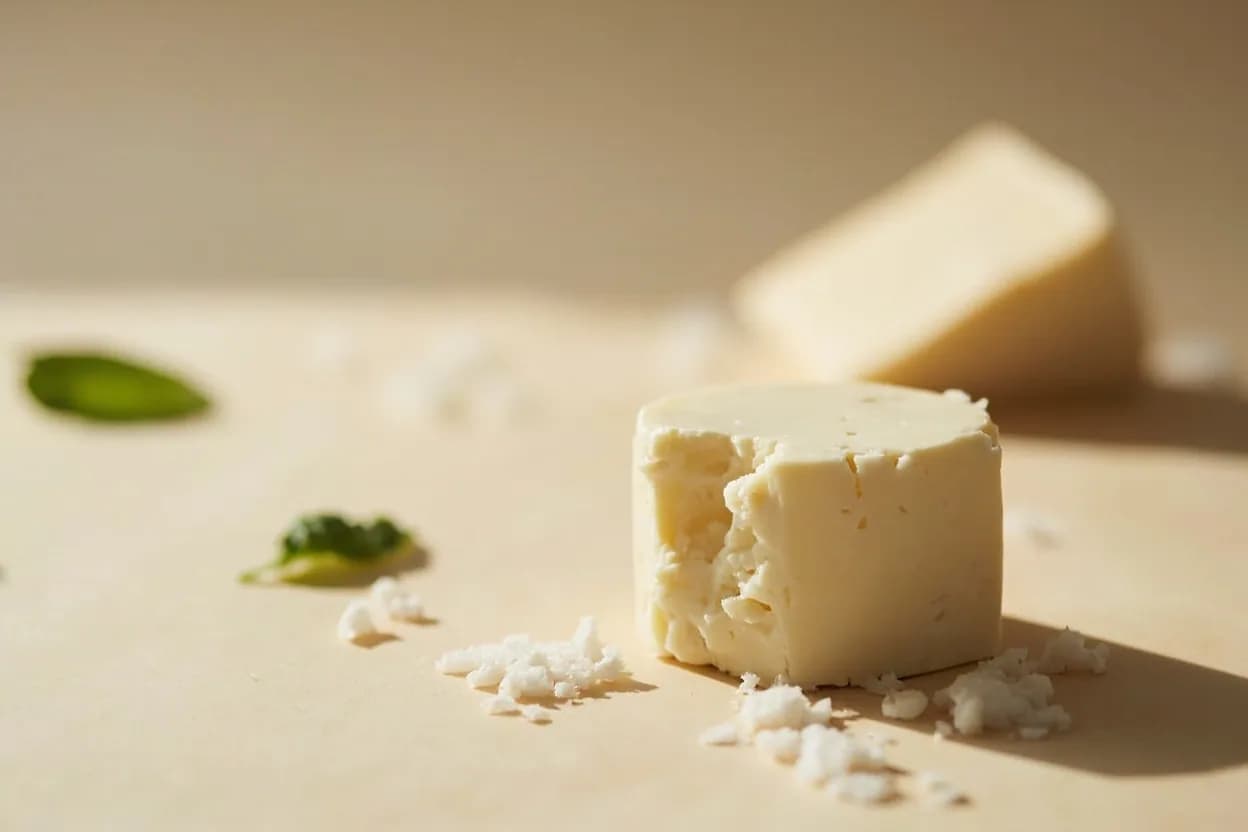
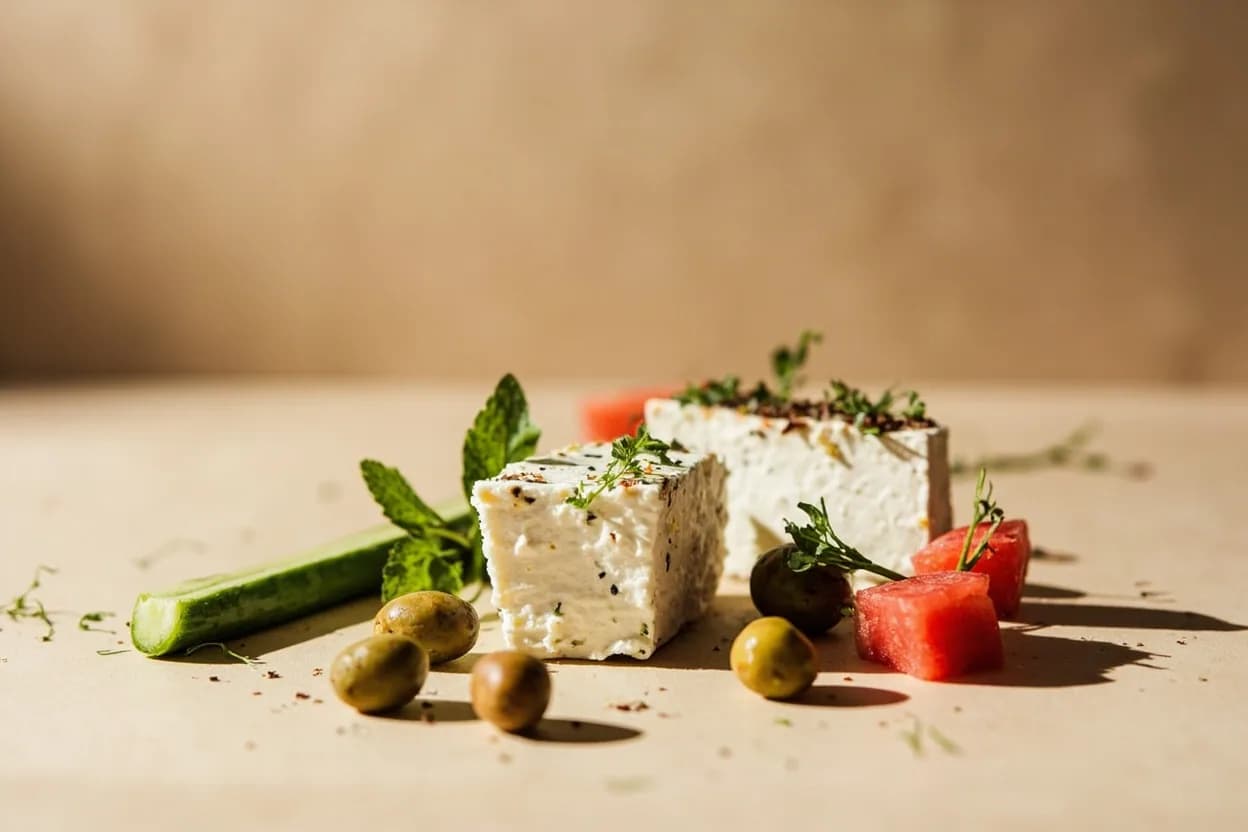
Feta is a Protected Designation of Origin (PDO) brine-ripened cheese produced exclusively in specific regions of Greece from sheep's milk (or a blend with up to 30% goat's milk). It is set with rennet, cut, pressed, dry-salted, and then brined, which produces a firm-but-crumbly texture, stark white colour, and a flavour profile of sharp lactic tang, pronounced salt, and a characteristic sheepiness — a grassy, lanolin note that distinguishes it from other white brined cheeses.
In photos
Flavour profile
Classic pairings
- CucumberGreek
The water content and mild vegetal freshness of cucumber dilutes and resets feta's salt between bites; together they define the core of a Greek village salad.
- Kalamata olivesGreek
Fruity, briny olives reinforce the cheese's own brine while adding polyphenol bitterness and fat to round out the sharp edges; the combination is ancient and canonical.
- WatermelonGreek / Eastern Mediterranean
High water content and pure sucrose sweetness are the ideal counterweight to feta's salinity; a Hellenic summer pairing that also appears across the eastern Mediterranean.
- Phyllo pastry (spanakopita, tiropita)Greek
The butter-crisped, papery layers provide textural contrast; feta's salt and tang season the pastry from within so the finished pie needs nothing more.
- Roasted red peppersGreek / Mediterranean
Sweetness from Maillard-caramelised peppers balances the acidity in feta; shared Mediterranean origin makes this combination feel instinctively right.
- Oregano and dried thymeGreek
Bitter aromatic herbs have a natural affinity with sheep's-milk cheese — they share terpenoid compounds (carvacrol, thymol) and amplify the cheese's herbal undertones.
- TomatoesGreek
Acidity in tomatoes harmonises with feta's own tang while glutamates amplify savoury depth; the pairing is a structural pillar of the Greek salad.
Adventurous pairings
- Honey and walnuts
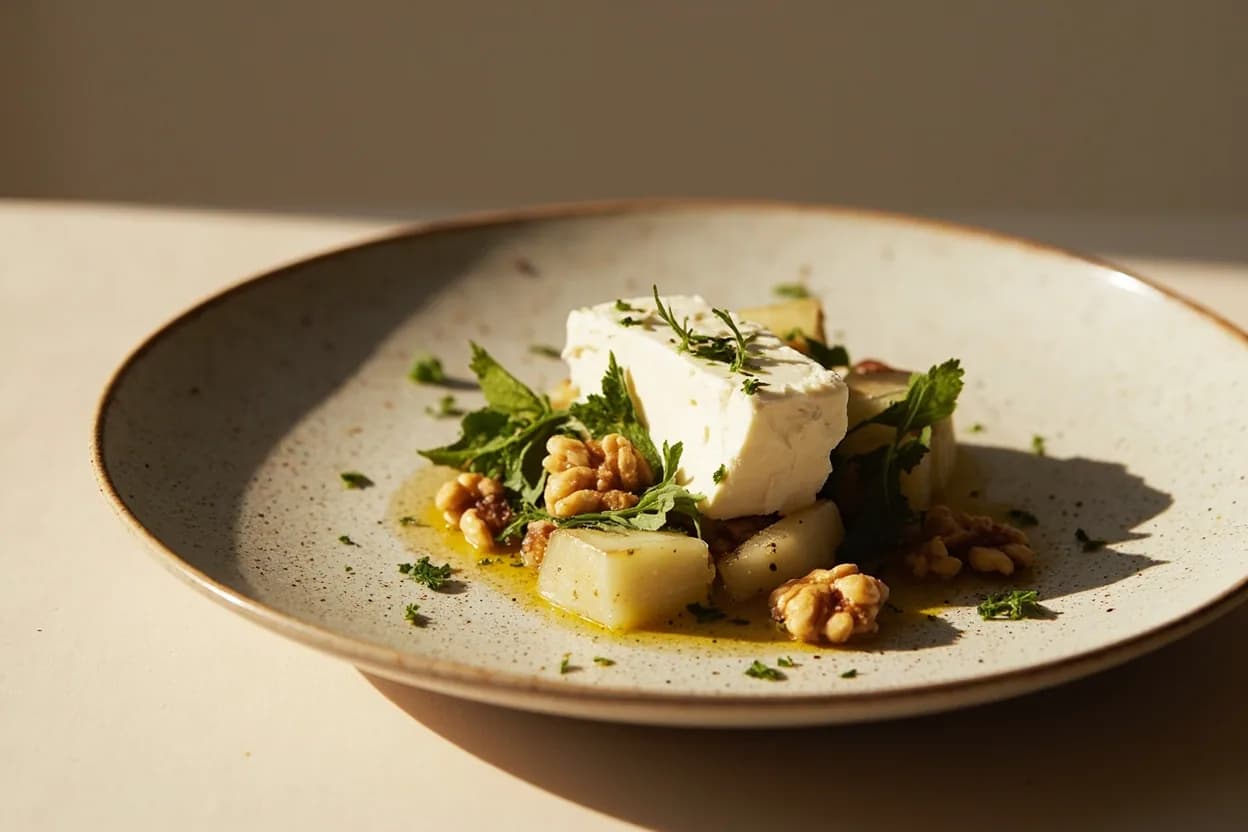
The sweet-salt binary in honey-over-feta is one of the oldest Greek flavour contrasts; walnuts add tannin and bitterness that prevent the plate from reading as dessert.
- Strawberries
Ripe strawberries have enough acidity and floral-ester aroma to match feta's sharpness; the combination with basil and a black-pepper finish becomes a sophisticated spring salad.
North African chili paste provides heat, smoked paprika, and cumin notes that cut through the dairy fat; the contrast makes baked feta with harissa a dramatic main.
- Dark lentils
Earthy, iron-mineral Puy or beluga lentils absorb feta's brine and salt, reducing the need for extra seasoning; a protein-complete combination with textural depth.
Tart, dark, reduced pomegranate syrup adds a Middle Eastern bridge note that transforms feta from Aegean to Levantine; brilliant over roasted squash.
Tread carefully
- Cream-based saucesavoid
Feta's high salinity and acid curdle dairy sauces and makes the plate aggressively salty; the cheese is a topping/finisher, not a sauce component.
- Other strongly salted cheeses (aged Pecorino, Manchego)avoid
Salt overload renders the dish unpalatable; feta occupies the salt-delivery role alone in any dish.
- Delicate white fish (sole, flounder)avoid
Feta's assertive flavour buries the subtle sweetness of delicate fish; use with robust fish (sea bass, sardines) only.
How to use it
- Soak in cold water or fresh milk for 15 minutes to reduce salt before using in salt-sensitive dishes
- Bake whole in olive oil (350°F / 175°C, 20 minutes) to soften and mellow brine sharpness while adding caramelised edges
- Crumble rather than slice for salads — irregular surfaces trap dressing and create textural variation
- Store submerged in its own brine in the fridge; once the brine is discarded the cheese dries and sharpens rapidly
- Combine with fat (olive oil) before adding acid (lemon) to prevent the cheese from seizing and clumping
Appears in
Related flavours
Fellow eastern Mediterranean brine cheese but designed for grilling; feta crumbles, halloumi holds shape — they occupy different textural roles
Both are salty dairy fixtures in mezze spreads but labneh is creamier and less sharp; they're interchangeable only in dishes where tang matters more than texture
- Manouri
Greek whey cheese — creamier and milder than feta; can substitute in dishes where feta's sharpness is too dominant
References
- 1.The Oxford Companion to Cheese — Donnelly, C. (ed.), Oxford University Press, 2016
- 2.Council Regulation (EC) No 1829/2002 — European Commission PDO for Feta, 2002
- 3.The Foods of the Greek Islands — Kochilas, D., Houghton Mifflin, 2001
Confidence: high
Notes
PDO and imitation
Since 2002, the name 'feta' is legally protected in the EU: the cheese must be produced in Macedonia, Thrace, Epirus, Thessaly, Central Mainland Greece, the Peloponnese, and Lesvos, from specified sheep and goat breeds. Products sold as 'Danish feta,' 'Bulgarian white cheese,' or 'white brined cheese' outside PDO regions are technically different products, though they may taste similar. For this encyclopedia, 'Feta' refers to the authentic PDO product.