Preserved & Cured Fish
Fermented Salted Shrimp (Saeujeot)
Also: saeujeot, salted shrimp paste, Korean shrimp paste, 새우젓, haesam
Korea's tiny salt-fermented shrimp — an oceanic umami bomb that is the backbone of kimchi seasoning and much of the Korean banchan tradition.
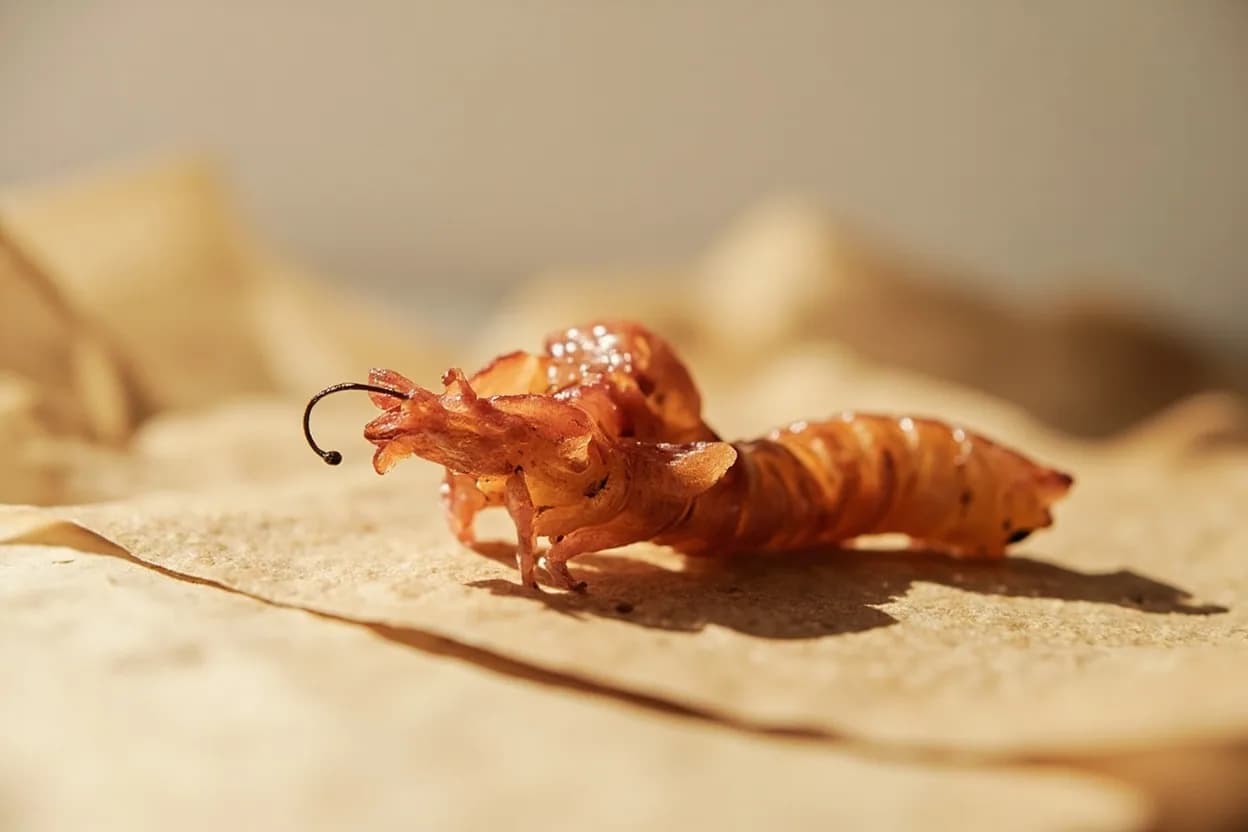
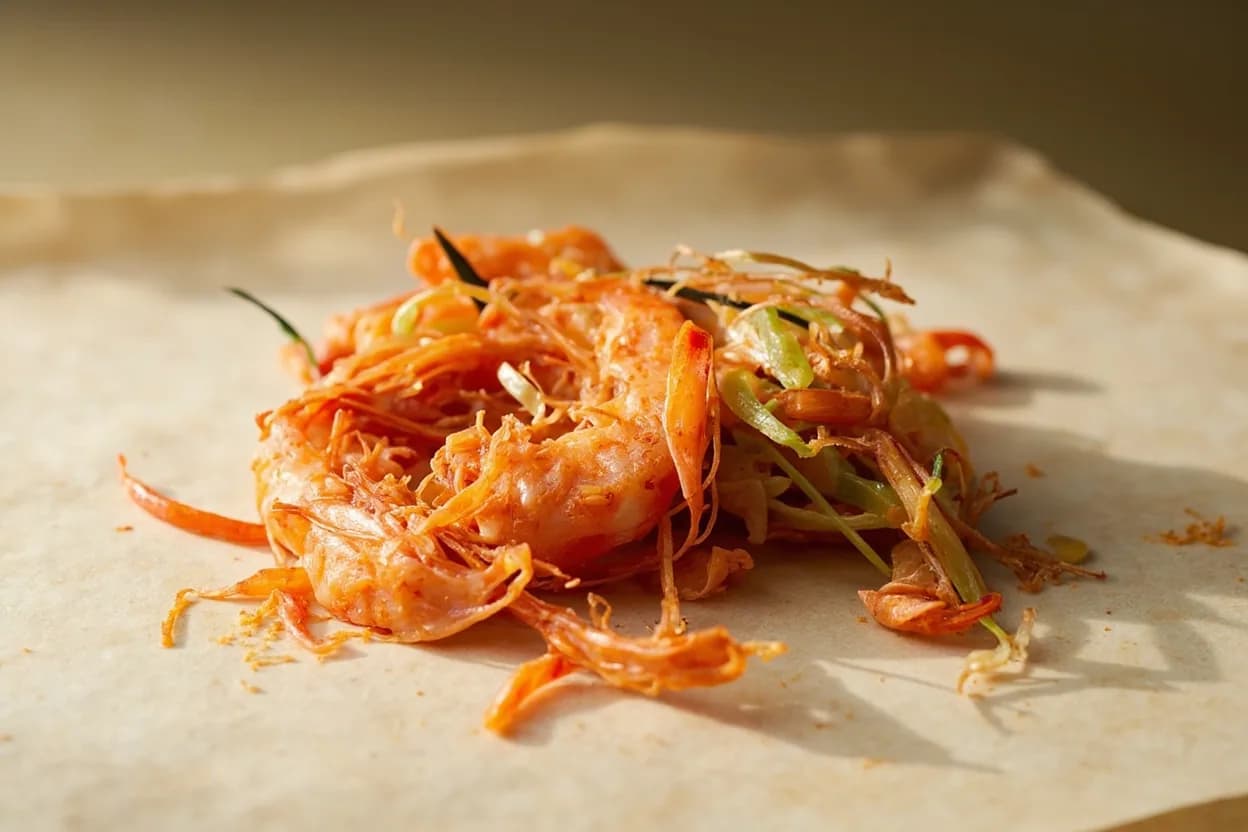
Saeujeot is made by packing small, whole raw shrimp (typically Acetes japonicus, a krill-like species) in a high ratio of salt — usually 25–35% by weight — and allowing them to ferment for one to twelve months in ceramic onggi jars. Over time, enzymes break down the proteins into free amino acids (glutamate, aspartate) while the salt suppresses putrefaction; the result is a paste or chunky brine of intensely concentrated shrimp with notes of brine, umami, ammonia (mellowed by time), and a distinctive crustacean sweetness. Saeujeot ranges from pale pink (young, mild, 'yuk-jeot') to deep grey-pink (aged, pungent) and from chunky whole shrimp to a nearly smooth paste depending on fermentation length and grinding.
In photos
Flavour profile
Classic pairings
- Napa cabbage (baechu) kimchiKorean
The foundational use: saeujeot seasons the kimchi paste alongside gochugaru, garlic, and ginger — its enzymes also accelerate fermentation.
- Gochugaru (Korean red pepper flakes)Korean
Saeujeot's salt-umami backbone amplifies gochugaru's fruity heat without the sharpness of raw chile powder.
- GarlicKorean
Allicin's pungency and saeujeot's fermented funk form a synergistic base for practically every Korean kimchi and banchan seasoning.
- Steamed white riceKorean
A small spoon of saeujeot eaten directly alongside plain rice is a Korean comfort pairing — the salt shock makes plain starch satisfying.
- Tofu (dubu)Korean
Mild, neutral tofu is the ideal foil: saeujeot provides all seasoning and savour, the tofu provides texture and protein.
- Braised pork belly (samgyeopsal)Korean
The fat of pork belly softens saeujeot's intense brine; together in wrapped ssam they create a classic Korean balance of salt, fat, and starch.
- Daikon radish (kkakdugi base)Korean
Daikon's mild sweetness and water content absorb saeujeot's flavour evenly, making it the other great kimchi application.
Adventurous pairings
- Scrambled eggs
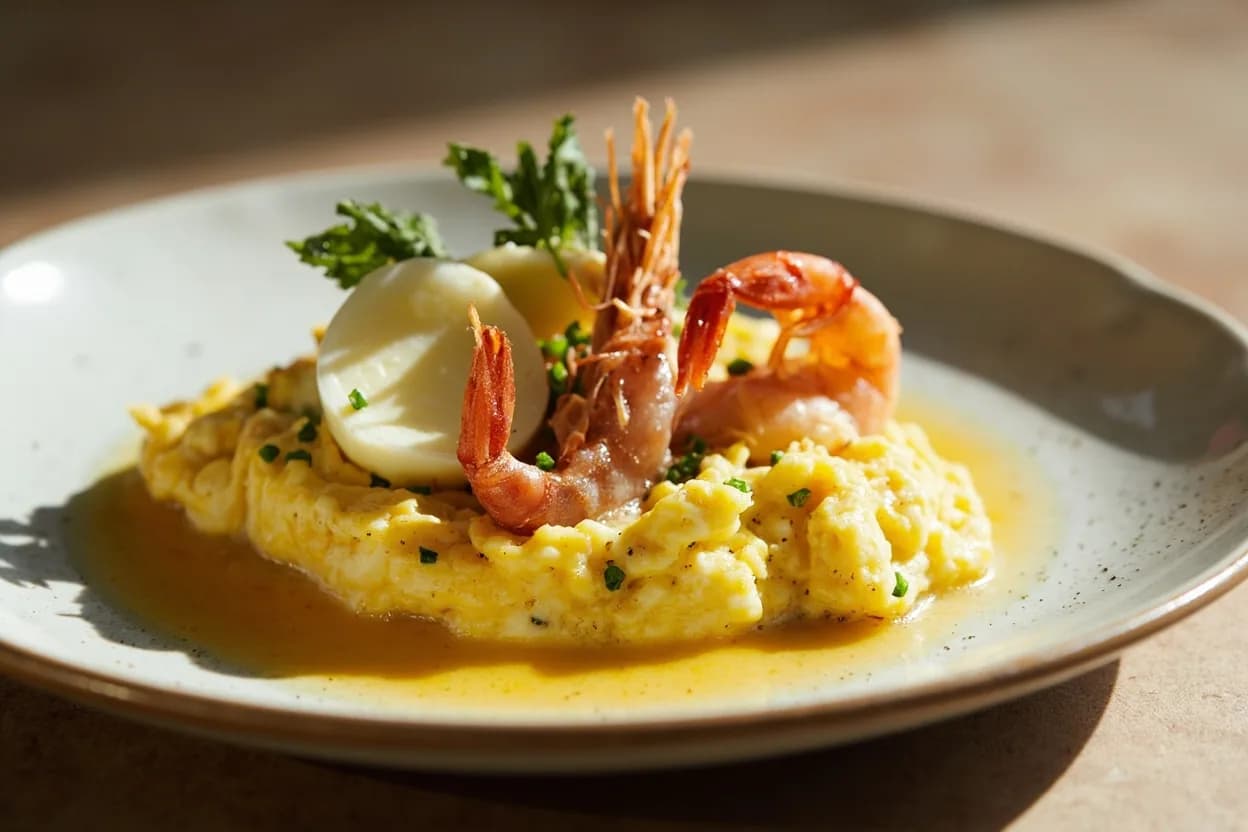
A small pinch of saeujeot (in lieu of salt) transforms scrambled eggs with deep marine umami — a Korean home-kitchen trick.
- Pasta aglio e olio
Swap the salt for saeujeot: the shrimp funk melds with garlic and olive oil into a flavour that reads as intensely 'sea' without being obviously Asian.
- Corn on the cob (elote-inspired)
Thin saeujeot brine brushed on grilled corn brings umami in the same way that cotija cheese does — a funky, salty depth that is entirely satisfying.
- Butter-poached leeks
Soft leek with a tiny amount of dissolved saeujeot is a surprising refined-European application of the fermented shrimp as seasoning liquid.
- Soft-boiled eggs (marinated)
Saeujeot brine diluted with soy and sesame makes a curing liquid for jammy eggs — the result is a more briny, complex version of soy-marinated eggs.
Tread carefully
- Delicately flavoured white fish (sole, flounder)avoid
Saeujeot's intensity obliterates the fish's delicacy; even a small amount overwhelms rather than seasons.
- Cream-based saucesavoid
The fermented funk curdles (aromatically if not literally) against dairy fat, producing a fishy-sour note that has no resolution.
- Delicate herbs (chervil, tarragon)avoid
Their finesse is immediately buried; use saeujeot only with assertive aromatics that can hold their ground.
How to use it
- Add to kimchi paste raw — the salt acts as a preservative and the enzymes assist fermentation
- Dissolve in a little water or rice porridge (juk) to create a seasoning liquid with less textural presence
- Mince finely and cook in oil briefly to mellow the ammonia edge before using in cooked banchan
- Use the liquid brine (jeot-guk) as a substitute for fish sauce in any recipe — lighter and more delicate
- Keep refrigerated after opening; fermentation continues slowly and the flavour deepens with age
Appears in
Related flavours
- Fish sauce (nuoc mam / nam pla)
Performs a similar fermented umami role in Southeast Asian cooking; both are liquefied marine proteins, though saeujeot is chunkier and more crustacean-forward.
Fermented chili-soybean paste that pairs with saeujeot in layered Korean seasoning, each contributing different umami vectors.
- Doenjang (Korean soybean paste)
Another cornerstone of Korean fermented seasoning; doenjang provides earthy legume umami while saeujeot provides marine umami — together they create depth in stews.
References
- 1.The Korean Table — Taekyung Chung & Yoon-Joo Lee (2008)
- 2.Maangchi's Real Korean Cooking — Maangchi (2015)
- 3.The Kimchi Chronicles — Marja Vongerichten (2011)
- 4.Korean Food Culture Series — National Institute of Korean Language (official classification)
Confidence: high
Notes
Choosing the right saeujeot by age
Young saeujeot (yuk-jeot, 1–3 months) is pale, relatively mild, and preferred for fresh kimchi where the shrimp's sweetness should be detectable. Aged saeujeot (6–12 months) is grey-pink, deeply funky, and used where complexity is the goal — deeply fermented kimchi, long-simmered jjigae. For Western cooking applications where the funk is a surprise element, start with young saeujeot and use the brine diluted at a 1:4 ratio with water.