Sweet Aromatics
Passion Fruit
Also: maracuyá, granadilla, maracujá, lilikoi, Passiflora edulis
Shockingly tart, tropical-floral, and intensely aromatic — passion fruit pairs with both restraint and drama.
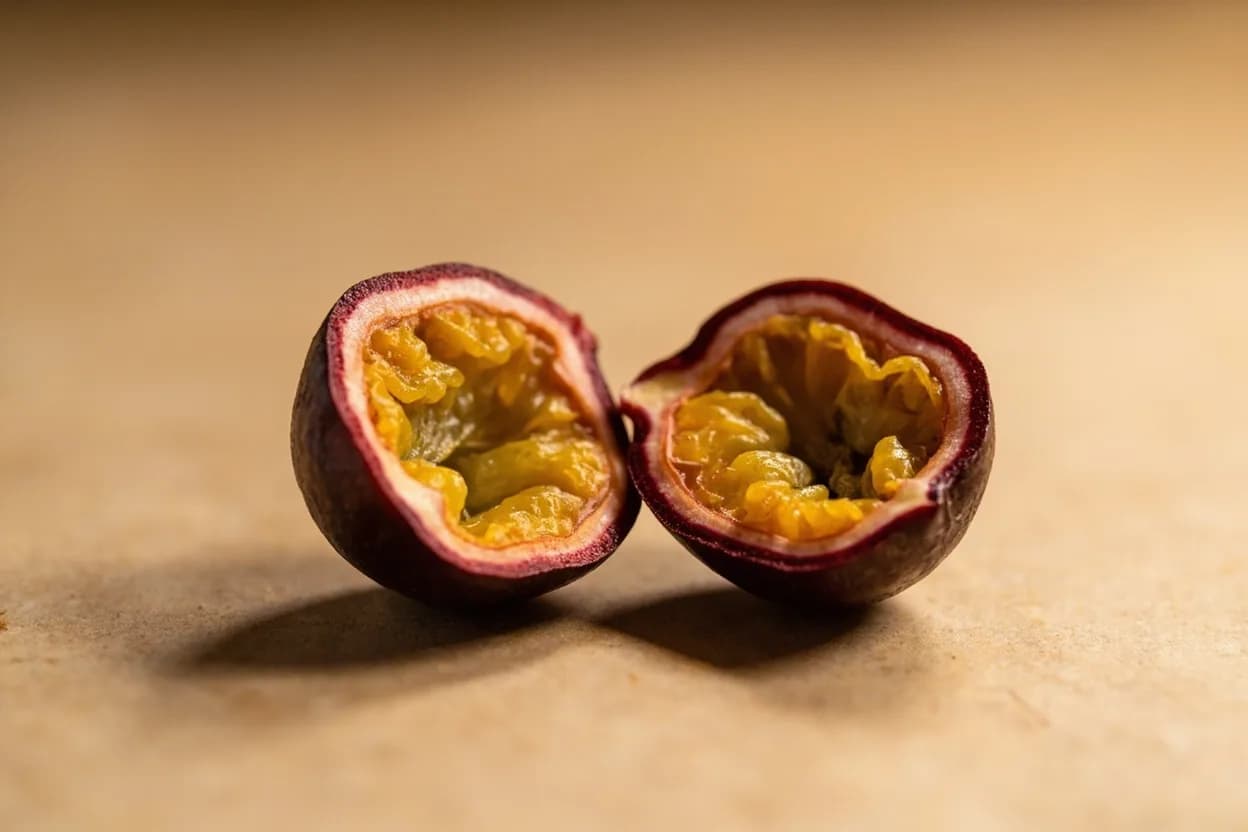
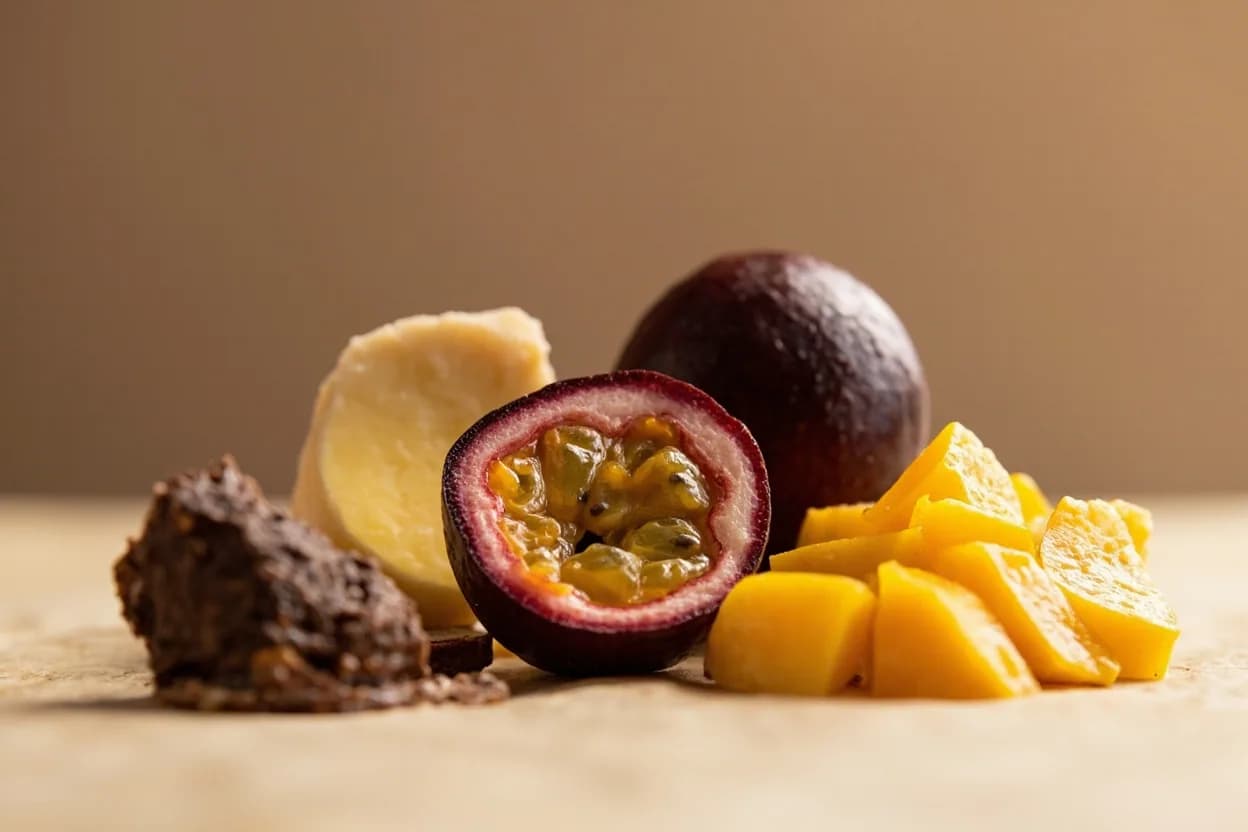
Passion fruit (Passiflora edulis) is a subtropical vine fruit prized for its intense, complex juice and edible seeds. The pulp ranges from deep gold-orange (P. edulis f. flavicarpa, yellow maracuyá) to purple-skinned and slightly sweeter (P. edulis f. edulis). Its flavor is one of the most distinctive in the fruit world: a sharp, almost vinegar-like tartness layered with tropical floral volatiles (ethyl butanoate, ethyl hexanoate, linalool) and a honeyed sweetness. The seeds provide crunchy textural punctuation. Passion fruit is used both as a flavor ingredient (strained juice, purée) and as a whole-fruit garnish.
In photos
Flavour profile
Classic pairings
- Dark chocolateFrench and Brazilian chocolatiers
Acid cuts chocolate fat and brightens fruit notes already present in well-fermented cacao; the floral character complements roasted bitterness.
- CoconutCaribbean, Pacific Island, and Brazilian desserts
A cornerstone tropical pairing: coconut cream's fatty sweetness tempers passion fruit's sharpness; the shared tropical ester compounds reinforce each other.
- MangoPan-tropical desserts, salsas
Both share dominant tropical esters (terpenes, lactones); mango adds fuller body and sweetness that rounds passion fruit's sharpness.
- VanillaFrench pâtisserie, Caribbean rum desserts
Vanillin's warmth and sweetness cushion the fruit's acid attack; a classic combination in mousse and crème brûlée.
- CaramelModern European pastry
Bitter-sweet caramel anchors the acid; together they create a sweet-sour toffee-tropical effect used in modern tarts and sauces.
- BananaBrazilian desserts, smoothie bowls
Banana's isoamyl acetate sweetness and soft body balance passion fruit's edge while keeping the tropical register coherent.
Adventurous pairings
The fruit's acidity cuts through extreme richness with elegance; a classic of avant-garde French cuisine — passion fruit coulis with pan-seared foie gras.
- Jalapeño
Heat amplifies the fruit's aromatic compounds; a passion fruit–jalapeño vinaigrette on ceviche or grilled shrimp is bright and complex.
Two high-acid, tropical-fruity, slightly musky flavors layered together create a sour-complex sauce used in Southeast Asian chutneys and cocktails.
- Aged rum
Oak-barrel lactones in aged rum and passion fruit esters speak the same tropical language; used in punch, daiquiri variations, and reductions.
- Camembert or Brie
The fruit's sharpness cuts dairy fat and ammonia notes; a passion fruit glaze on a baked brie is a genuinely effective flavor contrast.
Tread carefully
- Delicate white truffleavoid
Passion fruit's assertive esters and acid overwhelm the subtle sulfurous volatiles that define truffle — a waste of both.
- Very tannic red winesavoid
The fruit's high acidity clashes with tannic dryness, producing a metallic harshness; pair with off-dry whites or sparkling wine instead.
- Strong blue cheeseavoid
Roquefort or Stilton's intense moldy character fights the fruit's floral esters — both are assertive in incompatible directions.
How to use it
- Strain pulp through a fine-mesh sieve to separate seeds from intensely flavored juice
- Reduce juice to a concentrated syrup or gel for pastry glazes, mirror glazes, and sauces
- Use at room temperature or slightly warmed to maximize volatile aromatic release
- Combine with butter and eggs over gentle heat for a passion fruit curd (same technique as lemon curd)
- Blend into vinaigrette — the natural emulsifying pectin helps the dressing hold
- Scoop whole seeds and pulp directly onto desserts as a garnish — visual drama and textural contrast
Appears in
Related flavours
- Mango
The most natural tropical companion — both are ester-forward and pair with the same flavor partners.
Both are tart, floral fruits that pair with chocolate and cream; used interchangeably in some pastry contexts.
- Lime
Adds citrus brightness in the same register; together in a tart or dressing they create layered acid complexity.
References
- 1.The Flavor Bible — Karen Page & Andrew Dornenburg
- 2.Flavorings: Production, Composition, Applications, Regulations — Berger et al.
- 3.Tropical Fruits — Robert J. Knight Jr.
- 4.The French Laundry Cookbook — Thomas Keller
Confidence: high
Notes
Yellow vs. purple
Yellow passion fruit (maracuyá) is more acidic, more aromatic, and preferred for juice and culinary use. Purple passion fruit is sweeter and often eaten fresh with a spoon. In cooking, purée or juice, the yellow variety gives more intensity per gram of sugar.
Acid management
Passion fruit's pH (2.8–3.5) is similar to lemon juice. It can replace lemon or lime as an acid component in any recipe where tropical character is appropriate. Reduce sugar elsewhere in the recipe to compensate for the shift from savory-neutral citrus to sweeter tropical fruit.