Spices & Dried Aromatics
Pasilla Chile
Also: chile negro, pasilla negro, dried chilaca
A long, wrinkled dried Mexican chile with deep earthy, herbal, and berry-like heat — the backbone of complex moles.
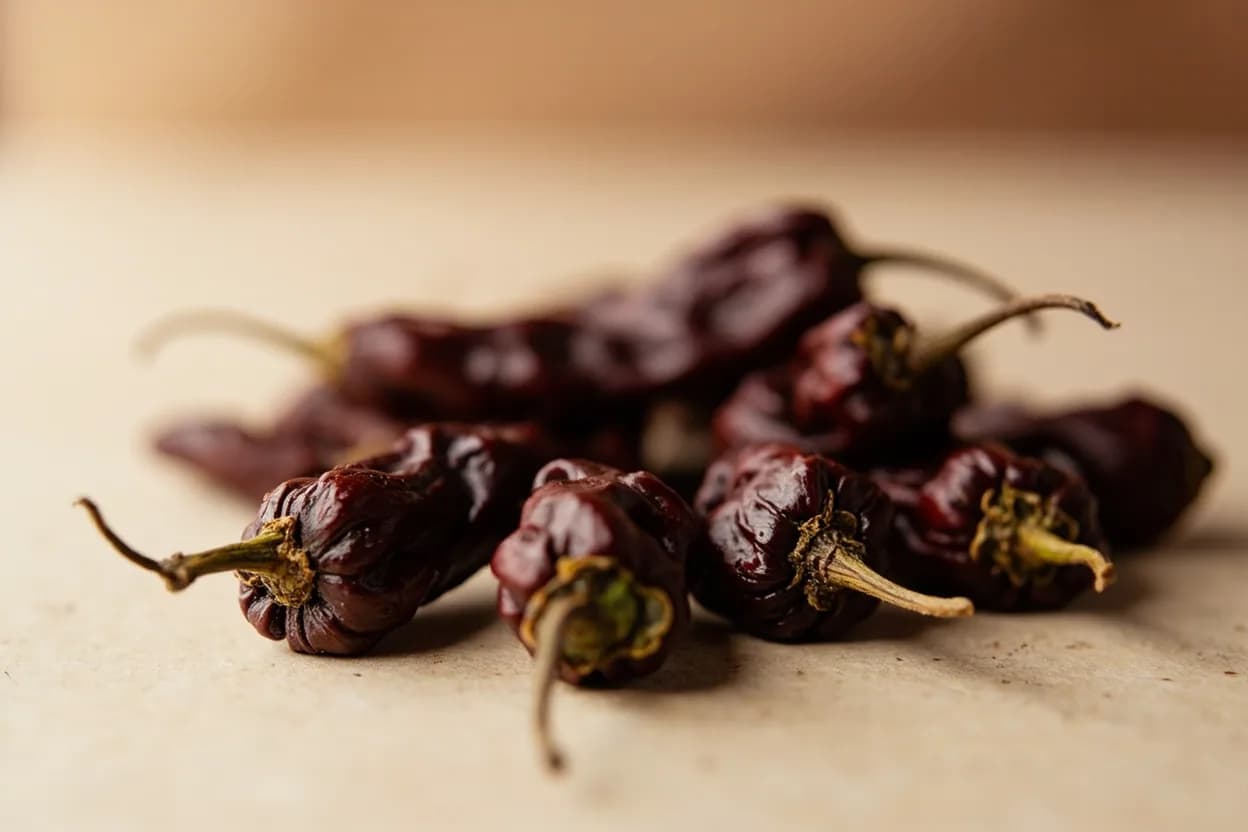
The pasilla is the dried form of the chilaca chile, a slender dark green pepper grown in central Mexico. Once dried, the skin turns nearly black and wrinkled, earning it the regional name 'chile negro.' Its flavor is earthy and herbal with notes of dried cherry, tobacco, and mild licorice, and it carries a gentle heat (1,000–2,500 SHU) that adds depth without brutality. It is one of the 'holy trinity' of mole chiles alongside mulato and ancho.
In photos
Flavour profile
Classic pairings
- dark chocolateMexican
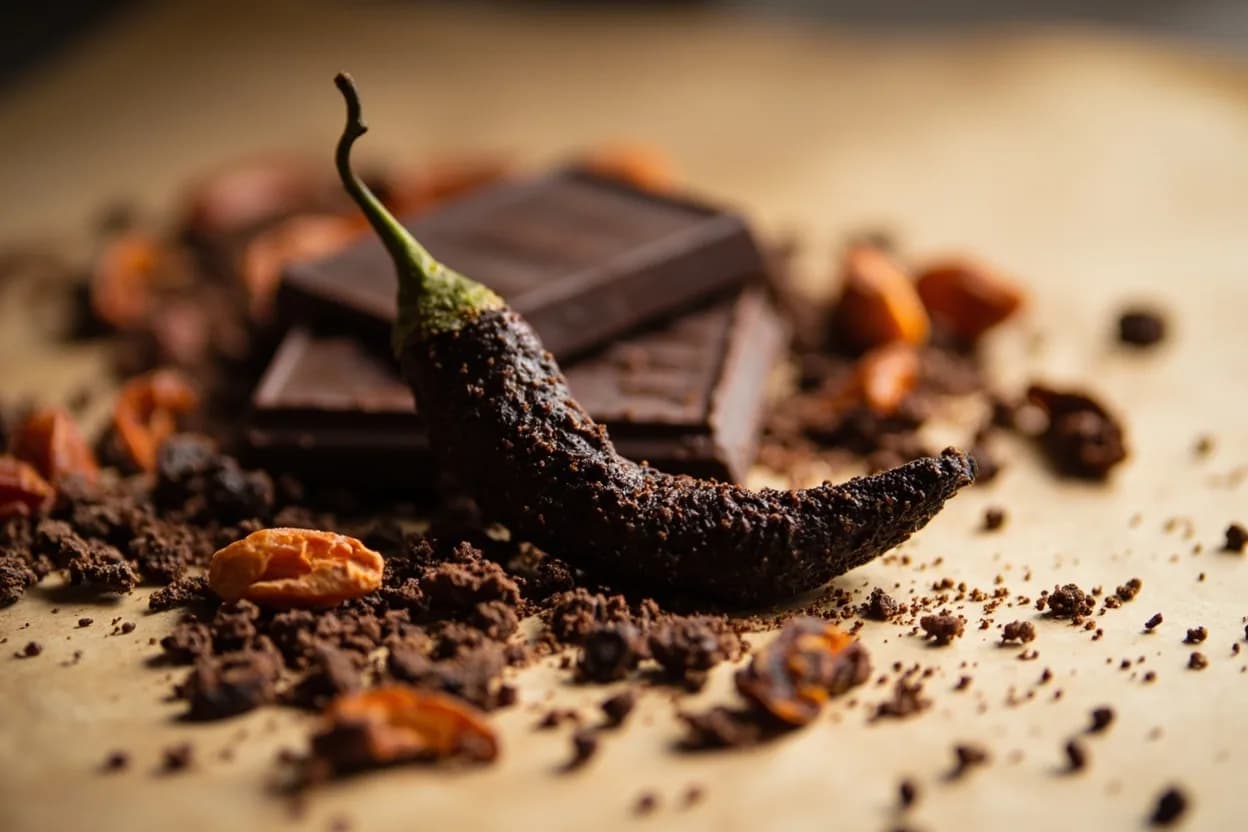
Shared bitter, earthy notes fuse seamlessly in mole negro; chocolate extends the pasilla's fruit-tobacco depth.
- turkeyMexican
The mild, meaty bird absorbs the pasilla's herbal complexity without being overwhelmed — the core of mole negro con guajolote.
- dried mulato and ancho chilesMexican
The classic mole trinity; each chile contributes a distinct note — pasilla's herbaceous tobacco rounds out ancho's sweetness and mulato's chocolate.
- black beansMexican
Pasilla refritos and soups gain earthy resonance from this pairing; the beans mirror the chile's dark, mineral quality.
- tomatilloMexican
Tart tomatillo cuts through the pasilla's richness in green moles and salsas, providing brightness.
- cuminMexican
Cumin's warm, slightly musty aroma aligns with the pasilla's earthy profile and is a standard pairing in Mexican chile pastes.
- pork shoulderMexican
Long-braised pork absorbs the pasilla's dried fruit and herbal notes deeply; a natural match for pozole rojo and carnitas salsas.
Adventurous pairings
Espresso-ground coffee reinforces the roasted tobacco notes in a pasilla mole or a chile-rubbed steak, tying together the bitter spectrum.
- aged goat cheese
The tangy, funky edge of aged chèvre contrasts the pasilla's dark fruit and earthy heat in a dip or flatbread topping.
- dried apricot
Stone fruit sweetness echoes the pasilla's own dried-cherry note while lifting the overall brightness in mole-style tagines.
- miso paste
White or red miso's umami depth mirrors pasilla's mushroom-tobacco earthiness; a compelling base for fusion braising sauces.
Tread carefully
- delicate white fishavoid
The earthiness and tannin of pasilla overwhelms the subtle flavor of sole or tilapia; use a milder fresh chile instead.
- fresh citrus zest in excessavoid
Heavy citrus oils clash with the pasilla's dried, tobacco-forward character, producing a bitter, metallic edge.
How to use it
- Toast briefly on a dry comal until fragrant (30 seconds per side) before rehydrating to deepen flavor
- Rehydrate in hot water, chicken stock, or dark beer for 20–30 minutes; reserve the soaking liquid as sauce base
- Blend rehydrated pasilla with soaked seeds, charred onion, and garlic into a smooth paste
- Pass blended chile through a fine sieve to remove skins and seeds for a silky mole base
- Fry the paste in lard or oil until it darkens and thickens before adding liquid
- Grind toasted, dried pasilla into powder for dry rubs or seasoning blends
Appears in
Related flavours
Both are dried poblano-family chiles with fruity, mild heat; ancho is sweeter and wider while pasilla is more herbaceous and narrow.
Close relative in the mole trinity; mulato is darker and carries chocolate-coffee notes compared to pasilla's dried-herb character.
Another essential Mexican dried chile; guajillo is brighter and more tannic, often combined with pasilla for layered salsas.
References
- 1.The Essential Cuisines of Mexico — Diana Kennedy
- 2.Truly Mexican — Roberto Santibanez
- 3.Mexico: The Cookbook — Margarita Carrillo Arronte
Confidence: high
Notes
Name confusion
Outside of Mexico, especially in California and the US Southwest, the term 'pasilla' is often incorrectly applied to the fresh poblano chile. In traditional Mexican cooking, pasilla strictly refers to the dried chilaca. When buying dried pasilla, look for the long, narrow, nearly black pods — not the wide, flat ancho.