Spices & Dried Aromatics
Mulato Chile
Also: chile mulato, mulato negro
A dark, wrinkled dried Mexican chile with smoky chocolate, coffee, and dried fruit complexity — indispensable in mole negro.
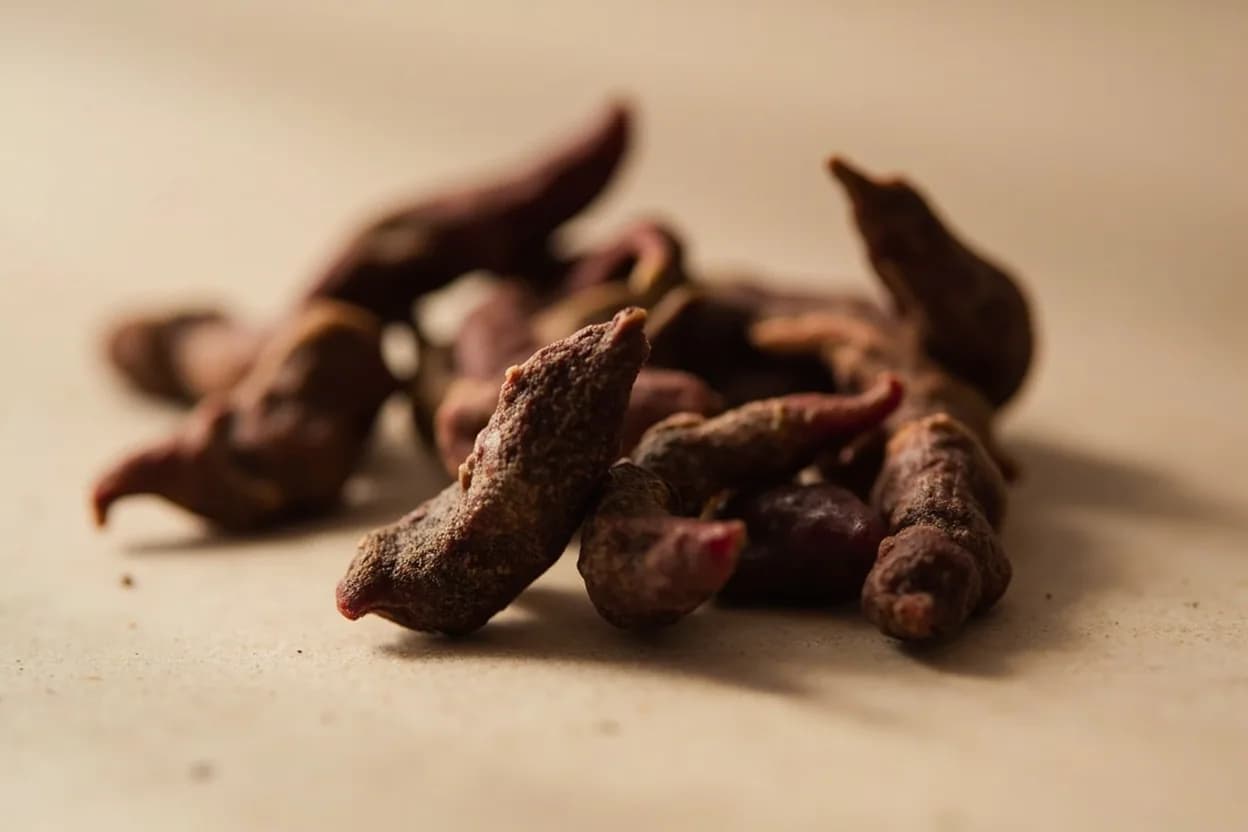
The mulato is a dried, fully ripened poblano chile (a distinct brown-ripening strain) grown in Puebla and Oaxaca. When dried, it turns a deep chocolate-brown to near-black. Its flavor is the most complex in the classic mole trinity: smoky, with pronounced notes of cocoa, coffee, dried plum, and a hint of licorice. Heat is mild to moderate (2,500–3,000 SHU). The mulato is rarely used alone — its power is in layering with pasilla and ancho to build the dense, multi-octave flavor of mole negro.
In photos
Flavour profile
Classic pairings
- dark chocolate (70%+)Mexican
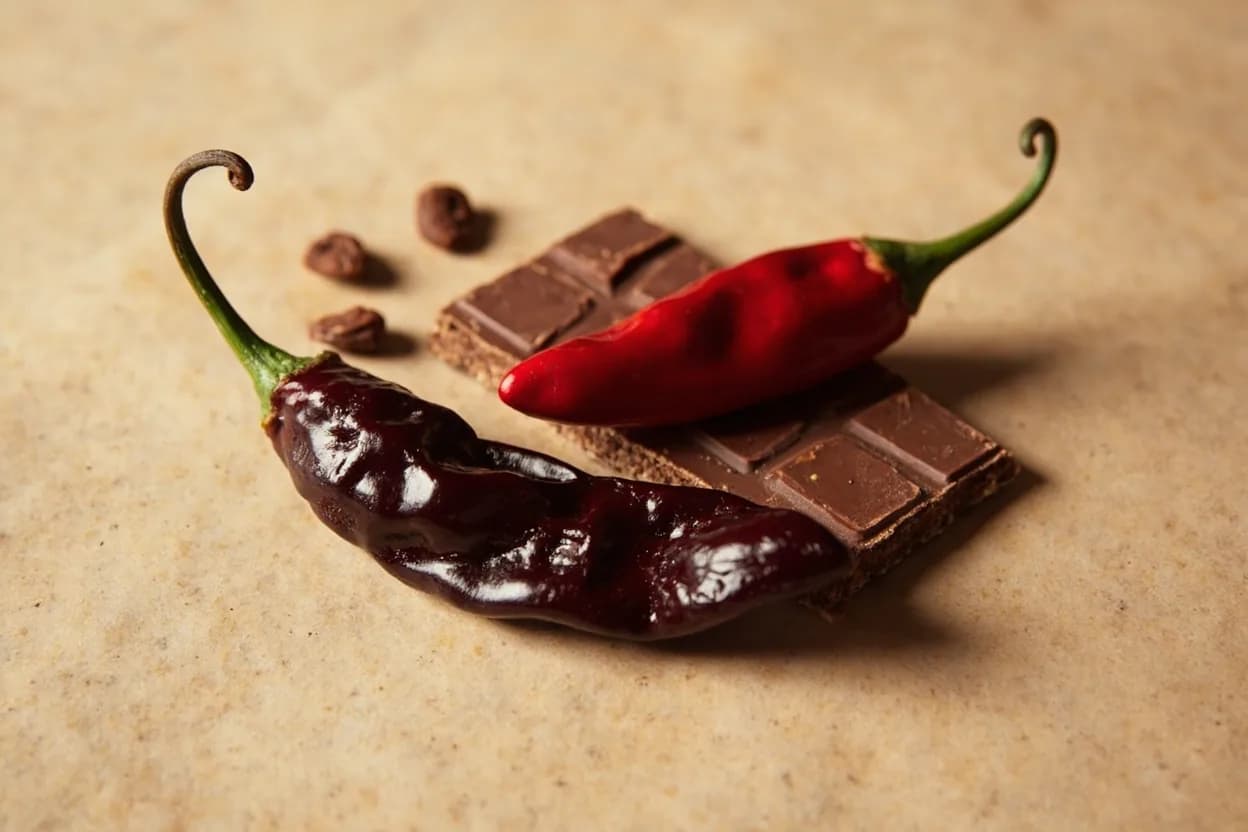
The mulato is essentially a dried chile that already tastes of chocolate; adding real chocolate in mole negro creates a resonant, doubled depth.
- turkeyMexican
The ultimate carrier for mulato's complexity in mole negro; turkey's neutral richness lets the chile's chocolate-coffee character dominate.
- ancho and pasilla chilesMexican
The holy trinity of classic mole negro; each brings a distinct dimension — mulato contributes the chocolate-coffee layer.
- cinnamonMexican
Warm cinnamon amplifies the mulato's spice shelf and bridges chocolate and fruit notes in mole sauces.
- plantainMexican
Charred or fried plantain is blended into mole negro for sweetness that complements mulato's prune-like fruit.
- sesame seedsMexican
Toasted sesame adds nutty fat and texture, classically stirred into mole negro to balance the chile's dry bitterness.
- duckMexican
Duck's rich, slightly gamey fat stands up to and absorbs the mulato's deep smoke and chocolate; excellent for mole-braised duck legs.
Adventurous pairings
Cold-brew or espresso concentrate in a mulato-based braising liquid doubles the coffee note and intensifies the dark, smoky profile of the sauce.
Tamarind's sour, caramel tartness cuts through mulato's heavy chocolate density and adds a fruity acid the chile itself lacks.
- lamb shoulder
Lamb's mineral, grassy fat pairs compellingly with mulato's chocolate-smoke in a long braise — a cross-cultural riff on mole techniques.
- dried Medjool dates
Dates echo mulato's prune notes while adding caramel sweetness; blend into a mulato-date paste for stuffed pastries or a mole variant.
- aged Manchego
Nutty, crystalline aged Manchego contrasts the mulato's bitterness and smoke in a chile-cheese board or quesadilla filling.
Tread carefully
- delicate herbs (chervil, tarragon)avoid
Mulato's powerful chocolate-smoke profile obliterates delicate anise-herb aromatics; reserve fresh herbs for finishing, not cooking.
- fresh tomatoes in large quantityavoid
Bright tomato acidity fights mulato's dense earthiness; charred or dried tomato is preferred to let the chile lead.
How to use it
- Toast on a dry comal 20–30 seconds per side until flexible and fragrant — avoid scorching, which turns flavors acrid
- Rehydrate in hot water or dark chicken stock for 25–30 minutes; soaking liquid carries significant flavor
- Char an onion and whole garlic cloves directly on the comal before blending with rehydrated mulato
- Blend rehydrated mulato with soaking liquid and charred aromatics; strain through a fine-mesh sieve
- Fry the strained paste in hot lard until it sizzles and darkens — this paso (frying) concentrates flavor
- Combine with toasted and ground spices (cumin, cinnamon, clove) and seeds (sesame, pumpkin) for a full mole
Appears in
Related flavours
Closest mole partner; pasilla provides herbal, tobacco notes while mulato contributes the chocolate-coffee layer.
The third mole trinity member; ancho is fruitier and sweeter, widening the flavor spectrum when blended with mulato.
An amplifying pair — mulato already carries cocoa character, and dark chocolate deepens it further in mole negro.
References
- 1.The Essential Cuisines of Mexico — Diana Kennedy
- 2.Oaxaca al Gusto — Diana Kennedy
- 3.Mexico: The Cookbook — Margarita Carrillo Arronte
Confidence: high
Notes
Mulato vs. ancho
Both are dried poblanos, but the mulato comes from a strain that ripens brown rather than red. The result is a darker, less sweet, more chocolate-forward flavor. They can substitute for each other in a pinch, but a true mole negro demands the mulato's specific bitterness. Look for pods that are nearly black and pliable — brittle or very brown pods are ancho.