Herbs
Mugwort (Ssuk)
Also: ssuk, Korean mugwort, Artemisia princeps, 쑥
Korea's wild spring herb — grassy, slightly bitter, and hauntingly aromatic in rice cakes and soups.
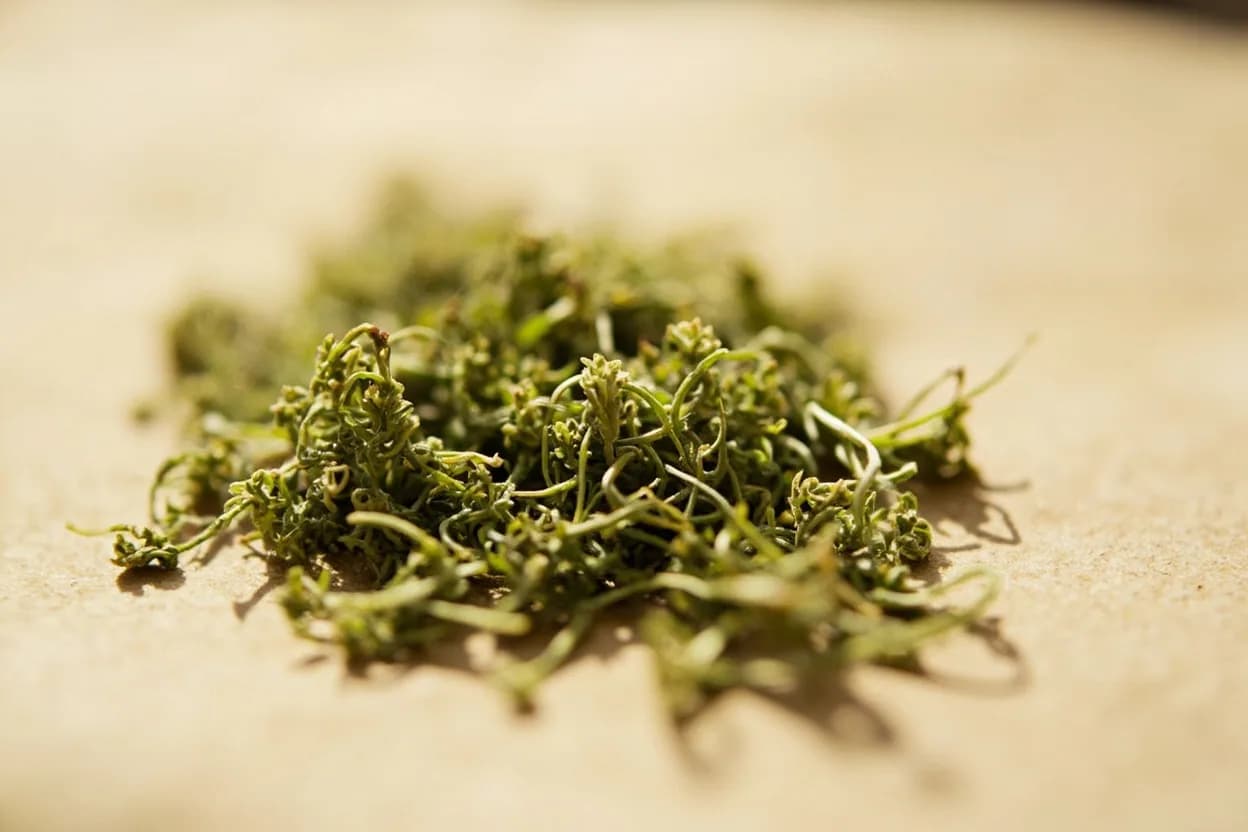
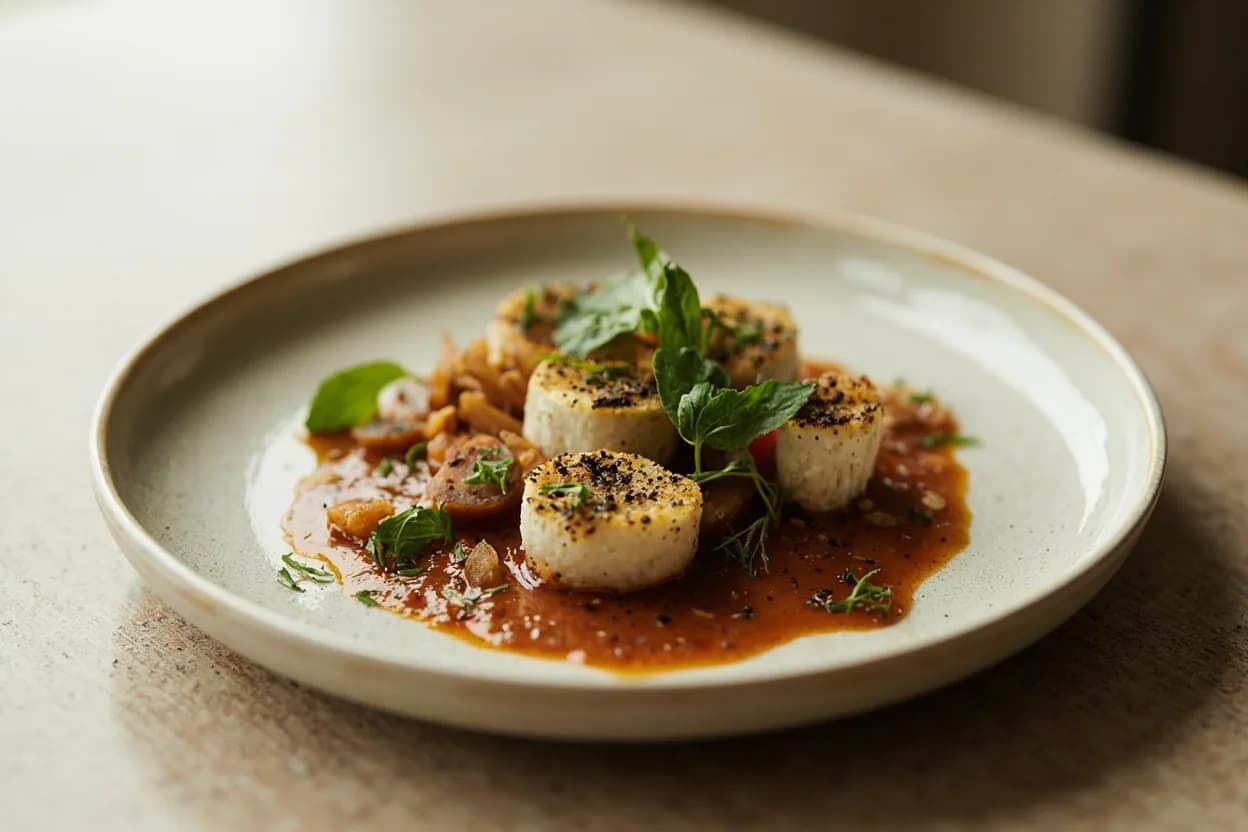
Mugwort (ssuk, 쑥) is the young shoots and leaves of Artemisia princeps, harvested in early spring when still tender. Its flavor is assertively herbal with a clean bitterness reminiscent of wormwood and a faint menthol edge, underscored by a warm, slightly medicinal depth. Used fresh, blanched, or dried, ssuk lends color and fragrance to tteok (rice cakes), doenjang soups, and spring porridges. In Korean food culture it carries strong seasonal symbolism — the first ssuk harvest marks renewal after winter.
In photos
Flavour profile
Classic pairings
- Glutinous rice (sweet rice flour)Korean
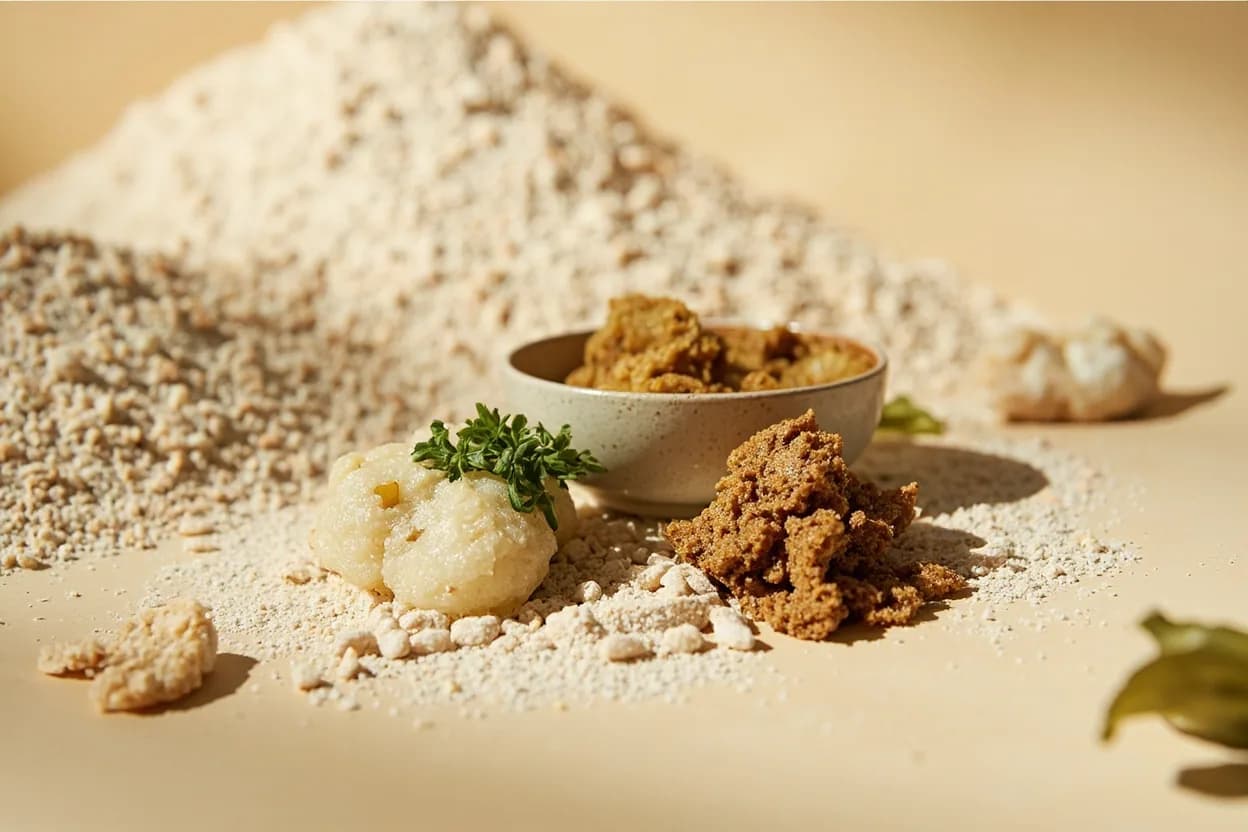
Ssuk is pounded directly into tteok dough; the fat and neutral starch temper its bitterness while the herb turns the cake a deep forest green.
- Doenjang (fermented soybean paste)Korean
The robust umami funk of doenjang and ssuk's bitterness are a classic spring-soup pairing; each amplifies the other's savory depth.
- Sesame oilKorean
Nutty, roasted sesame rounds off ssuk's bitter edges in namul preparations; the fat-soluble aromatics in both merge harmoniously.
- EggsKorean
Ssuk gyeran-jjim (steamed egg custard with mugwort) uses the herb's color and fragrance against mild, creamy egg — a clean, bright contrast.
- Dried anchovy broth (myeolchi yuksu)Korean
The deep oceanic umami of anchovy stock provides a savory backbone that lifts ssuk's herbal bitterness in soups and stews.
- White riceKorean
Ssuk juk (rice porridge) is a classic convalescent dish; neutral jasmine-style rice lets the herb's aromatic complexity take center stage.
- HoneyKorean
In ssuk tea, a drizzle of honey counterpoints the bitter herbal notes without masking the herb's medicinal character.
Adventurous pairings
- Ricotta or fresh chèvre
The clean lactic tang of fresh cheese mirrors ssuk's herbal bitterness — combine as a spread or in savory galettes for an unexpected Korean-Italian bridge.
- Dark chocolate (70%+)
Bitter meets bitter: ssuk's artemisia lactones and cacao's theobromine create a layered, almost forest-floor complexity in confections or ganache.
- Clam or cockle
The briny sweetness of small clams cut with fresh ssuk in a broth intensifies the sea-green character of both — think a Korean take on a herbed clam chowder.
- Miso (shiro/white)
Lighter fermented soybean paste lets ssuk's fresh-herb lift dominate while supplying a gentle umami canvas — a cross-cultural riff on the doenjang classic.
- Yuzu or green mandarin zest
Citrus zest's terpene oils echo ssuk's own aromatic volatiles, creating a layered, perfumed brightness in teas, dressings, or ice cream.
Tread carefully
- Delicate cream saucesavoid
Ssuk's assertive bitterness and herbal intensity overwhelm neutral cream-based sauces; the dairy magnifies rather than tames the camphor edge.
- Strongly spiced red-pepper dishesavoid
Gochujang-heavy or heavily spiced preparations drown ssuk's subtle aromatic complexity — both plants clamor for dominance.
- Raw in large quantitiesavoid
Mature or dried mugwort is intensely bitter and can be astringent; always blanch or briefly cook older leaves before using in quantity.
How to use it
- Blanch briefly in salted water, squeeze dry, then pound into rice cake dough for ssuk tteok
- Steep fresh or dried leaves in hot water for ssuk cha (mugwort tea)
- Chop finely and fold into juk (rice porridge) during the last few minutes of cooking
- Use dried and powdered as a flavoring dust for mochi-style confections
- Sauté blanched ssuk with garlic, sesame oil, and soy as a classic namul banchan
Appears in
Related flavours
The canonical fermented-soy companion to ssuk in Korean spring soups
Less harmonious but sometimes combined in tteokbokki variations — use sparingly
Fellow Korean wild herb with overlapping herbal-bitter profile; often used in tandem or as a substitute
References
- 1.Korean Food Culture — Kyung Ryang Chung, Royal Asiatic Society Korea
- 2.The Food of Korea — Injoo Chun, Jaewoon Uh, Duk-Hwan Oh
- 3.On Food and Cooking — Harold McGee (artemisia/wormwood family)
Confidence: high
Notes
Seasonality matters
Ssuk harvested in early spring (February–April in Korea) before flowering is tender and mildly bitter. By summer the leaves toughen and bitterness intensifies dramatically. Dried ssuk is available year-round and behaves more like an herbal tea — it loses the vivid green but concentrates the medicinal aromatics.
Medicinal tradition
In traditional Korean medicine (hanbang), ssuk is a warming herb used to aid digestion and improve circulation. This functional heritage shapes how Koreans use it — in light, restorative soups and porridges rather than bold, heavy preparations.