Herbs
Myoga
Also: Japanese ginger bud, myoga ginger, Zingiber mioga
Japan's delicate ginger bud: crisp, mildly spicy, and faintly floral — the finishing herb that sashimi chefs reach for.
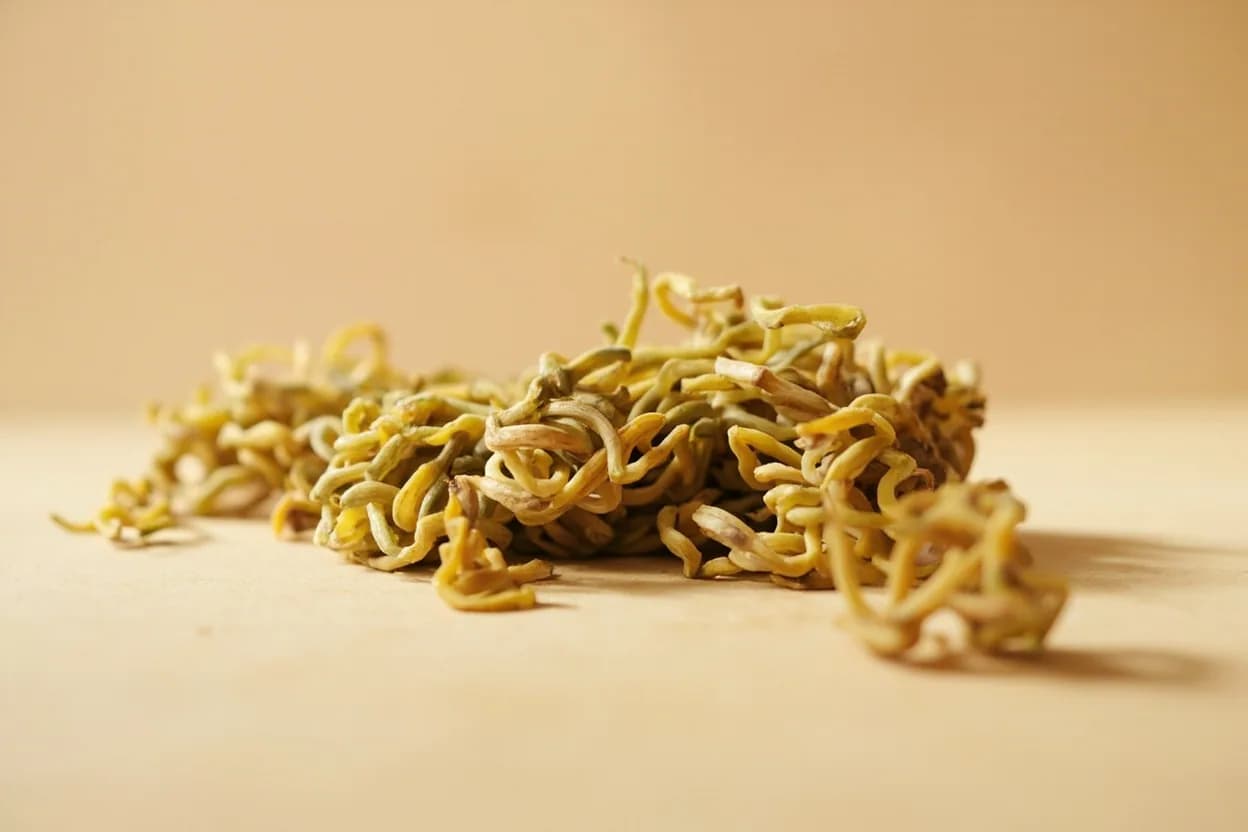
Myoga (Zingiber mioga) is the flower bud and young shoot of a cold-hardy ginger species native to Japan and Korea. Unlike common ginger root, myoga is used as a vegetable herb: the tightly furled buds are sliced thin and served raw or briefly pickled. Its flavor is mild — a whisper of ginger heat balanced by jasmine-like floral notes and a clean, grassy astringency. The texture is crisp and slightly watery, making it a natural garnish that adds brightness without overwhelming delicate ingredients.
In photos
Flavour profile
Classic pairings
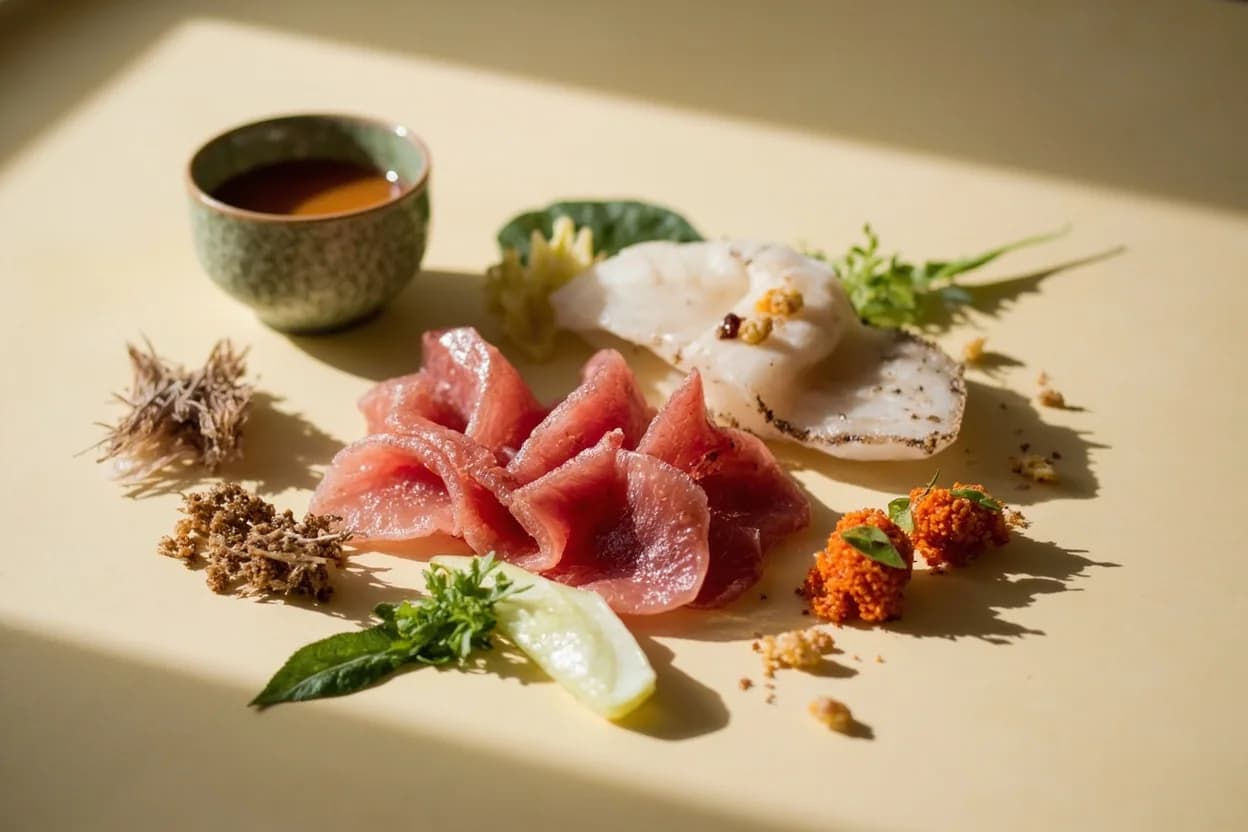
- Sashimi (tuna, sea bream, flounder)Japanese
Thinly sliced myoga sits beside raw fish as both garnish and palate cleanser; its mild heat cuts fishy oils without masking delicate sweetness.
- Cold tofu (hiyayakko)Japanese
Scattered over silken tofu with bonito flakes and soy, myoga's floral spice animates an otherwise quiet dish.
- Miso soupJapanese
Stirred in just before serving, myoga brightens the umami depth of white or yellow miso with floral lift.
- Somen and hiyamugi noodlesJapanese
A classic cold-noodle condiment alongside shiso and grated ginger; the bud's crisp texture contrasts silky noodles.
- Sunomono (cucumber vinegar salad)Japanese
Myoga's bitterness and ginger note harmonize with rice vinegar's acidity; together they amplify cucumber's freshness.
- Yakitori (chicken skewers)Japanese
Pickled myoga served alongside grilled chicken provides acid contrast to smoky char fat.
Adventurous pairings
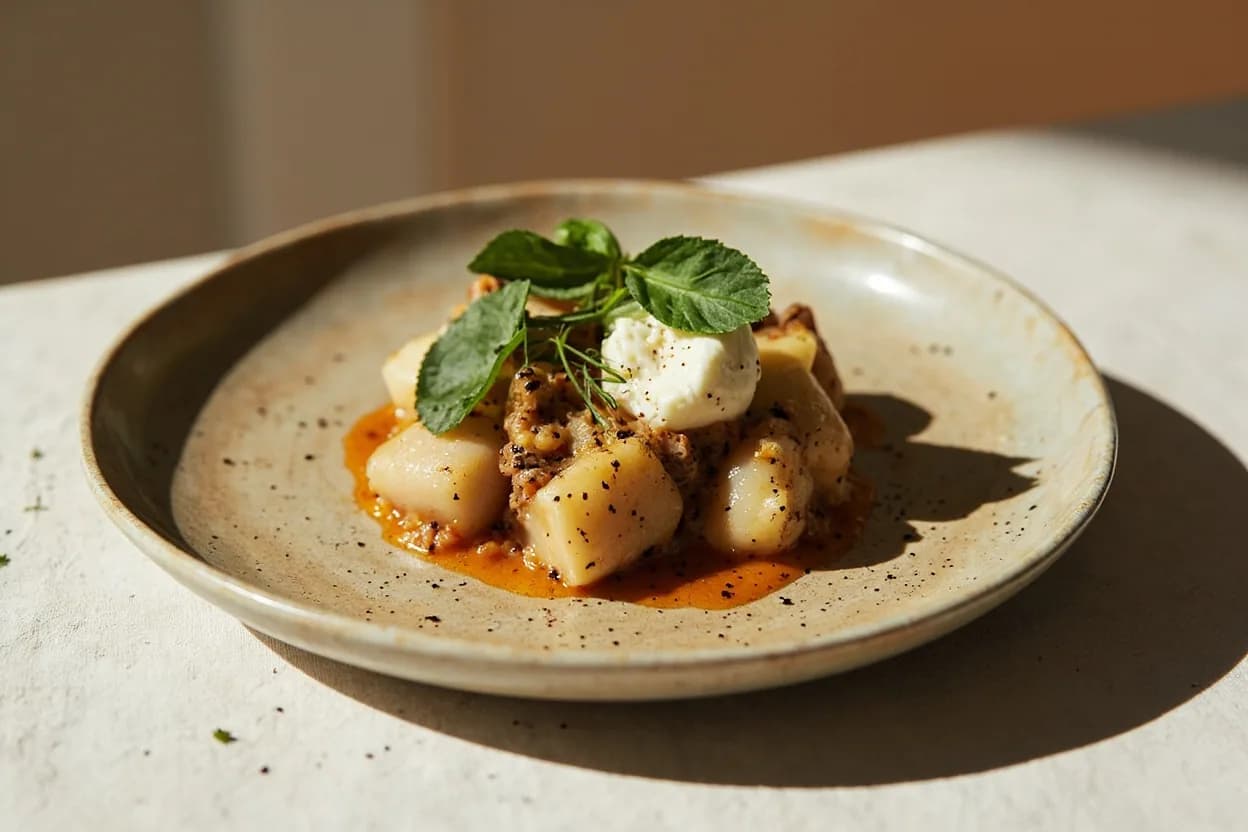
Sliced myoga draped over burrata with good olive oil creates a bridge between Japanese subtlety and Italian richness; floral notes echo cream.
- Oysters on the half shell
Myoga mignonette (minced bud, rice vinegar, dash of yuzu) replaces shallots, adding ginger tingle that amplifies brine without heat shock.
Swapped for red onion in a Japanese-Peruvian nikkei ceviche, myoga softens the allium punch while contributing its own mild heat to the leche de tigre.
- Watermelon and feta salad
Myoga's ginger-floral note bridges sweet melon and salty cheese in a summer salad, with rice vinegar dressing tying everything together.
Tread carefully
- Long cooking (braises, soups simmered >10 min)avoid
Heat collapses myoga's delicate floral aromatics and crisp texture into bitter, papery mush; always add raw or at the very end.
- Bold red meat (beef short rib, lamb)avoid
Myoga's mild character is completely overwhelmed by rich, heavily seasoned red meats; its nuance disappears.
- Strongly spiced dishes (curry, chili)avoid
Competing capsaicin and cumin simply erase myoga; there is no flavor contribution left.
How to use it
- Slice buds paper-thin on a mandoline and soak in ice water 5 minutes to crisp and mellow raw sharpness
- Quick-pickle in rice vinegar, sugar, and a pinch of salt (30 minutes) for a fuchsia-tinted garnish
- Julienne finely and scatter over dashi-based sauces as a finishing herb
- Grill whole buds briefly (30 seconds per side) to deepen sweetness while retaining crunch
- Mince and fold into ponzu or yuzu kosho-based dressings
Appears in
Related flavours
- Shiso
Japan's other signature herb garnish; shiso's anise-basil note complements myoga's ginger-floral character in the same dish
Both are Japanese aromatic finishers; yuzu's citrus brightens where myoga adds mild heat, and they appear together in ponzu
- Fresh ginger
Botanical relative with much more assertive heat; myoga is the subtle, floral alternative when restraint is called for
The citrus-soy condiment provides the acid frame that showcases myoga's aromatics rather than overpowering them
References
- 1.Japanese Farm Food — Nancy Singleton Hachisu (Andrews McMeel, 2012)
- 2.The Japanese Kitchen — Hiroko Shimbo (Harvard Common Press, 2000)
- 3.Washoku: Recipes from the Japanese Home Kitchen — Elizabeth Andoh (Ten Speed Press, 2005)
Confidence: high
Notes
Seasonality and availability
Myoga is harvested twice a year in Japan: summer buds (natsumyoga) in July–August and autumn shoots (akimyoga) in September–October. Outside Japan, it is found at Japanese grocery stores and occasionally Korean markets. Grows readily in USDA zones 7–10 as a shade-tolerant garden plant.
Color transformation
Raw myoga buds are pale ivory-pink. Quick-pickling in rice vinegar turns them vivid fuchsia-magenta — a visual transformation exploited in kaiseki presentations and sushi garnish work.