Herbs
Curry Leaf
Also: kadi patta, karivepilai, meetha neem, Murraya koenigii
The irreplaceable aromatic backbone of South Indian tempering — citrusy, nutty, and impossible to replicate.
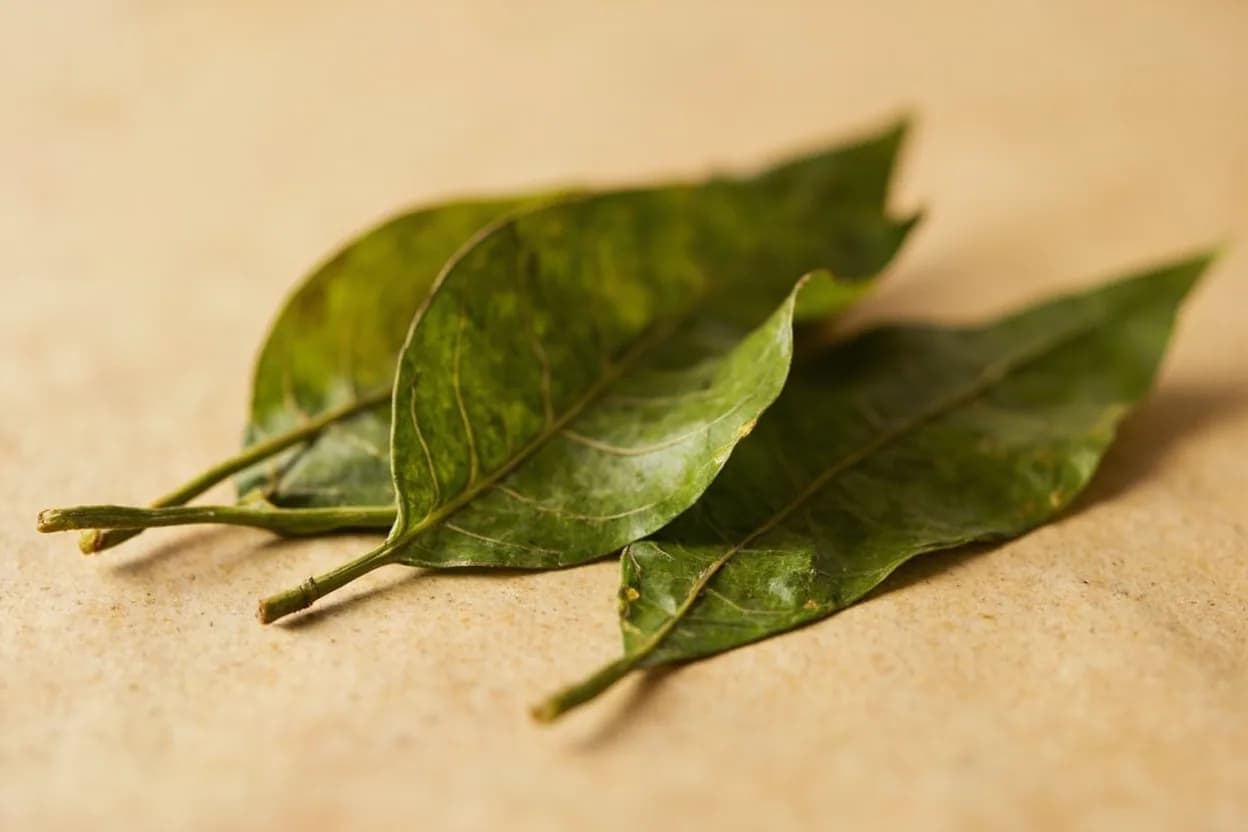
Curry leaf (Murraya koenigii) is a tropical tree native to the Indian subcontinent whose glossy leaves are one of the most important aromatics in South Indian, Sri Lankan, and Malaysian cooking. Despite the name, curry leaf is not an ingredient in curry powder and tastes nothing like it. Its fresh leaves emit a complex scent combining citrus zest, anise, asafoetida-adjacent nuttiness, and a warm herbal depth driven by compounds including linalool, caryophyllene, and curry-leaf-specific alkaloids (mahanimbine, girinimbine). Dried leaves are a pale substitute; the herb must be used fresh or frozen to deliver its signature character.
In photos
Flavour profile
Classic pairings
- Mustard seedsSouth Indian
The canonical tempering duo of South Indian cooking: mustard seeds crackle in hot oil first, then curry leaves are added, creating an aromatic bloom that forms the base of dals, chutneys, and rice dishes.
- CoconutSouth Indian / Kerala
Fresh coconut's sweet, fatty richness balances curry leaf's citrusy sharpness; essential in Kerala fish curries and coconut chutneys.
- Lentils (dal)Indian
A finishing tadka of curry leaves, mustard, and dried chili over cooked lentils is one of the defining aromatics of Indian home cooking.
- Dried red chiliSouth Indian
The heat of dried chili amplifies the toasty depth of fried curry leaves; standard in tarka dals and vegetable stir-fries.
- TurmericSouth Indian
Earthy, bitter turmeric is grounded by curry leaf's citrus; the pairing defines the color and aroma of South Indian rice dishes and fish preparations.
- YogurtIndian
Cool, tangy yogurt is the natural foil for fried curry leaves in raita and kadhi; the herb's warmth cuts lactic sourness cleanly.
- TamarindTamil / South Indian
Tart tamarind and citrusy curry leaf reinforce each other's sour-bright notes in sambar and rasam.
Adventurous pairings
- Butter and cream pasta
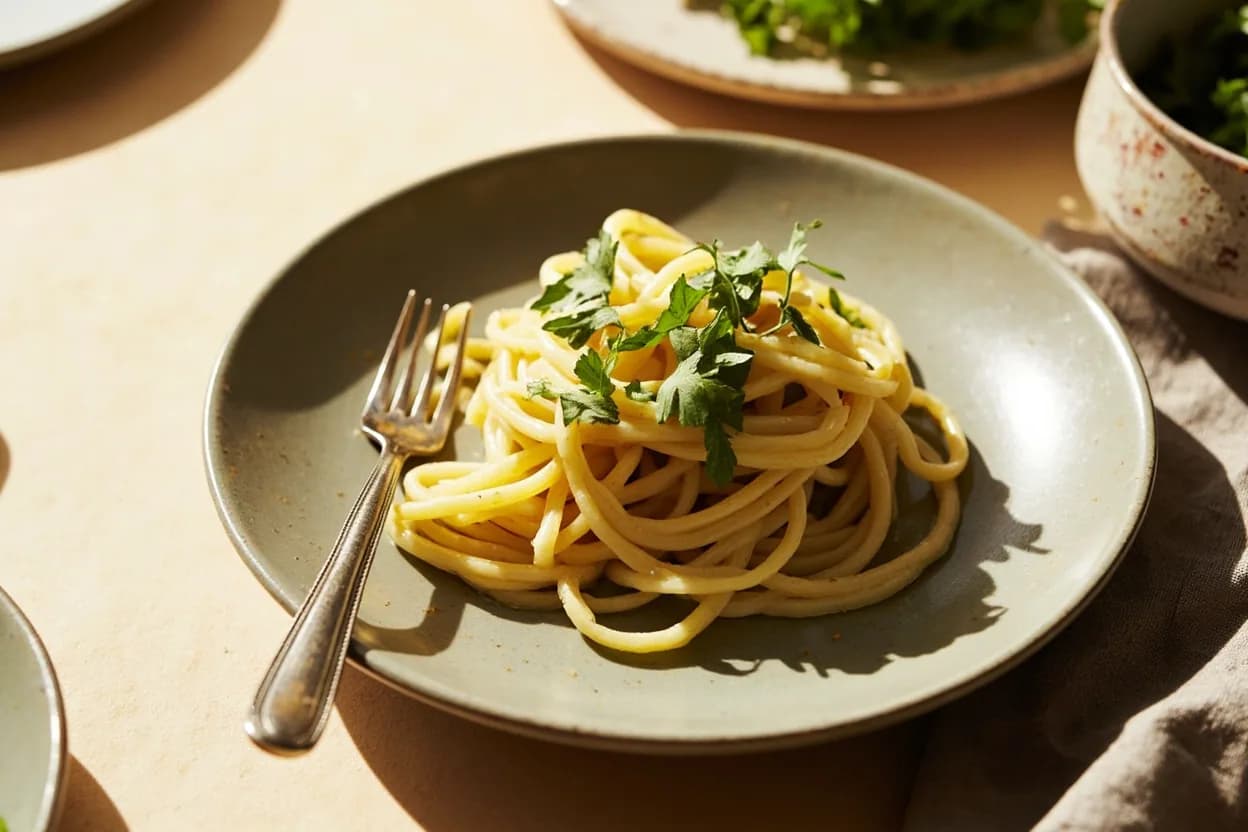
Curry leaves fried in brown butter create a nutty, citrus-herb sauce that works beautifully over wide pasta — a cross-cultural discovery gaining traction in modern Indian-Italian cooking.
- Avocado
The fatty creaminess of avocado is cut by curry leaf's citrus-herb brightness; curry-leaf oil makes a stunning dressing for avocado toasts or salads.
Curry leaf's bitterness and citrus top-notes echo the aromatic complexity of good dark chocolate; infuse leaves into ganache for an unexpected pairing.
- Crab
The sweet oceanic richness of crab is sharpened by curry leaf in ways that parallel classical tarragon-and-shellfish French pairings, as in Sri Lankan crab curry.
- Corn
Sweet corn's starch and sugar are lifted by a curry-leaf tarka; a South Indian-spiced corn chaat uses this pairing to great effect.
Tread carefully
- Delicate white-wine cream saucesavoid
Curry leaf's assertive citrus-anise overwhelms subtle European cream reductions; it belongs in contexts that can absorb its aromatic power.
- Subtle herbs (tarragon, chervil, chives)avoid
Curry leaf dominates any blended herb context; it must be the primary aromatic rather than one voice in a delicate herb mixture.
- Berriesavoid
Tart berry acidity conflicts with curry leaf's savory citrus profile, producing a medicinal, unpleasant combination.
How to use it
- Fry fresh leaves in hot oil or ghee for 10–20 seconds until they crackle and turn translucent — this blooms their volatile compounds into the fat
- Add curry leaves as the second element in tempering, after mustard seeds have begun to pop
- Freeze fresh leaves in a sealed bag; they keep 3 months and retain far more flavor than dried
- Grind fried curry leaves into a powder (curry-leaf powder) for dry rubs and spice blends
- Infuse in neutral oil for 2 hours over very low heat to make a curry-leaf finishing oil
Appears in
Related flavours
- Kaffir lime leaf
Parallel aromatic role in Thai/Southeast Asian cooking — bright, citrusy, and fat-soluble; interchangeable in non-traditional applications.
Often used alongside curry leaf in tempering; their umami-adjacent savory depths are complementary.
- Fenugreek leaf (kasuri methi)
A South Asian herb with similarly complex bitter-aromatic depth; used in the same tadka tradition.
References
- 1.The Flavour Thesaurus, Niki Segnit (2010)
- 2.660 Curries, Raghavan Iyer (2008)
- 3.India: The Cookbook, Pushpesh Pant (2010)
- 4.The Flavor Bible, Karen Page & Andrew Dornenburg (2008)
Confidence: high
Notes
Fresh only, please
Dried curry leaves are to fresh what dried parsley is to fresh — technically present, functionally absent. The volatile linalool and terpene compounds that define the herb's citrus-anise character evaporate almost entirely during drying. Freeze fresh leaves the day you buy them if you can't use them immediately.
Do not eat the leaves
In South Indian tradition the leaves are left in the dish as a signal that the dish was cooked properly, but diners typically push them aside when eating. They are not unpleasant to consume but are fibrous and have a concentrated bitterness when chewed whole.