Salts
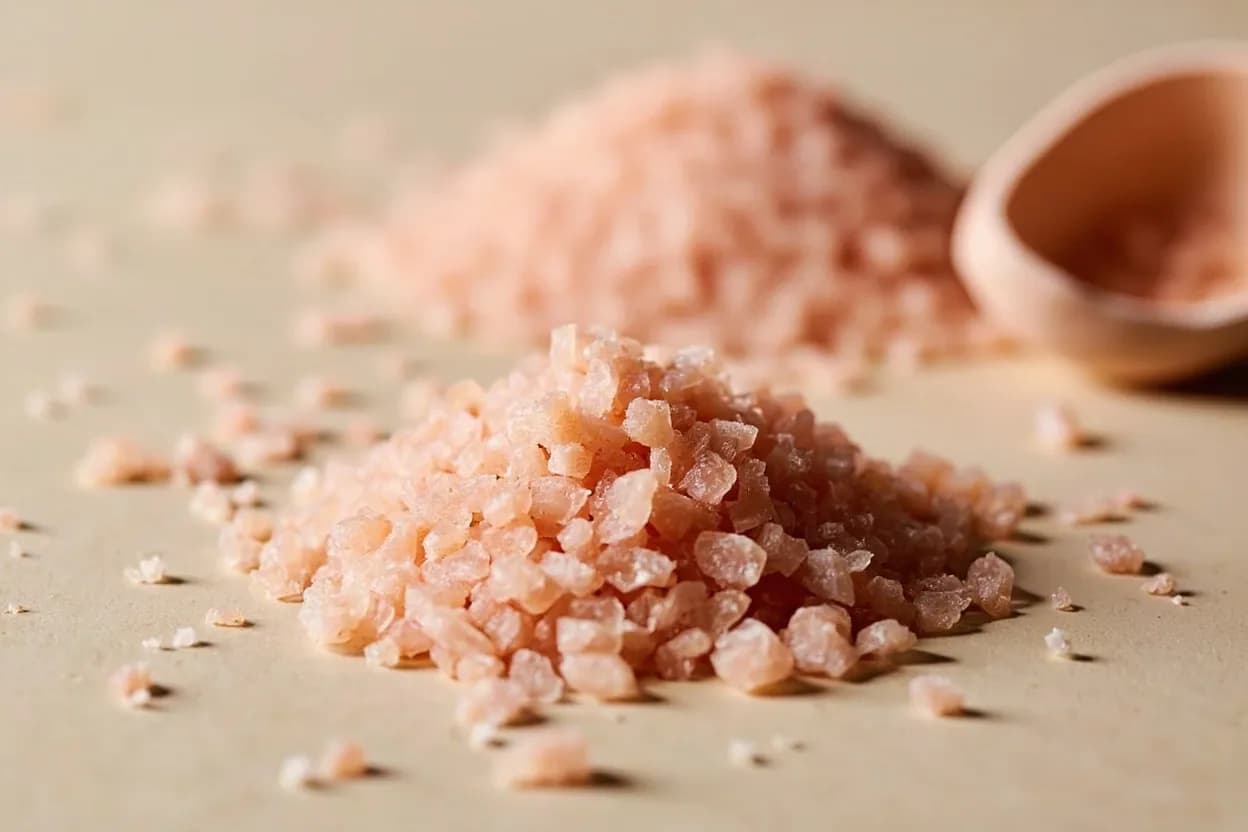
Curing Salt (Pink Salt)
Also: Prague Powder, pink curing salt, sodium nitrite, sodium nitrate, Instacure, sel rose
The invisible hand behind charcuterie — sodium nitrite that locks color, suppresses spoilage, and builds the unmistakable 'cured' flavor.
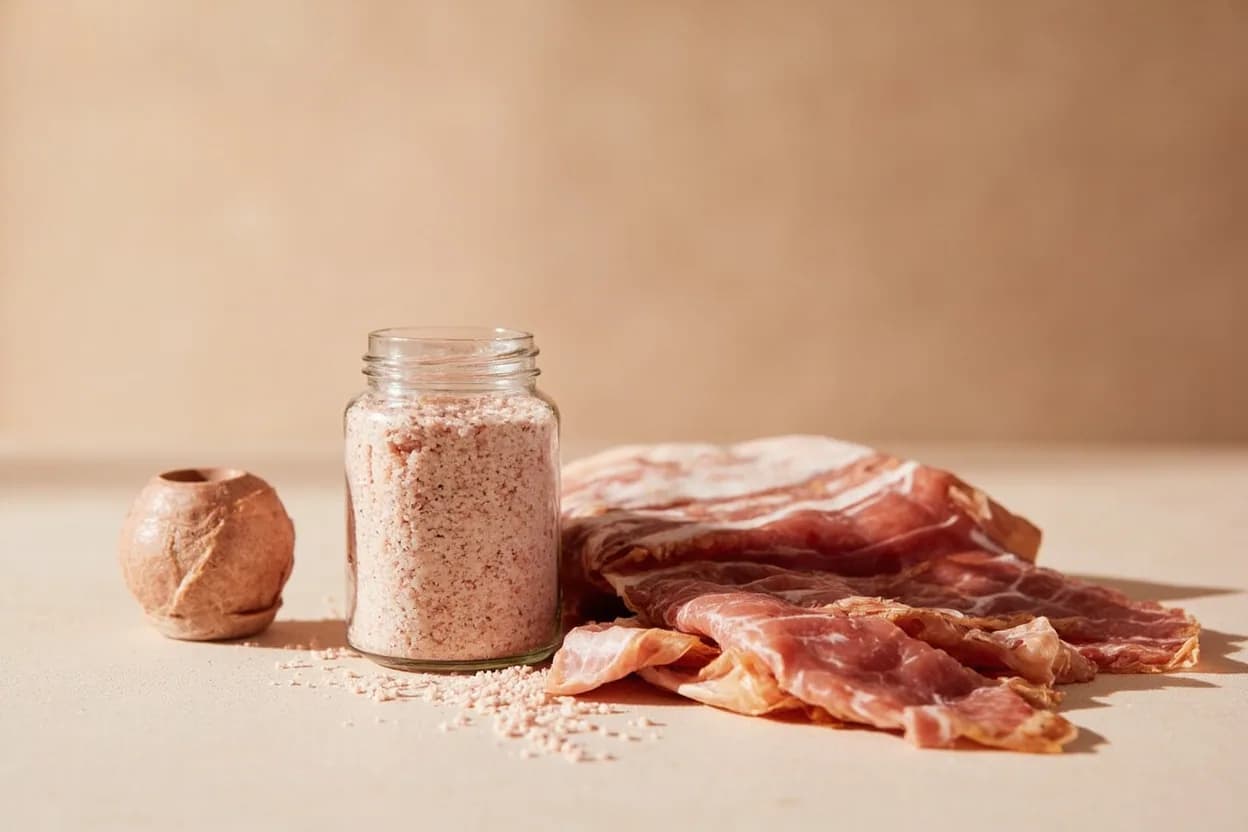
Curing salt is a mixture of table salt and sodium nitrite (Prague Powder #1, also called Instacure #1: 6.25% sodium nitrite) or sodium nitrate (Prague Powder #2, with both nitrite and nitrate for long-cured products). It is dyed pink to prevent accidental use as table salt. Nitrites react with myoglobin in meat to form nitrosomyoglobin, creating the stable pink-red color of ham, bacon, and corned beef; they also inhibit the growth of Clostridium botulinum and contribute to the characteristic 'cured' flavor — a slightly tangy, savory, mineral note distinct from fresh meat. Prague Powder #2 is used for dry-cured products that cure for weeks or months; #1 for wet brines and shorter cures.
In photos
Flavour profile
Classic pairings
- pork belly (bacon)American/European charcuterie
The archetype: nitrite cures the belly to a rosy pink, imparts the bacon cure flavor, and allows cold-smoking at safe temperatures without botulism risk.
- pork leg (prosciutto, ham)Italian/Spanish charcuterie
Prague Powder #2 enables long dry-cures — 12 to 36 months for prosciutto — by converting sodium nitrate slowly to nitrite over time, protecting the meat throughout.
- beef brisket (corned beef, pastrami)American Jewish deli
A brine of curing salt, sugar, pickling spices, and water turns brisket into corned beef — the nitrite fixes the characteristic pink interior and delivers the mild tangy cure note.
- sausages (frankfurters, mortadella, bologna)German/Italian
Curing salt in emulsified sausages fixes the pink color (otherwise they'd be grey after cooking), contributes cure flavor, and extends shelf life.
- duck confit (cured first)French
Leg quarters rubbed with curing salt, herbs, and garlic overnight before confiting gain a deeper savory complexity and blush color through nitrite reaction with duck myoglobin.
- salmon gravlaxScandinavian
Some Nordic recipes add a trace of Prague Powder #1 to gravlax for food-safety margin and a subtler 'cured' tang alongside dill and sugar.
- pancetta and guancialeItalian
Italian flat-cured pork belly and jowl rely on Instacure #2 for their characteristic flavor — the long slow conversion of nitrate to nitrite is what makes them shelf-stable and deeply savory.
Adventurous pairings
- cured lamb leg (prosciutto di agnello)
Less common outside Italy and the Basque Country, but lamb's higher myoglobin content means nitrite cures produce an even more vivid rose-red than pork, with a richer mineral flavor.
- cured egg yolks
A short cure in a mixture of curing salt, sugar, and aromatics firms yolks to a jammy, sliceable texture with an intensely concentrated savory note — used as a finishing ingredient on pasta.
- plant-based charcuterie (beet-cured seitan)
Some craft vegan charcutiers use curing salt in seitan preparations to achieve the 'cured meat' flavor profile and pink color without animal protein — the nitrite still reacts with beet pigments and proteins.
- venison bresaola
Wild game is lean and high in myoglobin; a nitrite cure produces a brilliant ruby bresaola with a gamy-mineral depth that outshines the beef original in complexity.
Tread carefully
- poultry with skin-on roastingavoid
Using curing salt on whole roasted chicken or turkey can produce a ham-like flavor and unnatural pink color throughout that misleads people into thinking the bird is undercooked.
- high-heat direct applications (frying, grilling at very high temp)avoid
At temperatures above 130 °C / 266 °F, nitrites can combine with amines to form nitrosamines — a known concern; this is why bacon is cured at low nitrite levels and why vegetables rich in amines (like fish sauce) aren't combined with nitrite cures at high heat.
- fish in very short brines without refrigerationavoid
Curing salt is not a substitute for proper cold-chain; it delays but does not prevent all spoilage — combining with unsafe holding temperatures creates false security.
How to use it
- Weigh curing salt precisely — use a gram-accurate scale; excess nitrite is toxic and insufficient nitrite is unsafe
- Equilibrium curing: calculate salt+nitrite as a percentage of meat weight (typically 2–2.5% total salt, 0.25% curing salt) and vacuum-seal for an exact, not excess, cure
- For wet brines, dissolve curing salt fully in cold water before submerging meat; never use warm water that could begin fermentation
- Prague Powder #1 for cures under 30 days; Prague Powder #2 only for long dry-cures (30 days to 18 months+)
- After curing, rinse meat thoroughly to remove surface salt before drying, smoking, or cooking
Appears in
Related flavours
- Sea Salt
The base salt in most cures; curing salt is never used alone but always blended with regular salt at a precise ratio
- Sugar (brown sugar, dhoney, maple)
Always paired with curing salt in brines and rubs — sugar balances the salt-mineral cure flavor and aids browning
Some home curers finish cured meats with smoked salt rather than cold-smoking — a shortcut that adds smoke aroma without a smoker
References
- 1.Charcuterie: The Craft of Salting, Smoking, and Curing — Michael Ruhlman & Brian Polcyn
- 2.The Art of Making Fermented Sausages — Stanley Marianski
- 3.On Food and Cooking — Harold McGee
- 4.USDA FSIS Guidelines on the Use of Nitrites and Nitrates in Meat Products
Confidence: high
Notes
Pink ≠ decorative
The vivid pink color of curing salt is a regulatory safety measure: pink dye (typically FD&C Red No. 3 or similar) is added specifically to make curing salt visually distinct from table salt. Sodium nitrite is toxic in concentrated form — even a few grams of pure sodium nitrite is dangerous — so the accidental-use prevention is critical. The dye does not impart color to the cured meat; that color comes from nitrosomyoglobin formation.
The 'cured' flavor
Beyond preservation and color, curing salt contributes an unmistakable flavor note — a slightly tangy, almost fermented savoriness that fresh meat lacks. This comes from nitrite's effects on the meat's own chemistry: lipid oxidation is slowed, certain proteolytic enzymes are active during the cure, and the fermentation of natural bacteria produces lactic acid in fermented sausages. This is why homemade prosciutto or bacon cured 'with just salt' (no nitrite) tastes fundamentally different from the commercial or traditional product.