Fermented Pastes & Sauces
Pixian Chili Bean Paste
Also: Pixian doubanjiang, 郫县豆瓣, broad bean chili paste, doubanjiang
The soul of Sichuan cooking: a slow-fermented chili-broad bean paste with oceanic depth and complex, brick-red heat.
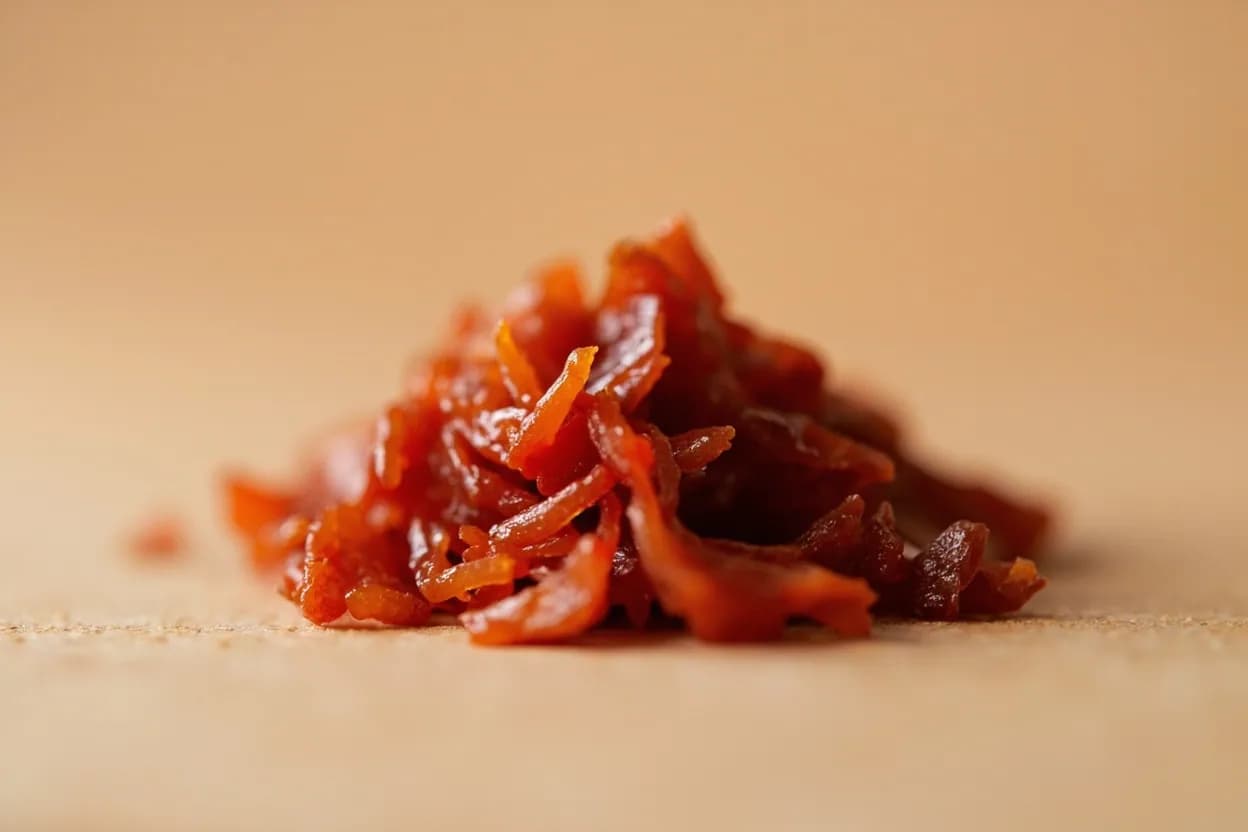
Pixian doubanjiang is a protected-designation fermented paste produced in Pixian county (now Pidu District), Chengdu, Sichuan. Made from dried er jing tiao chilies and broad beans (fava) co-fermented with salt, wheat flour, and native microflora for anywhere from 6 months to 3 years, it develops extraordinary complexity: umami from fermented bean protein breakdown, raw chili heat tempered by Maillard reactions during slow sun-turning (翻晒), and an almost savory-oceanic funk unique to aged doubanjiang. Color runs deep brick-red; aroma is pungent, meaty, and fermented; the texture is chunky with visible bean and chili fragments. It is the foundational flavoring of mapo tofu, twice-cooked pork, dan dan noodles, and Sichuan hot pot bases.
In photos
Flavour profile
Classic pairings
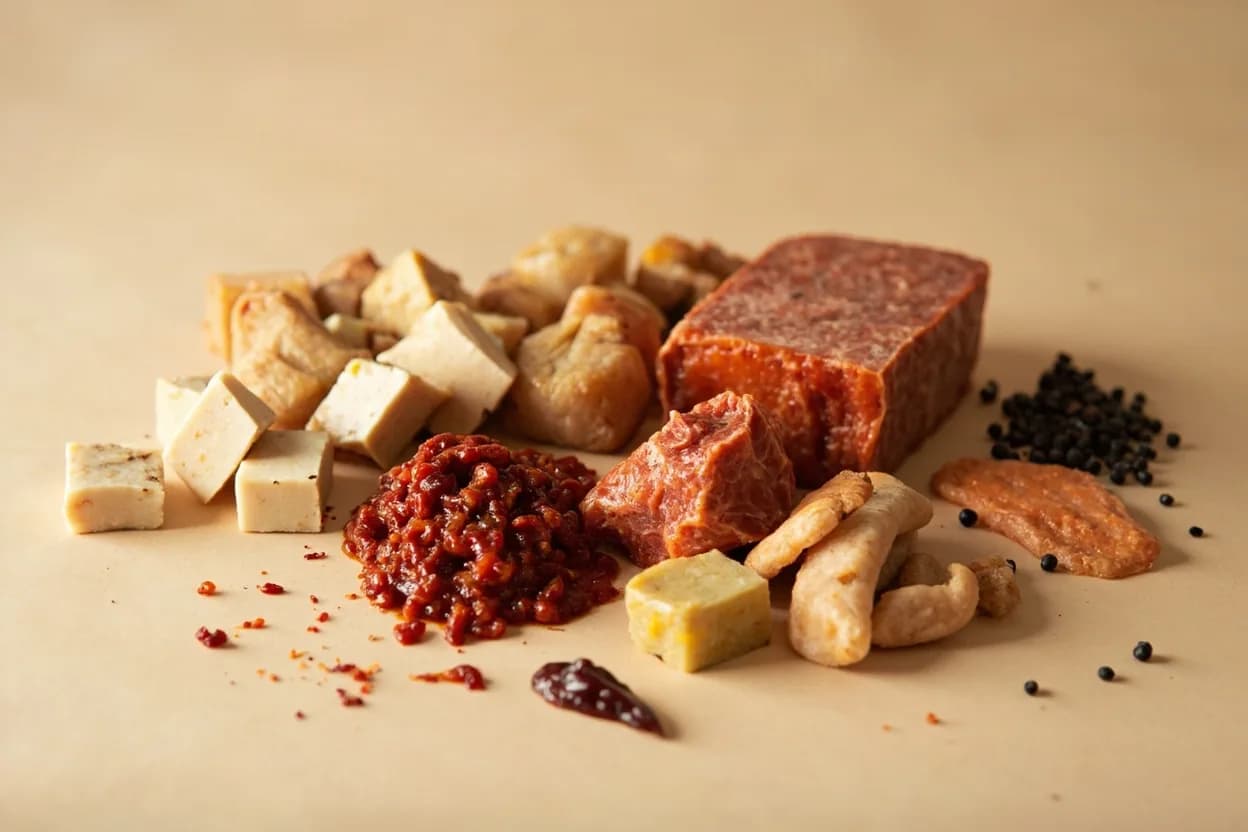
- Doufu (silken or firm tofu)Sichuan Chinese
Tofu's neutral protein canvas absorbs the paste's chili oil and umami completely; the contrast of soft curds against spiced braise is canonical in mapo tofu.
- Pork belly (wuhua rou)Sichuan Chinese
The fat in pork belly carries the fat-soluble capsaicin and pigments while tempering the paste's salinity; the backbone of hui guo rou (twice-cooked pork).
- Sichuan peppercorn (hua jiao)Sichuan Chinese
The numbing hydroxy-alpha-sanshool from hua jiao synergizes with doubanjiang's heat to create the defining mala (麻辣) sensation of Sichuan cuisine.
- Garlic and gingerSichuan Chinese
Aromatics stir-fried with doubanjiang 'bloom' the paste, driving off raw fermentation harshness and amplifying savory depth. The trio appears in virtually every Sichuan braise and sauce.
- Fermented black beans (douchi)Sichuan Chinese
Double fermented — douchi adds a second wave of umami and a bitter-earthy roundness that deepens doubanjiang's complexity without muddying it.
- Lap cheong (Chinese cured sausage)Sichuan Chinese
The sausage's sweetness and rendered fat counterbalance doubanjiang's salinity; a classic pairing in Sichuan-style stir-fried rice or mixed grain bowls.
- Eggplant (qie zi)Sichuan Chinese
Eggplant's spongy flesh and mild bitterness drink up chili oil-enriched paste in yu xiang qie zi; the fat absorption makes it voluptuously silky.
Adventurous pairings
- Dark chocolate (70%+)
The paste's roasted chili notes and chocolate's theobromine bitterness share oxidative Maillard compounds; a small amount bloomed in butter creates a compelling savory mole-like base for braised short ribs.
- Lamb shoulder
Lamb's sulfurous, gamey fat compounds are actually amplified then resolved by doubanjiang's fermented funk, creating a bold cross-cultural braise that outperforms plain chili pastes.
- Oysters (raw or roasted)
The brine and umami of raw oysters echo the oceanic quality in aged doubanjiang; a whisper of paste in a mignonette or roasted atop a half-shell amplifies both without competing.
- Miso-braised root vegetables
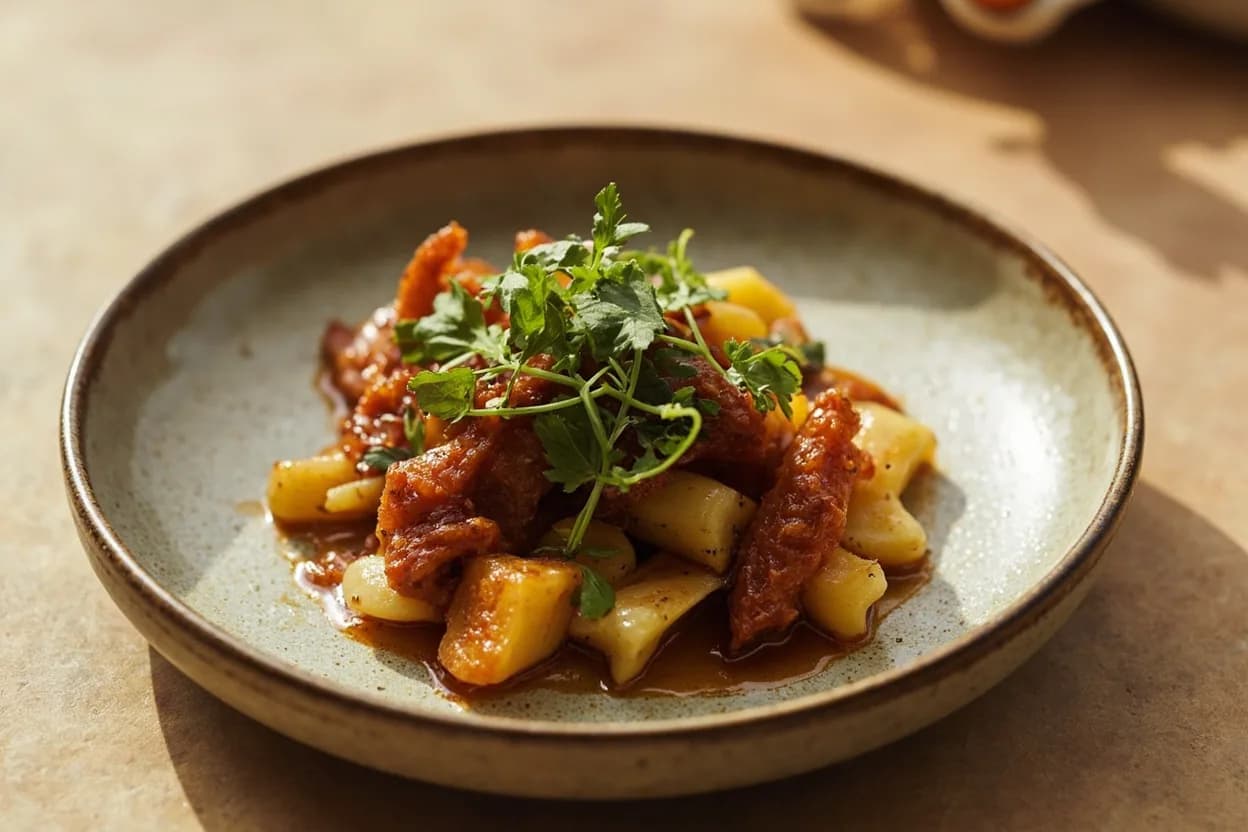
Combining Sichuan doubanjiang with shiro miso in a braise for turnips or parsnips stacks lactic-acid fermented umami from two traditions; the root vegetables provide needed starchy sweetness.
- Burrata or fresh ricotta
A drizzle of doubanjiang-chili oil over mild fresh cheese works like a sophisticated condiment — the heat and funk cut through richness in a way that plain olive oil never does.
Tread carefully
- Delicate white fish (sole, flounder)avoid
The paste's aggressive salinity and pungency overwhelm the subtle sweetness of fine-textured fish; use a lighter chili oil instead.
- Cream-based saucesavoid
The fermented funk curdles or turns bitter when combined with heavy cream at heat; the lactic acids from fermentation compete rather than complement dairy proteins.
- Raw application (uncooked)avoid
Unlike many pastes, Pixian doubanjiang releases its best color and flavor only when stir-fried in oil first; using it raw in dressings preserves the raw fermented harshness and muddy color.
How to use it
- Bloom in neutral oil over medium heat until brick-red oil separates and paste turns fragrant, 90–120 seconds — this is non-negotiable for depth and color
- Mince or roughly chop before frying if a smoother texture is desired; standard grade is coarse-chunky
- Combine with doubanjiang in the wok before adding aromatics — it hits the pan first
- Use aged (1–3 year) Pixian for braised dishes; younger paste for lighter stir-fries
- Store opened paste refrigerated, submerged in its own oil, up to 6 months
Appears in
Related flavours
Korea's fermented chili-soybean paste plays the same foundational role in Korean cuisine; similar umami-heat axis but sweeter, less funky, and with a different chili variety
Inseparable in mala cuisine — the numbing and the heat are designed to coexist
- Fermented black beans
Frequent co-ingredient in Sichuan sauces, adding another fermented umami layer
- Chili oil (hong you)
Often enriched with doubanjiang; understanding both helps calibrate heat and fat in a dish
References
- 1.Land of Plenty — Fuchsia Dunlop (W. W. Norton, 2003)
- 2.The Food of Sichuan — Fuchsia Dunlop (W. W. Norton, 2019)
- 3.On Food and Cooking — Harold McGee (Scribner, 2004)
- 4.Pixian Doubanjiang Protected Designation of Origin — China National Standard GB/T 20560-2006
Confidence: high
Notes
Frying the paste
The single most important technique: frying Pixian doubanjiang in oil (hong you bloom, or 炒香) transforms the raw, sharp fermented smell into deep, complex savoriness. The capsanthin pigments are fat-soluble — only frying extracts the vivid brick-red color. Skipping this step is the most common reason Sichuan home dishes taste flat.
Grades and aging
Premium Pixian doubanjiang is aged 1, 2, or 3 years under straw mats, turned daily to develop complexity. One-year paste is brighter and more aggressively spicy; three-year paste is darker, earthier, and has greater depth. For refined restaurant applications, aged paste is preferred; for quick weeknight stir-fries, standard one-year is sufficient.