Cheeses
Roquefort
Also: Roquefort-sur-Soulzon, the king of cheeses, Roquefort AOP
France's iconic blue: Penicillium roqueforti caves give it a pungent, salty tang and creamy richness that demands an equal partner.
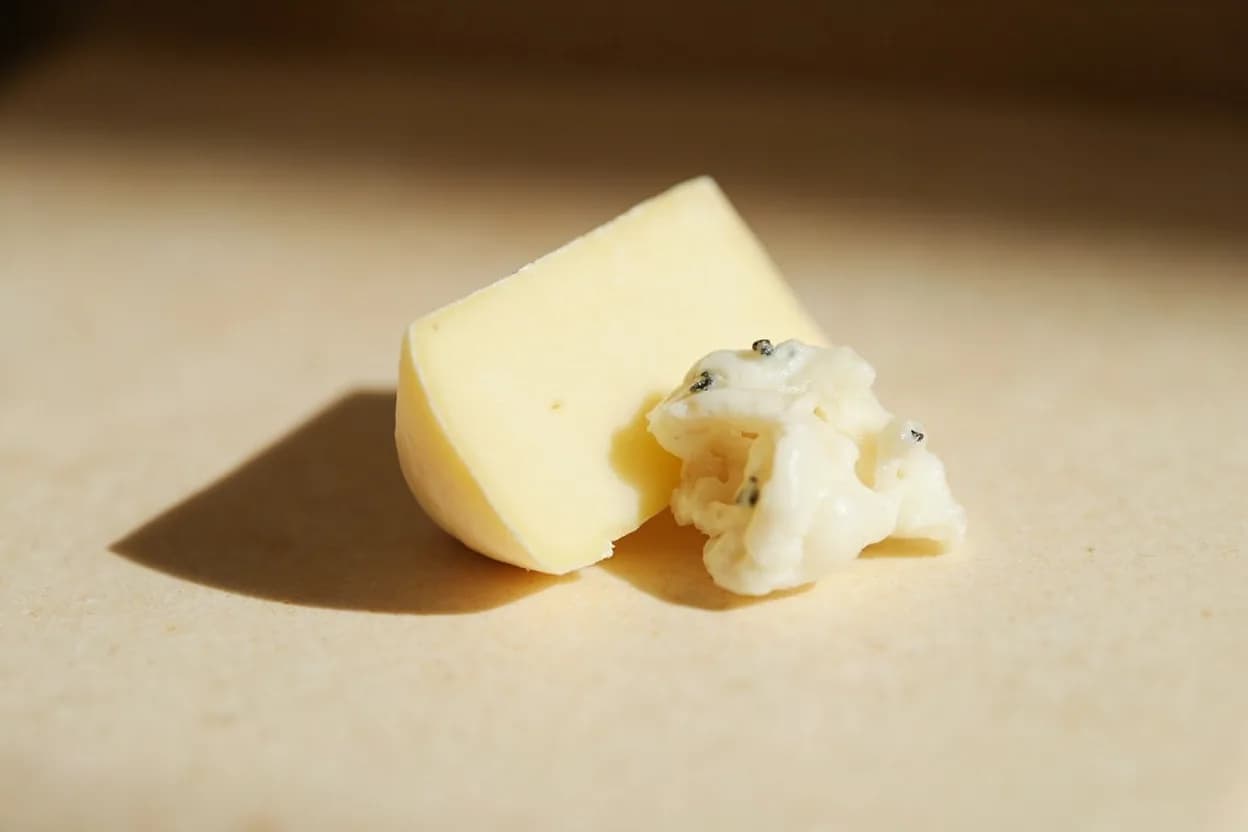
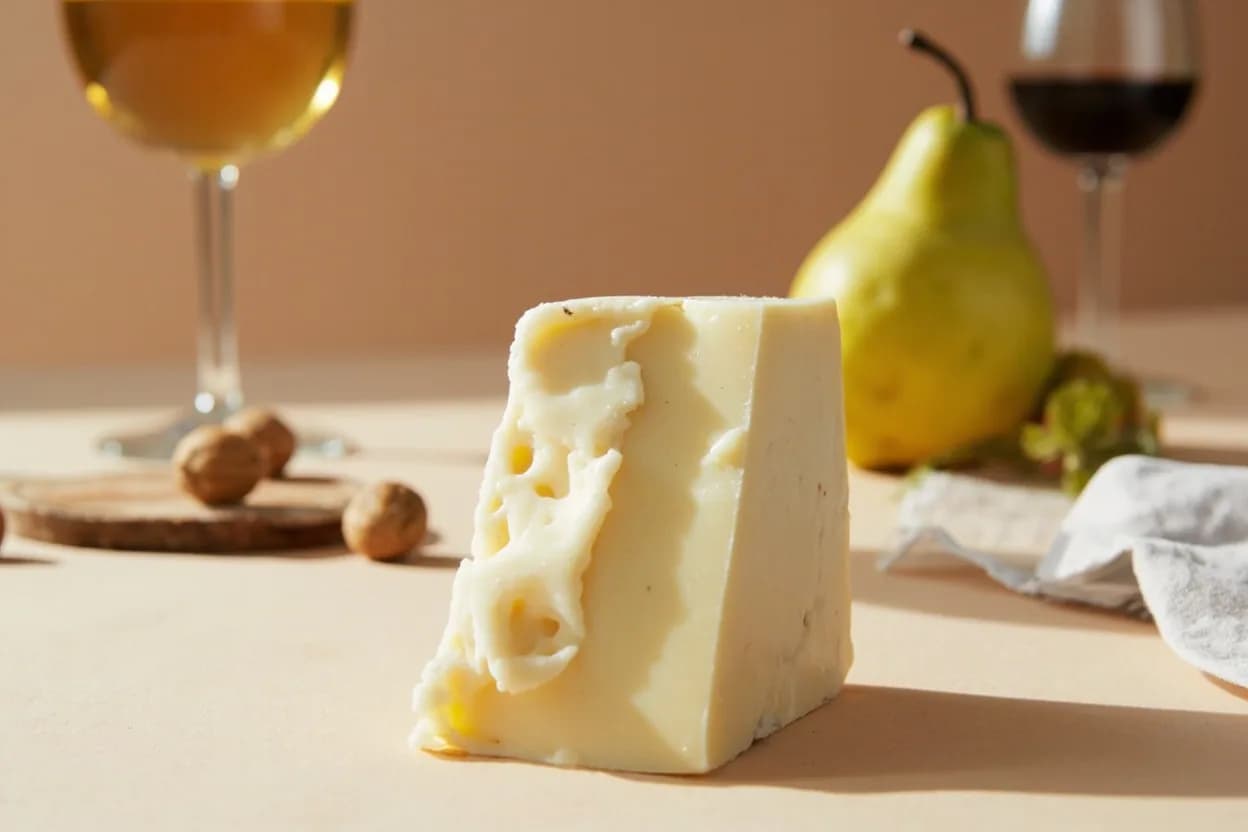
Roquefort AOP is made exclusively from raw Lacaune ewe's milk and matured in the natural Cambalou caves of Roquefort-sur-Soulzon in the Aveyron. Penicillium roqueforti spores are added to the curds; skewering the young wheels with long needles lets air in, encouraging blue-green veining. The result is ivory paste with blue-green veins, a crumbly-to-creamy texture depending on age, and a flavor that is simultaneously intensely salty, sharp, buttery, and savory — with barnyard lactic depth and a clean, peppery finish from the mold.
In photos
Flavour profile
Classic pairings
- SauternesFrench
The supreme pairing: botrytised sweetness and acidity slice through the fat while honeyed fruit harmonizes with the cheese's pungency. Brillat-Savarin called this combination 'the best alliance in the world.'
- WalnutsFrench
Tannins in walnut skins provide astringency that tempers the saltiness; the nut's bitterness mirrors the mold's edge, creating a deeply savory bite.
- Pear (Comice, Anjou)French
Ripe pear's floral sweetness and juicy acidity are the perfect fresh counterpoint; classic in salads with Roquefort dressing.
- Honey (acacia, chestnut)French
Sweet viscosity cloaks the saltiness; floral or dark-caramel honey tones echo the cheese's complexity.
- Endive (Belgian endive, radicchio)French/Belgian
Bitter chicory greens mirror the cheese's own bitter edge while their crunch and watery freshness cleanse the palate.
- CeleryFrench/American
High water content and vegetal freshness cut the heavy salt; a classic combination in Waldorf-style preparations.
- Roast beefFrench/American
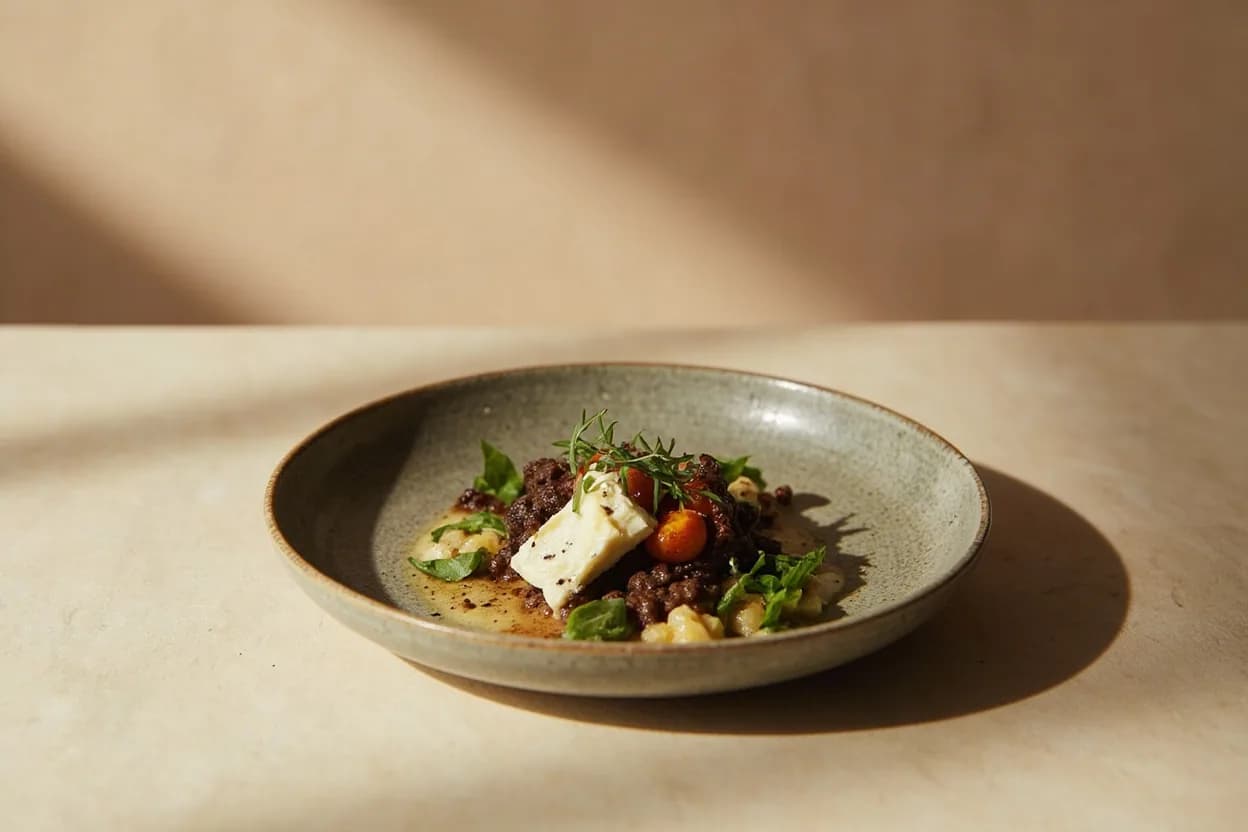
Compound Roquefort butter melted over a seared steak integrates the cheese's salt, funk, and fat into the meat's juices.
Adventurous pairings
- Dark chocolate (70%+)
Bitterness and roasted cocoa tannins parallel the mold's sharpness; both are fermented foods with complex earthiness. Use sparingly — a square alongside or shaved over.
Concentrated stone-fruit sweetness and tartaric acidity from sulphite drying act like a portable Sauternes, balancing salt and funk without liquid.
- Medjool dates
Caramel, molasses sweetness amplified by the cheese's salt creates an almost toffee-like effect — a north African crossroads for a cheese that originated in caves.
- Szechuan peppercorn (huajiao)
The citrus floral note and numbing quality play interestingly against the cheese's own peppery finish, amplifying the experience without competing.
- Port (LBV or Vintage)
Classic alternative to Sauternes — fortification cuts the brine, dark-fruit character echoes the cheese's earthiness, and residual sugar flatters the funk.
Tread carefully
- Delicate white fish (sole, sea bass ceviche)avoid
Roquefort's enormous weight and salinity bury any subtle protein; the mold flavor overwhelms.
- Dry, high-acid sparkling wine (Champagne Brut Nature)avoid
Without any residual sugar, acidity amplifies the cheese's sharpness unpleasantly into metallic astringency.
- Other strong cheesesavoid
Serving Roquefort alongside another assertive blue (Stilton, Gorgonzola) creates flavor fatigue — a board needs contrast, not competition.
How to use it
- Crumble over salads at the last moment — heat and moisture flatten the sharp aromatics
- Blend with softened butter and black pepper for a compound butter to finish steaks or lamb chops
- Whisk with crème fraîche and a splash of Cognac for a sauce-ravigote style blue dressing
- Let come to room temperature 30 minutes before serving — cold mutes the aromatic compounds
- Pipe into endive leaves or onto crostini as a cocktail canapé
Appears in
Related flavours
- Stilton
English cousin — cow's milk blue, creamier and less salty; shares the sweet-wine pairing logic but accepts Port more readily than Sauternes.
- Gorgonzola Dolce
Italian counterpart with a softer, butterier texture and milder funk — more approachable but follows the same walnut-and-pear pairing logic.
- Sauternes
The canonical pairing wine — their relationship defines how sweet wine unlocks blue cheese.
References
- 1.The Physiology of Taste — Jean Anthelme Brillat-Savarin (1825)
- 2.Cheese: A Connoisseur's Guide to the World's Best — Max McCalman & David Gibbons (Clarkson Potter, 2005)
- 3.The Oxford Companion to Cheese — ed. Catherine Donnelly (Oxford University Press, 2016)
- 4.Roquefort AOP Cahier des Charges (INAO specifications)
Confidence: high
Notes
Why Sauternes works so perfectly
Botrytis cinerea — the 'noble rot' of Sauternes grapes — is a mold, just as Penicillium roqueforti is a mold. Both are products of controlled fungal transformation, and their flavor compounds echo each other. The wine's glycerol coats the palate against the salt while residual sugar pulls the cheese's buttery notes forward.
Sourcing note
Genuine Roquefort must be aged in the Combalou caves — the constant 8–10°C temperature and specific humidity allow only Roquefort's licensed cave operators to produce it. Imitations aged elsewhere lack the mineral quality conferred by the cave's unique microclimate.