Dried Fruits
Quince
Also: beh, membrillo, coing, marmelo, sfymdonia
Floral, astringent, and deeply perfumed — quince turns silky and rosy-sweet with heat.
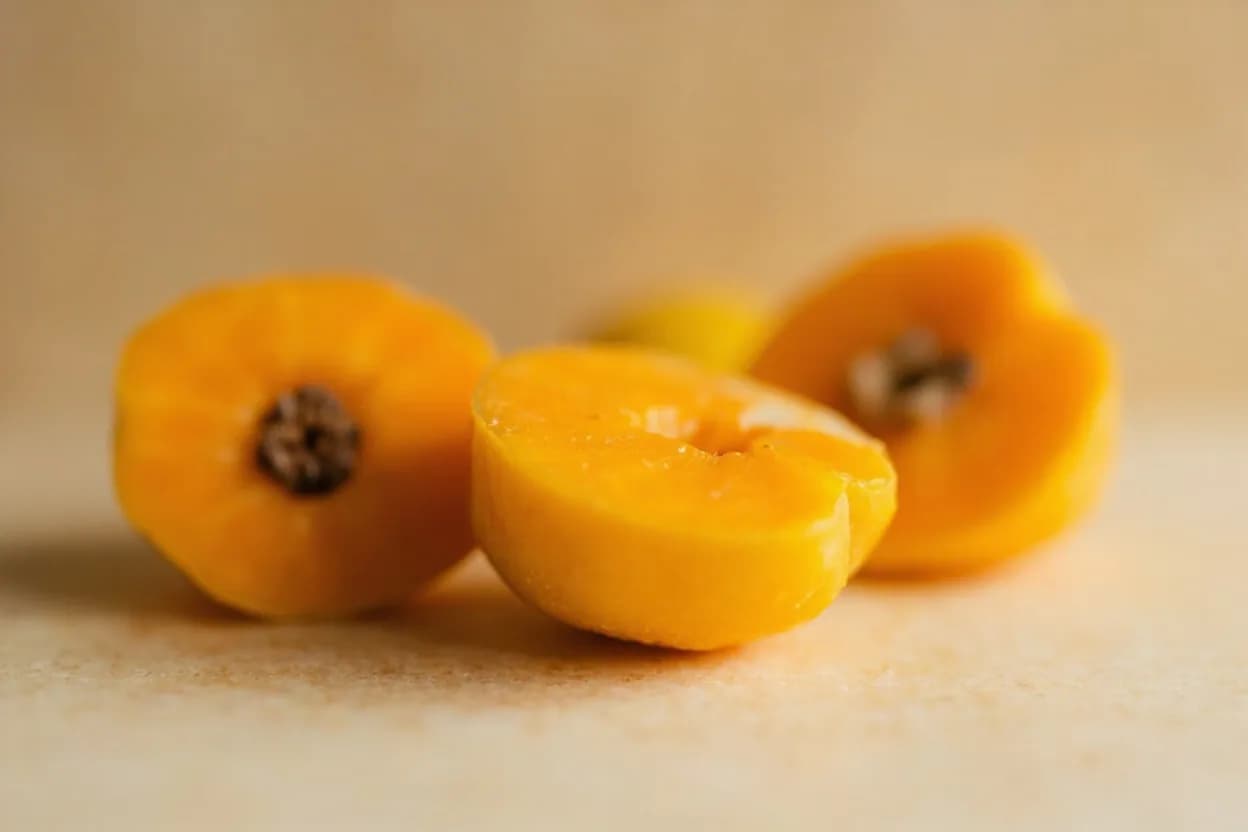
Quince (Cydonia oblonga) is a hard, golden-yellow fruit with a woolly skin that is virtually inedible raw due to its harsh tannins and dense flesh. When cooked, tannins soften, the fruit blushes deep coral-pink, and a haunting floral fragrance — part rose, part apple, part guava — blooms fully. Its high pectin content makes it invaluable for jellies and pastes. The flavor sits at the intersection of astringency, floral sweetness, and a faintly musky depth that no other fruit replicates.
In photos
Flavour profile
Classic pairings
- LambPersian / Moroccan
Quince's sweet-tart acidity cuts through fatty lamb and adds floral complexity; the combination is iconic in Persian khoresh-e-beh and Moroccan tagines.
- Manchego cheeseSpanish
Membrillo (Spanish quince paste) with Manchego is a canonical tapas pairing — the tangy paste's sweetness contrasts the salty, buttery sheep's-milk cheese.
- CinnamonPersian / Spanish
Warm spice amplifies quince's inherent fruitiness; used together in Persian stews, Middle Eastern preserves, and European confituras.
- PorkPortuguese / Catalan
Quince's pectin-rich sweetness reduces into glossy sauces that complement rich pork belly or shoulder; common in Portuguese and Catalan cooking.
- AlmondsPersian / French
The bitter nuttiness of almonds provides a grounding contrast to quince's perfume; combined in Persian khoresh, Moorish pastries, and French tarts.
- SaffronPersian
Quince and saffron share a honeyed floral register; together they create the signature gilded perfume of Persian rice dishes and festive braises.
- HoneyGreek / North African
Honey reinforces quince's natural sweetness and helps it caramelize; used together in roasted quince, North African compotes, and Greek spoon sweets.
Adventurous pairings
The funky, salty punch of Roquefort or Gorgonzola is tamed beautifully by quince paste's tannic sweetness — a more adventurous alternative to Manchego.
- Duck breast
Quince's floral acidity cuts through duck fat the way cherry or orange does, but with a more exotic, perfumed character that elevates the pairing.
- Cardamom
Cardamom's cool eucalyptus-floral note echoes quince's own florality; together in a poached quince or jam they create a deeply aromatic Middle Eastern-style preserve.
- Aged balsamic
A drizzle of aged balsamico on quince paste concentrates sweet-sour depth; the two share oxidative, honeyed character that makes cheese plates sing.
Tread carefully
- Raw preparations with strong raw onionavoid
Quince's raw astringency combined with sharp onion creates an unpleasantly harsh, bitter profile; quince almost always needs cooking first.
- Very light, delicate white fishavoid
Quince's intense perfume and tannin overwhelm subtle fish like sole or turbot; better reserved for robust meats.
How to use it
- Slow poach in sugar syrup with spices until the flesh turns deep rose
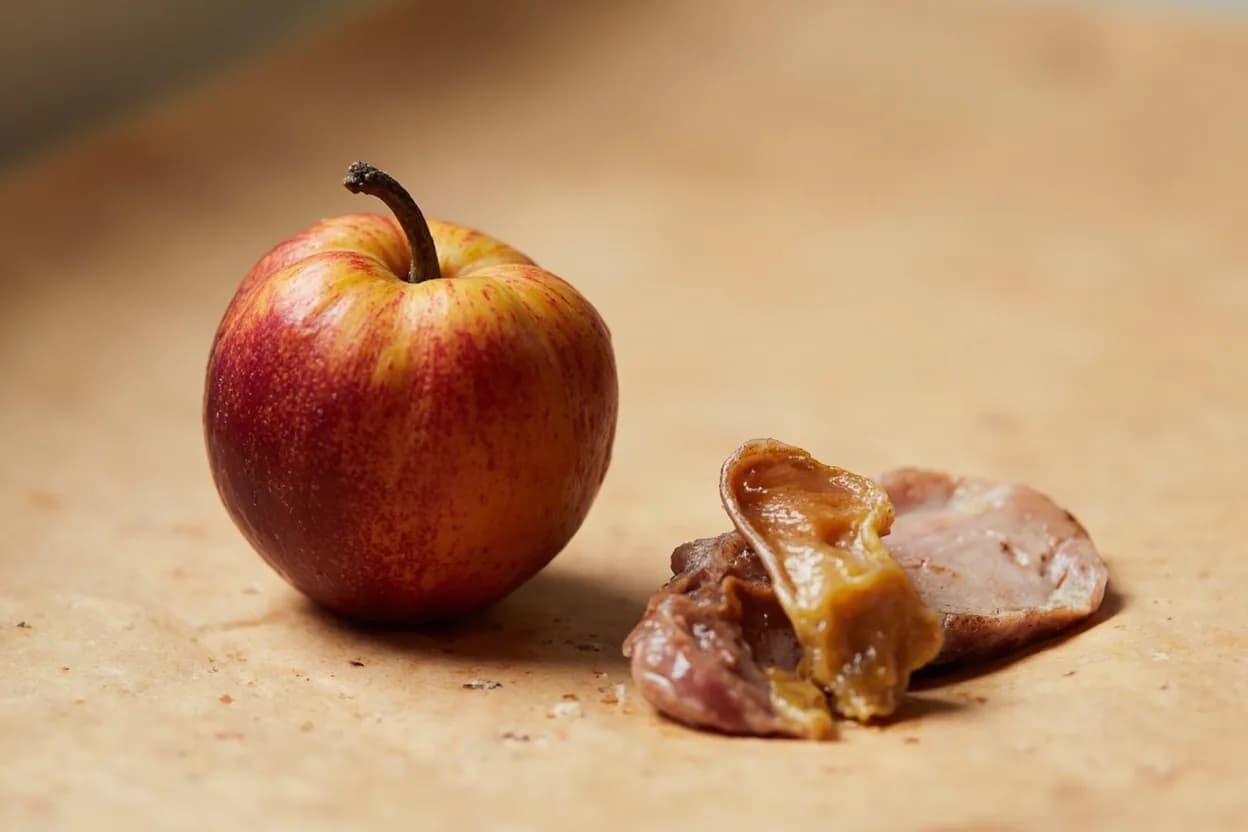
- Reduce to a thick paste (membrillo/cotignac) by cooking with equal weight sugar until it sets
- Braise alongside meat for the last 45 minutes to soften without dissolving
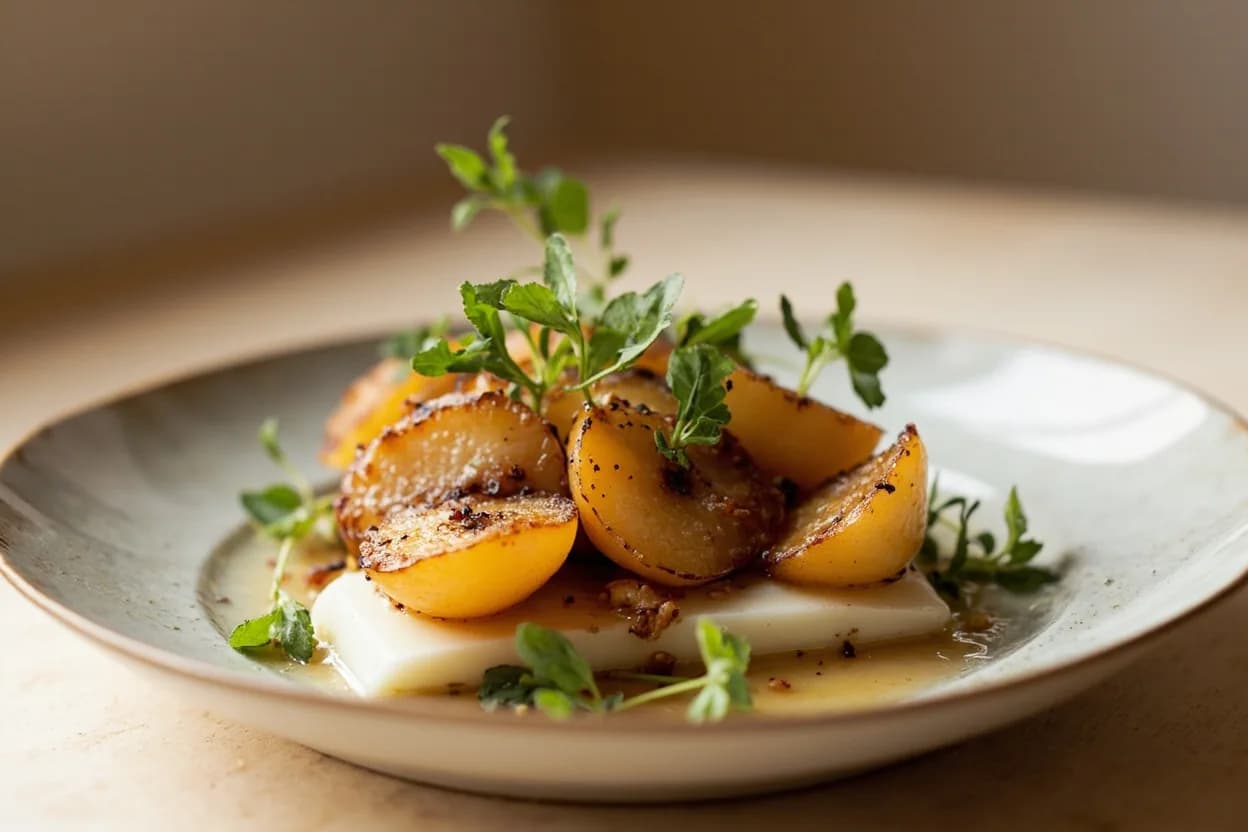
- Roast halved with butter, honey, and spices at 190°C until caramelized
- Steep in spirits (brandy, armagnac) for quince ratafia or liqueur
Appears in
Related flavours
- Apple
Quince and apple are botanical relatives; apple's milder sweetness makes it a useful pairing or substitute in quince recipes.
- Pomegranate
Both quince and pomegranate are pillars of Persian sour-sweet cooking and frequently appear together in khoresh.
- Dried apricot
Shares quince's role in Persian and Moroccan tagines; the two appear side by side as a sweet-tart fruit element in braises.
References
- 1.The Oxford Companion to Food — Alan Davidson (3rd ed.)
- 2.Plenty More — Yotam Ottolenghi
- 3.A Book of Middle Eastern Food — Claudia Roden
- 4.Moro: The Cookbook — Sam and Sam Clark
Confidence: high
Notes
The Pink Transformation
Raw quince is cream-colored and harsh; slow cooking triggers an anthocyanin reaction that turns the flesh a luminous coral-pink. The longer and slower the cook, the deeper the color — a fully braised quince can reach a rich burgundy. This color change is a reliable visual cue for doneness and readiness.
Pectin Power
Quince contains more pectin than almost any other fruit, which is why membrillo sets firm enough to slice without added gelatin. When added to jams made from low-pectin fruits (strawberry, cherry), a piece of quince boiled alongside will naturally help the preserve set.