Sweet Aromatics
Coconut Sugar
Also: palm sugar, gula melaka, gula jawa, coconut palm sugar, coconut blossom sugar
A warm, caramel-tropical sweetener with butterscotch depth and a mild molasses note — the soul of Southeast Asian sweets.
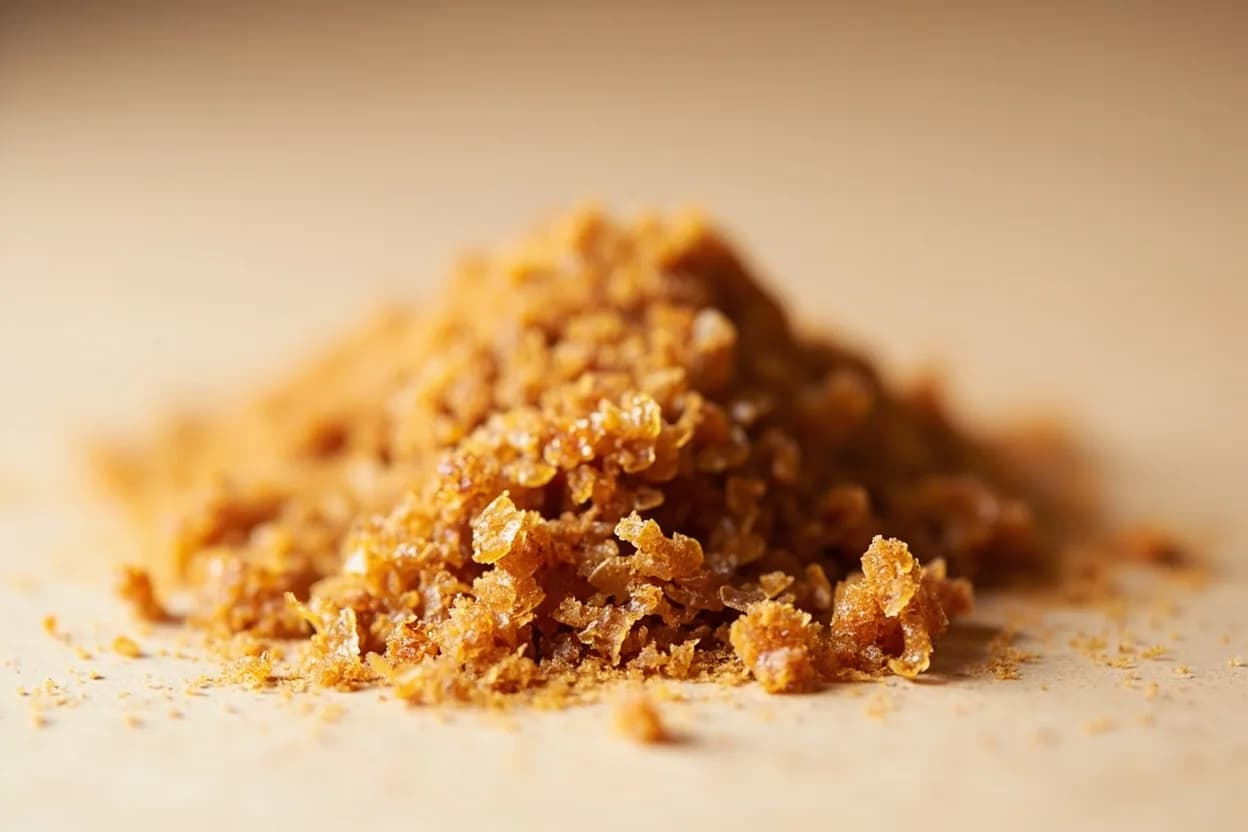
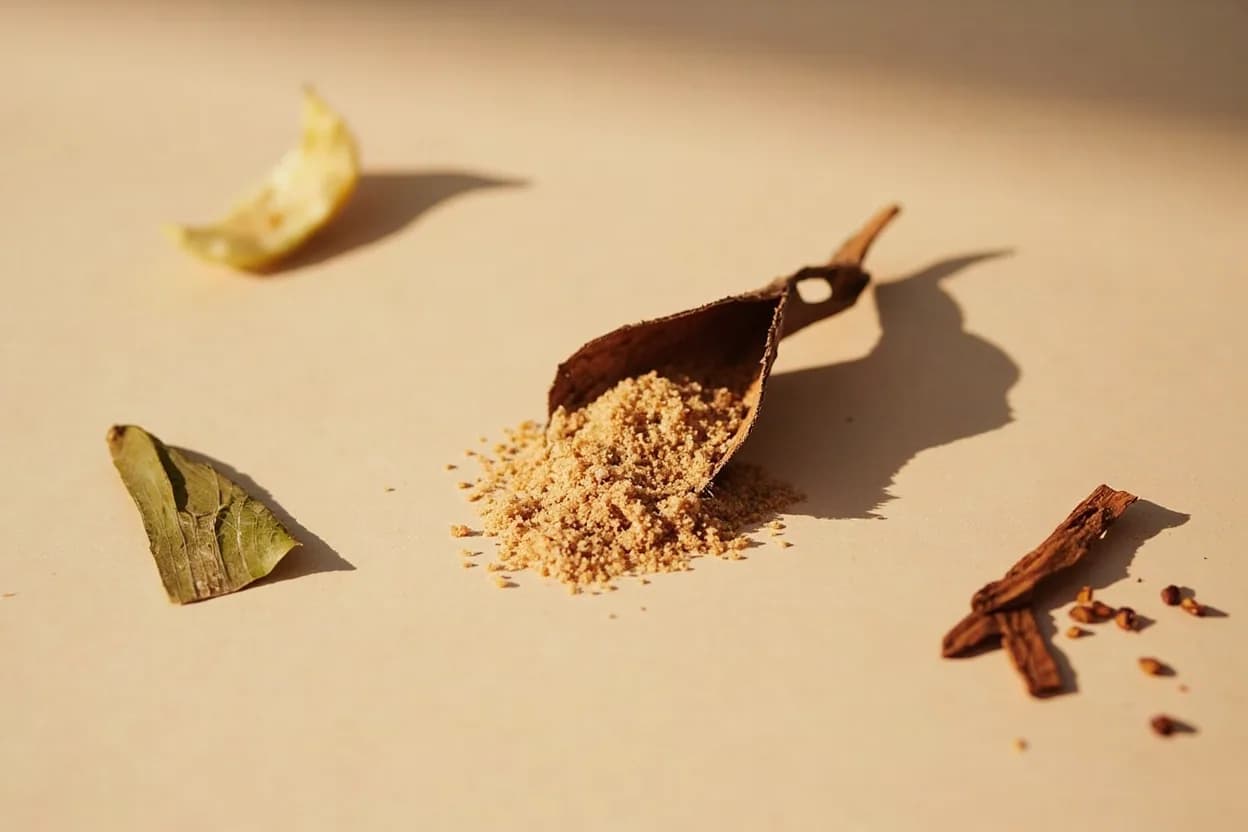
Coconut sugar is produced by collecting the nectar from the cut flower buds of coconut palms (Cocos nucifera), then slowly boiling the sap until it thickens and crystallizes. Unlike refined white sugar, coconut sugar retains trace minerals (potassium, iron, zinc) and amino acids, giving it a more complex flavor: warm caramel up front, followed by butterscotch, a hint of toffee, and a faintly tropical finish. In block form it is called gula melaka (Malaysia) or gula jawa (Java). Its lower glycemic index compared to sucrose and its distinctive flavor have made it a favored alternative sweetener globally, though in Southeast Asia it is simply the indigenous sugar — it always was.
In photos
Flavour profile
Classic pairings
- Coconut milkMalaysian, Indonesian, Thai
The logical partner — coconut sugar and coconut milk share the same botanical origin. Together in bubur cha cha, onde-onde filling, or sago pudding they produce a doubled, layered coconut sweetness with creamy balance.
- Pandan leavesMalaysian, Singaporean, Thai
Pandan's grassy, vanilla-adjacent aroma lifts coconut sugar's caramel into fragrant sweetness — this pairing defines Malaysian desserts from kuih to pandan cake.
- TamarindThai, Malaysian
Coconut sugar's sweetness tempers tamarind's sharp tartness in Thai pad thai sauce and assam dishes — each moderates the extreme of the other into sour-sweet harmony.
- Fresh gingerIndonesian, Southeast Asian
Ginger's spicy heat cuts through coconut sugar's warmth in Indonesian wedang jahe (ginger tea) and in ginger snaps — together they produce a warming, spiced sweetness.
- Dark roast coffeeVietnamese, Indonesian
Coconut sugar's caramel notes complement coffee's roasted bitterness better than white sugar; it dissolves readily and adds a butterscotch dimension to Vietnamese cà phê and Indonesian kopi.
- Sticky glutinous riceThai, Malaysian, Indonesian
Coconut sugar is the classic sweetener for Southeast Asian rice desserts — it soaks into sticky rice to create chewy, caramel-perfumed textures in mango sticky rice and klepon.
- BananaThai, Filipino
Banana's natural sugars resonate with coconut sugar's caramel — together in Thai fried bananas (kluai tod) or banana cake they create an intensified tropical sweetness.
Adventurous pairings
- Dark chocolate (70%+)
Coconut sugar's butterscotch and the bitterness of dark chocolate create a sophisticated, less-sweet confection than conventional chocolate bars — with a tropical undertone.
Combining coconut sugar's caramel sweetness with white miso's salty umami produces a complex glaze for roasted root vegetables or salmon — sweet-salty-earthy with surprising depth.
Black sesame's nutty, bitter depth contrasts beautifully with coconut sugar's warm sweetness in ice cream, pudding, or halva-style confections.
- Cardamom
Cardamom's floral, eucalyptus character lifts coconut sugar's warm earthiness into a perfumed sweetness that works well in spiced baked goods and chai.
Coconut sugar's caramel sweetness bridges well with the intense salt and funk of blue cheese on a cheese board — a less conventional alternative to honey.
- Espresso and caramelized onion
A pinch of coconut sugar added to caramelizing onions accelerates browning and adds a tropical-butterscotch note — combine with espresso for a deeply savory glaze for pork or duck.
Tread carefully
- Delicate floral desserts (rosewater, violet)avoid
Coconut sugar's earthy caramel can overwhelm the ethereal quality of floral flavors — use white sugar to keep those notes clean and bright.
- Lemon-forward preparationsavoid
Coconut sugar's warm, brown-sugar earthiness muddies fresh citrus brightness; white sugar or honey better preserve the clean tartness of lemon curd or citrus sorbet.
- Light-colored confections (white meringue, panna cotta)avoid
Coconut sugar's color is unavoidable — it turns things brown. Use only when you want the color as well as the flavor.
How to use it
- Dissolve in a small amount of warm water to make a liquid sweetener for dressings and sauces
- Grate or finely chop block gula melaka before adding to desserts for even melting
- Use 1:1 as a brown sugar substitute in baking; expect slightly more moisture due to mineral content
- Caramelize in a pan with coconut cream to make a Southeast Asian butterscotch sauce
- Simmer with pandan leaves and coconut milk to make kaya (coconut jam)
Appears in
Related flavours
- Palm Sugar (non-coconut varieties)
Related product from other palm species — similar caramel profile but less tropical, sometimes darker and smokier
Closest Western substitute — shares molasses warmth but lacks coconut sugar's tropical nuance; substitute at 1:1
South Asian unrefined cane or date palm sugar — similar earthiness and mineral complexity, used interchangeably in non-traditional contexts
References
- 1.Hot Sour Salty Sweet: A Culinary Journey Through Southeast Asia — Jeffrey Alford & Naomi Duguid (Artisan, 2000)
- 2.The Food of Malaysia — Wendy Hutton (Periplus, 2015)
- 3.On Food and Cooking: The Science and Lore of the Kitchen — Harold McGee (Scribner, 2004)
- 4.Coconut: 80 Delicious Recipes — Ghillie Basan (Lorenz Books, 2015)
Confidence: high
Notes
Gula melaka vs. block vs. granulated
In Malaysia and Indonesia, coconut sugar is sold in cylindrical blocks wrapped in banana leaf — this is gula melaka, and it has the deepest, most complex flavor, often with a slight smokiness from the boiling process. Granulated coconut sugar (sold widely in health food stores) is more convenient but trades some depth for shelf stability. For serious Southeast Asian desserts, hunt for the block form.