Cheeses
Halloumi
Also: hellim, halloumi PDO, grilling cheese, squeaky cheese
A high-melt Cypriot cheese built for the grill — salty, squeaky, and bronzed on the outside with a yielding interior that anchors salads and mezze with rare textural authority.
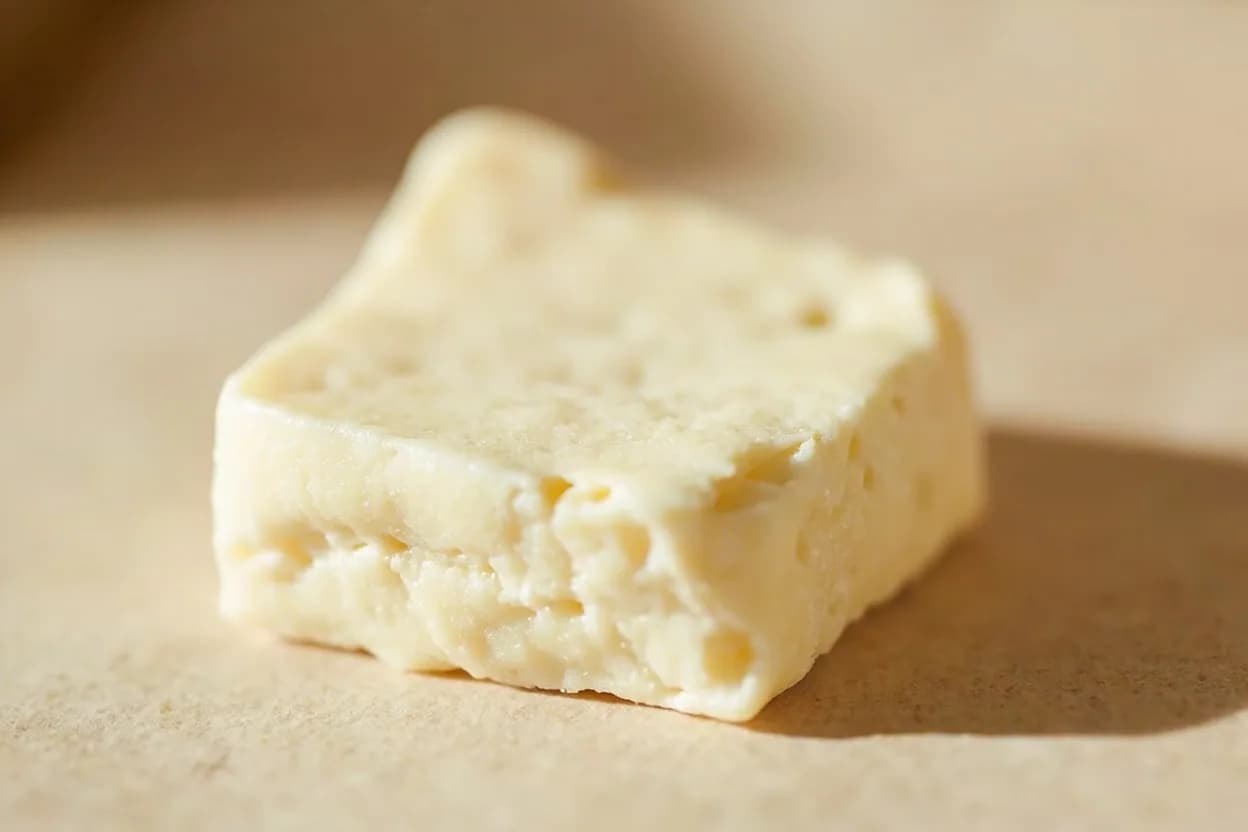
Halloumi is a semi-hard, unripened, brined cheese produced in Cyprus (PDO since 2021) from a mixture of sheep's and goat's milk, sometimes with added cow's milk. Its defining characteristic is an unusually high melting point — a result of the whey being heated during production (a process similar to pasta filata) and the cheese then being brined and dried — which allows it to be pan-fried or grilled without losing its shape. It has a firm, squeaky texture, a pronounced saltiness, and a mild milky flavour that develops grassy, caramelised, and slightly rubbery notes on the grill.
In photos
Flavour profile
Classic pairings
- WatermelonCypriot
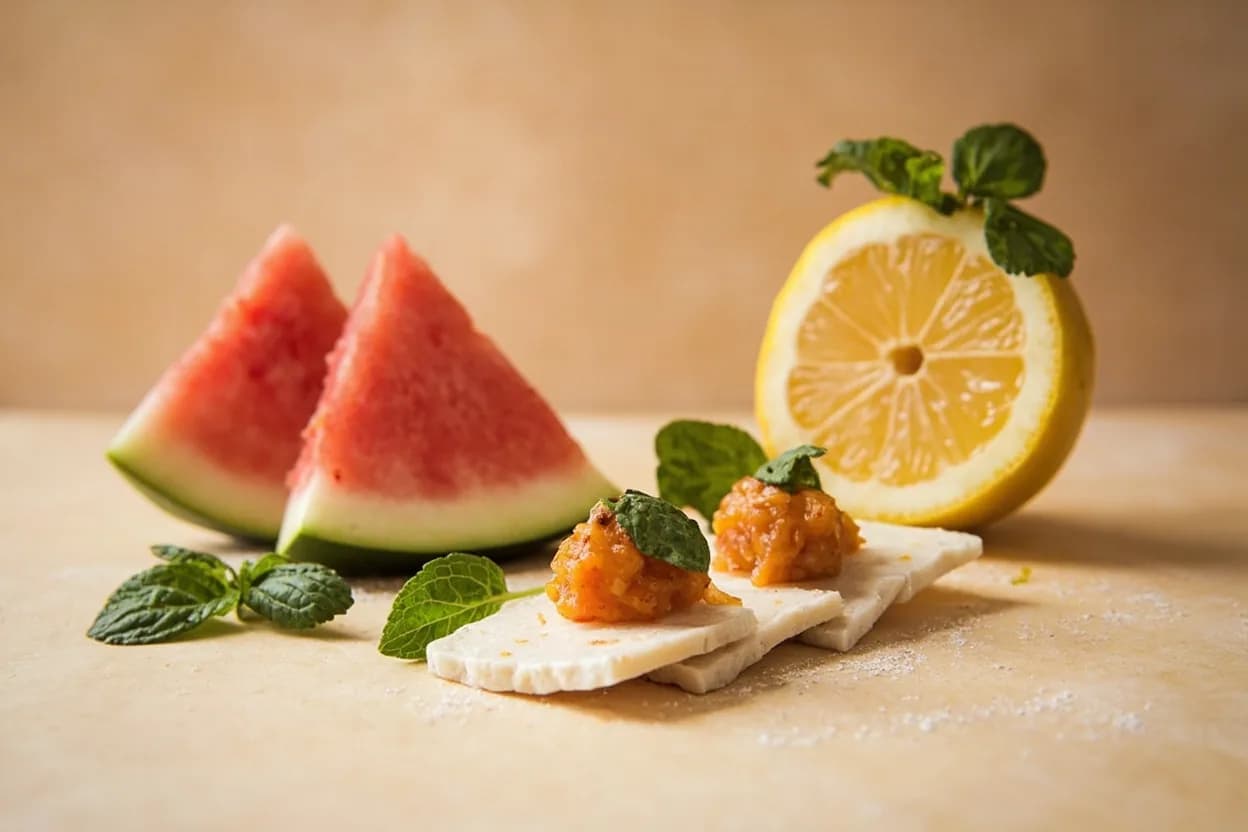
Pure sucrose sweetness and water-freshness from watermelon are the ideal shock-absorber for halloumi's salt; the contrast is a Cypriot summer fixture and a visually dramatic plate.
- LemonCypriot / Eastern Mediterranean
A squeeze of lemon directly over freshly grilled halloumi brightens and cuts the fat instantly; acid signals the finish and prevents the saltiness from lingering too long.
- Fresh mintCypriot
Mint's menthol coolness is a traditional Cypriot partner; it counters the heat of grilling and adds an aromatic freshness that lifts the cheese's milky baseline.
- Grilled courgette (zucchini)Cypriot
Mild, sweet courgette shares the grill and absorbs halloumi's rendered fat; together they form the core of Cypriot vegetable mezze without either ingredient overwhelming the other.
- Tomatoes (grilled or raw)Eastern Mediterranean
Acidity from tomatoes cuts halloumi's salt and fat; shared Mediterranean context makes the pairing intuitive across Greek, Turkish, and Cypriot tables.
- Flatbread or pitaCypriot / Levantine
Neutral, chewy bread is the vehicle that moderates each salty bite and provides textural contrast to the dense, firm cheese; essential for mezze service.
Adventurous pairings
- Pomegranate seeds and sumac
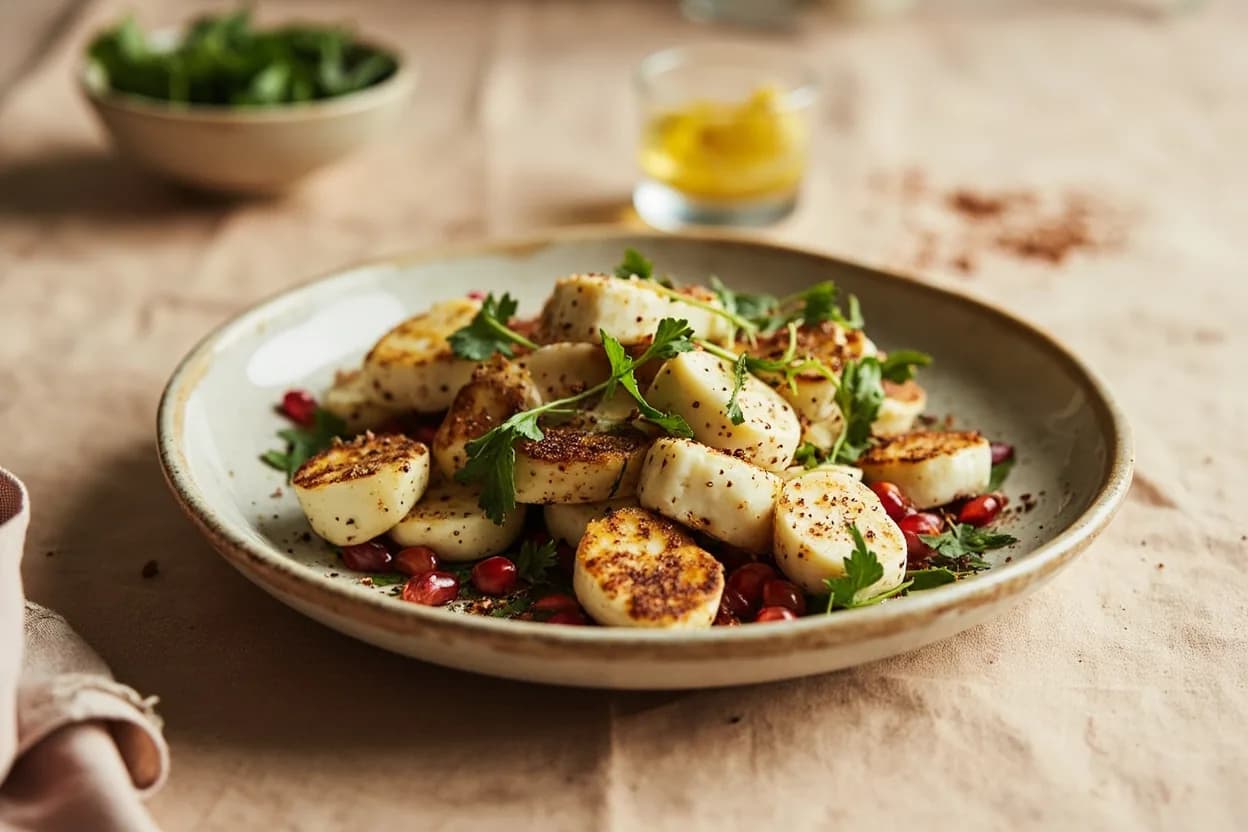
Tart, jewel-bright pomegranate seeds and acidic sumac attack halloumi's salt from multiple directions; the visual contrast on a white platter makes the dish feel celebratory.
- Fig jam or fresh figs
Sweet fig preserves share the Levantine pantry with halloumi; the fruit's jammy, musky sweetness creates a honey-salt dynamic that is especially effective on bruschetta.
- Nduja or merguez
Fiery cured meat alongside grilled halloumi is a hot-salty-fat trifecta; the cheese moderates the heat while the chili amplifies the Maillard caramel notes in the cheese's crust.
- Candied walnuts
Bitter tannin in walnuts plus caramelised sugar creates a sweet-bitter-nutty foil for halloumi's straight salinity; adds crunch that the cheese itself never provides.
- Chili honey drizzle
Warm honey cut with chili flakes over hot halloumi triggers the sweet-heat-salt triangle simultaneously; a rapidly popularised combination in modern mezze restaurants.
Tread carefully
- Heavy cream saucesavoid
Halloumi is already rich and salty; adding a cream element doubles the dairy without providing acid relief, and the dish becomes palate-fatiguing quickly.
- Delicate poached or steamed fishavoid
The assertive salinity of halloumi overwhelms gentle flavours; serve alongside bold, oily fish (sardines, mackerel) only.
- Cold serviceavoid
Cold halloumi is rubbery, squeaky to the point of unpleasantness, and overly salty without the caramelised contrast that grilling provides; always serve hot from the pan.
How to use it
- Grill or pan-fry dry (no oil) in a very hot cast-iron or ridged grill pan for 1–2 minutes per side until deeply golden — the cheese releases its own fat
- Pat dry with a paper towel before grilling; surface moisture causes steaming rather than searing
- Slice 1cm thick — thinner slices dry out before browning, thicker slices don't cook through
- Soak in cold water for 30 minutes before cooking to reduce salt if the batch is particularly briny
- Serve within 2–3 minutes of cooking; halloumi hardens as it cools and loses its yielding centre
Appears in
Related flavours
Fellow eastern Mediterranean brine cheese but feta is un-cookable at high heat; halloumi occupies the grilling role feta cannot fill
South Asian non-melting fresh cheese with comparable grilling behaviour; milder and less salty, with different pairing logic around spice
- Queso blanco
Mexican/Central American non-melting white cheese with similar grilling properties; different flavour signature (milder, less briny)
References
- 1.The Oxford Companion to Cheese — Donnelly, C. (ed.), Oxford University Press, 2016
- 2.Cypriot Cuisine — Mavrommati, M., Interworld Publications, 2005
- 3.Meze: Small Plates from the Middle East — Helou, A., Kyle Books, 2016
Confidence: high
Notes
PDO and the Cyprus identity
Halloumi / Hellim received EU PDO status in 2021 after a lengthy dispute that touched on the political division of Cyprus. The name 'hellim' is the Turkish Cypriot designation for the same cheese; both Greek and Turkish Cypriot communities produce it under shared cultural ownership. The PDO requires traditional production methods including the use of sheep's or goat's milk (or a blend with cow's milk) but mandates no proportion minimum — meaning 100% cow's milk versions exist legally under the PDO umbrella, though traditionalists consider these inferior.