Spice Blends
Herbes de Provence
Also: herbes de Provence, Provençal herb blend, herbs of Provence
The sun-dried perfume of the French south — thyme, rosemary, savory, and lavender blended for grilled meats, roasted vegetables, and olive oil dishes.
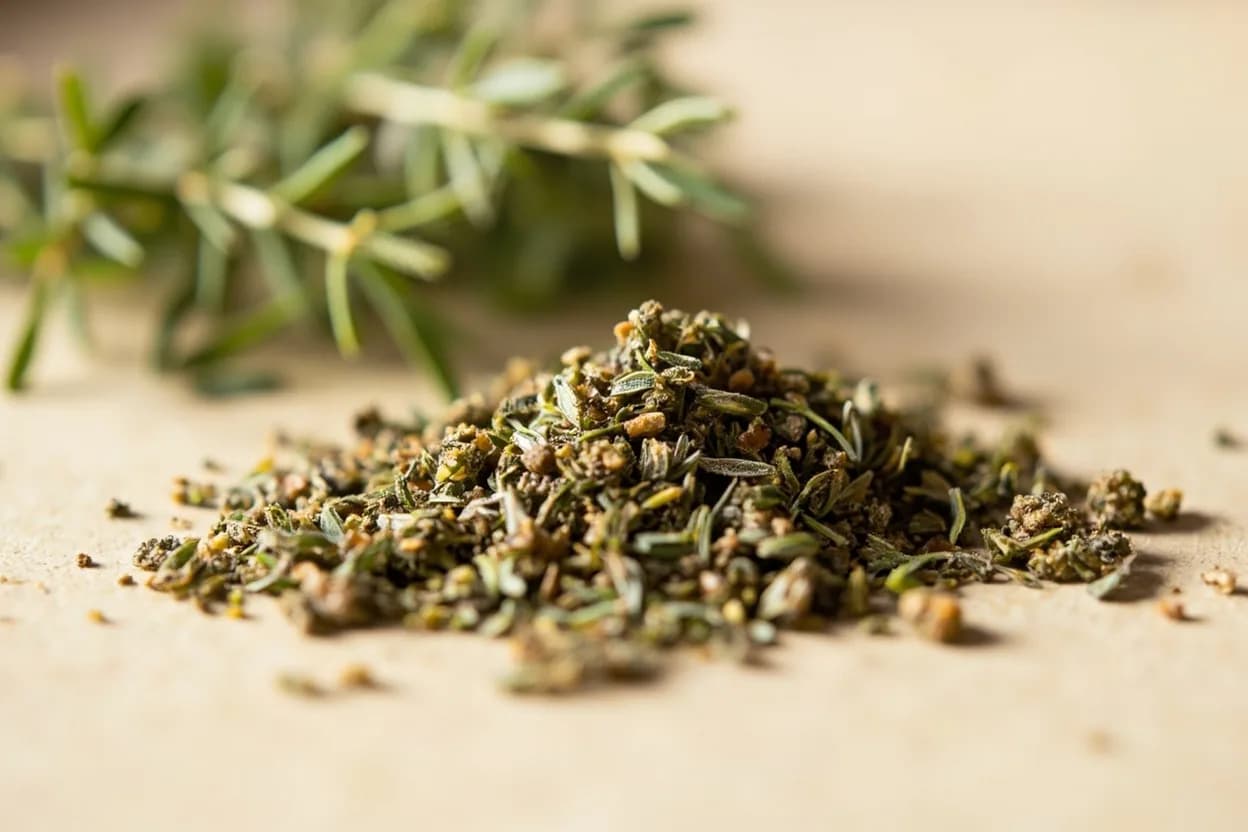
Herbes de Provence is a blend of dried herbs associated with the Provence region of southeastern France. The classic combination includes thyme, rosemary, savory (sarriette), marjoram, and oregano; many modern commercial blends add lavender flowers, which became popular internationally after the 1970s. The blend's character is intensely herbal, resinous, and slightly floral — with thyme and savory providing the astringent-woody backbone, rosemary adding a sharp pine-camphor note, and lavender (where present) contributing a distinctive floral-soapy aromatic. It is designed for the high heat of a wood fire or oven, where the dried herbs caramelize and release their volatile oils into fat.
In photos
Flavour profile
Classic pairings
- lamb (rack, leg, chops)Provençal/French
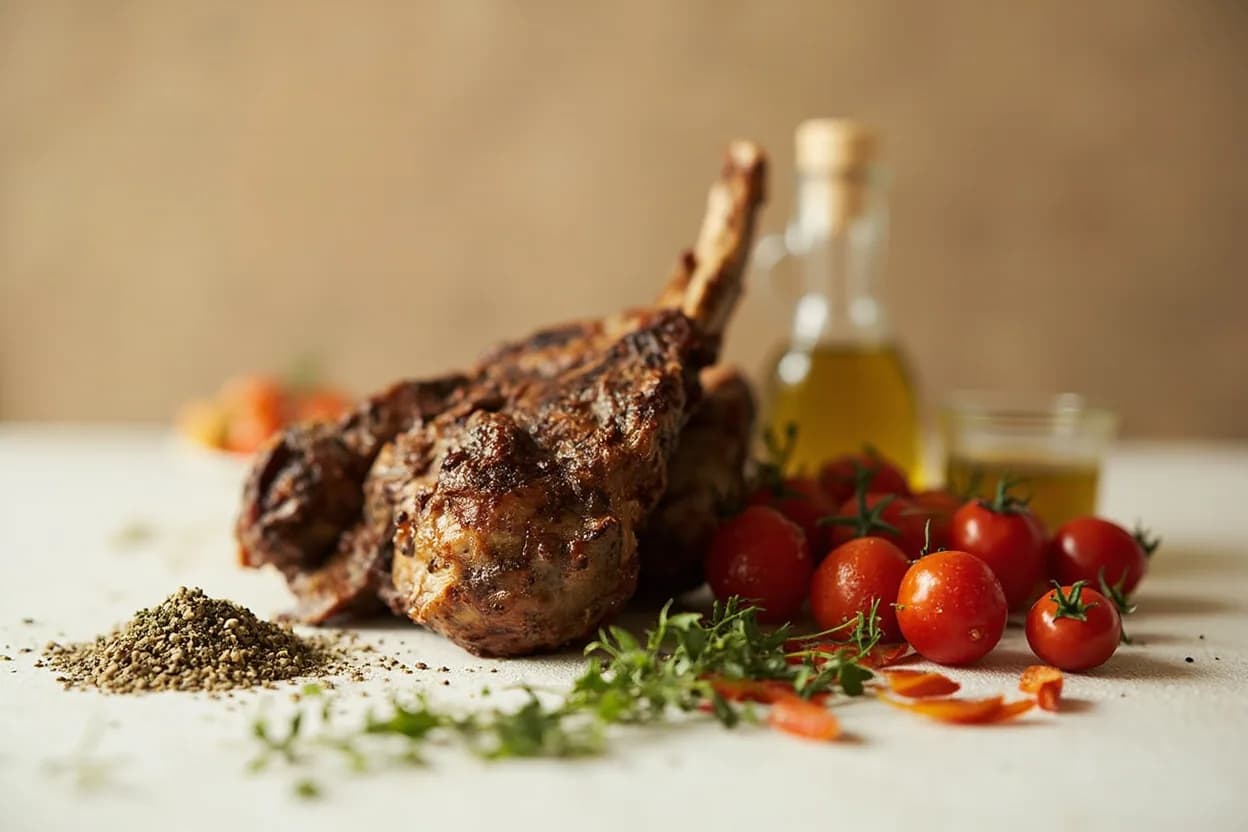
Herbes de Provence pressed into a lamb leg or rack with olive oil and garlic before roasting is the defining use case — the herbs form a fragrant crust as the fat renders.
- olive oilProvençal
Steeping the blend in good olive oil for a week produces an infused oil that carries all the volatile aromatics; this is the Provençal pantry staple used to finish dishes and dress salads.
- tomatoes (roasted or raw, ripe)Provençal
Slow-roasted tomatoes with herbes de Provence, olive oil, and garlic (tian-style) is one of Provence's great preparations; the herbs' astringency cuts the tomato's sweetness beautifully.
- zucchini and summer squashProvençal
The tian Provençal — layered sliced zucchini, tomato, and eggplant baked with herbes de Provence — is the vegetable dish of the region.
- chicken (grilled or roasted)French
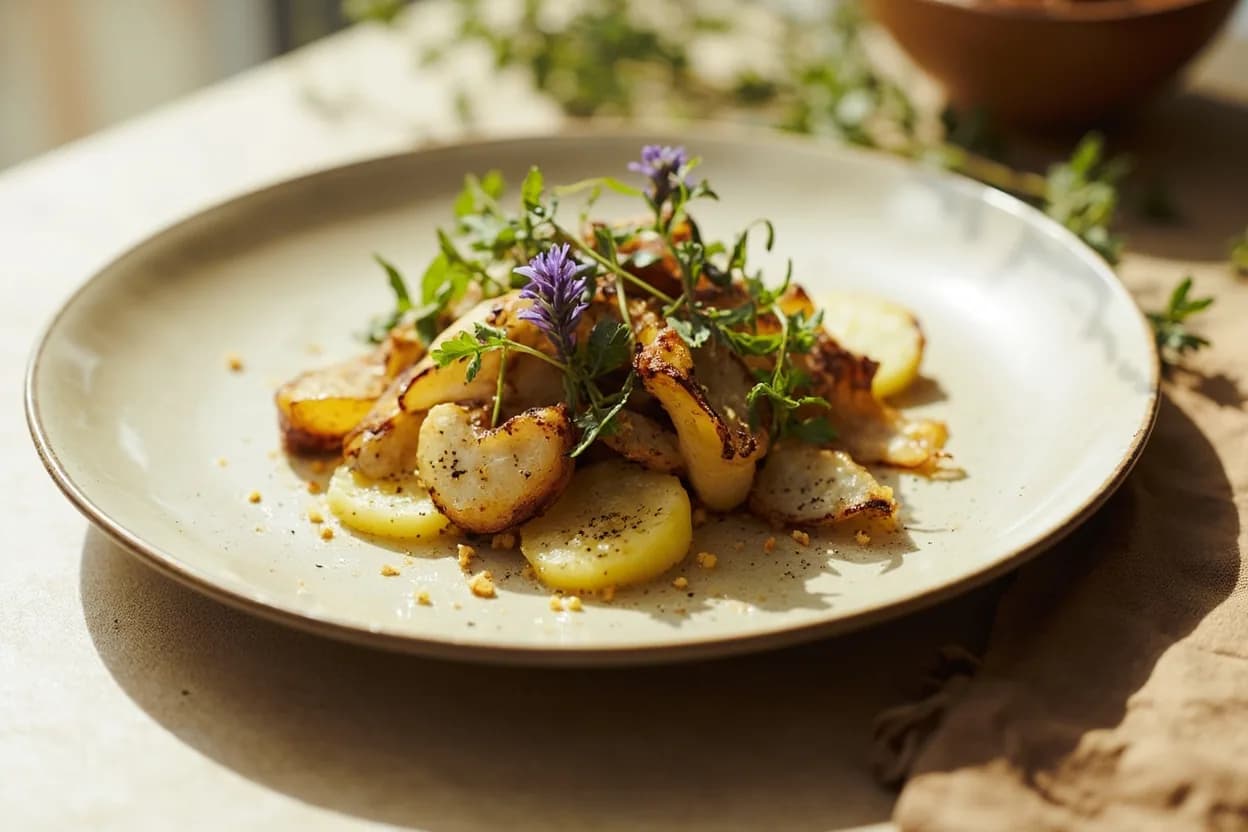
Poulet rôti à la Provençale: a whole chicken rubbed with the blend and roasted over thinly sliced potatoes in olive oil is a French home-cooking standard.
- goat cheese (chèvre)Provençal
Fresh chèvre rolled in herbes de Provence is a Provençal classic sold at every market; the herbs' astringency balances the cheese's lactic tang perfectly.
- socca and farinataNiçoise
The chickpea flour flatbreads of Nice and Liguria are seasoned with olive oil and herbes de Provence — the blend's herbs carry into the crispy edges as the socca chars.
Adventurous pairings
- honey (lavender-enhanced blend)
Herbes de Provence with lavender infused into acacia honey produces a complex drizzle for cheese plates, yogurt, or toasted almonds — the floral-herb register becomes lushly sweet.
- grilled peaches or apricots
Provençal stone fruits grilled with a herbes de Provence butter — thyme and savory against caramelized stone fruit — is a summer starter or dessert of surprising elegance.
- salmon (en papillote)
Salmon fillet baked en papillote with the blend, thinly sliced lemon, and olive oil benefits from the steam driving the herb aromatics into the flesh without the risk of over-toasting.
- white beans (flageolet or Tarbais)
Braised flageolet beans with herbes de Provence, garlic, and olive oil is the traditional Provençal accompaniment for lamb; the beans absorb the herbal infusion over a long, slow cook.
- compound butter for finishing steaks
A pat of herbes de Provence–rosemary butter melted over a grilled rib-eye translates the Provençal herb register into steakhouse territory with great effect.
Tread carefully
- very delicate steamed fish (sole, flounder)avoid
The assertive resinous character of rosemary and dried thyme overwhelms delicate white fish cooked with no browning; use only fresh herbs or a single dried herb sparingly.
- Asian-spiced dishes (soy, ginger, sesame)avoid
Mediterranean herbal notes clash directly with umami-soy or ginger-sesame flavor profiles — the idioms are incompatible.
- chocolate dessertsavoid
Lavender occasionally works in chocolate but herbes de Provence as a blend makes chocolate taste medicinal; isolate the lavender if that pairing is desired.
How to use it
- Press directly into fat (olive oil, butter) rubbed onto meat or vegetables before high-heat roasting — fat is the carrier for volatile herbal aromatics
- Infuse in warm olive oil (65°C / 150°F) for 20 minutes, then cool and use as a finishing or dipping oil
- Add to braising liquids early — a full hour or more of gentle heat melds the dried herbs into the sauce
- Use as a flavoring for focaccia or flatbread dough, mixed into the oil before baking
- Steep in warm cream for 10 minutes, strain, and use as a base for savory panna cotta or cream sauce
- Apply to cheese: press chèvre or cream cheese logs in the blend before serving on a cheese board
Appears in
Related flavours
- Thyme (dried)
The dominant herb within herbes de Provence; dried thyme alone is often a workable substitute and shares all the core pairing logic.
- Lavender (culinary)
The floral-distinctive element in many commercial blends; lavender alone is a bolder, more polarizing partner than the full blend.
A Levantine parallel — also built on dried herb (origanum), earthy sesame, and acid — with different geographic and flavor emphasis but similar roles in flatbread and meat applications.
References
- 1.Richard Olney, 'Simple French Food' (1974)
- 2.Patricia Wells, 'The Provence Cookbook' (2004)
- 3.Roger Vergé, 'Cuisine of the Sun' (1979)
- 4.Oxford Companion to Food, Alan Davidson (3rd ed., 2014)
Confidence: high
Notes
Lavender: Optional, Not Canonical
Traditional Provençal cooks rarely included lavender flowers in their daily herb blends — it was an American and British market addition popularized after Julia Child and later Patricia Wells. Authentic Provençal herb blends are thyme-savory-rosemary dominant. Purchase blends without lavender for savory cooking unless specifically seeking the floral note.
Fresh vs. Dried
Herbes de Provence is a dried-herb blend by definition and design — the drying concentrates essential oils that withstand high-heat roasting and long braises. Fresh herbs from the same species deliver a brighter, more volatile profile better suited to quick finishing, not as a substitute for the blend.