Spice Blends
Za'atar
Also: zaatar, zahtar, zatar, za'tar
The Levant's most essential condiment: a tangy, herbal, sesame-rich blend that turns bread, yogurt, and olive oil into something transcendent.
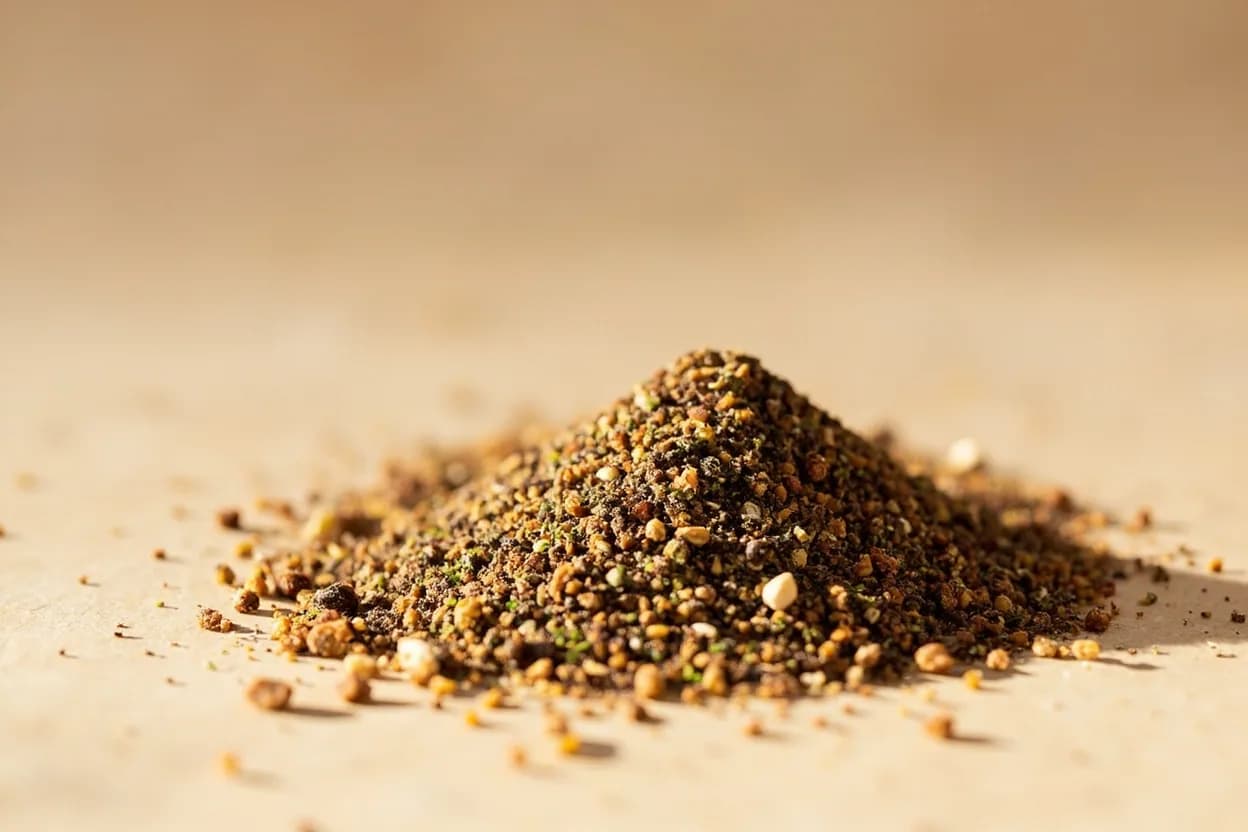
Za'atar is both a wild herb (Origanum syriacum, a form of oregano/marjoram native to the Eastern Mediterranean) and the blend made from it. The spice blend — the form most discussed in cooking — combines dried za'atar herb with ground sumac (for tartness), toasted sesame seeds (for nuttiness and fat), and salt. The herb-forward version is floral and thyme-like; sumac-heavy blends are sharper and more citric. It is the defining condiment of Palestinian, Lebanese, Syrian, Israeli, and Jordanian kitchens, eaten daily from breakfast through dinner.
In photos
Flavour profile
Classic pairings
- olive oilLevantine
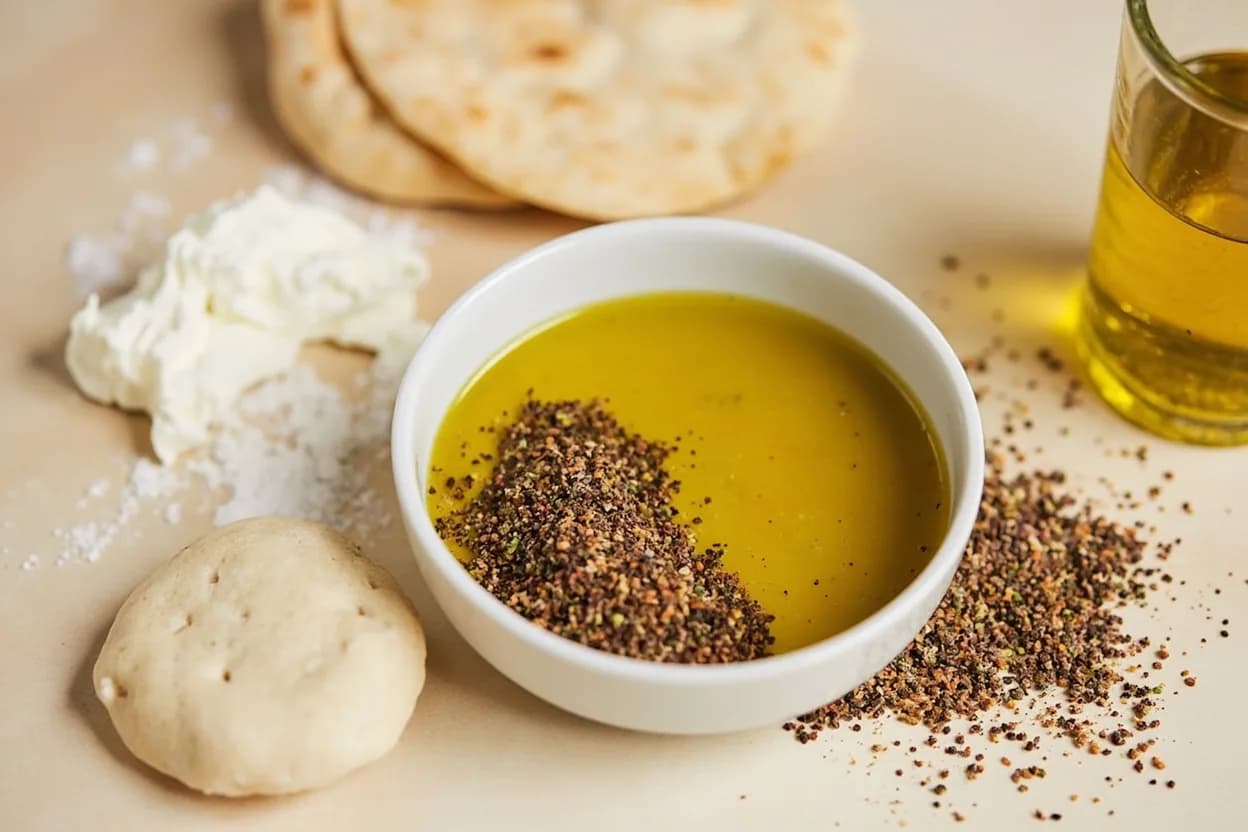
The ur-pairing: za'atar mixed with good olive oil as a dip for flatbread is eaten at every Levantine breakfast table. The fat carries the herbal aromatics and softens sumac's acid.
- flatbread (pita, manakish dough)Lebanese
Man'oushe — flatbread smeared with za'atar-olive oil paste and baked until fragrant — is Lebanon's most beloved street breakfast.
- labneh (strained yogurt)Levantine
Za'atar sprinkled over labneh with olive oil drizzle is an essential Levantine mezze; the yogurt's tang amplifies sumac while fat carries the herb.
- chicken (grilled or roasted)Palestinian/Israeli
Za'atar-rubbed roast chicken is universal across the Levant; the herb-sumac crust caramelizes to a fragrant, tangy bark over the skin.
- tomatoesLevantine
Za'atar and ripe tomatoes share an almost instinctive affinity; a simple salad of tomato, olive oil, and za'atar is a summer staple across the region.
- white cheese (akkawi, halloumi, feta)Levantine
Salty, firm cheeses act as a neutral canvas for za'atar's herbaceous punch; the combination is eaten for breakfast across Palestine, Lebanon, and Jordan.
- roasted eggplantSyrian/Lebanese
Za'atar over charred eggplant — especially mutabbal or simple fire-roasted slices — creates a smoky-herbal contrast native to Levantine cooking.
Adventurous pairings
- scrambled eggs (soft-cooked)
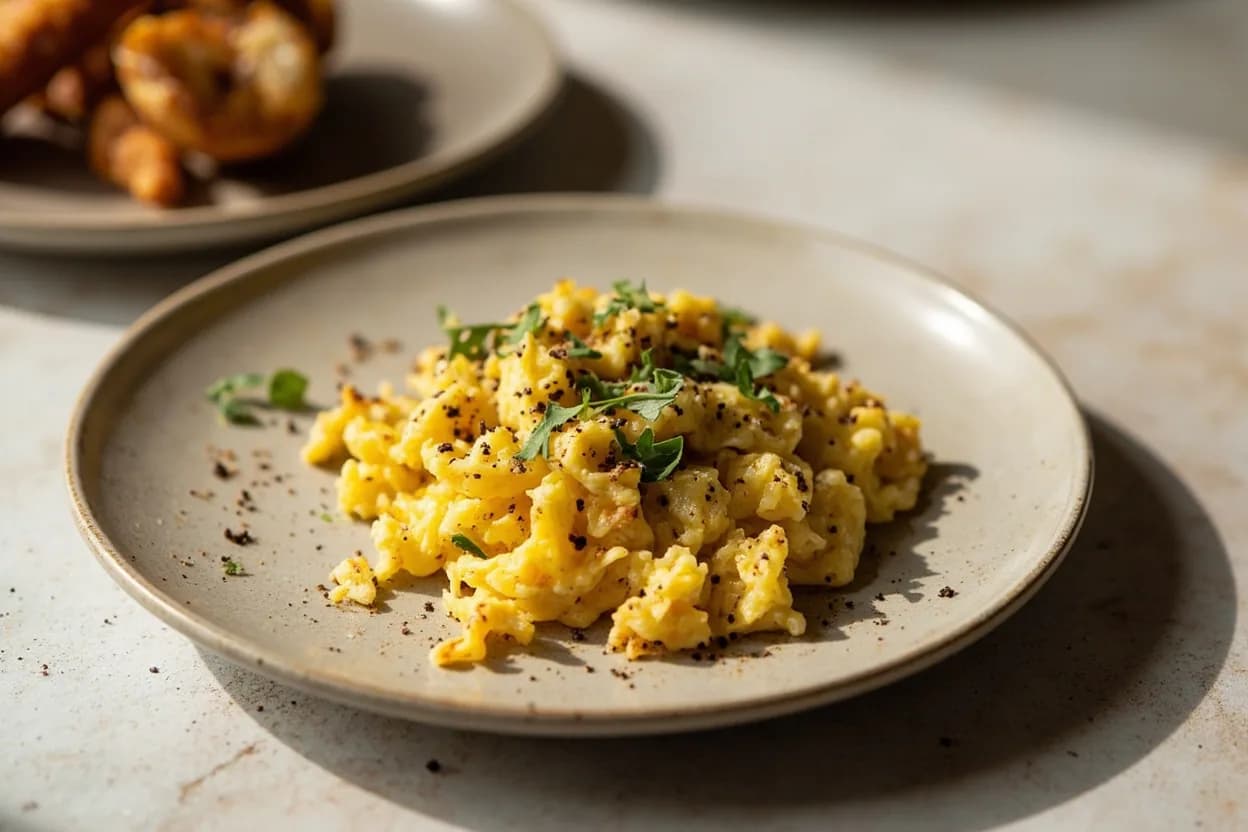
Za'atar folded into soft scrambled eggs with good butter creates a herbaceous, tangy breakfast that feels simultaneously French and Levantine.
- avocado
Za'atar's sumac tartness and sesame nuttiness contrast avocado's rich fat in a way that makes the avocado taste brighter and more complex — excellent on toast.
- pan-seared salmon
A za'atar crust on salmon fillet exploits the herb-citrus-sesame trio against fatty fish; the sesame toasts to a beautiful crust while sumac brightens each bite.
- popcorn
Za'atar tossed with hot popcorn and a drizzle of olive oil is a genuinely excellent snack that showcases the blend's herbal depth without any cooking.
- honey (drizzled over)
Za'atar with honey on warm bread or cheese is a sweet-savory-herbal combination practiced in Israel and Palestine; the floral notes of thyme-honey compound the herb.
Tread carefully
- very sweet dessertsavoid
Za'atar's sumac tartness and herbal character clash with delicate dessert flavors; it doesn't belong in or on chocolate cake or custard.
- heavy cream saucesavoid
Cream mutes za'atar's bright herbal and acidic notes completely; the blend needs an acidic or fat-free context to read clearly.
- strong blue cheeses (Roquefort, Stilton)avoid
The assertive funk of blue cheese overwhelms the subtle herb profile; stick to mild, milky, or briny fresh cheeses.
How to use it
- Mix 3:1 with olive oil to make a paste; brush onto flatbread before baking at high heat
- Press into room-temperature butter to make a compound butter for finishing grilled meat or fish
- Sprinkle over finished dishes raw — za'atar is always used uncooked or barely warmed to preserve volatile herbals
- Stir into thick yogurt or labneh as a dip or sauce base
- Use as a dry rub on chicken thighs mixed with olive oil and lemon zest; allow 1+ hour marination
- Toast briefly in a dry pan (30 seconds) to revive stale dried herb before using
Appears in
Related flavours
The tartness backbone of za'atar; understanding sumac's citric-tannic quality explains why za'atar works with fatty and neutral foods.
- Sesame seeds (toasted)
The fat and nuttiness in za'atar come from toasted sesame; sesame tahini is a natural companion — tahini-za'atar sauce is a Levantine classic.
- Dried thyme
Often used as a substitute for the wild za'atar herb in blends; thyme-heavy za'atar has a slightly more antiseptic, camphorous edge than the true herb.
References
- 1.Sami Tamimi & Tara Wigley, 'Falastin' (2020)
- 2.Yotam Ottolenghi & Sami Tamimi, 'Jerusalem' (2012)
- 3.Anissa Helou, 'Feast: Food of the Islamic World' (2018)
- 4.Charles Perry, 'A Baghdad Cookery Book' (translation, 2005) — historical za'atar context
Confidence: high
Notes
The Herb vs. The Blend
Confusion arises because 'za'atar' names both Origanum syriacum (wild oregano/marjoram) and the prepared spice blend. A Palestinian making za'atar at home might say she is 'making za'atar' meaning she is drying and blending the fresh herb into the condiment. Outside the Levant, 'za'atar' almost always refers to the blend.
Protected in Palestine
Wild za'atar (Origanum syriacum) is a protected plant in Israel and the Palestinian territories due to overharvesting. Commercial za'atar blends increasingly use cultivated herb; the wild variety has a more intense, resinous character than the cultivated form.