Color & Flavor Agents
Achiote (Annatto)
Also: annatto, achiote paste, bixa orellana, urucum, achote, recado rojo
Latin America's signature color agent — earthy, mildly peppery, and subtly floral — that stains everything it touches a warm amber-red.
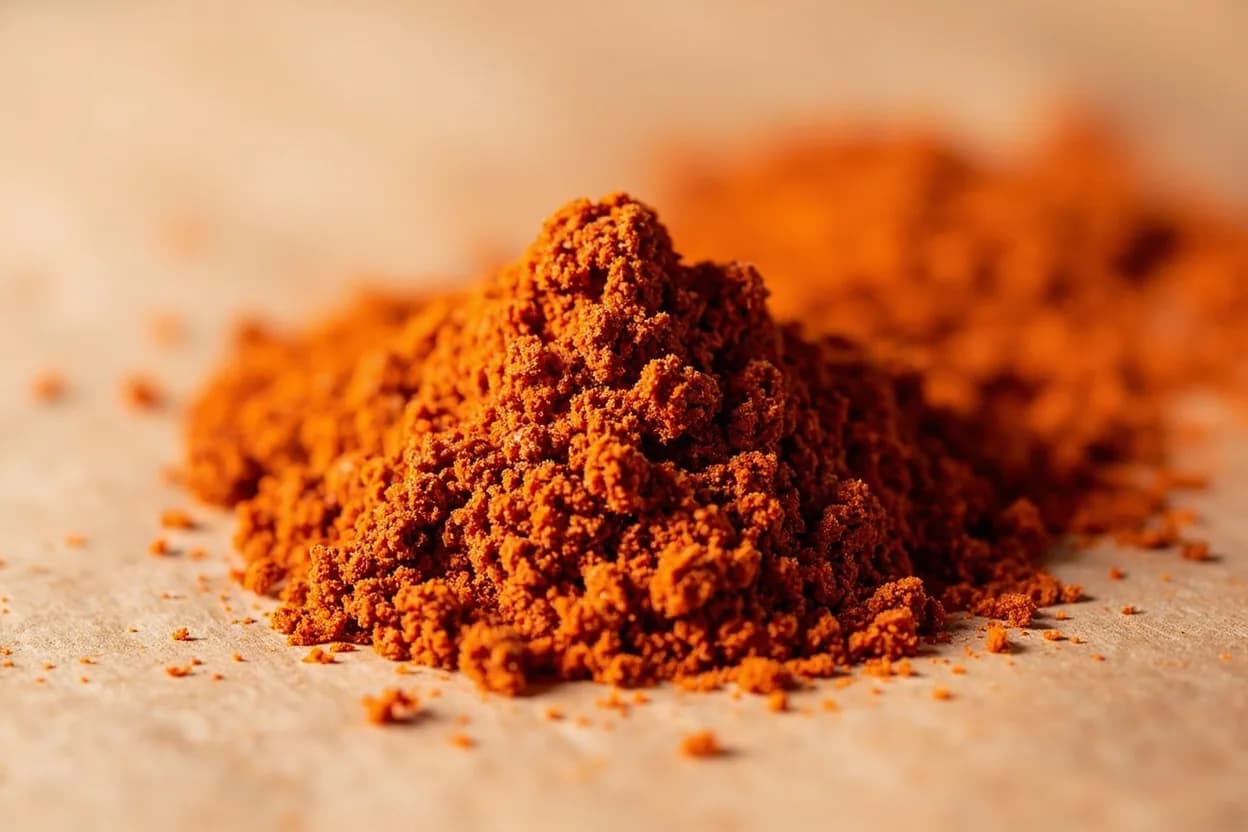
Achiote comes from the seeds of Bixa orellana, a tropical shrub native to the Americas. The seeds' waxy red coating contains bixin, a carotenoid responsible for the vivid orange-red color used across Mexican, Caribbean, and Peruvian cuisines. As a flavor, achiote is mild — earthy and slightly peppery with a faint nuttiness and a floral note reminiscent of saffron (though the compounds are unrelated). It is typically used as a paste (achiote paste, or recado rojo, blended with spices, vinegar, and citrus) or as seeds steeped in hot oil to transfer color and flavor. In Southeast Asia — particularly the Philippines — it appears as atsuete, used for color in pancit and other dishes.
In photos
Flavour profile
Classic pairings
- Pork (slow-cooked)Yucatecan Mexican
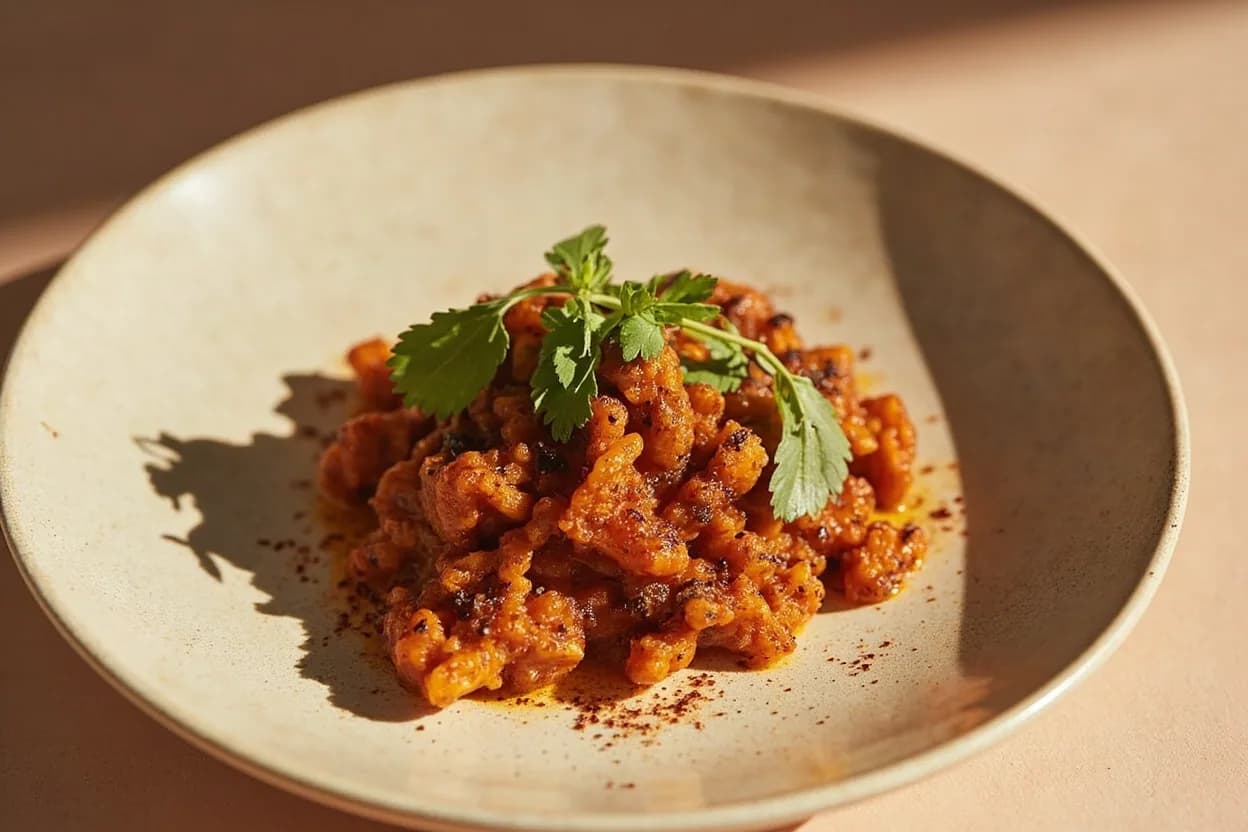
Achiote paste is the defining marinade for cochinita pibil — the acidic citrus in the recado tenderizes while achiote stains the pork a deep amber and adds earthy spice.
- ChickenMexican, Caribbean
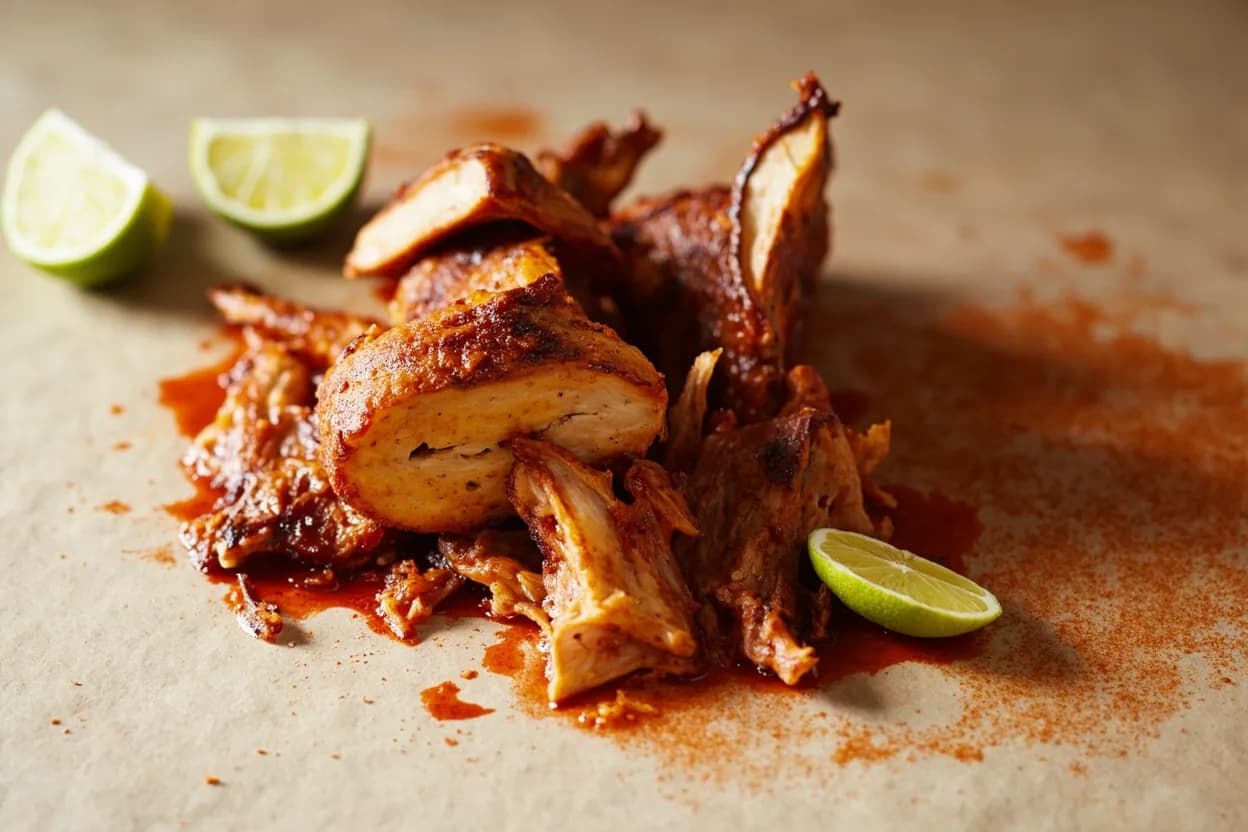
Achiote-marinated chicken is a staple of Caribbean rotisserie and Mexican street food — the paste clings to skin and creates a caramelized, colored crust under heat.
- Citrus (sour orange/naranja agria, lime)Yucatecan
Acid is essential to dissolve and activate achiote paste; sour orange is the traditional Yucatecan vehicle, with lime as a widely available substitute.
- Lard / rendered fatMexican, Peruvian, Caribbean
Achiote seeds steeped in lard transfer their color and flavor into the fat, which then perfumes and colors everything fried in it — the classic Peruvian and Caribbean base technique.
- RiceCaribbean, Puerto Rican
Arroz con pollo and its Caribbean relatives rely on achiote oil to turn the rice a golden yellow-orange — the color signals the dish's identity across the region.
- Black beansCuban, Mexican
The earthy warmth of achiote echoes black bean's own minerality while adding color drama to sofrito-based bean dishes.
- CuminMexican, Yucatecan
In recado rojo and many achiote paste formulas, cumin's warm, musty earthiness is the dominant spice companion — both reinforce each other without competing.
Adventurous pairings
Achiote's earthy spice is a natural partner to coconut milk's sweetness in Caribbean and Filipino dishes — the fat also carries the color beautifully.
- White fish (firm, grilled)
Mild fish like sea bass or snapper accepts an achiote rub without being overwhelmed; the fish turns amber under heat with a subtly smoky, spiced crust — classic Yucatecan tikin xic.
- Mango
Tropical sweetness and the mild pepper-floral of achiote align in salsas and marinades; the color contrast is also visually arresting.
- Feta or fresh cheese
Achiote-rubbed fresh cheese grilled or baked develops a colored crust against bright white interior — a modern tapas/mezze interpretation.
Tread carefully
- Delicate white sauces (béchamel, velouté)avoid
Achiote will stain these sauces an unappealing muddy orange and add earthiness that conflicts with their clean dairy base.
- Subtle seafood (raw oysters, scallop crudo)avoid
The earthy, peppery notes overpower the ocean-fresh sweetness of raw bivalves — reserve achiote for cooked, assertive proteins.
How to use it
- Steep seeds in hot oil or lard for 5 minutes until oil turns deep orange; remove seeds and use colored fat as a cooking base
- Blend achiote paste (seeds + cumin, oregano, peppercorns, garlic, citrus, vinegar) in a molcajete or blender for recado rojo marinade
- Rub paste onto proteins 2–12 hours before cooking to allow penetration and tenderizing from the acid
- Wrap achiote-marinated meat in banana leaves before pit-roasting or steaming to trap color and aromatics
- Dissolve paste in warm broth or water as a stew base color agent
- Use powder (ground seeds) in dry spice rubs for a milder effect
Appears in
Related flavours
Shares the color-agent role in European cooking; both stain food golden-yellow to amber-red, but saffron's flavor is more intensely floral and medicinal
Overlapping role as an earthy yellow-orange color agent; turmeric is more bitter and pungent, used across South and Southeast Asian cuisines
- Smoked Paprika
Shares earthy, mild pepper warmth and the role of adding color to Spanish-influenced dishes; often used together in Cuban and Puerto Rican cooking
References
- 1.Mexico: The Cookbook — Margarita Carrillo Arronte
- 2.Gran Cocina Latina — Maricel Presilla
- 3.The Flavor Bible — Karen Page & Andrew Dornenburg
- 4.On Food and Cooking — Harold McGee
Confidence: high
Notes
Color vs. flavor balance
Achiote is one of the rare ingredients where visual function and culinary function are nearly equal in importance. The vivid orange-red it imparts to cochinita pibil, arroz con pollo, and Caribbean stews is not incidental — the color is part of the dish's cultural identity. When using achiote only for flavor without the color effect, the dose can be very small; when building the full visual impression, use more generously.
Paste vs. seeds vs. powder
Seeds provide the purest color extraction when steeped in fat. Commercial achiote paste adds spices, acid, and sometimes garlic — it is a shortcut to recado rojo rather than a neutral color base. Ground powder (annatto powder) is the mildest and easiest to dissolve but loses color intensity quickly once opened. For maximum color impact, steep whole seeds; for maximum convenience, use paste.