Herbs
African Basil (Scent Leaf)
Also: scent leaf, efinrin, nchuanwu, efirin, Ocimum gratissimum, clove basil, tree basil
West Africa's essential aromatic herb — peppery, clove-forward, and eucalyptus-bright — that anchors soups, stews, and jollof rice with grounded fragrance.
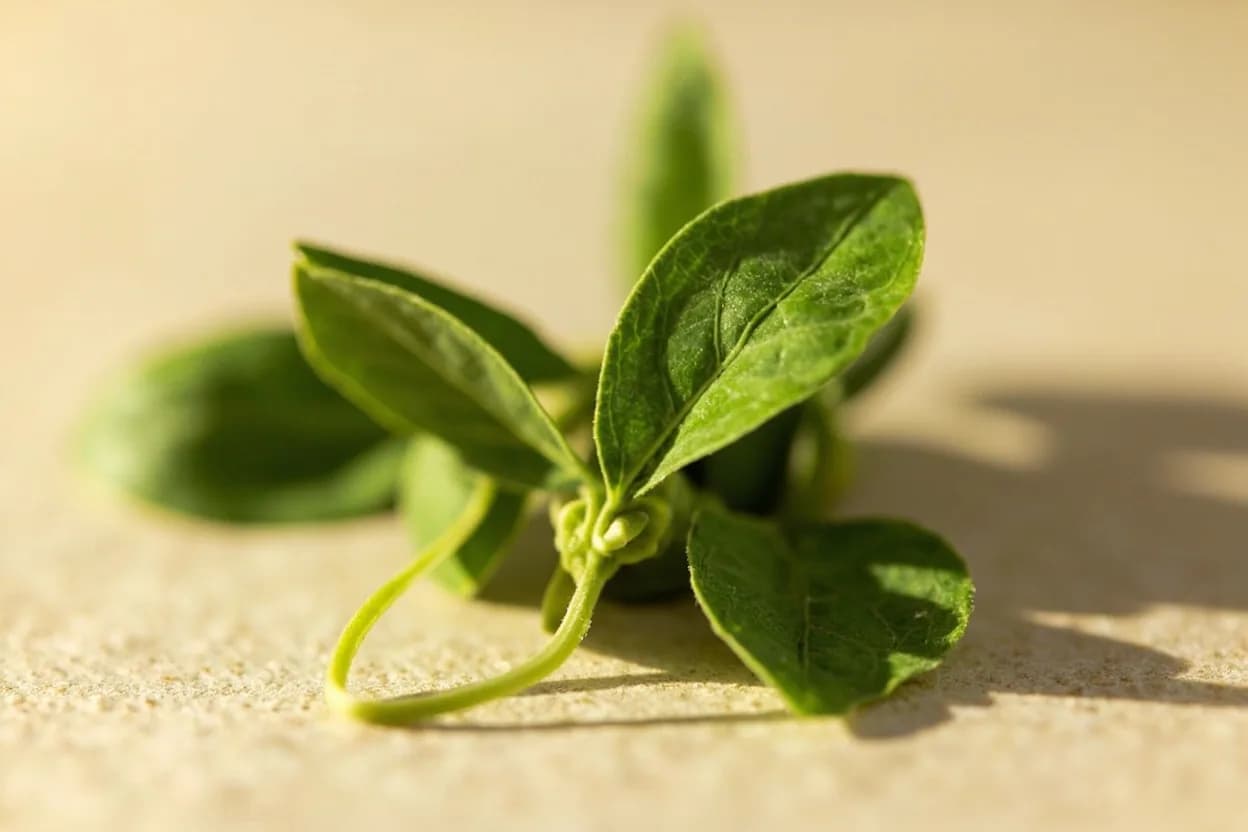
Ocimum gratissimum, known as scent leaf or African basil, is a shrubby perennial herb widespread across West and Central Africa. Unlike Italian sweet basil, it has a coarser texture, a more assertive aroma, and a flavor profile closer to cloves and eucalyptus than to anise. The essential oil is dominated by eugenol (shared with cloves), with additional notes of camphor and black pepper. In Yoruba cooking it is called efinrin; in Igbo tradition, nchuanwu. It seasons everything from pepper soup and egusi to jollof rice and native soups — both as a fragrance herb and a mild medicinal.
In photos
Flavour profile
Classic pairings
- Egusi (ground melon seeds)Nigerian / Yoruba
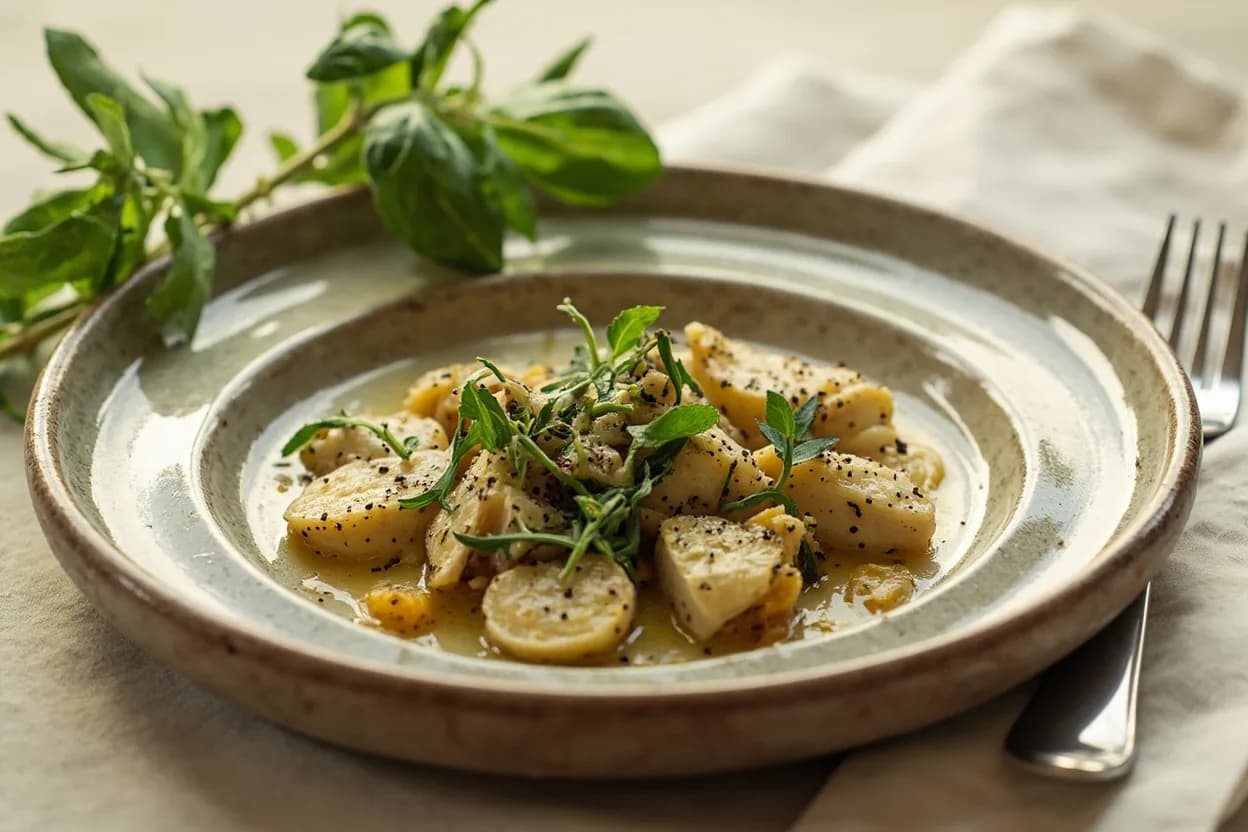
Scent leaf's clove-eucalyptus aroma floats above the rich, oily body of egusi — it is added late to prevent bitterness.
- Palm oilWest African
Fat-soluble eugenol blooms beautifully in hot palm oil, releasing the leaf's full fragrance before other ingredients are added.
- Crayfish (ground smoked shrimp)Nigerian
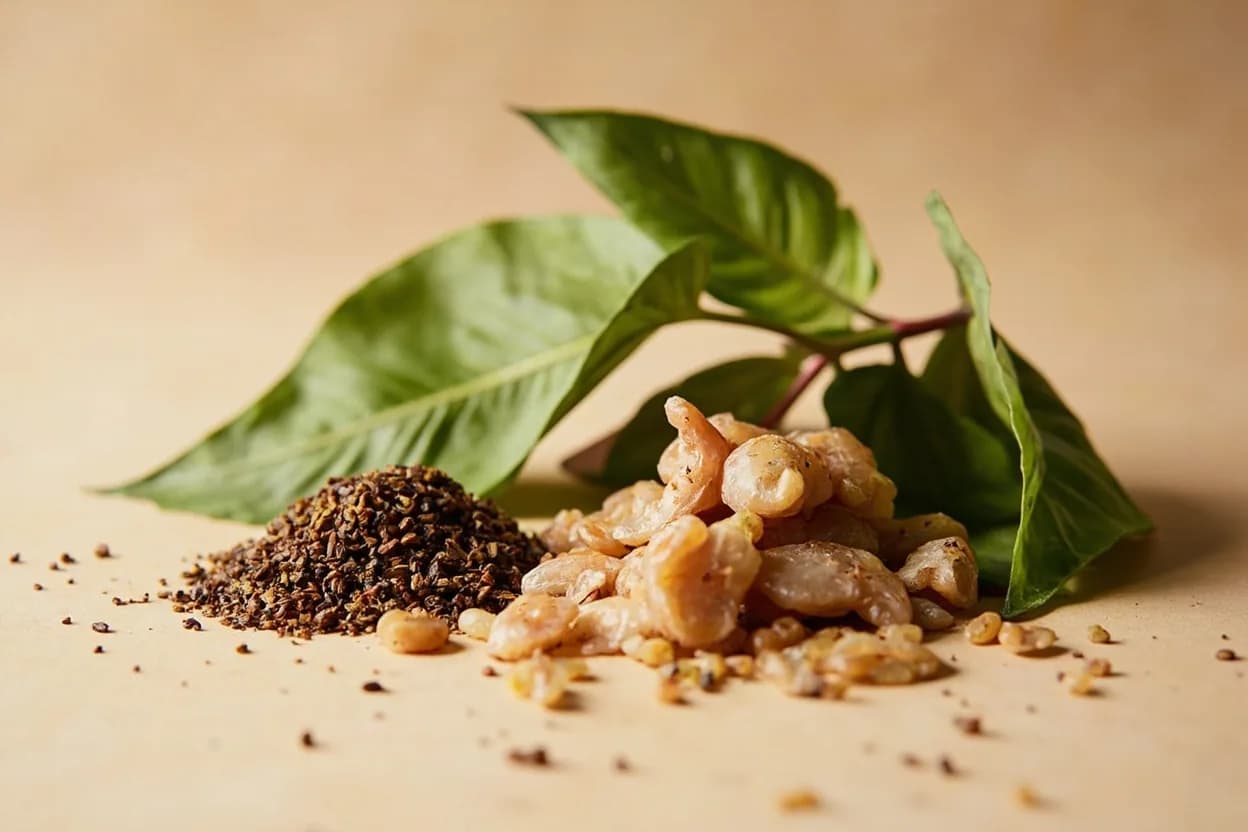
The funky umami of ground crayfish is lifted and perfumed by scent leaf, an essential pairing in native soups.
- Goat meat / muttonNigerian / Yoruba
Scent leaf's clove note tames gaminess; pepper soup with goat and scent leaf is a canonical Yoruba remedy dish.
- TomatoesWest African
In stews, the acid of tomato brightens and anchors the herb's volatility — together they form the aromatic base of many Yoruba sauces.
- Scotch bonnet pepperWest African
Scent leaf and scotch bonnet are natural allies; the herb's warmth deepens the fruitiness of the pepper beyond raw heat.
- Fresh catfish (eja aro)Nigerian
Catfish pepper soup is incomplete without scent leaf, which cuts the fish's muddy earthiness and adds a medicinal brightness.
Adventurous pairings
Blended into fresh ricotta with lemon zest, scent leaf's clove warmth creates an unexpected African-Italian filling for pasta or crostini.
- Mango
The herb's eucalyptus edge and clove warmth mirror the resinous top notes of ripe Alphonso mango — a compelling chutney or salsa.
- Dark rum
Scent leaf muddled in dark rum (as one would use Thai basil in cocktails) produces a clove-forward tropical drink backbone.
- Lamb fat
Rendering lamb fat with scent leaf infuses it with eugenol warmth, producing a West African answer to rosemary lamb dripping.
In a broth, scent leaf's camphor note cuts coconut's sweetness to produce a cleaner, more aromatic soup than lemongrass alone.
Tread carefully
- Delicate herbs (chervil, tarragon)avoid
Scent leaf's aggressive eugenol overwhelms subtle anise-forward herbs in any compound.
- Light floral teasavoid
Its camphor note clashes with jasmine or rose-based drinks, producing a medicinal, soapy effect.
- Aged balsamicavoid
The competing sweetness and acidity of aged balsamic fights the herb's resinous eugenol rather than harmonizing.
How to use it
- Add whole leaves in the final 3–5 minutes of simmering to preserve aromatic volatiles
- Bruise or chiffonade immediately before use to activate eugenol release
- Blend raw into marinades and spice pastes to distribute fragrance evenly
- Dry and crumble into spice blends for pepper soups and suya rubs
- Infuse in warm oil as a finishing drizzle over soups
Appears in
Related flavours
A peppery Nigerian herb used alongside scent leaf in soups; uziza is sharper and more resinous, scent leaf more clove-forward.
- Uda (Negro pepper)
Shares the warm, resinous quality; often appears in the same pepper soup spice blend as scent leaf.
- Sweet basil (Ocimum basilicum)
Botanical cousin; sweeter and more anise-forward, can substitute in a pinch but lacks scent leaf's clove depth.
References
- 1.The Groundnut Cookbook — Duval Timothy, Jacob Fodio Todd & Folayemi Brown
- 2.My Yoruba Kitchen — Adama Jalloh
- 3.Chemical Composition and Biological Activities of Ocimum gratissimum — Ilori et al., African Journal of Microbiology Research
Confidence: high
Notes
Why 'scent leaf'?
The English name is purely functional: brush a single leaf between your fingers and you understand immediately. The eugenol content is so high that the scent is almost overwhelming raw — which is why cooks in Lagos and Ibadan add it at the end of cooking, letting residual heat release the aroma without driving it off entirely. In Yoruba medicine, the same leaf is brewed into a tea for fever, headaches, and stomach complaints — a reminder that the boundary between spice and medicine has always been thinner than Western culinary tradition acknowledges.