Spices & Dried Aromatics
Scotch Bonnet Pepper
Also: bonney pepper, Caribbean red pepper, goat pepper, ají caballero
The Caribbean's fiery icon — intensely fruity and floral, with a delayed, all-enveloping heat that defines jerk, pepper sauce, and island stews.
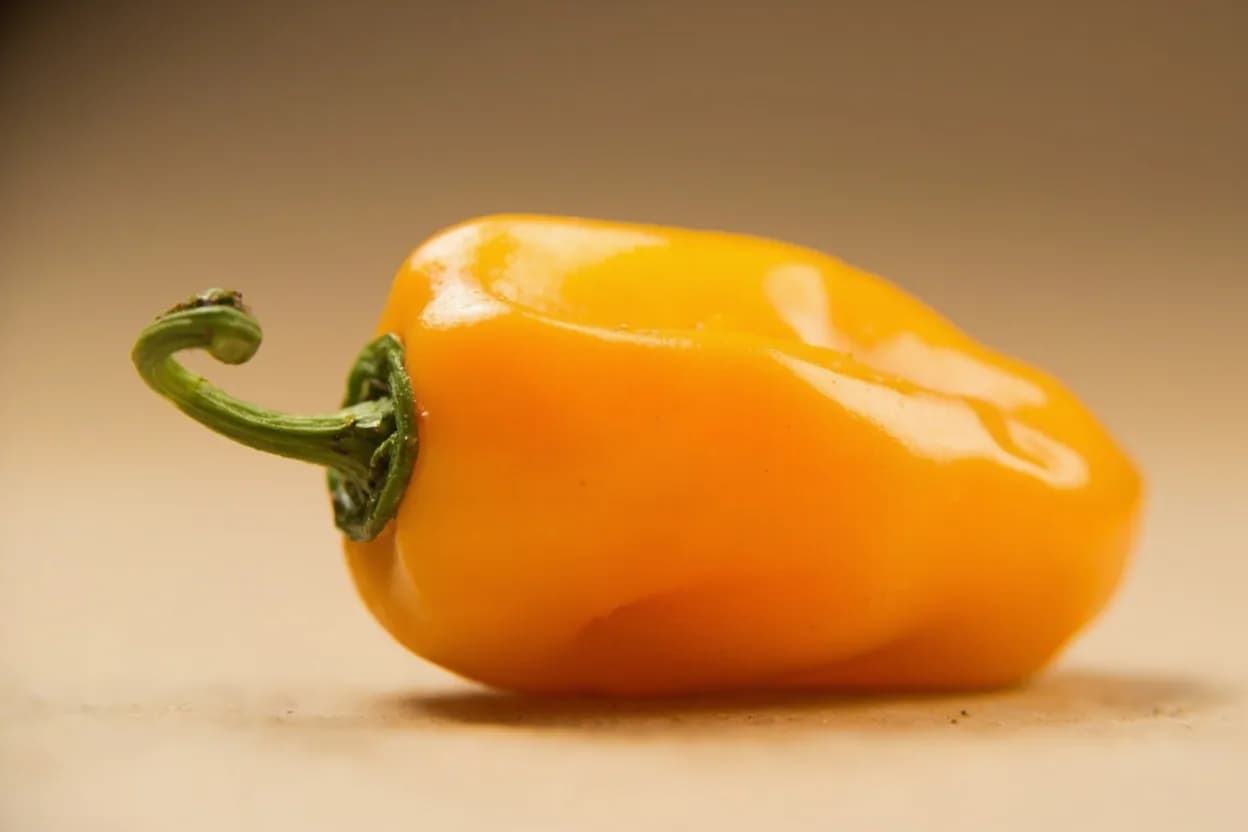
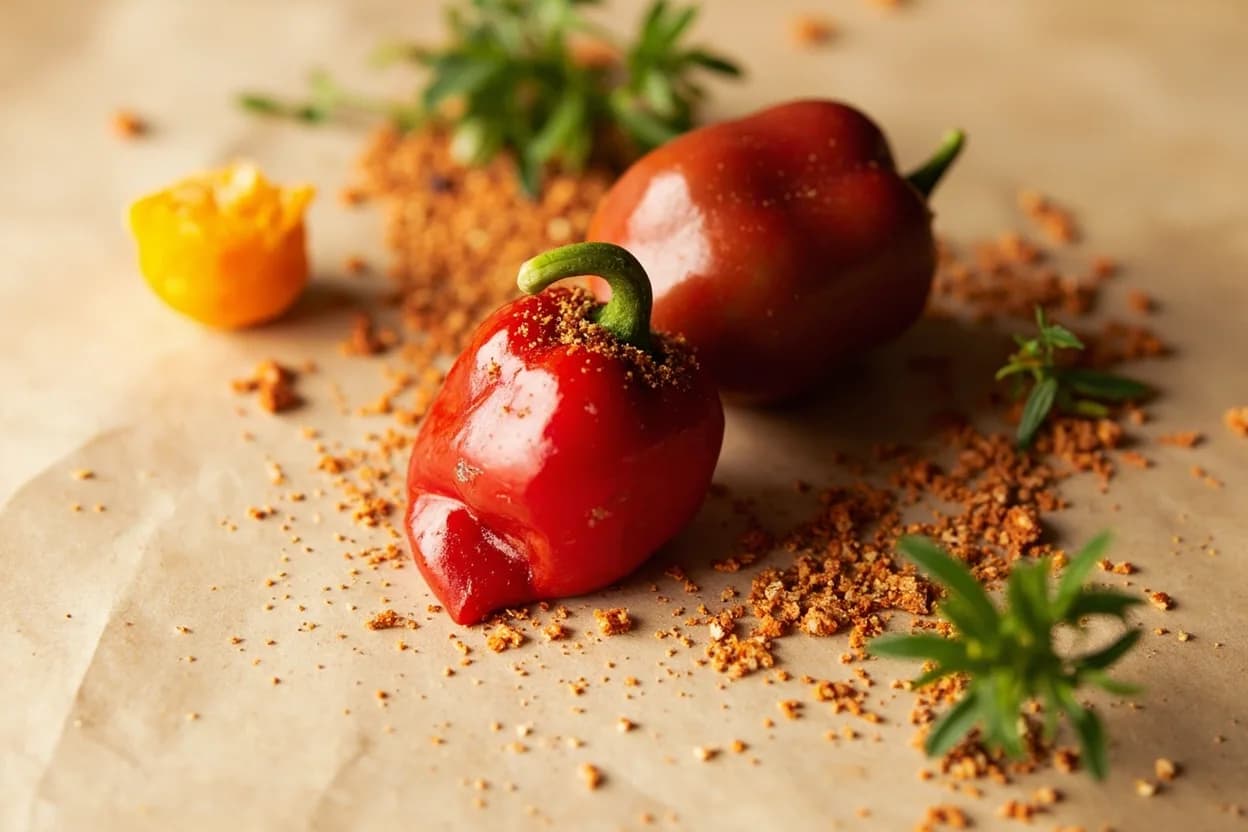
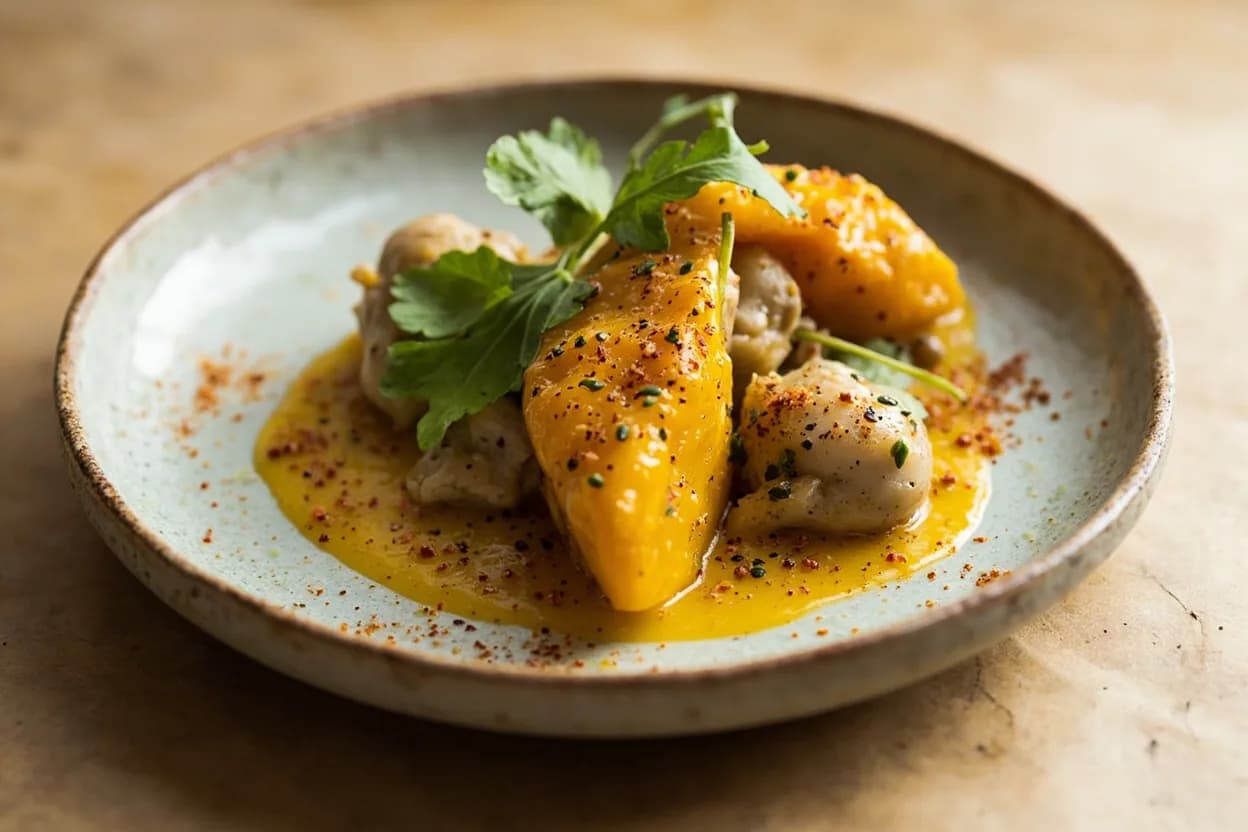
Scotch bonnet (Capsicum chinense) is the dominant culinary chili of the Anglophone Caribbean — Jamaica, Trinidad, Barbados, Ghana, and West Africa broadly. It measures 100,000–350,000 SHU, rivaling the habanero (to which it is closely related). The heat is fierce but not linear: there is a brief window of extraordinary sweetness and tropical-fruit aroma — apricot, cherry, pear — before a delayed heat overtakes. That aromatic front is why it cannot simply be swapped with other hot chilies. Used in jerk seasoning, pepper sauce, callaloo, curry goat, and escovitch fish.
In photos
Flavour profile
Classic pairings
- Allspice (pimento)Jamaican
The foundational jerk pairing — allspice's clove-and-cinnamon warmth weaves around the chili's fruit, the combination inseparable from Jamaican jerk.
- ThymeCaribbean
Fresh thyme provides an earthy, herbal anchor in jerk marinades and island stews, keeping the chili's fruit from floating.
- Coconut milkTrinidadian
The fat in coconut milk binds and tempers capsaicin while amplifying the fruity sweetness — essential in Trinidadian pelau, Caribbean fish stews, and callaloo.
- Vinegar (cane or white)Barbadian
Pepper sauce tradition: scotch bonnets and vinegar are macerated together, the acid dissolving and carrying the fruity capsaicin into a shelf-stable condiment.
- Goat (curry goat)Jamaican
The gaminess of slow-cooked goat is exactly what scotch bonnet's aromatic fruitiness is designed to balance — the defining Jamaican Sunday-lunch dish.
- PineappleCaribbean
Tropical fruit echoes tropical fruit; pineapple's bromelain also tenderizes meat — a natural in jerk pork or chicken marinades.
- Saltfish (salt cod)Jamaican
Preserved fish's intense salinity is cut by the chili's acid and heat; ackee and saltfish with scotch bonnet is Jamaica's national dish.
Adventurous pairings
- Mango
Shares esters for a double tropical hit — scotch bonnet mango salsa or hot sauce plays on the shared aromatic compounds, the chili's heat dramatizing the fruit's sweetness.
- Dark rum
Molasses and caramel in aged rum harmonize with the chili's fruitiness; used in jerk glazes and Caribbean pepper sauces for a sweet-hot-smoky finish.
- Fermented black beans
An unexpected Afro-Asian bridge — the deep umami of douchi absorbs the fruity heat and channels it into a complex stir-fry sauce for pork or clams.
The floral acidity of passion fruit amplifies the chili's aromatic front before the heat arrives — stunning in a ceviche-style marinade for shrimp.
Tread carefully
- Subtle aromatic herbs (tarragon, basil, dill)avoid
Scotch bonnet's overwhelming fruitiness and heat erase delicate aromatics before they can contribute anything — use hardier herbs like thyme or culantro.
- Very light chicken broths or consommésavoid
Even a small amount of scotch bonnet dominates a clear broth; its fruit and heat cloud the delicacy required. Use a fraction of the quantity expected or choose a milder chili.
- Dry-aged beef alone (no fat buffer)avoid
The chili's full heat with a lean, intensely beefy cut is a confrontation rather than a complement; the umami notes clash. Pair with fattier cuts or add coconut milk.
How to use it
- Add whole to stews and soups without cutting — capsaicin remains in membrane/seeds; remove before serving for moderate heat
- Split and scrape seeds for a fruity heat throughout; mince finely for maximum release
- Char over open flame to deepen smokiness before blending into sauces
- Ferment whole peppers in 3% brine for 1–2 weeks before blending — deepens umami and softens heat
- Blend with vinegar, salt, and a small amount of sugar for a classic Caribbean pepper sauce (shelf-stable)
- Wear gloves when handling — capsaicin at this level causes significant skin and eye irritation
Appears in
Related flavours
- Habanero
Closest relative and common substitute — slightly less fruity, similarly hot. Most commercially available where scotch bonnets are scarce.
Inseparable spice partner in jerk seasoning; the two define Caribbean heat-and-spice as a category.
- Culantro (shadow beni)
The Caribbean cilantro cousin — a defining herb pairing in Trinidad and Tobago's green seasoning alongside scotch bonnet.
References
- 1.Fiery Foods: The World's Hottest Chiles and Spices — Dave DeWitt and Paul Bosland
- 2.The Food of Paradise: Exploring Hawaii's Culinary Heritage — Rachel Laudan (comparative fruit chili discussion)
- 3.Jubilee: Recipes from Two Centuries of African American Cooking — Toni Tipton-Martin
- 4.My Favourite Ingredients — Skye Gyngell (Caribbean herb-chili notes)
Confidence: high
Notes
Scotch bonnet vs. habanero
Both are Capsicum chinense and look similar, but scotch bonnets are rounder and slightly sweeter with a more pronounced fruity-floral top note. Habaneros are slightly more angular, drier in flavor, and more consistently available. In Jamaican and Barbadian cooking, the aromatic difference is meaningful — scotch bonnet's fruit is part of the recipe's identity. In Ghanaian and West African cooking, scotch bonnets (called 'kpakpo shito' fresh or used in pepper soup) carry the same integral role.
The heat paradox
Scotch bonnet's culinary power comes from the interplay of its aromatic top note and its fierce heat. The brain registers fruit first, then endorphin-triggering pain — that sequence is what makes the experience pleasurable rather than simply punishing. Removing the seeds reduces heat significantly while preserving most of the aromatic character, which is why experienced Caribbean cooks add the whole chili (punctured, not split) to a pot of rice and peas or callaloo to perfume without overwhelming.