Aromatics & Roots
Scallion (Green Onion)
Also: green onion, spring onion, bunching onion, Welsh onion, pa (Korean), cong (Chinese), negi (Japanese)
The universal fresh allium — mild, grassy, and versatile enough to anchor East Asian aromatics, brighten steamed fish, or finish a bowl of soup with a burst of green freshness.
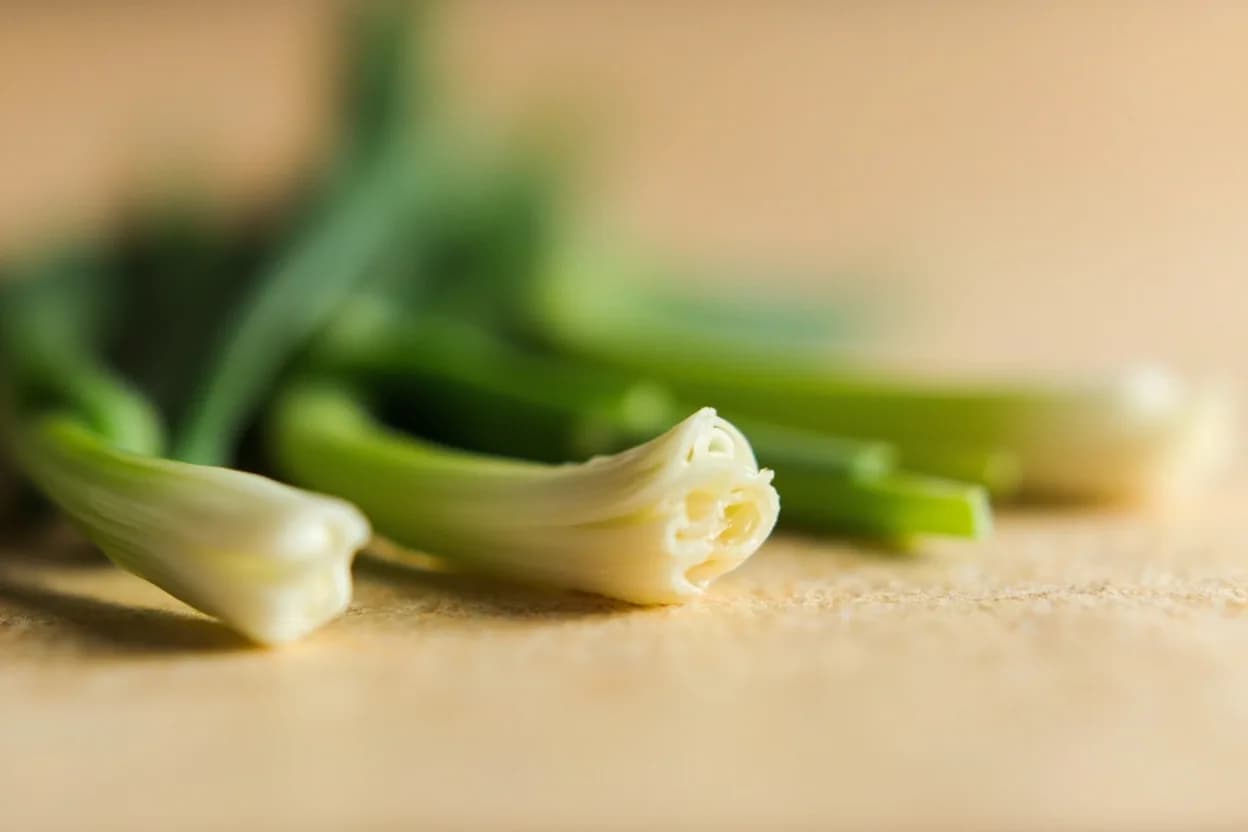
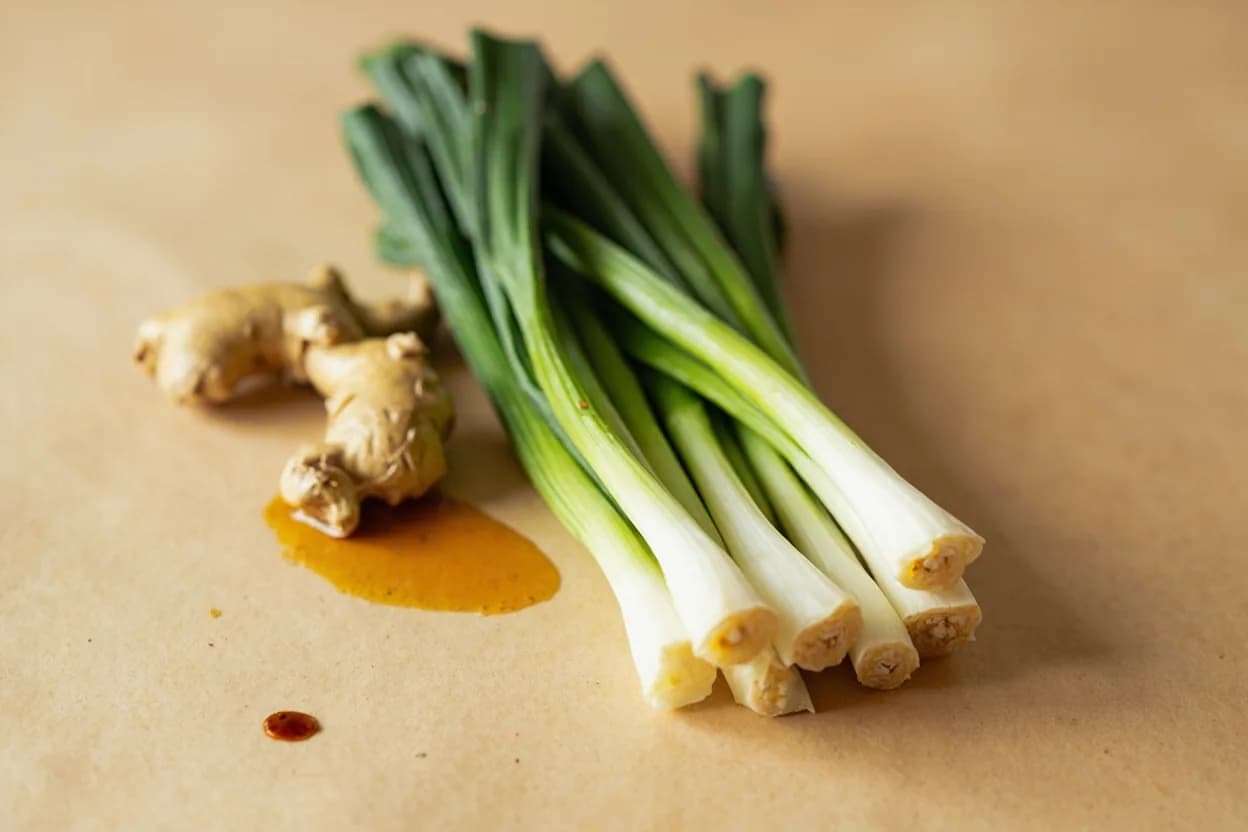
Scallions (Allium fistulosum) are immature or non-bulbing onion plants harvested before a bulb forms, yielding a slender white base shading into crisp, hollow green tops. The white part carries a sharper, more pungent allium bite similar to mild onion; the green tops are grassier and more delicate. Both parts are edible raw or cooked, offering a bright, clean allium freshness that is far less aggressive than yellow onion or garlic. In many East Asian cuisines they function as both aromatic base and finishing garnish — a dual role almost no other ingredient can match.
In photos
Flavour profile
Classic pairings
- GingerChinese
The foundational Cantonese aromatic duo — scallion and ginger are the pair that goes into steamed whole fish, white-cut chicken poaching liquid, and virtually every wok preparation in southern Chinese cooking; ginger's heat complements scallion's fresh allium freshness.
- Soy sauceChinese
Scallion dipped directly in soy sauce or combined in dipping sauces is a cornerstone of East Asian table condiments; the umami depth of soy anchors scallion's bright, grassy bite.
- Sesame oilKorean
A drizzle of toasted sesame oil over blanched scallions or used together in Korean namul and pancake batter is one of the defining flavor pairings of Korean and Chinese cuisine; the nutty richness balances scallion's sharp freshness.
- TofuChinese
Cold silken tofu with sliced scallion, soy, and sesame is one of the simplest and most perfect expressions of Cantonese flavors; scallion provides texture and aromatic lift to the smooth, neutral curd.
- EggsChinese
Scallion and egg is a global pairing from Chinese egg fried rice to French herb omelettes; the sulfur compounds in both are complementary rather than competing, and scallion's freshness cuts through egg's richness.
- Daikon radishJapanese
In Japanese and Korean cooking, grated daikon and sliced scallion are constant garnish companions for soba, udon, and dipping sauces; both are sharp and refreshing but in different registers — watery and crisp versus grassy and pungent.
- Doubanjiang (fermented bean paste)Sichuan
Scallion's clean freshness is a critical balance element against the deep, funky heat of Sichuan doubanjiang; used together in mapo tofu and braised fish, scallion lifts what could otherwise be overwhelmingly rich and spicy.
Adventurous pairings
- Cream cheese
Scallion cream cheese is a deli classic that works because the allium's fresh bite cuts through dairy fat; taken further into tarts, compound butters, or cultured cream applications, it is unexpectedly sophisticated.
- Miso butter
Charred scallions — blistered directly over flame or under a broiler — paired with a miso-butter baste produce a deeply savory, smoky result that highlights scallion's underrated ability to caramelize.
- Lime and fish sauce
In Vietnamese and Thai cooking, scallion bridges the gap between sharp citrus acid and fermented umami; together they form the core of many dipping and dressing sauces that balance heat, salt, sour, and freshness.
Raw scallion on dark rye with quark or sour cream is a Scandinavian and Eastern European open-sandwich tradition that showcases scallion's clean sharpness against earthy fermented grain.
Scallion's green freshness cuts through tahini's dense nuttiness; the pairing appears in Levantine salads and works equally well as a dressing base for grain bowls.
Tread carefully
- Delicate floral herbs (cooked together)avoid
Scallion's allium volatiles dominate and suppress delicate florals like chamomile, elderflower, or lavender when cooked in the same preparation — use them in separate elements of a dish at most.
- Milk-based dessert basesavoid
Raw scallion's sulfur compounds curdle or off-flavor dairy-sweet preparations like panna cotta or custard; even a residual trace in a pan can ruin a dessert.
How to use it
- Slicing into rings (white and green parts separated) for staggered addition to stir-fries — whites go in early, greens at the very end
- Charring whole over open flame or dry skillet to develop sweetness and smokiness (used in Korean dakgalbi, Mexican charred salsa)
- Julienning into fine threads and crisping in ice water for Cantonese garnishing on steamed dishes
- Blooming in hot oil (cong you) to infuse scallion flavor into a neutral oil for drizzling
- Tying into knots and adding to braises or poaching liquids to add allium depth without textural scallion presence
- Making pajeon (Korean scallion pancake) batter, where the whole scallion becomes structural
Appears in
Related flavours
Shallot is the concentrated, sweeter French counterpart; scallion delivers fresh grassiness where shallot delivers depth.
- Chive
Chive shares scallion's grassy freshness but is more delicate and without the white base's pungency — often interchangeable as a garnish.
In East Asian cooking, garlic and scallion frequently appear together as the core aromatic base, each contributing a different register of allium heat.
References
- 1.The Wok: Recipes and Techniques — J. Kenji López-Alt
- 2.Every Grain of Rice — Fuchsia Dunlop
- 3.The Korean Cookbook — Judy Joo
- 4.On Food and Cooking — Harold McGee
Confidence: high
Notes
White base vs. green tops — two ingredients in one
Professional cooks treat the white and green parts of a scallion as distinct ingredients. The white base, with its higher concentration of allicin precursors, is added early in cooking alongside garlic and ginger. The green tops, largely composed of chlorophyll-rich cells and more volatile aromatics, go in last — or are used raw — to preserve their fresh color and bite. Ignoring this distinction and adding the whole scallion at once wastes the green's liveliness.
Cong you: scallion oil as a cooking medium
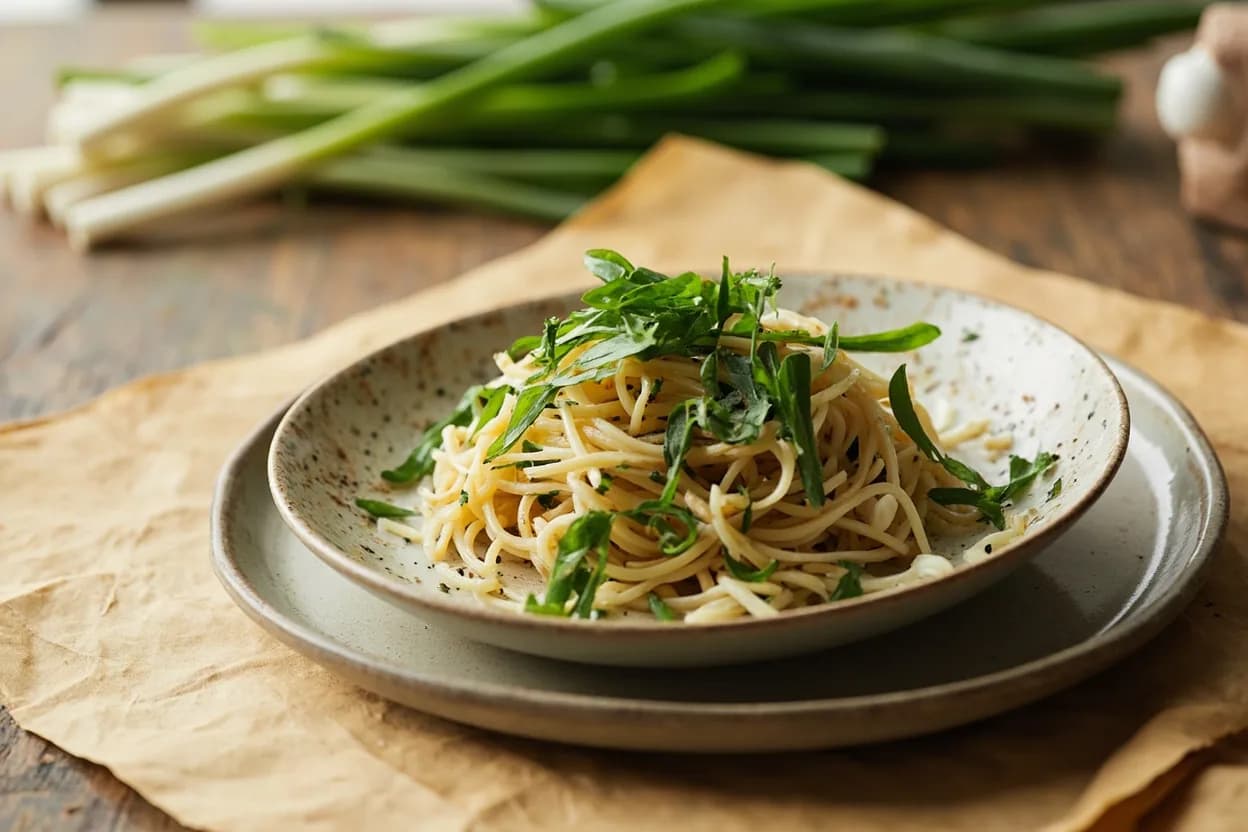
In Shanghai cooking, scallion oil (cong you) is made by slowly infusing sliced scallions in neutral oil until the allium flavor is fully extracted and the scallion strips are golden. The oil is then strained and used to dress blanched noodles in one of Shanghai's most beloved street foods, scallion oil noodles. This technique extracts and concentrates every flavor compound from the scallion into a storable, versatile condiment.