Herbs
Sawtooth Coriander (Culantro)
Also: culantro, recao, ngò gai, bhandhania, shadow beni, Mexican coriander, long coriander, Eryngium foetidum
Cilantro's tougher, more heat-stable tropical cousin whose sawtooth leaves pack twice the flavour and survive cooking where coriander wilts.
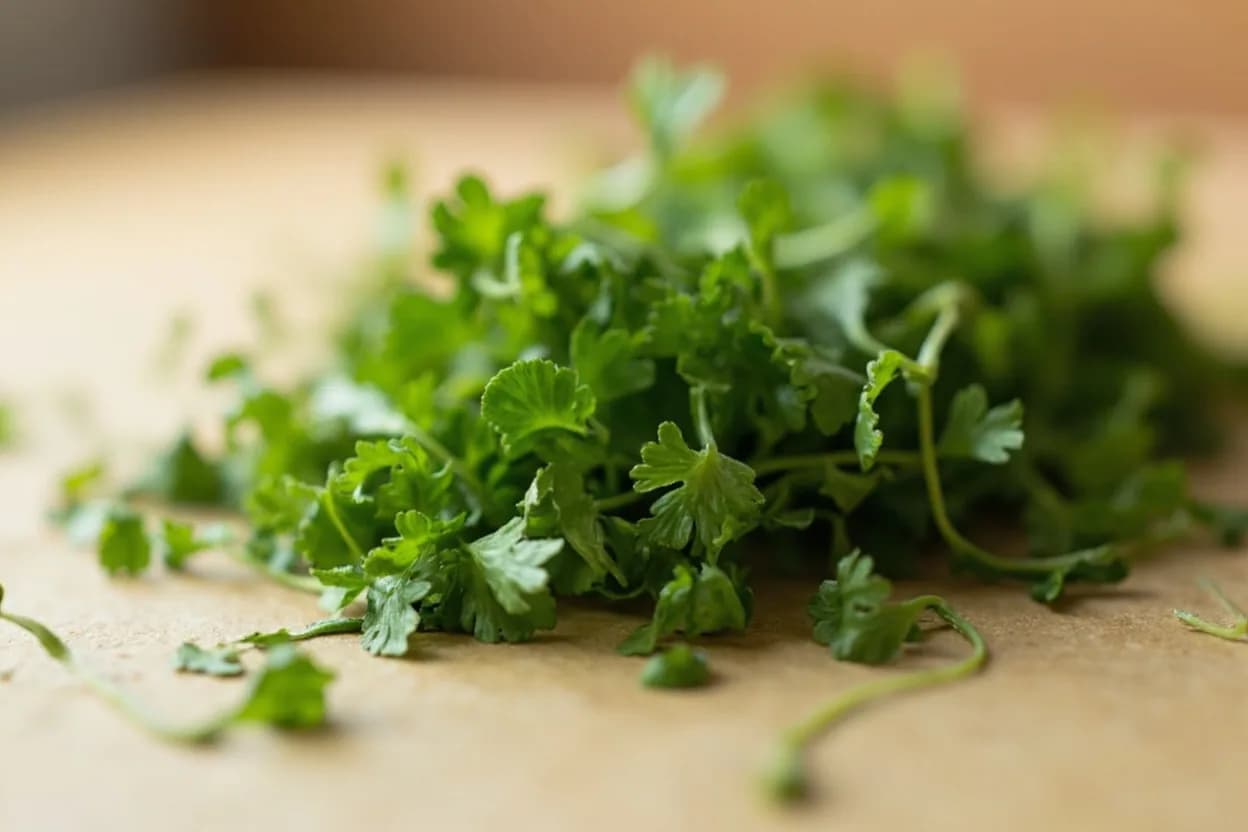
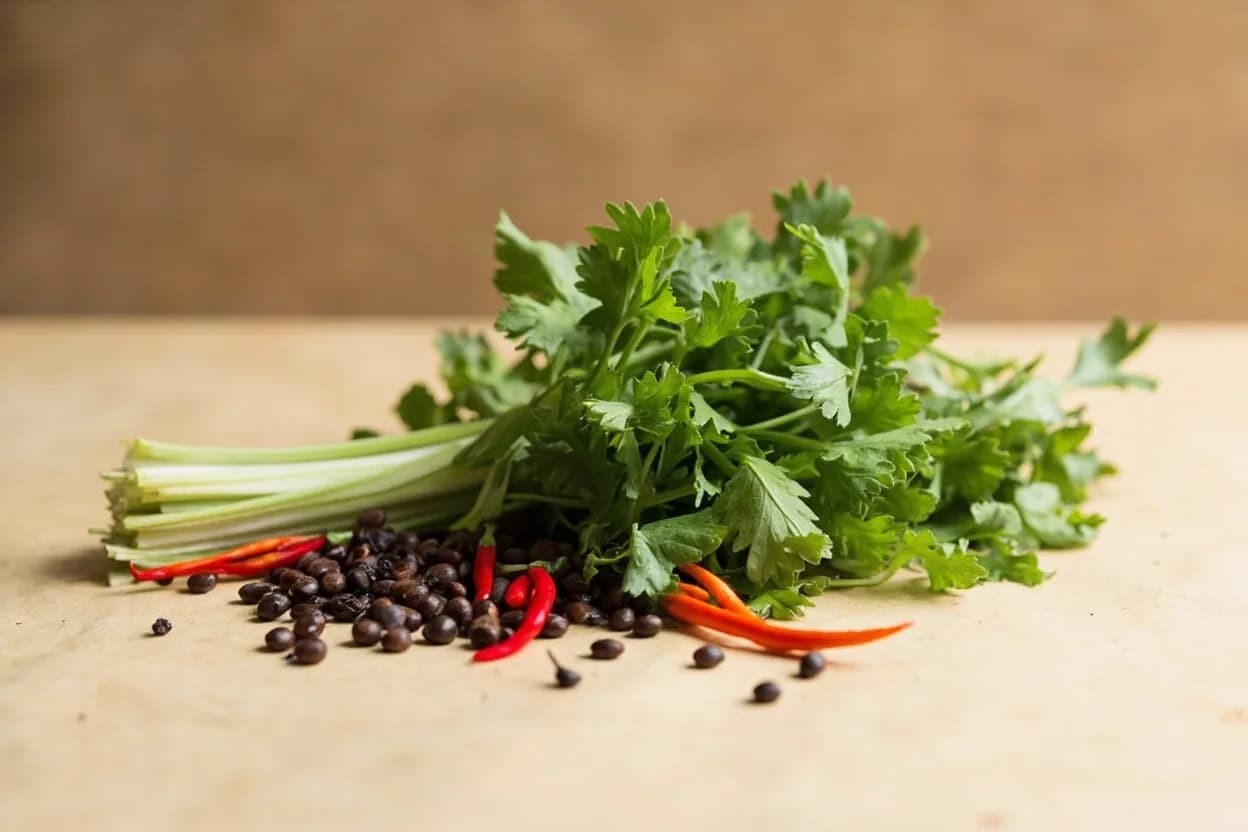
Culantro (Eryngium foetidum) is a biennial herb native to tropical Americas and the Caribbean, now essential across the Caribbean, Southeast Asia, and parts of South Asia. Its long, serrated leaves look nothing like cilantro but smell intensely similar — a bold, aldehydic, green-citrus aroma described as cilantro amplified two to three times. Crucially, culantro is heat-stable: its aromatic compounds withstand simmering and slow cooking in a way that coriander leaf cannot, making it the herb of choice for long-cooked stews, bean soups, and curry pastes in the tropics.
In photos
Flavour profile
Classic pairings
- Scotch bonnet chilliCaribbean (Trinidad, Puerto Rico)
The canonical Caribbean pairing: culantro's green intensity balances Scotch bonnet's fruity, incendiary heat in sofrito and green seasoning.
- black beansCaribbean / Latin American
In Cuban and Puerto Rican cooking, culantro simmered with black beans all'hour infuses the pot in ways cilantro could never manage over heat.
- coconut milkCaribbean, Southeast Asian
Throughout the Caribbean and Vietnam, culantro added to coconut-based curries and stews releases its aromatics slowly into the fat, building depth.
- porkPuerto Rican, Vietnamese
A cornerstone of Puerto Rican pernil seasoning and Vietnamese bún bò Huế; pork's fat carries culantro's aromatics across the whole dish.
- garlic and onion (sofrito base)Puerto Rican, Dominican
Culantro is one of the five pillars of Caribbean sofrito alongside ají dulce, garlic, onion, and tomato — it provides the herb backbone.
- lemongrassVietnamese, Thai
In Vietnamese and Thai cooking, culantro and lemongrass share fragrant citrus duties; together they intensify beef soups and spicy broths.
- tamarindTrinidadian, Indo-Caribbean
The sourness of tamarind cuts through culantro's pungency in Trinidadian chutneys and Indian-Caribbean curries.
Adventurous pairings
- clam and shellfish
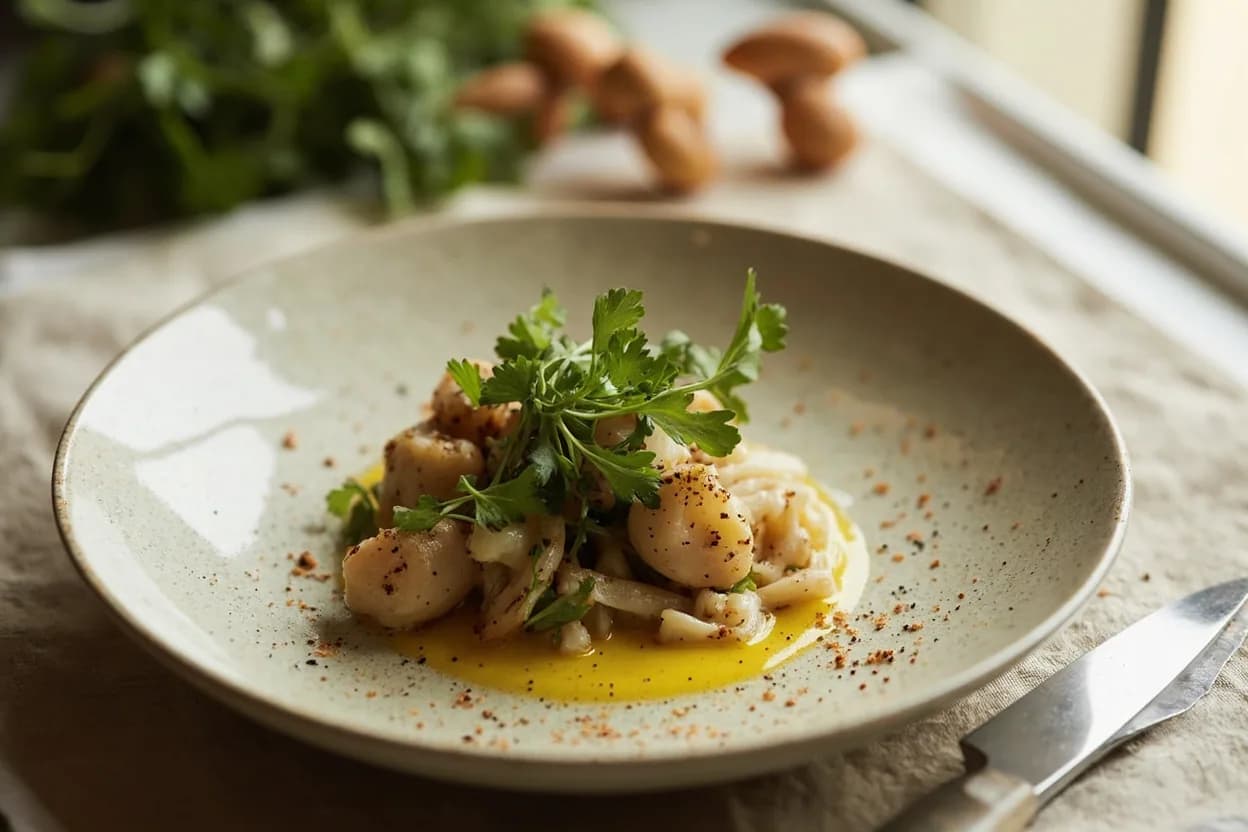
Culantro's green intensity complements briny shellfish better than cilantro in long-simmered clam broths or Vietnamese seafood hotpot.
- aged rum
The herbal pungency of culantro used in rum-based cocktail syrups (like a Caribbean green herb shrub) creates a layered, aromatic, tropical drink.
- dark bitter chocolate
A mole-inspired pairing: culantro's green aldehyde notes and dark chocolate's bitterness mirror their chemical complexity when used in slow-cooked meat sauces.
- fermented black garlic
The sweet-umami depth of black garlic absorbs culantro's intensity, creating an unconventional marinade paste for grilled meats.
- mango (green/unripe)
In Indo-Caribbean cuisine, culantro and green mango appear together in chutneys; the tartness of raw mango mirrors culantro's citric bite.
Tread carefully
- delicate fish (raw or just-seared)avoid
Culantro's double-strength intensity overwhelms subtly flavoured raw fish; use the milder coriander leaf or microgreens instead.
- light cream sauces (French-leaning)avoid
The herb's tropical pungency clashes with buttery, reduced cream; it reads as intrusive rather than aromatic in that context.
- egg-forward custards and soufflésavoid
The powerful aldehydic aroma turns medicinal rather than herbal when paired with cooked egg's sulfur notes at high heat.
How to use it
- Add whole leaves to soups and stews early — it withstands 30–60 minutes of simmering without losing aroma
- Chop finely for sofrito and green seasoning blends; blend with oil and freeze in ice-cube trays
- Tear and use raw as a finishing herb over Vietnamese beef noodle soups (phở) and rice paper rolls
- Dry-wilt over a flame or in a dry pan to intensify smokiness for salsas
- Pound into a paste with garlic, chilli, and salt for a wet herb base that keeps refrigerated up to 10 days
Appears in
Related flavours
- Coriander (Cilantro) Leaf
The softer, more volatile cousin; use where heat stability is not required and a gentler flavour is preferred
Shares the sustained, heat-stable citrus-earthy character; used in Thai pastes as culantro is in Caribbean sofrito
- Vietnamese Coriander (Rau Ram)
Another Southeast Asian herb in the extended 'coriander' family — peppery, lemony, used raw over salads and rice dishes
References
- 1.Vegetables from Amaranth to Zucchini — Elizabeth Schneider (William Morrow, 2001)
- 2.Gran Cocina Latina — Maricel Presilla (W.W. Norton, 2012)
- 3.The Food of Vietnam — Luke Nguyen (Murdoch Books, 2009)
- 4.CRC Handbook of Medicinal Spices — James A. Duke (CRC Press, 2002)
Confidence: high
Notes
Heat stability is the defining advantage
The key practical difference between culantro and cilantro is not just intensity but heat stability. Coriander leaf's main aromatic aldehydes (dodecanal, decanal) are highly volatile — they evaporate within minutes of cooking. Culantro contains similar compounds at higher concentrations with more stable molecular configurations, allowing it to survive the full duration of a soup or stew. Caribbean and Southeast Asian cuisines discovered this independently: long-cooked dishes need culantro; fresh, quick dishes can use cilantro.
Regional names and identity
Culantro is known as 'recao' in Puerto Rico and Cuba, 'shadow beni' or 'bhandhania' in Trinidad and Tobago (bhandhania being the Indo-Trinidadian name), 'ngò gai' in Vietnam, and 'pak chee farang' (foreign coriander) in Thailand. The variety sold in Latino and Caribbean grocery stores and Vietnamese markets is the same species despite the different names — always Eryngium foetidum.