Herbs
Coriander Root
Also: cilantro root, pak chee rark, รากผักชี
The intensely earthy, citrus-peppery base of Thai curry pastes that coriander leaves can never fully replace.
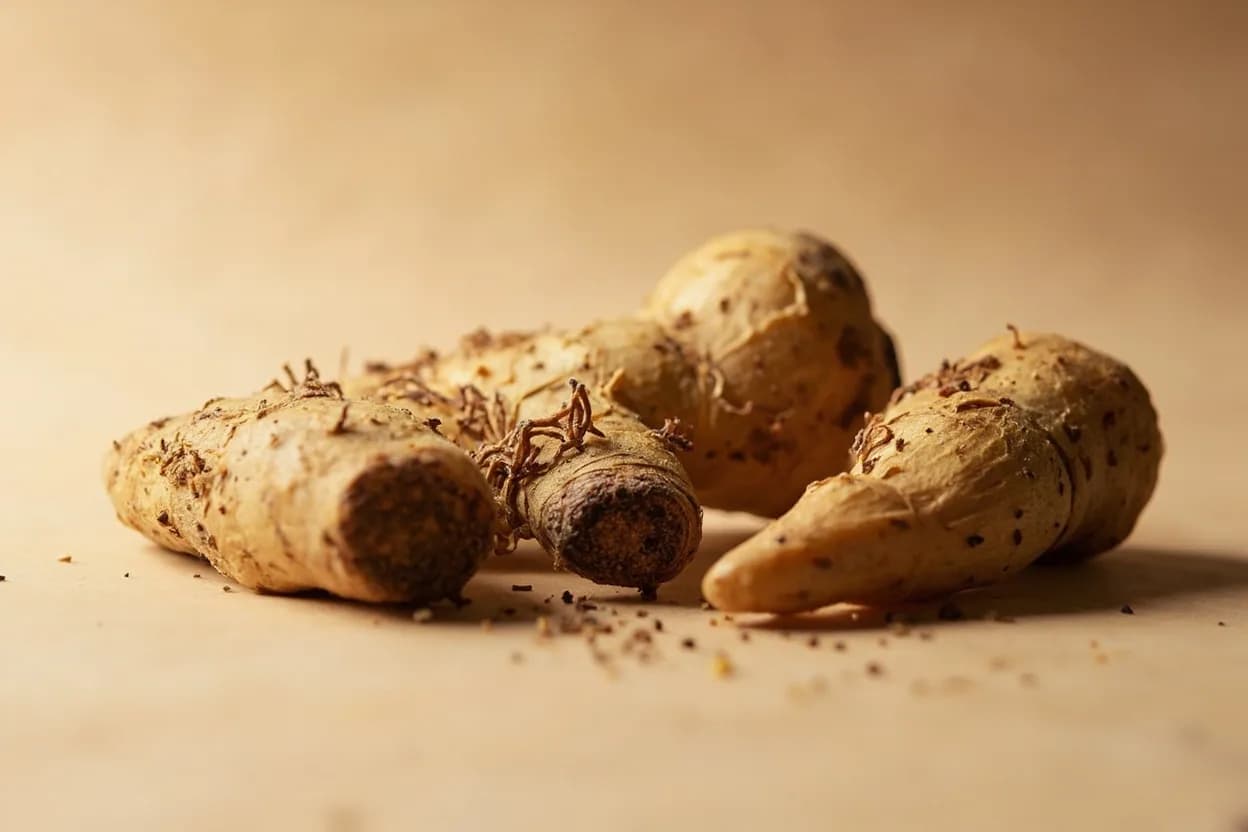
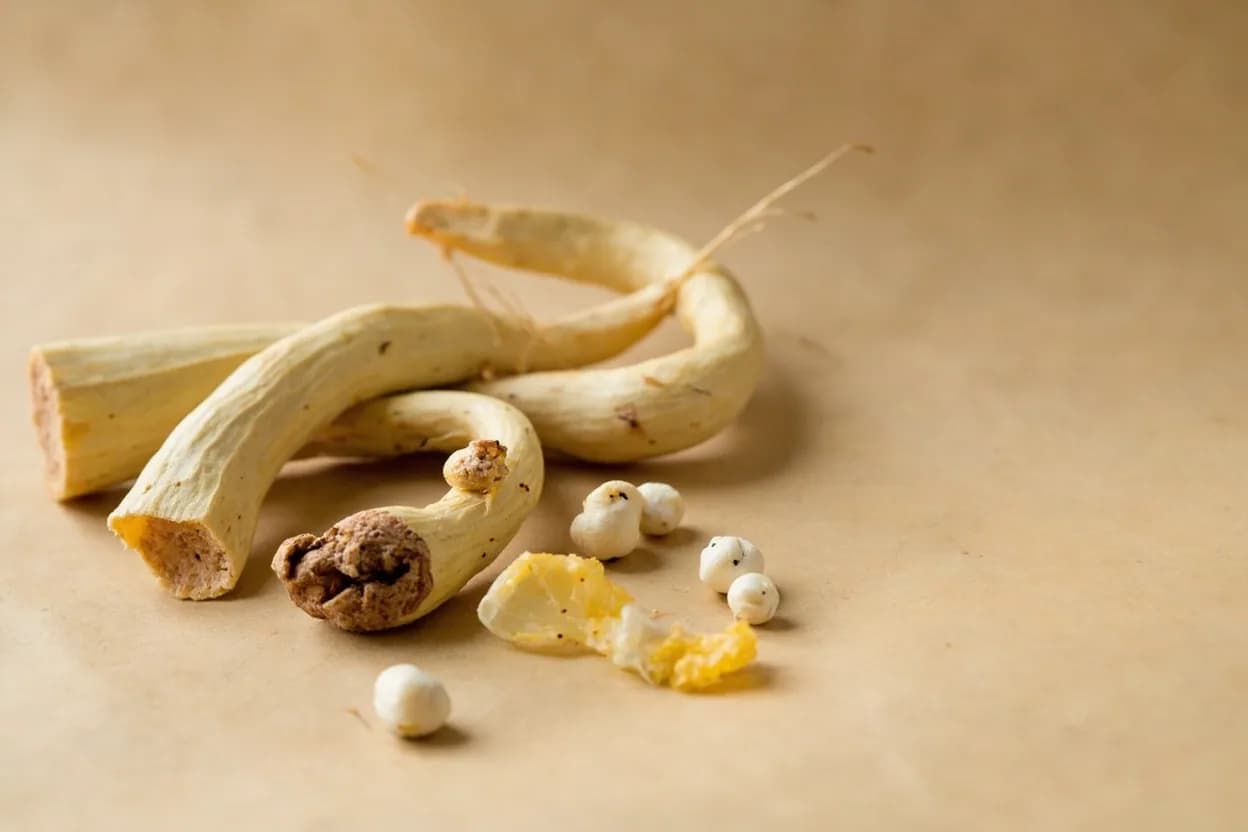
Coriander root is the scraped taproot and lower stem of Coriandrum sativum, prized in Thai cooking as a distinct ingredient rather than a byproduct. Compared to the leaves, the root carries a deeper, more concentrated flavour: earthy, slightly woody, with a sustained citrus-peppery warmth and none of the leaf's soapy volatility. It is nearly always pounded raw into pastes alongside galangal, lemongrass, and dried chillies, releasing its aromatic compounds through physical rupture rather than heat.
In photos
Flavour profile
Classic pairings
- galangalThai
Together they anchor Thai green, red, and massaman curry pastes — galangal's sharp ginger heat and coriander root's citrus earth are inseparable partners.
- lemongrassThai
The lemony brightness of lemongrass lifts coriander root's earthiness; the two are almost always ground together in Thai aromatic paste bases.
- white peppercornsThai
An ancient Thai trio — coriander root, white pepper, and garlic — forms the fundamental paste for marinades and stir-fries.
- garlicThai
Pound together for the classic Thai marinade trinity (กระเทียมพริกไทยรากผักชี); the allium rounds coriander root's raw edge.
- coconut milkThai
Slow-simmered in coconut-milk curries, the root's earthiness mellows and deepens the body of the sauce.
- dried red chilliesThai
Rehydrated dried chillies blended with coriander root create the mahogany paste base of red curry and panaeng.
- fish sauceThai
Fish sauce amplifies the root's savory earthiness, bridging herbaceous and umami registers in soups and braises.
Adventurous pairings
The root's earthy camphor note echoes good dark chocolate's terroir; use a small amount in a mole-style sauce or truffle ganache.
- lamb
Pound coriander root into a yogurt marinade for lamb shoulder — its sustained citrus warmth penetrates fat better than the leaf.
- beetroot
Roasted beetroot shares coriander root's earthy geosmin character; blend both into a soup with coconut cream for unexpected harmony.
Stirring pounded coriander root into white miso dressing gives a Southeast-Asian-Japanese hybrid that works on grilled aubergine or fish.
Tread carefully
- delicate white fish (steamed)avoid
The root's intensity overwhelms subtle steamed fish; use the leaf instead to keep flavour hierarchy balanced.
- dairy cream (as the primary herb)avoid
Coriander root's woody resin reads as bitter and medicinal in plain cream sauces lacking the acidic or fatty counterpoints Thai cuisine provides.
How to use it
- Pound in a granite mortar before other paste ingredients — its fibrous texture requires the longest time to break down
- Scrub roots clean and remove fine hair roots, but keep all root flesh
- Freeze whole roots to extend shelf life; they pound well from frozen
- Add to long-simmered stocks in the last 30 minutes to preserve volatile top notes
- Blend into marinades with neutral oil to disperse aromatics evenly
Appears in
Related flavours
The seed shares earthy citrus character but is drier and more floral; used in curry powders where the root is not available
Near-constant companion in Thai paste-making; sharper and more piney than coriander root
Provides the bright citrus top note that coriander root's earthiness underpins
References
- 1.Thai Food — David Thompson (Pavilion, 2002)
- 2.Simple Thai Food — Leela Punyaratabandhu (Ten Speed Press, 2014)
- 3.On Food and Cooking — Harold McGee (Scribner, 2004)
Confidence: high
Notes
Why the root, not just more leaf
Coriander root and coriander leaf share the parent plant but behave as different spices. The root's aromatic compounds — particularly higher concentrations of 2-decenal and dodecanal — are less volatile and more fat-soluble than the leaf's, which means they survive pounding and heat rather than evaporating. Thai cooks have understood this empirically for centuries: you pound the root into the paste and scatter the leaf over the finished dish. They are not substitutes for each other.