Regional Meat Cuts
Falda vs. Arrachera vs. Tasajo
Also: falda, arrachera, tasajo oaxaqueño, outside skirt Mexico
Three overlapping Mexican beef cut names — falda (flank/skirt region), arrachera (inside skirt, marinated for fajitas), and tasajo (thinly butterflied leg or flank air-dried in Oaxaca) — that vary by region, butchery tradition, and intended cooking method.
In Mexican carnicerías, 'falda', 'arrachera', and 'tasajo' all refer to thin, intensely flavoured beef cuts from the plate and flank region — but the names shift meaning depending on the state, the butcher, and whether the meat is fresh or cured. Falda is the broadest term, covering the lower chest and flank plate; arrachera in most of northern Mexico and the US border region means the diaphragm skirt (inside skirt/hanger area) sold marinated for carne asada; and tasajo is a Oaxacan tradition of butterflying and salt-drying a cut from the leg or flank into a thin sheet for grilling over coals. Understanding which cut a recipe means requires knowing the regional context.
In photos
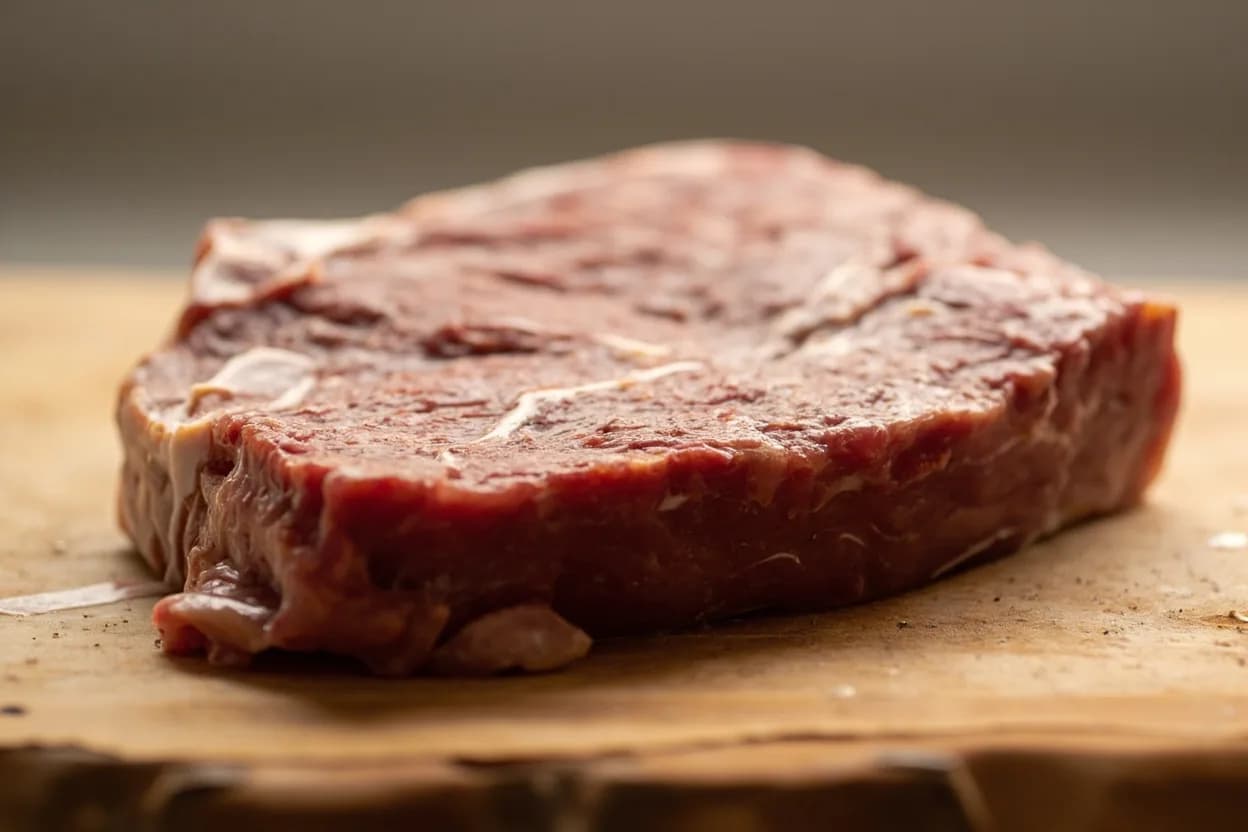
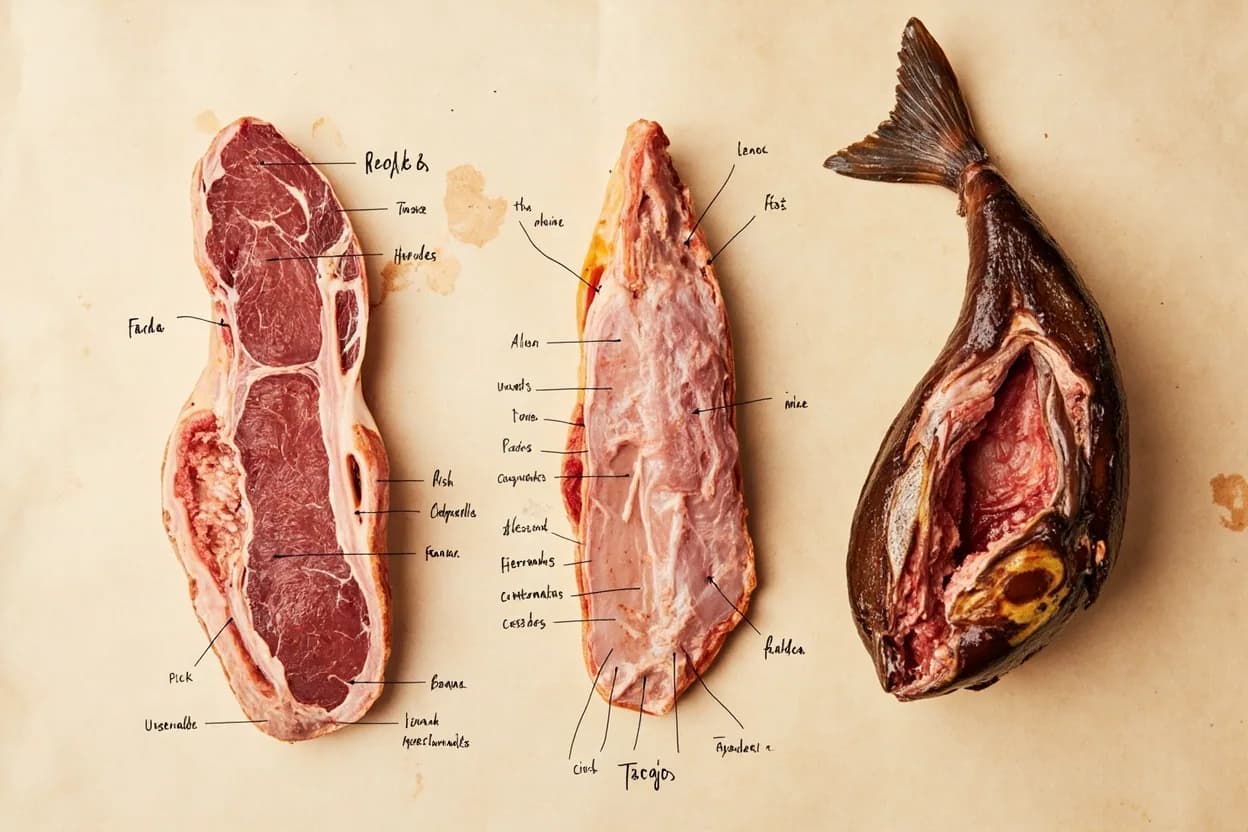
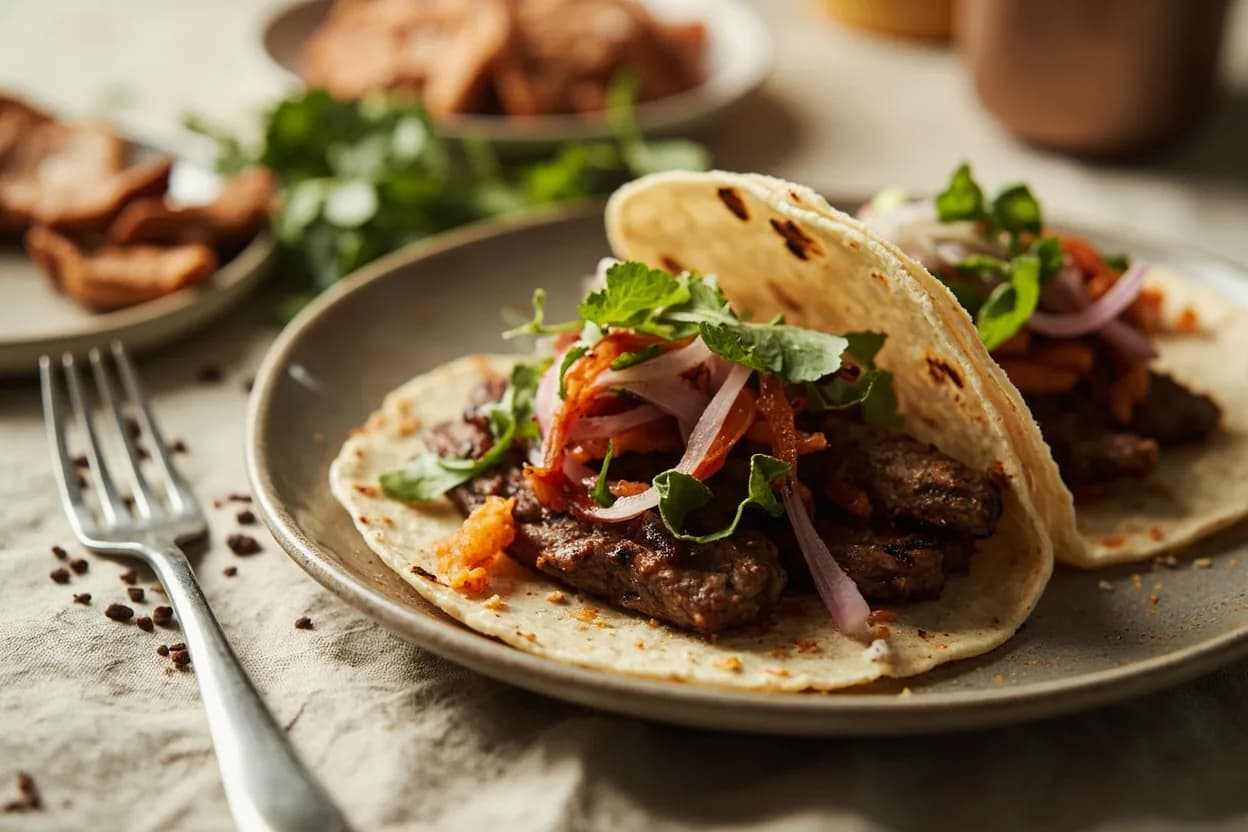
Where it comes from
Falda: lower rib plate and flank, roughly NAMP 193 (flank steak) to 121 (skirt steak) territory. Arrachera: specifically the diaphragm muscle (inside skirt, NAMP 121C) running along the rib cage interior — long, coarsely grained, highly flavoured. Tasajo: typically the hind leg (round) or occasionally flank, butterflied paper-thin and rubbed with salt and chili before sun-drying.
Best for
How to cook it
- 1Arrachera: marinate in citrus juice (lime or bitter orange), garlic, cumin, and dried chiles for 2–6 hours; grill over very high direct heat for 3–4 minutes per side; rest 3 minutes, then slice thinly against the coarse grain.
- 2Falda (flank): pound or score lightly, marinate similarly to arrachera; grill or braise depending on thickness — thick cuts benefit from a shorter braise before finishing over flame.
- 3Tasajo: no additional marinating needed — the cure is the seasoning. Grill over medium-high charcoal or coals, turning frequently, for 4–6 minutes per side until caramelised and lightly charred; serve with Oaxacan black bean paste, fresh salsa, and tortillas.
- 4When buying arrachera pre-marinated from a Mexican carnicería, reduce additional acid to avoid over-tenderising (mushy texture).
Prep & butchery
- Remove the tough membrane (silverskin) from arrachera before marinating — it resists chewing and prevents marinade penetration
- Tasajo is sold in a large folded sheet at Oaxacan markets; unfold fully, rinse lightly, and pat dry before grilling
- Falda from a Mexican butcher may include short sections of rib cartilage — check and remove before cooking
- Always slice all three against the very prominent grain, using a bias cut at 45° to maximise slice width
Substitutes
- Outside Skirt Steak (NAMP 121D)
More widely available in the US; nearly identical in grain and flavour to inside skirt/arrachera
- Flank Steak
Leaner and tighter grain than arrachera but a valid substitute for falda-style preparations; slice thinner against grain
- Hanger Steak
Shares diaphragm origin with arrachera; richer, more iron-forward flavour; a true like-for-like in high-heat applications
- Bresaola or Cecina
For tasajo outside Oaxaca: cecina (Mexican salt-dried beef, usually leg) is the closest widely available substitute
Related cuts
- Inside Skirt Steak
The US NAMP designation for what most Mexican butchers call arrachera
- Flank Steak
Shares plate/flank region with falda; used interchangeably in many Mexico City recipes
- Cecina
Mexican salt-cured thin-sliced beef, typically from the leg — overlaps with tasajo in function and tradition
- Hanger Steak
Adjacent diaphragm muscle to the inside skirt; richer, single-muscle cut
Appears in
References
- 1.Mexico: The Cookbook — Margarita Carrillo Arronte (2014)
- 2.Authentic Mexican — Rick Bayless (1987)
- 3.My Mexico City Kitchen — Gabriela Cámara (2019)
- 4.The Food of Oaxaca — Alejandro Ruiz Olmedo (2019)
- 5.NAMP Meat Buyer's Guide, 8th Edition — North American Meat Processors Association
Confidence: high
Notes
Naming across regions
The confusion between falda, arrachera, and tasajo is genuine and long-standing even within Mexico. In Monterrey and the northern states, 'arrachera' nearly always means inside skirt marinated and ready to grill — the quintessential carne asada cut. In Mexico City, 'falda' is more common and may refer loosely to anything from the plate region. In Oaxaca, tasajo is its own tradition with no direct equivalent elsewhere in Mexican cuisine: the butterflied, salt-dried, partially air-cured sheet of beef is folded and sold by the kilo at mercado stalls, then grilled to order.
Tasajo vs. cecina: a Oaxacan distinction
In Oaxacan cooking, tasajo and cecina are distinguished by species and cut: tasajo is beef (usually leg), cecina is pork (often loin or leg, rubbed with chili paste). Outside Oaxaca, the distinction dissolves — cecina in central Mexico can be beef or pork, salted or chile-marinated. If a recipe specifies tasajo oaxaqueño, it always means the beef, always the air-dried sheet, and always grilled — not braised.