Regional Meat Cuts
Falda (Skirt Steak) / Arrachera
Also: arrachera, falda, inside skirt, outside skirt, diaphragm steak
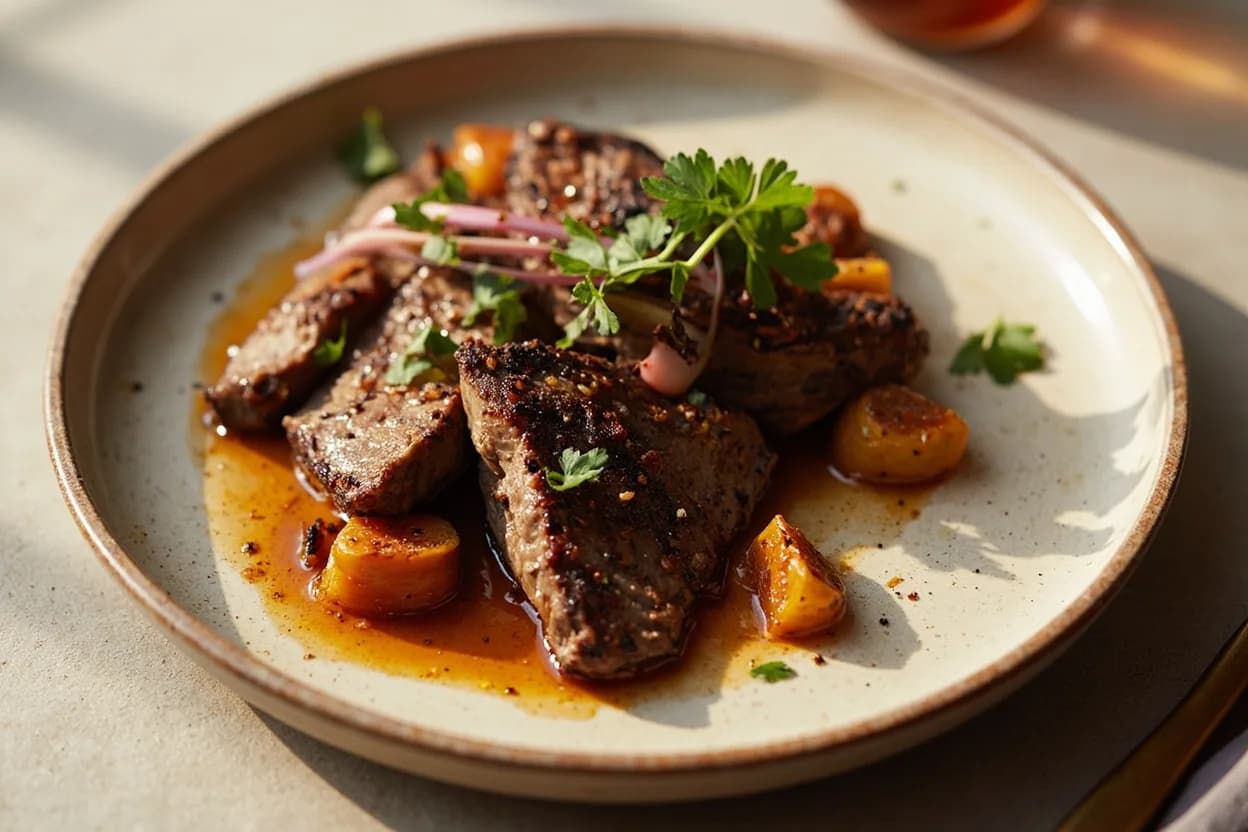
Long, coarse-grained diaphragm muscles prized in Mexican cooking for their intense beefy flavor, quick marinade uptake, and dramatic char on a screaming-hot grill — sliced strictly against the grain.
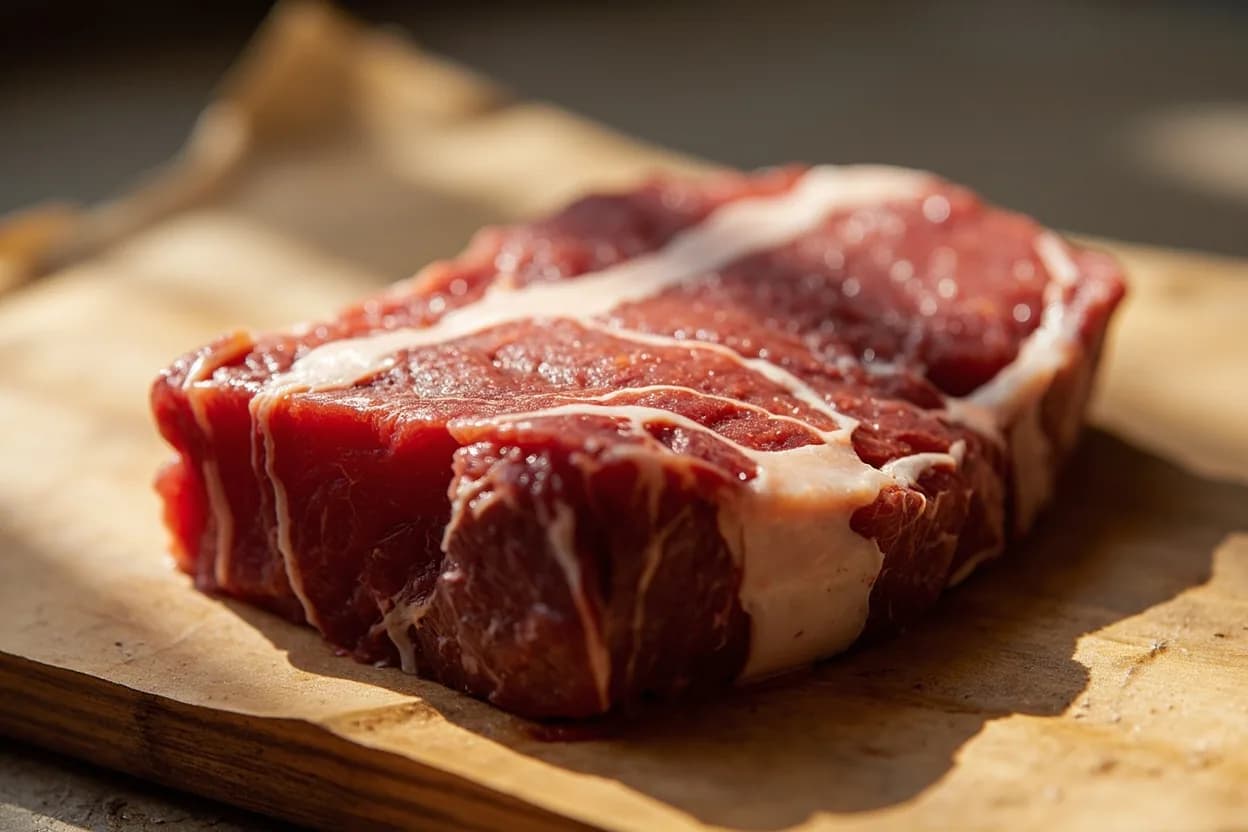
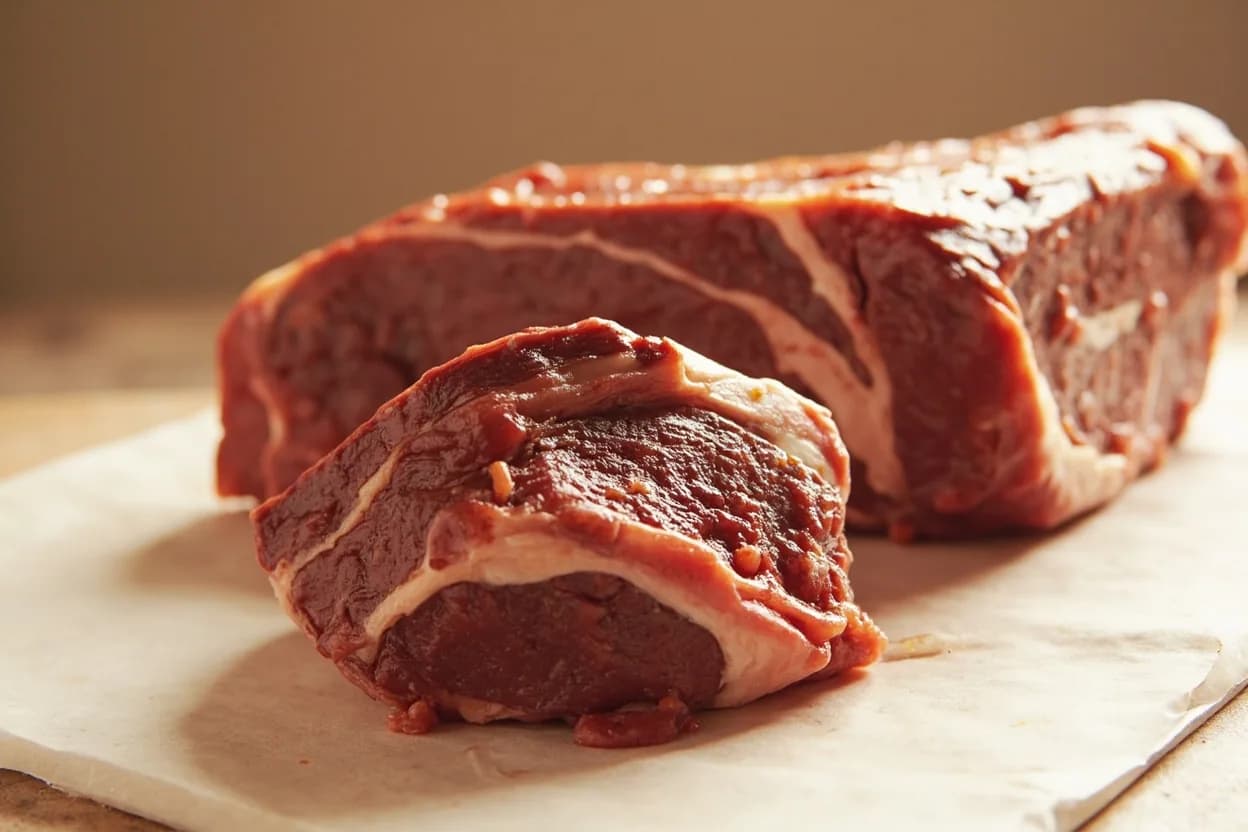
In Mexico, falda and arrachera are the dominant names for the skirt steak complex — two anatomically distinct muscles (inside skirt and outside skirt) that both come from the plate and flank area of the steer. 'Arrachera' has become the marketing term for marinated, restaurant-grade skirt, nearly always the outside skirt (also called the diaphragm muscle), while 'falda' is used more loosely in home and butcher-shop contexts for both cuts. The long, parallel muscle fibers run almost perpendicular to the cut edge, making against-the-grain slicing non-negotiable.
In photos
Where it comes from
Inside skirt (falda interior): from the transversus abdominis muscle, inside the rib cage along plates 6–12. Outside skirt (arrachera / falda exterior): from the diaphragm, running along the lateral edge of the plate; typically longer, thinner, and more uniform than the inside skirt. Both are considered plate/flank primals.
Best for
How to cook it
- 1Remove the thick exterior membrane on the outside skirt by sliding a sharp knife under it at one corner, then pulling it away while running the blade flat along the muscle.
- 2Marinate 30 minutes to 4 hours in a citrus-soy-garlic base (adobo) or simply season aggressively with salt, pepper, and lime — the open grain penetrates fast; overnight marinades turn the surface mushy.
- 3Bring to room temperature for 20 minutes before cooking.
- 4Grill or sear over the highest possible heat, 2–3 minutes per side for medium-rare on a thin outside skirt.
- 5Rest 3–5 minutes before slicing — this cut holds less juice than thick steaks, so resting is critical.
- 6Slice strictly against the grain at a 45-degree bias cut, holding the knife nearly horizontal to create wider, more tender slices.
Prep & butchery
- Peel the silvery membrane off the outside skirt before any marinade contact — it is impermeable to flavor and turns to rubber under heat.
- If the inside skirt is very thick in one section, butterfly that section to even the profile.
- Score the surface lightly in a crosshatch (optional) to increase marinade penetration and improve visual grill marks.
- Do not pound — breaking the fibers makes the texture mushy rather than tender.
Substitutes
- Flank steak (matambre)
Same family, leaner, slightly thicker; slice the same way; longer marinate time
- Hanger steak (arrachera de la nana)
More tender, richer flavor; cut from one single muscle; excellent alternative for tacos
- Flat iron steak
More tender and consistent; loses the coarse-grain character but works on the grill
Related cuts
- Falda (Flank Steak)
Confusingly, 'falda' is also used by some Mexican butchers for the true flank steak from the abdominal wall
Different muscle, same high-heat grill tradition
Appears alongside arrachera on traditional taquiza menus
Appears in
References
- 1.The Meat Buyer's Guide — North American Meat Institute (NAMI, 8th ed.)
- 2.Mexico: The Cookbook — Margarita Carrillo Arronte (Phaidon, 2014)
- 3.Truly Mexican — Roberto Santibañez (Wiley, 2011)
- 4.The Food Lab — J. Kenji López-Alt (W. W. Norton, 2015)
Confidence: high
Notes
Inside vs. Outside: The Arrachera Debate
In Mexican taquerias and butcher shops, 'arrachera' almost universally refers to the outside skirt (the diaphragm muscle, NAMP #121C), which is longer, more uniform in thickness, and slightly more tender than the inside skirt. The inside skirt (NAMP #121D) is fattier and has a more pronounced flavor but is harder to cook evenly. Many home cooks and smaller taquerias use inside skirt without knowing the distinction, which is why arrachera quality varies so widely.
The Grain Is Everything
Skirt steak has the most pronounced and directional muscle fiber grain of any common beef cut. The grain runs almost lengthwise down the long strip. Slicing with the grain — even by a few degrees — produces stringy, chewy pieces that seem like a different meat entirely. Against-the-grain slices at a slight bias cut through dozens of short fiber bundles simultaneously, producing tender, juicy bites. This is the single most important technique note for anyone cooking arrachera.