Regional Meat Cuts
Tasajo Scoring Technique (Oaxacan Butterfly Slice)
Also: tasajo, carne tasajeada, Oaxacan dried beef
Continuous accordion-butterfly cuts through a whole beef muscle that unfurl it into a single thin sheet for salt-curing and charcoal grilling.
Tasajo is the iconic cured-beef preparation of Oaxaca in which a whole muscle — typically from the hindquarter — is butterflied open via a series of parallel, almost-through cuts that fold out like an accordion or spiral, producing one continuous paper-thin slab. That slab is rubbed with salt, hung in the open air to half-dry, then grilled over hardwood embers at high heat.
In photos


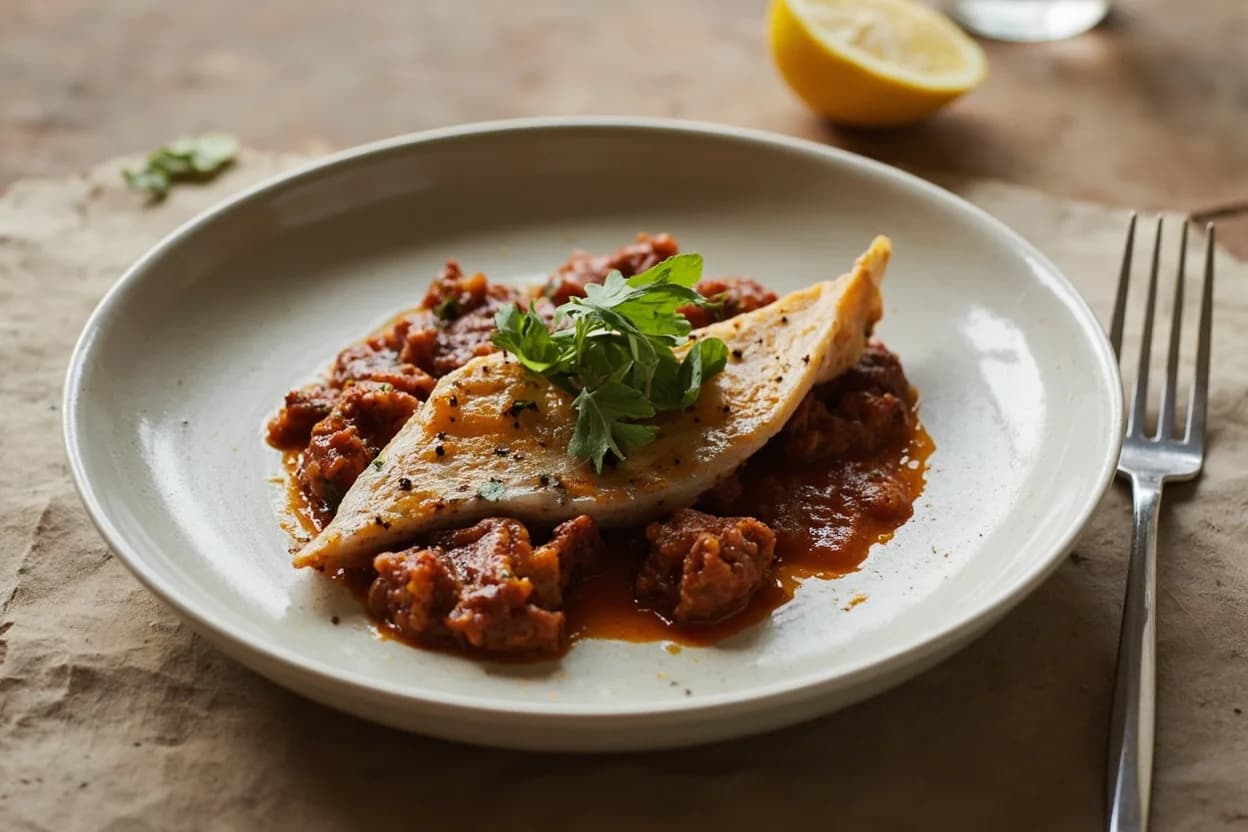
Where it comes from
Most commonly cut from the round (back leg), specifically the topside or silverside. Some butchers use the sirloin flap. The entire muscle is unrolled rather than sliced into individual steaks, so the finished sheet can reach 60–90 cm in length.
Best for
How to cook it
- 1Start at one edge of the muscle and make a horizontal cut almost — but not all the way — through, parallel to the board, then fold the meat open.
- 2Repeat the cut in the opposite direction from the newly exposed edge, again stopping just short of the far side; continue until the muscle is fully unrolled into a flat sheet.
- 3Rub both sides liberally with coarse sea salt (roughly 2% of the meat's weight) and any regional spice additions (some butchers add a touch of chile paste).
- 4Hang or lay flat on a wire rack in a shaded, breezy spot for 4–8 hours until the surface feels dry but the interior still has give — it should not be fully jerky-like.
- 5Grill directly over very hot hardwood coals, 2–3 minutes per side, until charred in spots and just cooked through.
- 6Rest 2 minutes, then slice across the grain into strips for tacos or tear into irregular pieces for a tlayuda.
Prep & butchery
- Use a boning knife or long thin-bladed slicing knife for the accordion cuts; a stiff blade makes the parallel passes uneven.
- Keep the muscle cold but not frozen so it holds shape during unrolling.
- Score any thick connective tissue on the exterior before salting so the cure penetrates evenly.
- After half-drying, pound gently with a mallet if the slab is uneven in thickness before grilling.
Substitutes
- Cecina (Mexican cured beef)
Similar thin-slice curing cut from leg; slightly thicker, diagonal slice rather than butterfly
- Carne seca (Sonoran dried beef)
Fully dried rather than half-dried; more crumble, less grill char
- Flank steak (arrachera)
Different muscle and cut direction; skip the curing step and marinate instead
Related cuts
Sister Oaxacan/Guerrero cured-meat tradition; diagonal slices vs butterfly
Often served alongside tasajo on Oaxacan meat platters
Appears on the same traditional Oaxacan platter as tasajo and chorizo negro
Appears in
References
- 1.Truly Mexican — Roberto Santibañez (Wiley, 2011)
- 2.Mexico: The Cookbook — Margarita Carrillo Arronte (Phaidon, 2014)
- 3.Oaxaca: Home Cooking from the Heart of Mexico — Bricia Lopez & Javier Cabral (Abrams, 2019)
Confidence: high
Notes
The Accordion Logic
The butterfly technique's genius is efficiency: one large round muscle yields a single dramatic sheet that cooks in under five minutes on a hot grill rather than requiring hours of slow braising. The thin cross-section maximizes surface area for salt penetration during curing and char development during grilling, compensating for the leanness of the round with texture contrast rather than fat.
Regional Variation
In the Central Valleys around Etla and Tlacolula, tasajo is typically sold half-dried at the market and grilled to order. Some producers in the Sierra Norte fully dry the meat for longer preservation, producing a crumblier product closer to northern carne seca. The cut itself — and the accordion unrolling — is consistent across all Oaxacan styles.