Regional Meat Cuts
Lengua Trimming & Peeling
Also: beef tongue, lengua de res, tacos de lengua, langue de boeuf
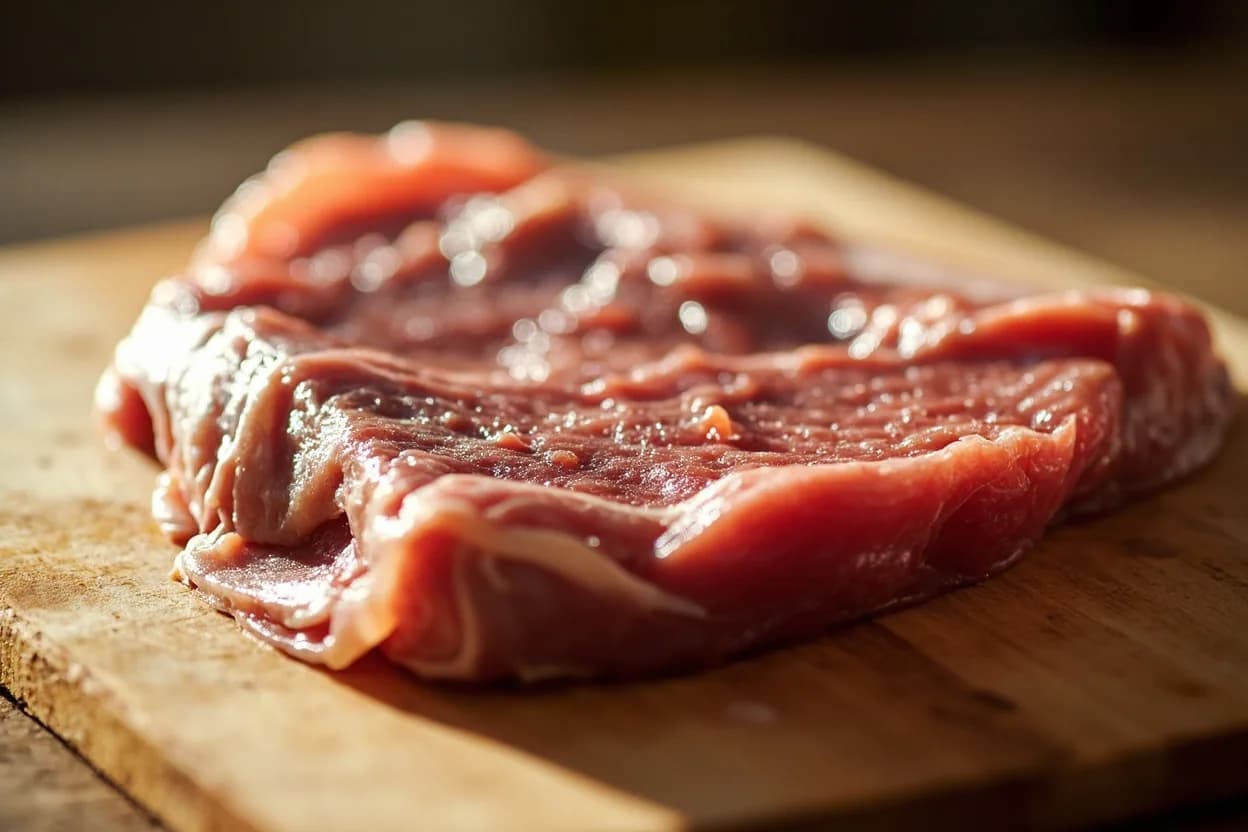
Beef tongue simmered until the thick, papillae-covered skin loosens, then peeled while hot, root-trimmed, and sliced into tender medallions for tacos, braises, and charcuterie.
Lengua (beef tongue) is a single large skeletal muscle — the hyoglossus and associated tongue muscles — weighing 1–2 kg in a mature steer. Its surface is covered in a thick, keratinized skin studded with papillae that is inedible and must be removed after cooking, not before. The muscle itself, once peeled, is among the most tender and richly flavored of all offal cuts, with a close, dense grain that slices cleanly and crisps beautifully on a griddle.
In photos
Where it comes from
The free muscle of the oral cavity, attached at the root to the floor of the mouth and the hyoid bone. The root end has cartilage and salivary gland tissue that must be trimmed away; the tip of the tongue is the most tender section.
Best for
How to cook it
- 1Rinse the tongue under cold water and scrub the surface with a stiff brush to remove any blood or debris.
- 2Place in a large pot with onion, garlic, bay leaves, black pepper, and enough cold water to cover by 5 cm; bring to a simmer and skim the grey foam that rises in the first 10 minutes.
- 3Simmer at a gentle, steady bubble (not a rolling boil) for 2.5–3.5 hours depending on size, until a skewer meets no resistance in the thickest part of the muscle and the skin has begun to visibly crack and loosen at the tip.
- 4Remove immediately to a cutting board while steaming hot — the skin must be peeled while the tongue is above 70°C; once it cools, the skin bonds back to the muscle and becomes very difficult to remove.
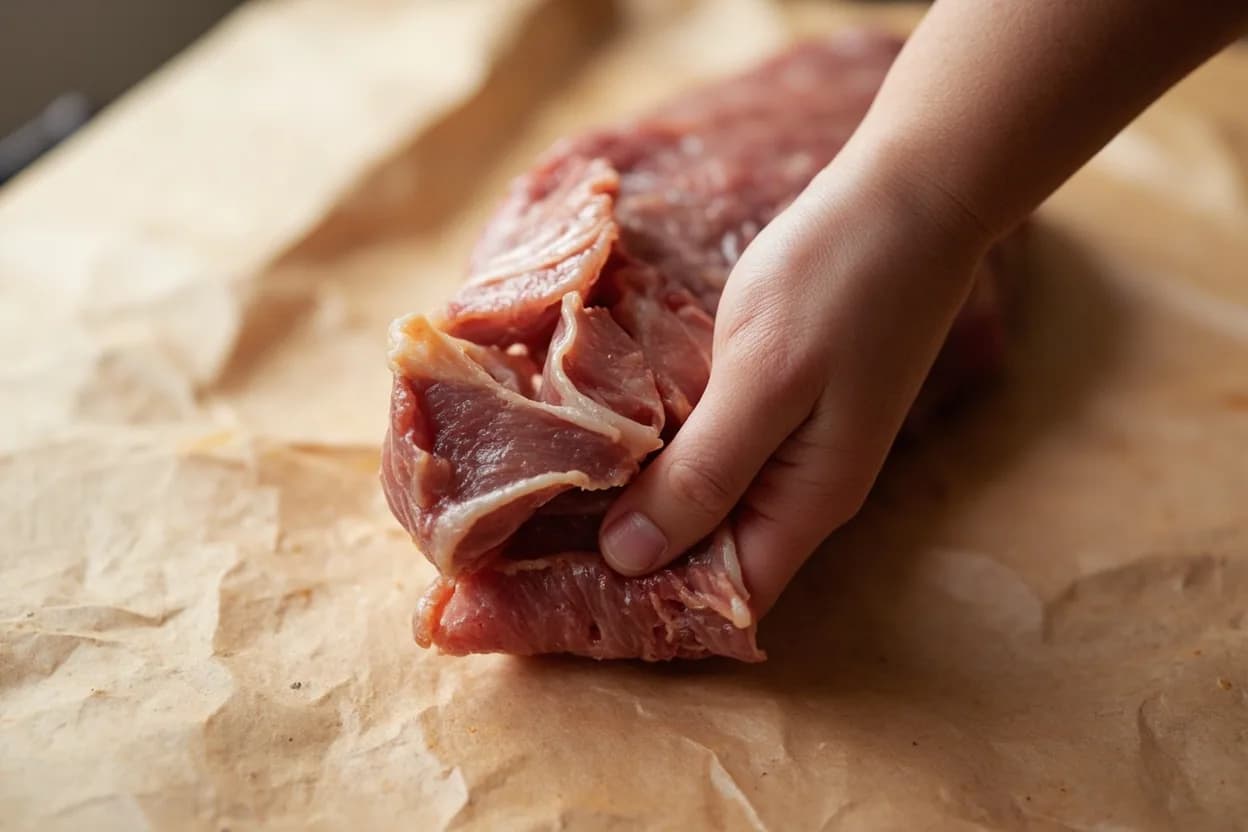
- 5Grip the skin at the tip and peel it back in large sheets toward the root; use a knife to score and lift any stubborn patches; the skin should come away in thick, rough pieces.
- 6Trim the root: cut away the cartilaginous hyoid bone attachment, any remaining salivary gland tissue (identifiable as pale, lobed fatty clusters), and the thick base connective tissue.
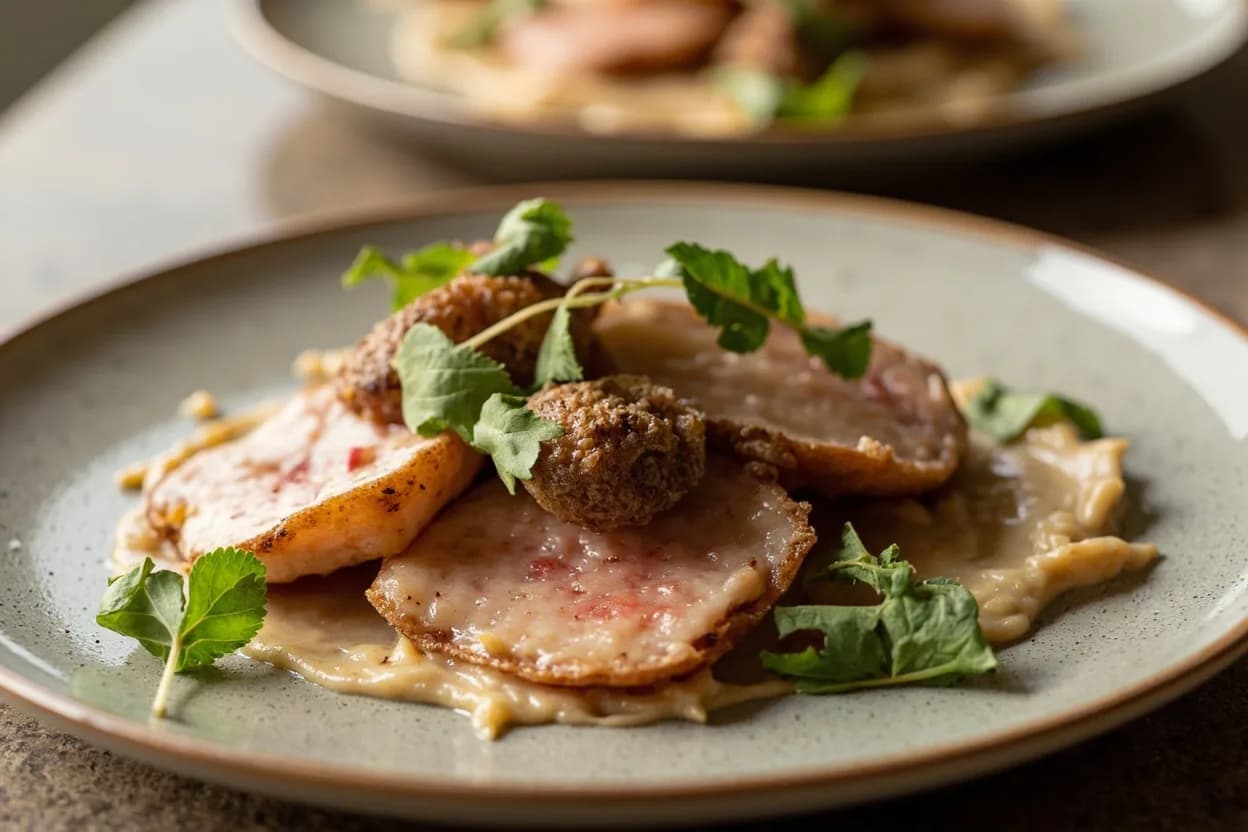
- 7Slice across the grain into 1–1.5 cm medallions for tacos; for griddle crisping, sear in a dry pan over high heat 60–90 seconds per side until deeply browned.
- 8Alternatively, slice and braise the peeled, trimmed tongue in salsa verde or chile morita sauce for 20 minutes to absorb the sauce flavors.
Prep & butchery
- Never try to peel tongue raw — the skin is firmly bonded to the muscle and will tear the meat; cooking first is non-negotiable.
- Work fast when peeling: have a bowl of cold water nearby to dip your hands but keep the tongue itself hot.
- If the tongue cools before peeling is complete, return it to the simmering liquid for 5 minutes to re-loosen the skin.
- Reserve the braising liquid: it makes a rich, collagen-laden broth ideal for soups, sauces, or ramen.
- The tongue can be simmered a day ahead, peeled, trimmed, and refrigerated whole; reheat sliced medallions on the griddle to order.
Substitutes
- Veal tongue (lengua de ternera)
Smaller, more delicate, milder flavor; same peeling and trimming protocol; cooks in 1.5–2 hours
- Pork tongue
Even smaller; used in head cheese and pozole; same technique, 1–1.5 hour simmer
- Beef cheeks (cachete)
Not anatomically related but produces a similar shredded, unctuous taco filling
Related cuts
Tongue is the premier cut from the beef head; always included on cabeza menus
Companion taco filling at traditional taquizas
The three together — lengua, arrachera, cecina — form the backbone of many taquería menus
Appears in
References
- 1.Mexico: The Cookbook — Margarita Carrillo Arronte (Phaidon, 2014)
- 2.Tacos: Recipes and Provocations — Alex Stupak & Jordana Rothman (Clarkson Potter, 2015)
- 3.The Whole Beast: Nose to Tail Eating — Fergus Henderson (Ecco, 2004)
- 4.Charcuterie: The Craft of Salting, Smoking, and Curing — Michael Ruhlman & Brian Polcyn (W. W. Norton, 2005)
Confidence: high
Notes
The Peeling Window
The single most critical technique note for lengua is the peeling window. As the tongue cools below approximately 60–65°C, a structural change occurs in the skin-to-muscle junction and the papillary layer re-adheres to the muscle surface. Cooks who attempt to peel a cooled tongue will tear the meat, lose yield, and spend far more effort than necessary. Professional taqueros peel straight from the simmering pot, often with bare hands callused enough to tolerate the heat, or using kitchen towels to grip while working quickly.
Cross-Cultural Presence
Beef tongue is a global staple far beyond Mexican cooking. In Jewish deli tradition, pickled tongue (sliced cold) is a canonical sandwich meat. In France, langue de boeuf is classically served hot with sauce madère or cold with gribiche. In Japan, gyutan (sliced grilled tongue) is a Sendai specialty. In each tradition, the same fundamental preparation applies: long, moist heat followed by hot-peeling. What differs is the seasoning of the braise and the final treatment of the sliced meat.