Seafood & Shellfish Breakdown
Lobster — Live Split, Tail & Claw Separation
Also: lobster butchery, lobster breakdown, live lobster preparation, splitting lobster
Humanely dispatching a live lobster, halving the body lengthwise, and separating the tail, claws, and knuckles into distinct sections for optimal cooking.
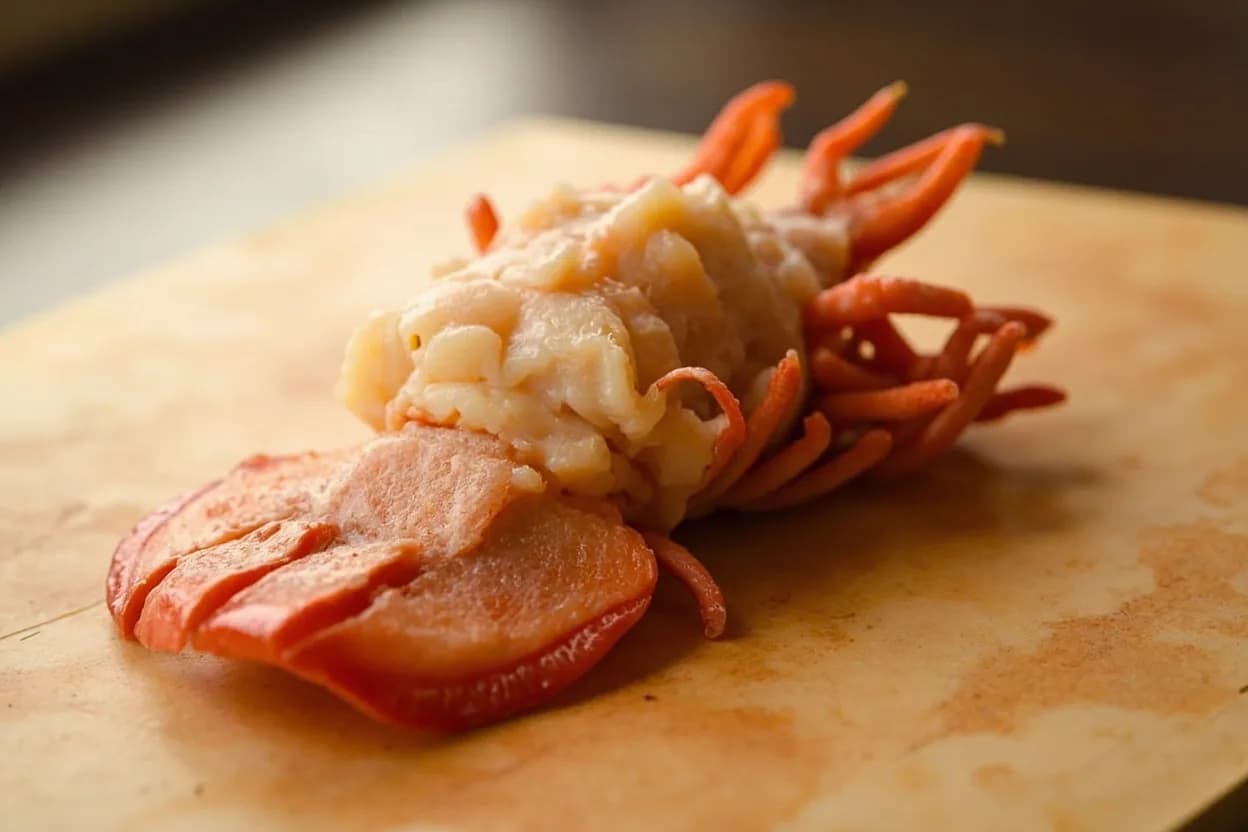
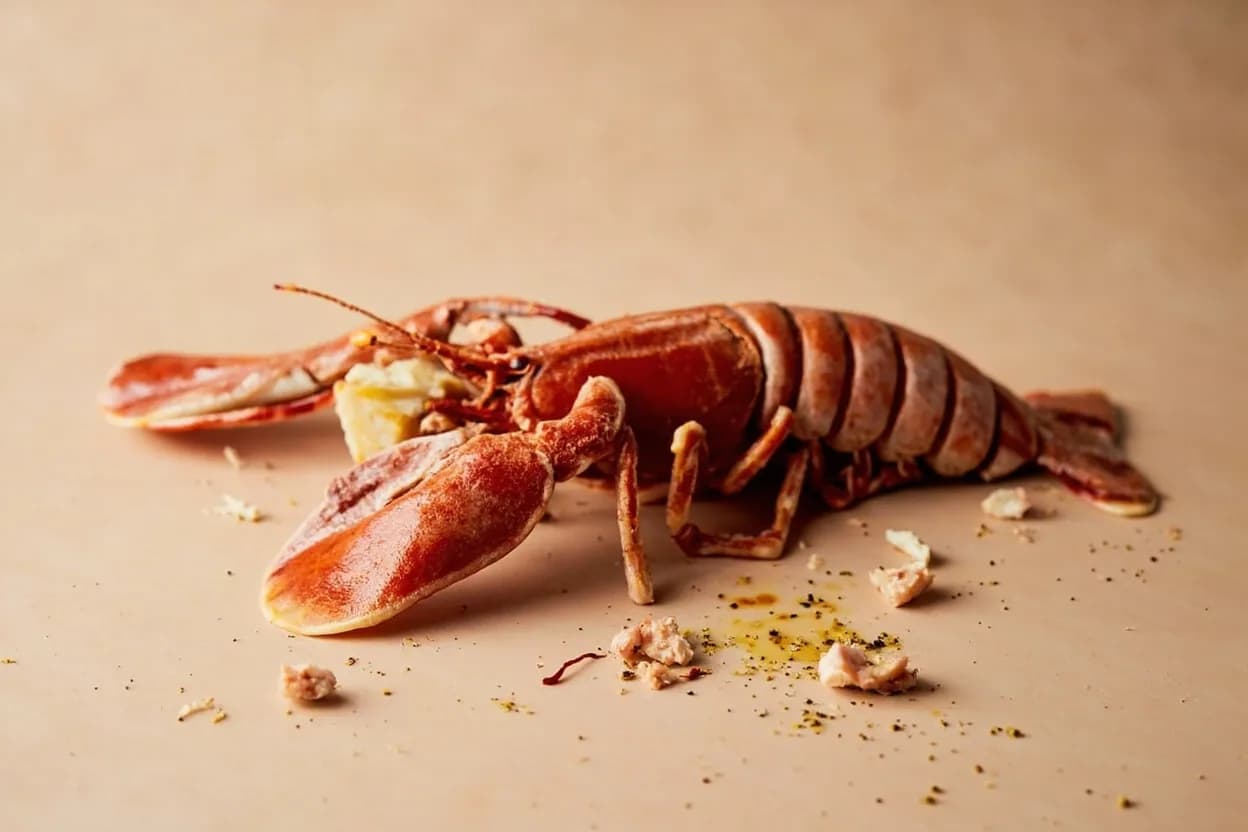
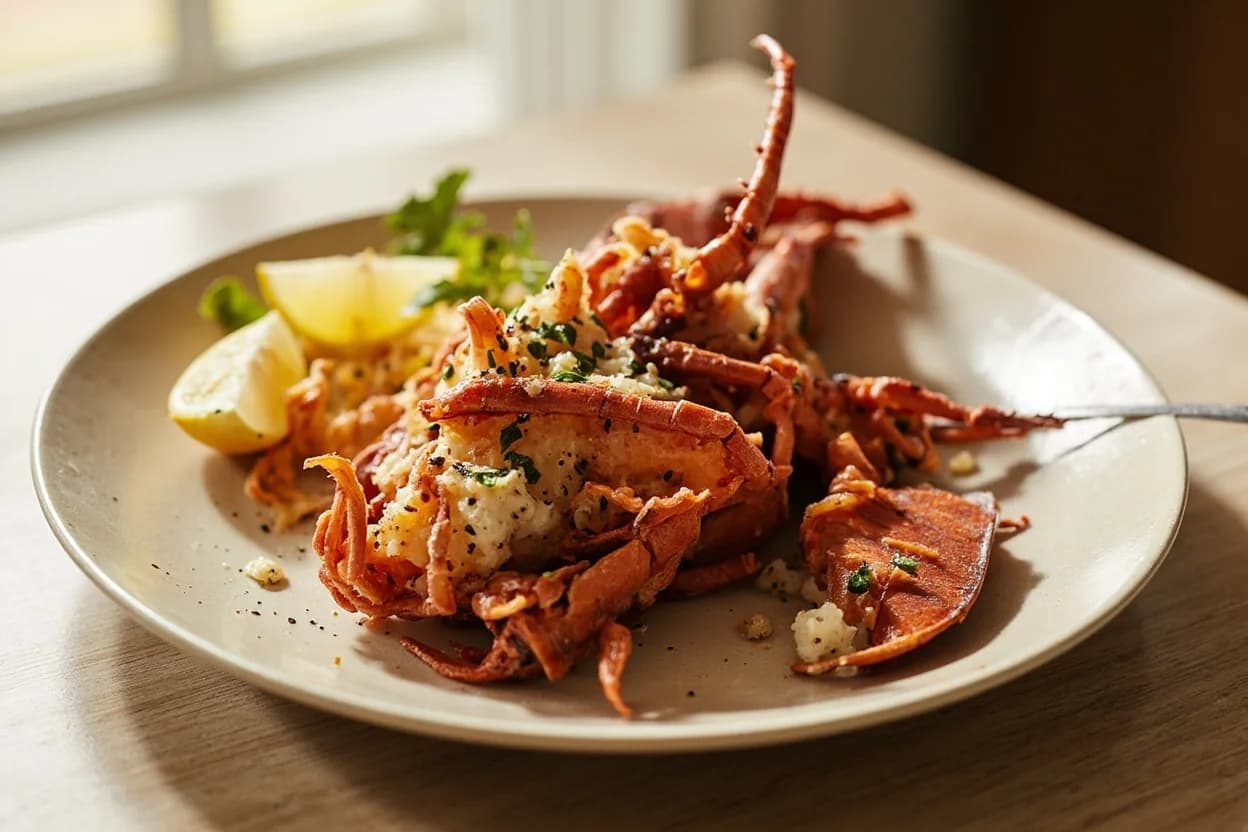
Live lobster breakdown is a sequence of precision cuts that produces the major anatomical sections — split body (for grilling or roasting), tail (the largest single muscle), claws (the firmest, sweetest meat), and knuckles (the connector joints, often overlooked but richly flavored) — each with different cooking times and uses. The technique begins with a quick, humane kill. The tomalley (green hepatopancreas) and coral (orange roe in females) are handled as optional luxury ingredients separate from the body meat.
In photos
Where it comes from
American or Maine lobster (Homarus americanus) and European lobster (H. gammarus) share the same anatomy. The tail is the muscular abdomen — a single large fan-shaped block of striated muscle protected by segmented shell. The two claws are differentiated: the 'crusher' claw is larger with molar-like ridges; the 'pincer' claw is narrower with sharp teeth. Knuckles are the two short cylindrical joints connecting each claw to the body.
Best for
How to cook it
- 1Humane dispatch: place the live lobster in the freezer for 10–15 minutes to sedate it. Then position it dorsal-side up and drive a sharp chef's knife firmly through the cross mark on the carapace (between the eyes and the first tail segment) in one rapid downward motion — this severs the main nerve ganglion instantly.
- 2Split the body: continue cutting forward through the head and downward through the tail to produce two halves. Alternatively, kill-spike first, then separate at the body-tail junction with a twist.
- 3Separate the tail: grip the tail in one hand and the carapace in the other; twist and pull to detach. Remove the dark intestinal tract (digestive vein) that runs along the top of the tail meat.
- 4Remove the claws: grip each claw at the knuckle joint and twist outward; a firm pull with a slight rotation releases the entire claw-knuckle unit from the body.
- 5Separate knuckles from claws: bend the knuckle joint against its natural flex until it cracks and pulls free; do the same for the small 'thumb' section of each claw.
- 6Crack claws for cooking: using the spine of a heavy chef's knife or a mallet, crack each large claw on both flat sides before grilling or steaming — the shell opens during cooking for even heat penetration.
- 7Handle tomalley and coral: scoop them from the split body halves into a small bowl; whisk into softened butter for a compound, or use to enrich a sauce just off the heat (do not boil — they scramble).
Prep & butchery
- Always buy live lobsters the same day you cook them — refrigerate on ice, never submerge in fresh water.
- A 680 g (1.5 lb) live lobster yields approximately 115–140 g (4–5 oz) of meat.
- Rubber band removal: always remove rubber bands from claws before cooking — they impart a rubbery off-flavour to the nearby meat.
- For tail-only recipes, a lobster cracker or sturdy kitchen shears cuts through the underside shell cleanly without mangling the meat.
Substitutes
- Langoustine (Nephrops norvegicus)
Same body plan at a smaller scale; split and grill identically but reduce cooking time dramatically — 2–3 minutes total
- Spiny lobster (Palinuridae)
No claws; tail breakdown is identical but expect tougher texture unless braised or butter-poached
- Large shrimp (head-on)
Far smaller but the split-down-the-back technique for grilling is analogous
Related cuts
Similar crustacean logic: body-split, gill removal, section separation
- Langoustine Split
Direct miniature analogue of the lobster split; same knife path, shorter cook time
Appears in
References
- 1.The French Laundry Cookbook — Thomas Keller (Artisan, 1999)
- 2.Fish & Shellfish — James Peterson (William Morrow, 1996)
- 3.Le Guide Culinaire — Auguste Escoffier (Flammarion, 1903; Wiley trans. 2011)
- 4.On Food and Cooking — Harold McGee (Scribner, 2004)
Confidence: high
Notes
Knuckle meat — the chef's secret
The two short knuckle joints connecting each claw to the carapace are consistently richer in flavour and more tender in texture than the claws themselves. Many professional kitchens reserve knuckle meat for the plate and use claw meat in secondary preparations. When buying pre-picked lobster meat, look for 'claw and knuckle' — the knuckle inclusion is the mark of quality.
Tomalley safety note
The tomalley (hepatopancreas) concentrates any toxins present in the lobster's environment, including paralytic shellfish poison during red-tide events. While the FDA advises against eating tomalley during such advisories, in clean-water harvest seasons it is prized — intensely savoury, creamy, and used extensively in French and New England cooking. Know your source.