Seafood & Shellfish Breakdown
Crab Breakdown — Hard Shell & Soft Shell
Also: crab butchery, crab cleaning, soft-shell crab prep, Dungeness crab breakdown, blue crab cleaning
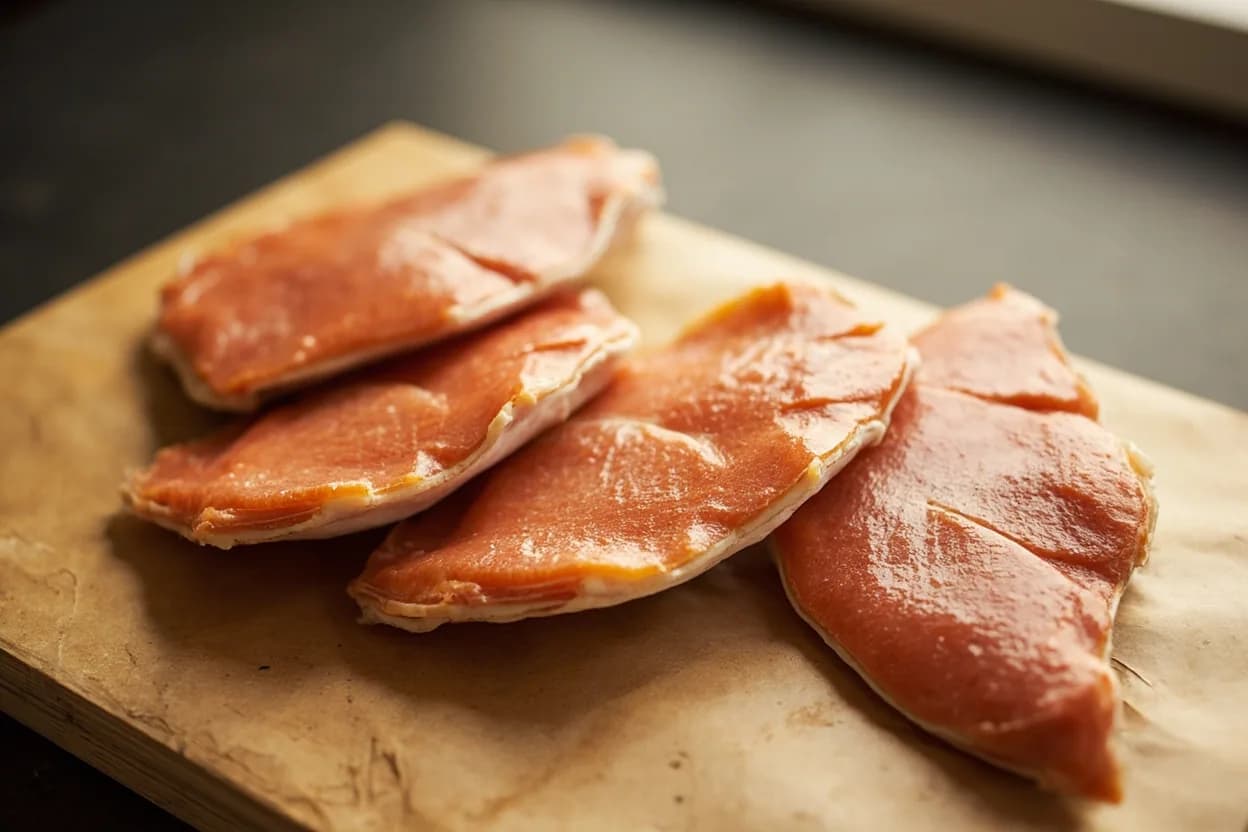
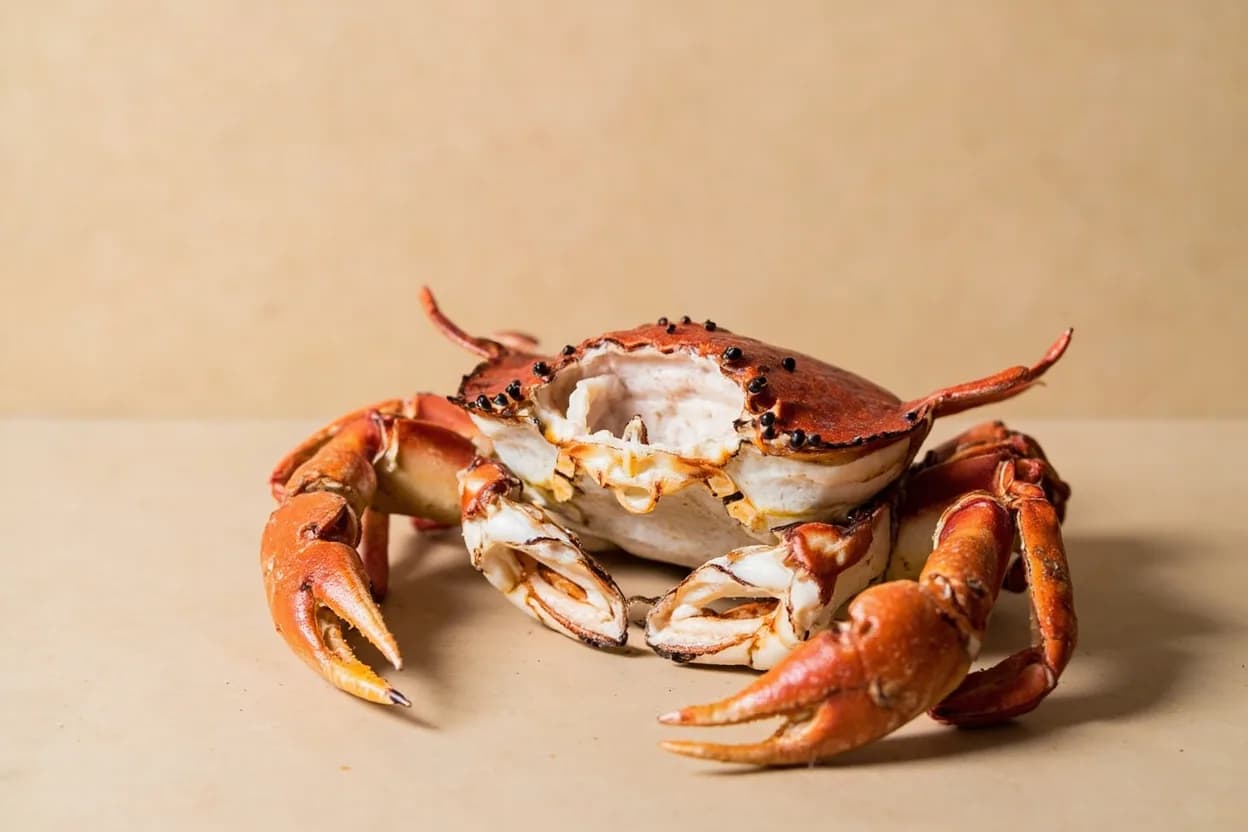
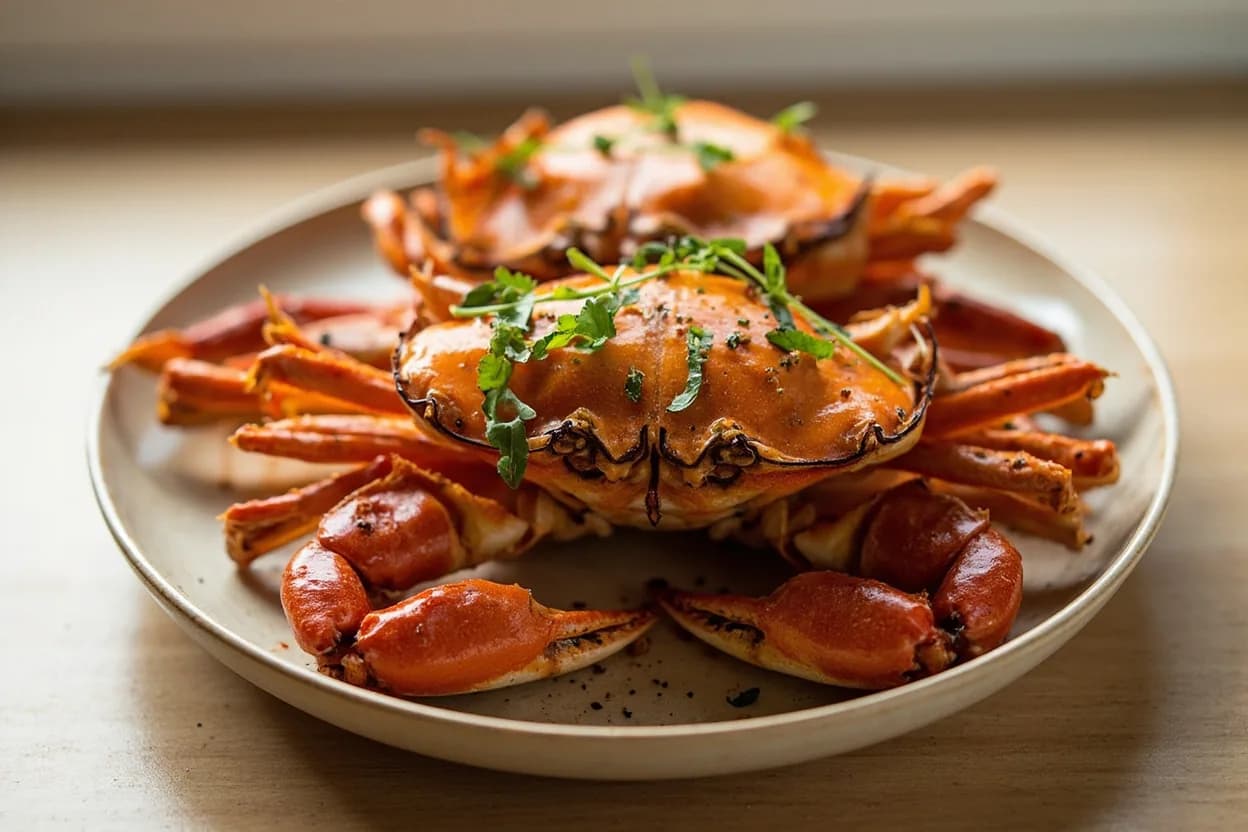
Two distinct preparation paths: hard-shell crabs are top-removed, gill-cleaned, and quartered for cooking; soft-shell crabs receive a face-cut and gill-and-apron removal for whole pan-frying or deep-frying.
Crab breakdown splits into two fundamentally different techniques depending on shell state. Hard-shell breakdown involves lifting or cutting away the carapace, scraping out the inedible grey gill 'dead man's fingers,' removing the apron (abdominal flap), and splitting or quartering the body to expose the lump and backfin meat in its chambers. Soft-shell crab preparation — applied to blue crabs caught mid-moult — requires only four quick cuts: the face (eyes and mouth), the gill removal from each side, and the apron flip, leaving the entire crab edible shell and all.
In photos
Where it comes from
Hard-shell species worked most commonly: Dungeness crab (Metacarcinus magister, Pacific North America), Blue crab (Callinectes sapidus, Atlantic and Gulf), Brown crab (Cancer pagurus, Europe), and King crab (Paralithodes camtschaticus, legs only sold). Soft-shell crabs are almost exclusively blue crabs (C. sapidus) harvested within hours of moulting, before the new cuticle hardens. The lump meat of hard-shell crabs sits in two large chambers flanking the central body; backfin, claw, and leg meat are secondary.
Best for
How to cook it
- 1HARD-SHELL — Dispatch: place live crab ventral-side up; drive a heavy skewer or knife point through the nerve centre behind the eyes or chill in the freezer 15 minutes to sedate.
- 2Remove the apron: lift the triangular (male) or round (female) abdominal flap from the underside and snap it off.
- 3Remove the top shell (carapace): grip the shell firmly and pull it away from the body with a firm upward twist; on some species (Dungeness), use a knife to sever the connective tissue first.
- 4Clean the body: scrape away the grey feathery gills from both sides using a spoon or your fingers — discard entirely. Remove the stomach sac (mandibles area, near the front of the body).
- 5Quarter or halve: cut the body in half or into quarters with a heavy chef's knife, exposing the meat chambers. Crack claws with a mallet to allow heat penetration.
- 6SOFT-SHELL — Face cut: with scissors, cut straight across the face just behind the eyes and mouth. Squeeze gently to expel the small stomach sac.
- 7Gill removal: lift each side of the top shell and snip away the soft grey gill fingers from both sides.
- 8Apron removal: flip the crab and snap off the apron flap. Pat dry and the crab is ready to flour and fry immediately.
Prep & butchery
- For live hard-shell crabs, chilling in the freezer 15–20 minutes is more reliable than spiking — the crab becomes torpid and safe to handle.
- Always pull the gills before cooking; they create bitterness in the cooking liquid and are indigestible.
- Soft-shell crabs must be cooked immediately after cleaning — they deteriorate rapidly. Ask your fishmonger to clean them if cooking within the hour.
- Crack all claws before steaming or boiling hard-shell crabs so the meat releases steam without exploding the shell.
- A stiff-bristle brush cleans mud and barnacles from shells before cooking.
Substitutes
- Lobster (sectioned)
Larger crustacean; carapace-removal and gill-cleaning logic is similar but scaled up — no soft-shell equivalent
- Langoustines (split)
Smaller; split along the belly for grilling; no cleaning step needed
- Prawns (shell-on, butterflied)
Much simpler anatomy; only the deveining step is analogous
Related cuts
Directly analogous carapace removal and body-section separation on a larger crustacean
- Shrimp Devein & Butterfly
Simpler crustacean prep; shares the deveining (digestive tract) removal concept
Appears in
References
- 1.Fish & Shellfish — James Peterson (William Morrow, 1996)
- 2.The New Professional Chef — The Culinary Institute of America (Wiley, 8th ed., 2006)
- 3.Real Cajun — Donald Link (Clarkson Potter, 2009)
- 4.Land of Fish and Rice — Fuchsia Dunlop (Norton, 2016)
Confidence: high
Notes
Why hard-shell and soft-shell need entirely different thinking
Hard-shell prep is fundamentally about access — removing the armour to reach the meat chambers or to allow heat and seasoning to penetrate during cooking. Soft-shell prep is about subtraction — removing only the three inedible parts (face, gills, apron) so the entire crab can be eaten whole. The two techniques share almost no steps beyond killing the animal.
Lump vs. backfin vs. claw: the meat hierarchy
Lump meat (from the two large swimming-leg muscle masses) is the coarsest, sweetest, and most prized — ideal for crab cakes where large chunks matter. Backfin is a mix of lump shreds and smaller flakes — good value. Claw meat is darker, slightly stronger in flavour, and the most affordable; excellent for dips, soups, and fillings where texture is secondary.