Cheese & Dairy Cuts
Long-Format Cheese Portioning (Comté & Gruyère)
Also: wheel portioning, meule portioning, circumference scoring, affineur cut
The deliberate scoring, splitting, and sectioning of a 40–60 kg cave-aged wheel along its circumference and across its face to yield even wedges with correct paste-to-rind ratios.
Long-format portioning refers to the structured breaking down of large cylindrical pressed cheeses — principally Comté (up to 70 cm in diameter, 40–55 kg) and Gruyère AOP (55–65 cm, 25–40 kg) — from whole wheel to retail or service portions. The operation preserves the cheese's internal architecture: the dense, smooth paste (pâte pressée cuite) at the heart differs in moisture and flavour intensity from the subcrustral zone just beneath the grey-brown natural rind, and both must be represented in every final portion. Affineurs and fromagers use a combination of a wire cutter (lyre), a long two-handled cheese knife, and a narrow boning-style probe knife to score, halve, quarter, and ultimately wedge the wheel without bruising the paste or shattering the rind.
In photos
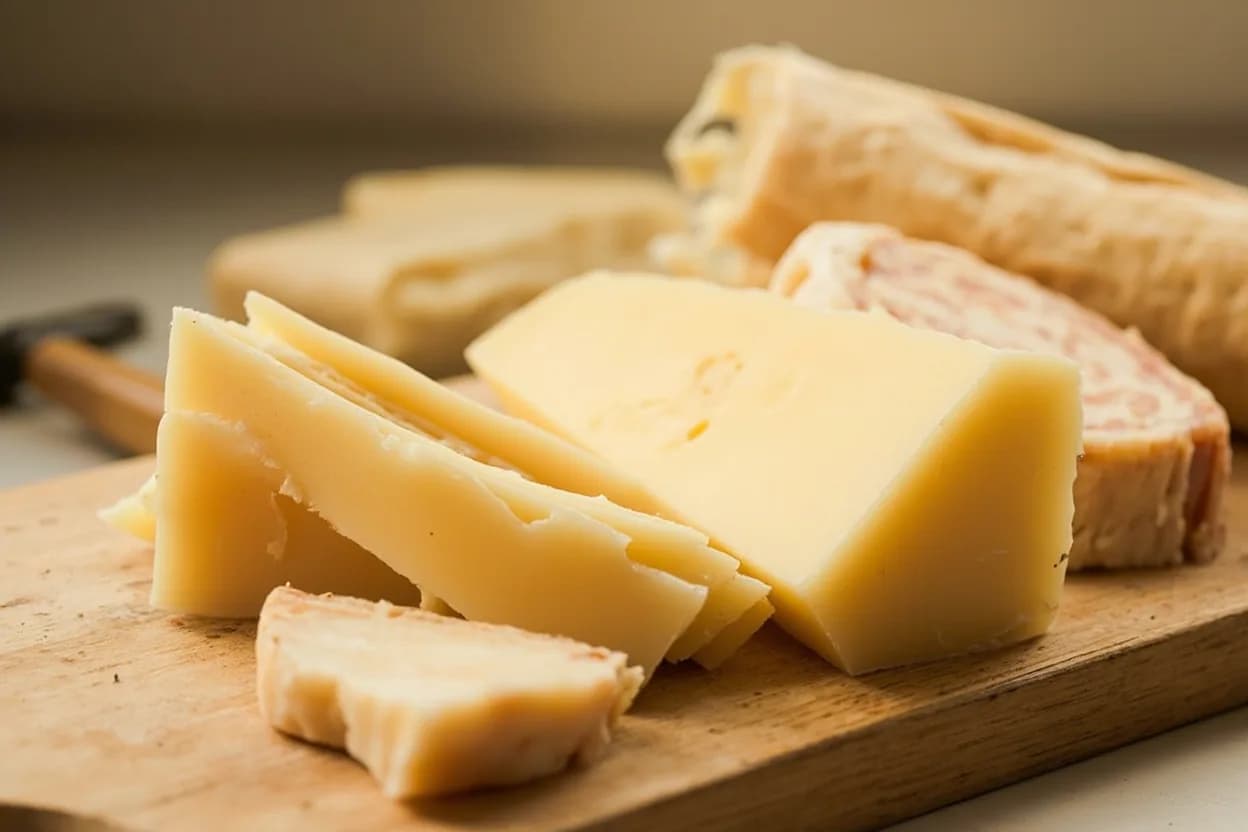
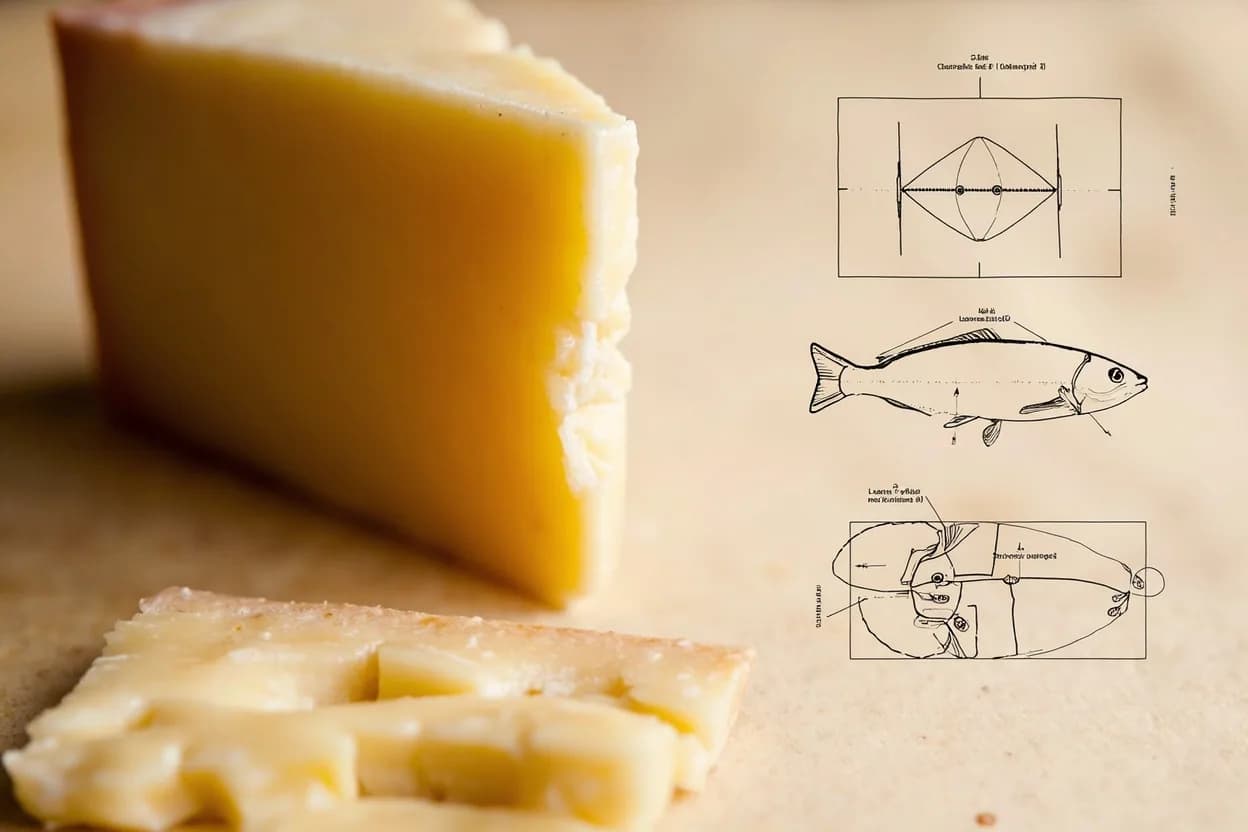
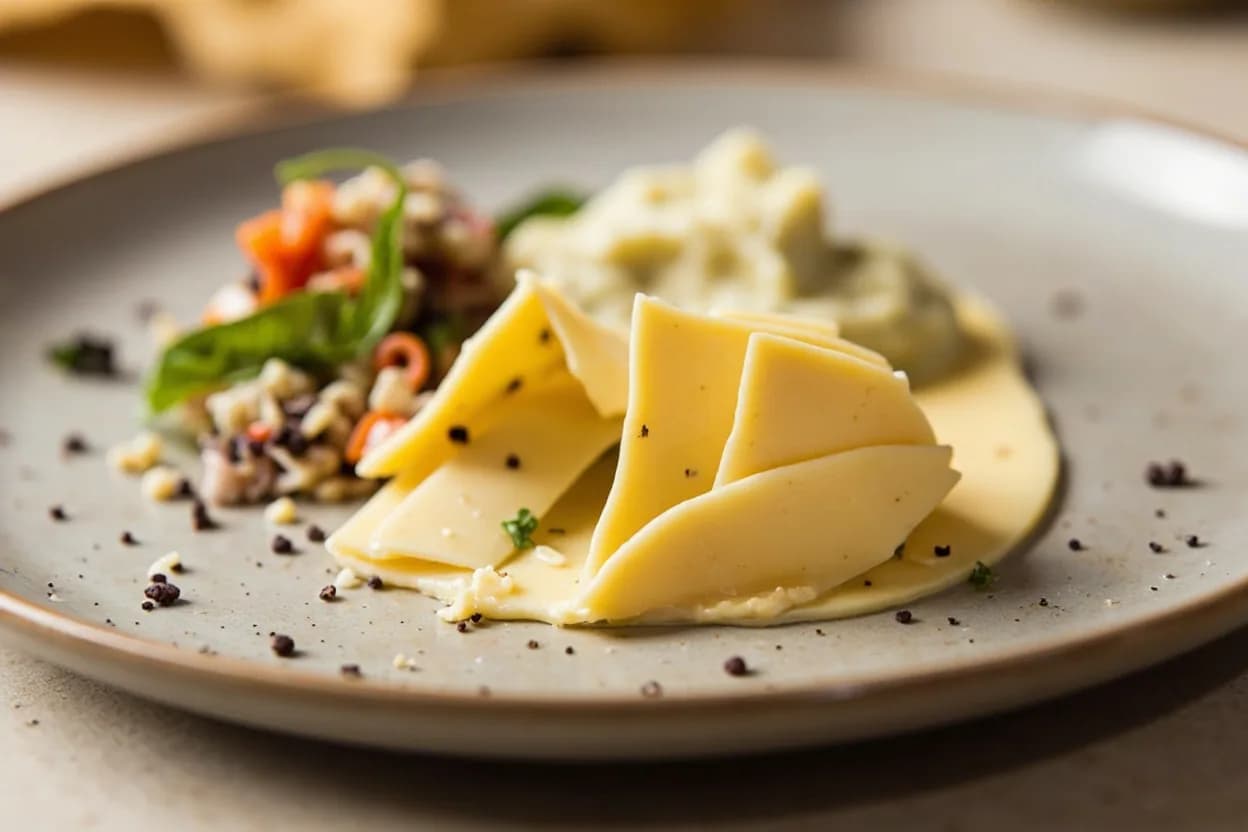
Where it comes from
Not an animal cut. The 'source' is the wheel itself: a 40–70 cm diameter, 9–13 cm tall cylinder of cooked-curd pressed cheese with a brushed natural rind and a golden-ivory to amber paste that may contain small round 'eyes' (Gruyère) or be essentially blind (Comté).
Best for
How to cook it
- 1Lay the wheel on a clean, stable surface — ideally a wooden board or affineur bench with a non-slip mat
- 2Use a thin-bladed probe knife to score the circumference at the halfway point; verify the score is centred by measuring both faces
- 3Insert the lyre (wire cutter) across the full diameter and draw it through in one continuous pull to split the wheel into two demi-wheels — never saw
- 4From each demi-wheel, use the long two-handled knife to halve again into quarters, then eighths, cutting radially from the centre like a clock-face to keep paste and rind balanced on every piece
- 5For retail wedges, cut each eighth into 150–300 g portions: a single straight radial cut from the rind apex inward, maintaining a rind strip on the outer arc of each piece
- 6Inspect each wedge: the paste should show a clean, slightly glossy face; any grey 'sous-croûte' band wider than 5 mm indicates over-aged or poorly stored cheese
- 7Wrap cut faces immediately in wax paper (not cling film, which suffocates the rind) and store at 8–12 °C, 90–95% relative humidity
Prep & butchery
- Chill the wheel to 10–12 °C before cutting — a cold paste cuts cleaner and shatters less
- Wipe all cutting tools clean between wheels to avoid cross-contamination of rinds
- Mark the circumference with a thin scratch line before committing the lyre to ensure an even horizontal split
- When portioning for fondue or gratin, remove all rind before grating; rind adds a bitter, astringent note when dissolved in the fondue pot
Substitutes
- Beaufort wheel portioning
Nearly identical geometry and paste character; same lyre-and-radial method applies
- Emmental wheel portioning
Larger diameter (up to 80 cm), same radial technique but expect more shattering around large eyes
- L'Etivaz
Smaller alpine wheel, same pressed-cooked paste; portioning follows the same logic at reduced scale
Related cuts
- Brie & Camembert wedge cut
Soft-rind wheels also cut radially but paste is runny — requires a different knife angle and no lyre
- Parmigiano-Reggiano spade-and-almond break
Granular hard paste requires blunt spades driven into pre-scored lines rather than a wire or blade
Final service-level geometry (wedge vs slice vs chunk) follows from the wheel-level breakdown described here
Appears in
References
- 1.Mastering Cheese — Max McCalman & David Gibbons (Clarkson Potter, 2009)
- 2.Comté AOP Cahier des Charges — CIGC (Comité Interprofessionnel du Gruyère de Comté)
- 3.Gruyère AOP Production Regulations — Interprofession du Gruyère, Switzerland
- 4.The Oxford Companion to Cheese — ed. Catherine Donnelly (Oxford University Press, 2016)
Confidence: high
Notes
Paste-to-rind equity
The cardinal rule of long-format portioning is that every customer portion carries the same ratio of outer paste (sous-croûte), inner paste (coeur), and rind arc. A radial cut from the geometric centre guarantees this automatically; a parallel slab cut from the face does not. Affineurs who sell by weight must also account for the fact that the rind — inedible in practice — represents 5–8% of the wheel's mass.
Lyre vs knife
The lyre (a taut wire strung across an adjustable frame) makes the cleanest horizontal split of a pressed-cooked wheel because it applies continuous, even tension across the entire 65 cm diameter simultaneously. A long blade dragged in a sawing motion creates micro-tears in the paste and compresses the sous-croûte, dulling the aromatic release at the cut face. In a retail setting without a lyre, a long thin-bladed slicing knife can substitute if the operator maintains constant downward pressure without lateral movement.