Regional Meat Cuts
Cecina Thin-Slice Curing Cut
Also: cecina de res, cecina enchilada, cecina guerrerense
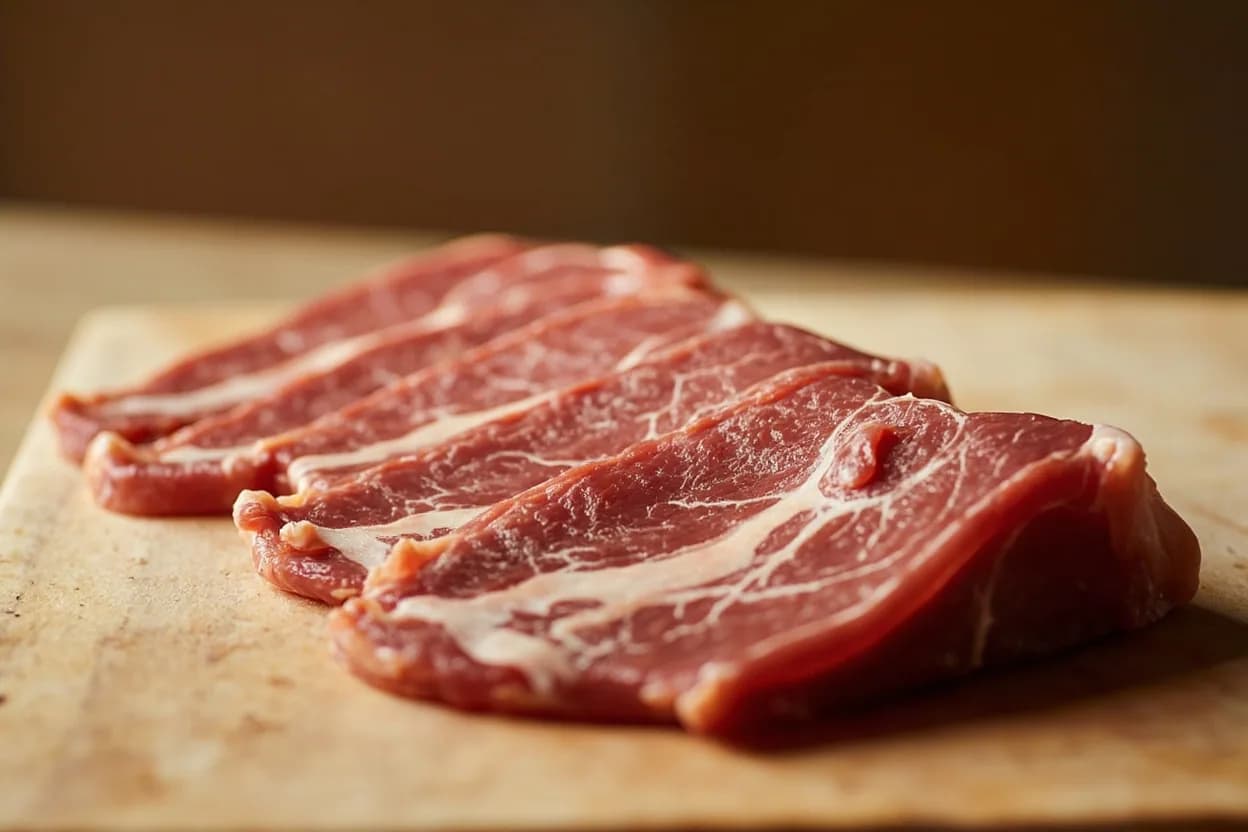
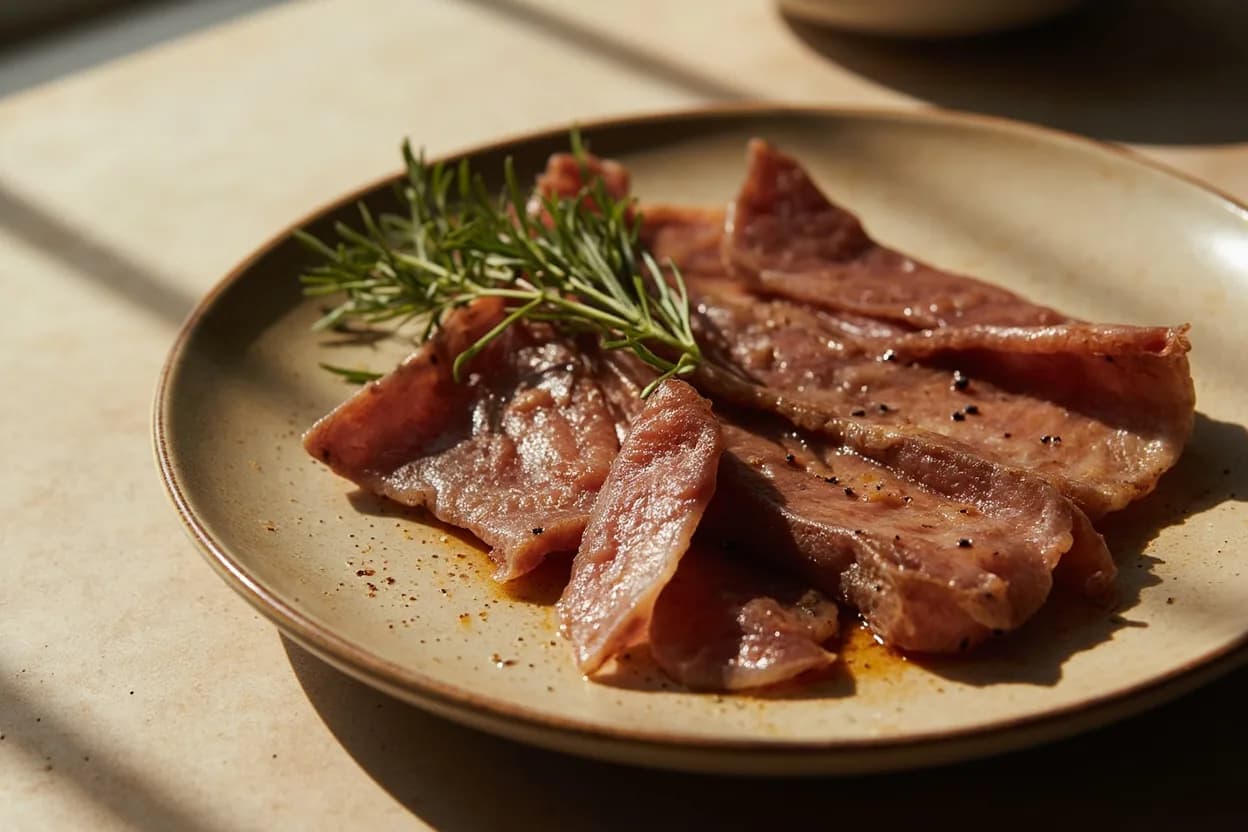
Razor-thin diagonal slices cut from the beef leg, rubbed with salt (or chile paste) and air-dried to a supple, intensely flavored sheet ready for quick griddle searing.
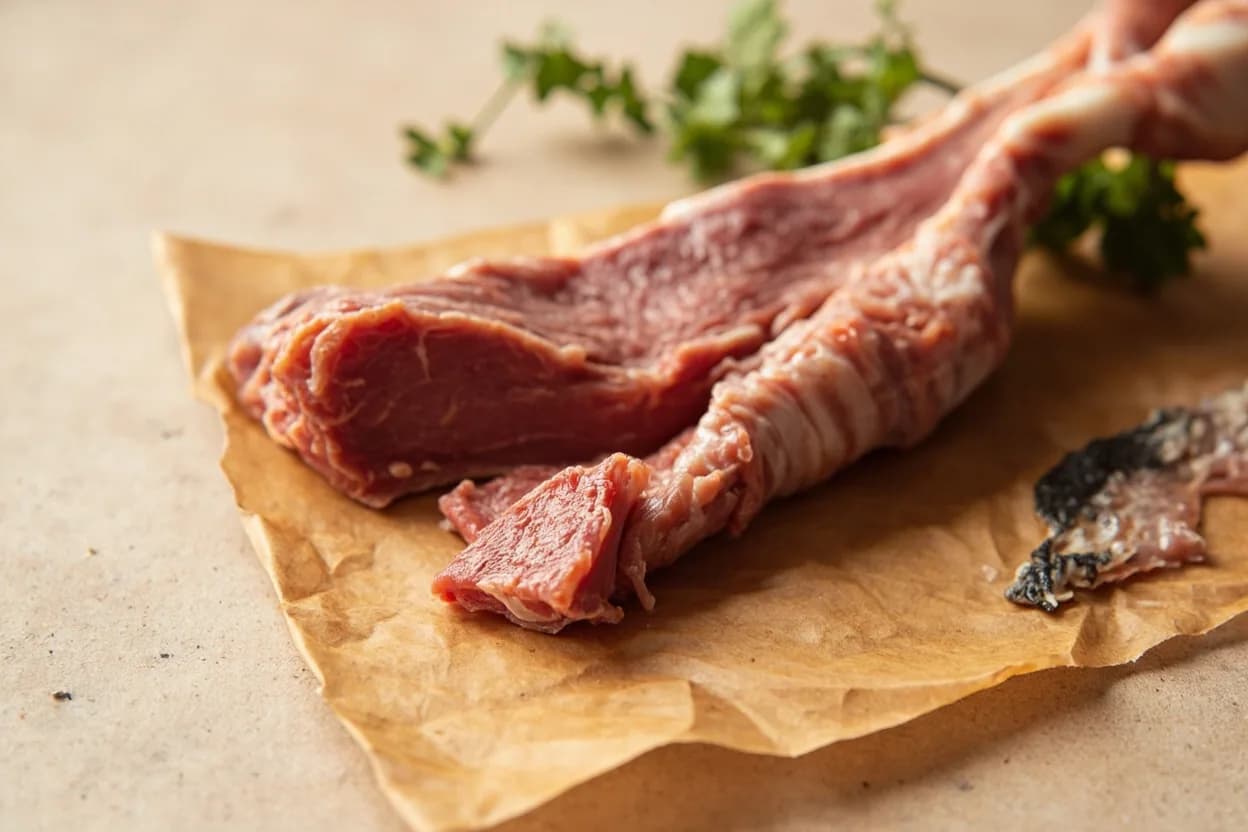
Cecina (from the Latin siccina, meaning dried) refers to beef sliced in long, thin diagonal sheets from leg muscles, then salt-cured and air-dried to varying degrees of dryness. In Mexico the term encompasses both a plain salted version (cecina de res) and the chile-rubbed variant (cecina enchilada or cecina de Yecapixtla). The cutting technique — long, sweeping diagonal passes that create broad, paper-thin panels — is the defining craft, determining how evenly the cure penetrates and how the meat behaves on a hot griddle.
In photos
Where it comes from
Cut from the hindquarter: primarily the topside (round) and silverside, though the eye of round and sirloin flap are also used. The butcher makes long angled slices nearly parallel to the meat's surface, peeling each layer back in a continuous motion similar to unrolling a scroll.
Best for
How to cook it
- 1Bring a comal or cast-iron skillet to high heat — it must be dry and very hot before the meat goes on.
- 2Lay the cecina flat in a single layer; avoid overlapping or steam will prevent searing.
- 3Cook 60–90 seconds per side; the chile crust on enchilada versions should blister and char at the edges.
- 4Remove immediately and rest 1 minute; carry-over is significant given the thin profile.
- 5Tear or slice into strips across the grain for tacos, or serve whole alongside beans and tortillas.
Prep & butchery
- A long, thin-bladed slicer or flexible boning knife is essential; a stiff blade causes tearing on the diagonal passes.
- Partially freeze the muscle (30–45 minutes in the freezer) for cleaner, more consistent slices.
- After salting, hang slices on a wire rack or clothesline out of direct sun in a cool, breezy spot for 3–6 hours for the Yecapixtla style, or up to 12 hours for a drier product.
- For cecina enchilada: coat with a paste of guajillo and ancho chiles, achiote, garlic, and oregano before the drying step.
Substitutes
- Tasajo (Oaxacan butterfly-slice beef)
Also from the round; butterflied rather than diagonally sliced; similar curing logic
- Thin-sliced flank steak
Skip the curing; marinate in lime and salt 30 minutes for a serviceable comal alternative
- Bresaola (Italian air-dried beef)
European cousin: fully dried, served raw and thin-sliced; not a comal candidate
Related cuts
Sister Oaxacan cured-beef cut; accordion-butterfly vs. diagonal scroll
Often plated together on regional carne platters
Cecina appears alongside head cuts at traditional taquizas
Appears in
References
- 1.Mexico: The Cookbook — Margarita Carrillo Arronte (Phaidon, 2014)
- 2.Oaxaca: Home Cooking from the Heart of Mexico — Bricia Lopez & Javier Cabral (Abrams, 2019)
- 3.Truly Mexican — Roberto Santibañez (Wiley, 2011)
- 4.The Food of Mexico — Saveur Editors (Chronicle Books, 2014)
Confidence: high
Notes
Yecapixtla: Mexico's Cecina Capital
The town of Yecapixtla in Morelos state is considered the benchmark for cecina enchilada. Butchers there have practiced the diagonal-scroll cut for generations, and weekend markets draw buyers from Mexico City. The Guerrero style (cecina guerrerense) is similar but often uses a slightly thicker slice and a simpler salt-only cure, resulting in a chewier, more robust product.
Partial vs. Full Drying
Mexican cecina is intentionally only half-dried — a key distinction from Spanish cecina de León, which is a long-aged, fully dried charcuterie product eaten raw. The Mexican version retains enough moisture to sear cleanly on a comal without crumbling, and the incomplete drying means it must be refrigerated and used within a few days of curing.