Knife Cuts — Regional & Global
Cauliflower Steak Cut
Also: cauliflower slab, cavolfiore alla griglia, whole-head cauliflower slice
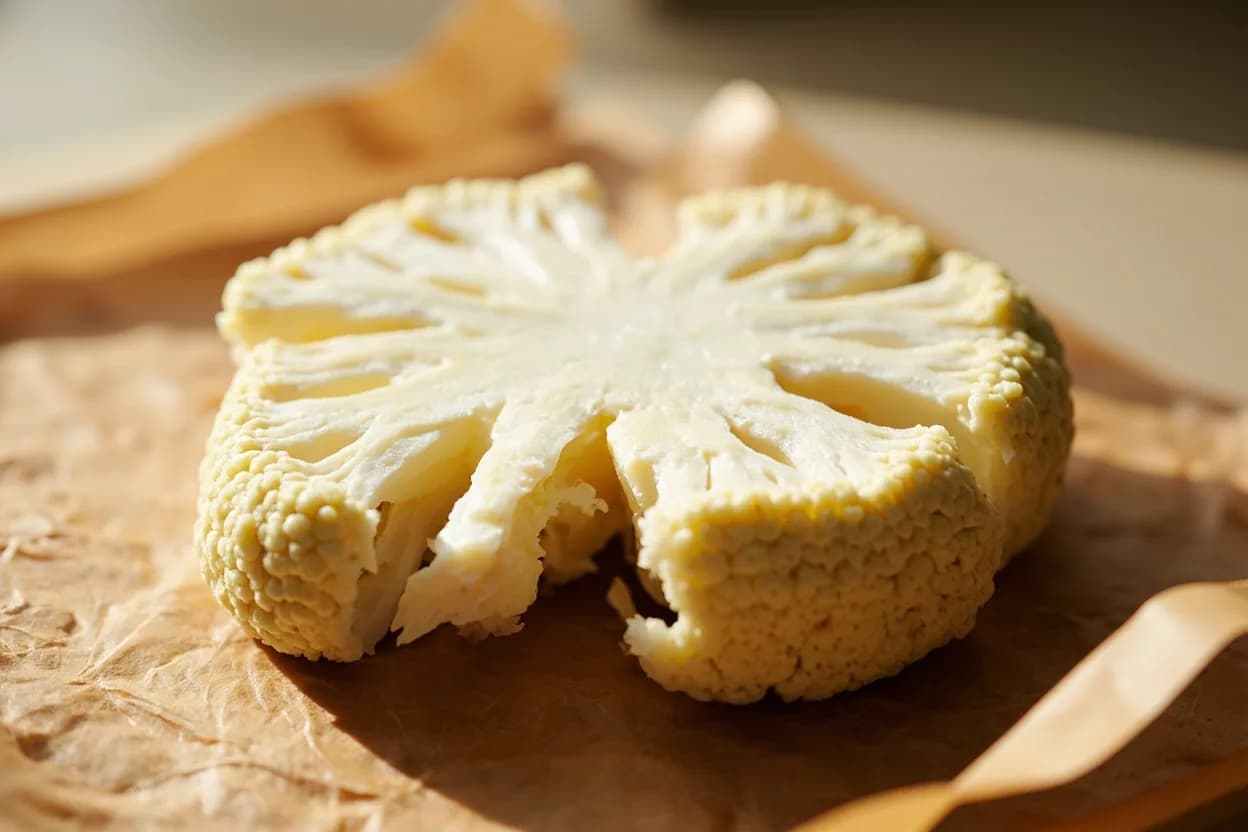
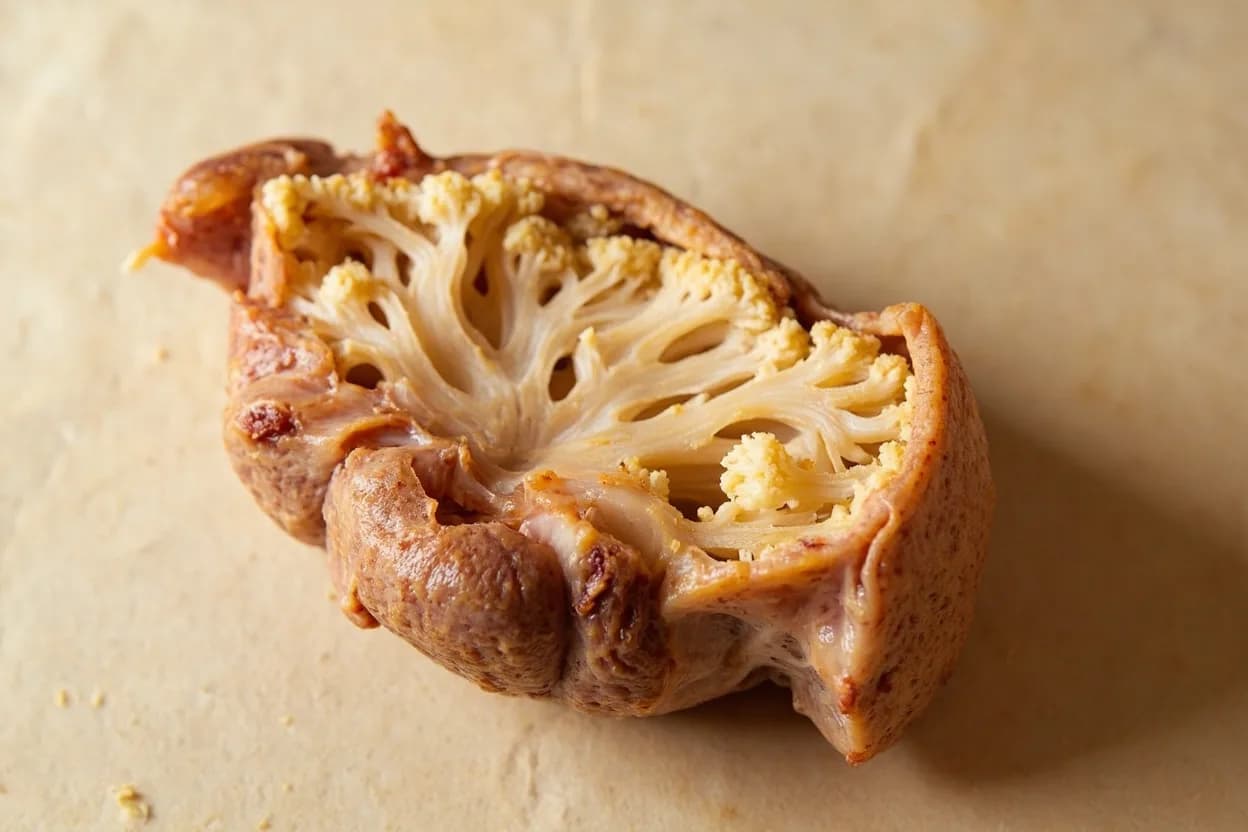
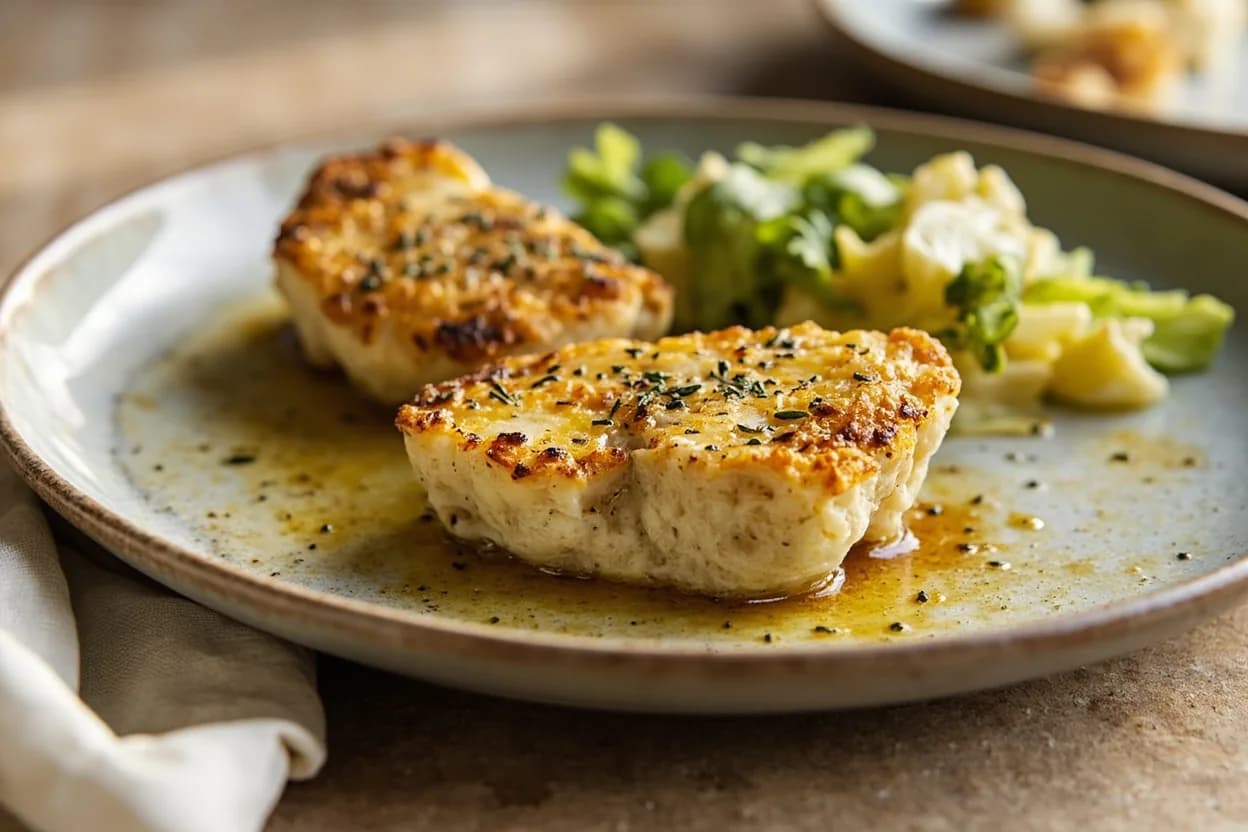
A thick vertical slab cut straight through the center of a cauliflower head, retaining the core to hold the florets intact for high-heat roasting or grilling.
A cauliflower steak is produced by slicing a whole head vertically from crown to base through the central core in slabs 2–3 cm thick. The key anatomical feature is the core: a dense fibrous trunk to which all floret stems connect. By cutting through the core (not around it), each slab retains a cross-section of the entire head — florets fanning out symmetrically from a solid base that holds the steak together during cooking. Outer florets inevitably detach and are reserved for roasting separately.
In photos
Where it comes from
The head of Brassica oleracea var. botrytis — a tightly packed curd of undeveloped flower buds (the edible white mass) branching from a central fibrous core stem, encased in large protective leaves. The cut runs vertically through this structure along the head's axis of symmetry.
Best for
How to cook it
- 1Remove outer leaves and trim the base of the stem flush so the head sits stably on the board
- 2Stand the head upright on its flat base and cut straight down through the center with a heavy chef's knife, producing two halves — each half has a full cross-section of core
- 3Cut each half into 2–3 cm slabs parallel to the first cut; you will typically get 2–3 good steaks from a medium head with detached florets on the outer edges
- 4Season cut faces generously with olive oil, salt, and spices — press seasoning into the flat surfaces; rest 5–10 minutes
- 5Sear in a very hot cast-iron or grill over direct heat until deeply browned, 4–5 minutes; flip once and continue cooking until a knife tip slides through the core with mild resistance
- 6Finish in a 200°C oven for 8–10 minutes if the interior is not yet fully tender after searing
- 7Rest 2 minutes before plating; the core continues cooking slightly off heat
Prep & butchery
- The head must be dense and tightly packed — loose or old cauliflower will disintegrate at the floret joints
- A long, heavy chef's knife (25 cm+) allows a single confident stroke through the dense core without pivoting
- Score the core face 3–4 mm deep with a crosshatch before seasoning to improve marinade penetration to this densest part
- Blanching the steaks briefly (2 minutes in salted water, shocked in ice water) before searing reduces grill time and ensures even cooking through the core
Substitutes
- Romanesco steak
Same cut works identically on romanesco heads; nuttier flavor and fractal floret pattern hold equally well
- Cabbage steak
Cross-cut through a cabbage head yields a similar slab; more layers may separate during cooking
- Broccoli steak
The branching structure is looser than cauliflower; cut must include significant stem or slabs fall apart
Related cuts
- Cabbage Wedge
Vertical quarter-cut through cabbage retaining the core to hold leaves; similar rationale for structural integrity
- Tofu Slab
Another horizontal block-cut through a dense, fragile structure where the broad flat face is the cooking surface
Appears in
References
- 1.Plenty — Yotam Ottolenghi
- 2.The Zuni Café Cookbook — Judy Rodgers
- 3.Vegetables — James Peterson
- 4.The Food Lab — J. Kenji López-Alt
Confidence: high
Notes
Why the core is the key
Cauliflower's edible curd is a mass of tightly ramified flower buds, each attached by a short pedicel to a larger stem, and all stems ultimately branch from the central core. When a head is cut radially (wedges) or the florets are removed individually, the core is discarded or left behind. The steak cut exploits the core as a structural spine: every floret on that face is still attached to a segment of core that runs the full thickness of the slab. Without the core intact, the slab is a pile of florets held together only by proximity and will fall apart on the grill.
Doneness at the core
The core is roughly three times denser than the floret curd and takes significantly longer to cook. A steak whose floret tips are caramelized and golden may still have a crunchy, raw center core. The test is a small paring knife pressed into the core cross-section: it should slide through with light pressure, similar to testing a potato. If not, transfer to a moderate oven rather than continuing on high heat, which will char the florets before the core is done.