Knife Cuts — Regional & Global
Fennel Frond vs. Bulb Separation
Also: fennel trimming, fennel butchery, finocchio preparation
The systematic dismantling of a fennel plant into its three distinct culinary components — fronds, stalks, and bulb — each used differently, each carrying a different intensity of anise flavor.
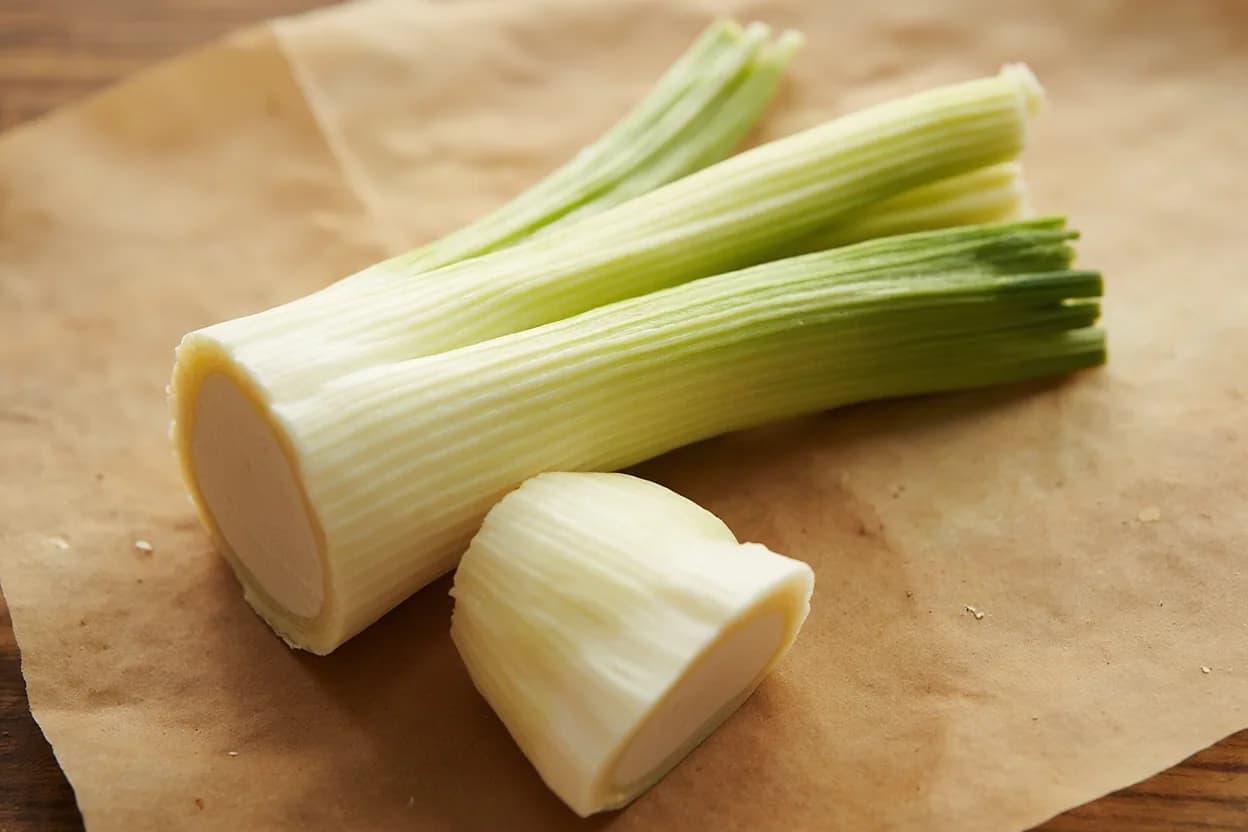
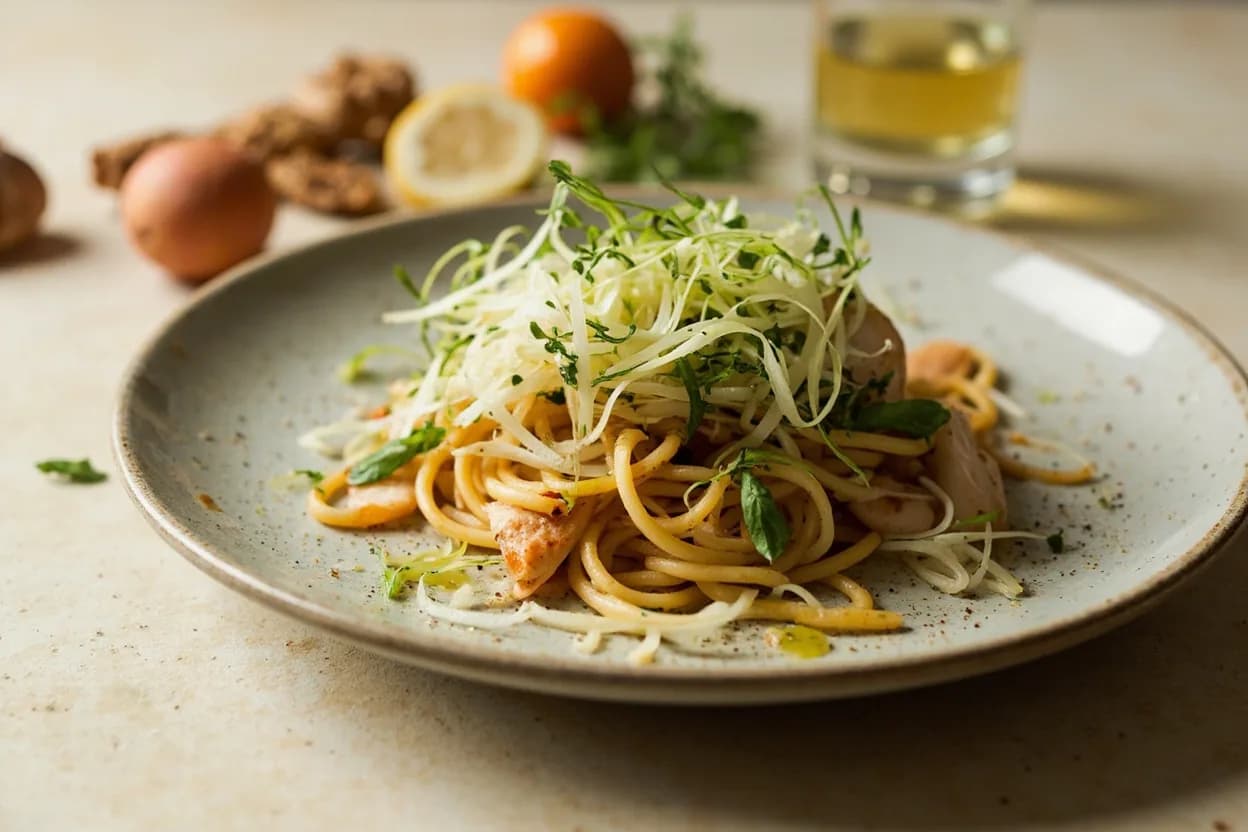
Fennel preparation begins by separating the plant into three anatomically and culinarily distinct parts. The feathery fronds (dill-like leaves atop the hollow stalks) are the most intensely aromatic and are used as an herb. The stalks are tough and fibrous, suitable for stock and aromatic bases. The bulb — the swollen base formed from tightly overlapping sheath-like leaf bases — is the primary cooking ingredient: it is cored, then shaved paper-thin on a mandoline for raw salads or cut into wedges for roasting and braising. Each part carries the same anethole-forward anise flavor at progressively decreasing concentration from frond to bulb.
In photos
Where it comes from
Foeniculum vulgare var. azoricum (Florence fennel / finocchio) — an umbelliferous perennial whose bulb is the enlarged base of overlapping leaf sheaths. The hollow cellulose stalks rise from the bulb and terminate in compound umbel fronds of feathery, thread-like leaves. The bulb is technically a stem base, not a root.
Best for
How to cook it
- 1Cut the stalks off flush at the shoulder of the bulb — the point where the stalks begin to separate above the bulb's shoulders; reserve stalks for stock or discard if wilted
- 2Pinch off fronds from the stalks and set aside in a small bowl covered with a damp cloth; they wilt quickly
- 3Trim the base of the bulb, cutting away any root nodule or discolored base; a 3–4 mm trim is sufficient
- 4Stand the bulb on its trimmed base and halve it vertically through the core; the core appears as a dense triangular wedge at the center base of each half
- 5Cut out the core with a V-cut (two angled cuts toward each other) or a straight diagonal slice; for wedges, leave the core intact to hold the layers together during roasting
- 6For thin shaving: lay each half flat on the mandoline-safe surface and shave across the grain at 1–2 mm on a mandoline or with a very sharp knife; work quickly and transfer to acidulated water
- 7For wedges: cut each cored half into 3–4 wedges vertically; the layers will hold if cut surfaces are oiled immediately
Prep & butchery
- Do not discard the stalks immediately — they are among the best aromatic vegetable bases for fish fumet and seafood stocks
- Fronds lose volatile aromatics rapidly when wilted; add them raw at the last moment before serving
- For maximum thinness, chill the bulb halves in the freezer for 10 minutes before mandoline-shaving to firm the cell walls
- A core-intact wedge is the standard for roasting — the core holds the layers as the fennel softens; coring is correct only for raw or medium-heat sautéed preparations
Substitutes
- Celery
Similar crunch and water content in raw applications; no anise flavor — add a pinch of fennel seed to approximate
Substitutes for fronds in cooked applications — use sparingly as flavor is more concentrated and woody
- Dill fronds
Closest visual and textural substitute for fennel fronds as a garnish; lighter, less anise, more grassy
Related cuts
Another aromatic allium-adjacent vegetable requiring careful part separation and calibrated slicing thickness
- Mandoline Shave
The thin shave of the fennel bulb is one of the canonical mandoline applications in the vegetable repertoire
Appears in
References
- 1.Vegetables — James Peterson
- 2.Silver Spoon (Il Cucchiaio d'Argento) — Domus Academy
- 3.Chez Panisse Vegetables — Alice Waters
- 4.The Zuni Café Cookbook — Judy Rodgers
Confidence: high
Notes
Anise intensity gradient across the plant
All parts of the fennel plant contain anethole — the primary anise/licorice aromatic compound — but at different concentrations and in different molecular environments. The fronds have the highest essential-oil density and the most volatile fragrance; bruising them between the fingers releases a sharp anise burst. The stalks have a background anise note largely locked in cellulose structure, released slowly during long simmering. The bulb has the most diluted but most rounded anise character: cooking converts some of the sharp trans-anethole volatiles while the natural sugars caramelize, producing the fennel's characteristic sweet-anise profile that pairs so well with fish, citrus, and cream.
Core in or core out: a cooking-method decision
The dense triangular core at the base of each bulb half is the fibrous attachment point of all the surrounding layers. Leaving it intact is correct for roasting and braising: the core acts exactly as the cauliflower steak's central spine, holding the wedge together as the outer layers soften. Removing the core before shaving raw fennel is equally correct: for a mandoline-sliced salad, the core produces tough, unpleasant strings and should be excised with a V-cut before the bulb goes on the blade. The decision — core in or core out — is dictated entirely by the cooking method.