Fish — Fabrication & Breakdown
Fish Collar Separation (Coastal East African)
Also: pectoral collar cut, fish collar, kichwa cha samaki, collar piece
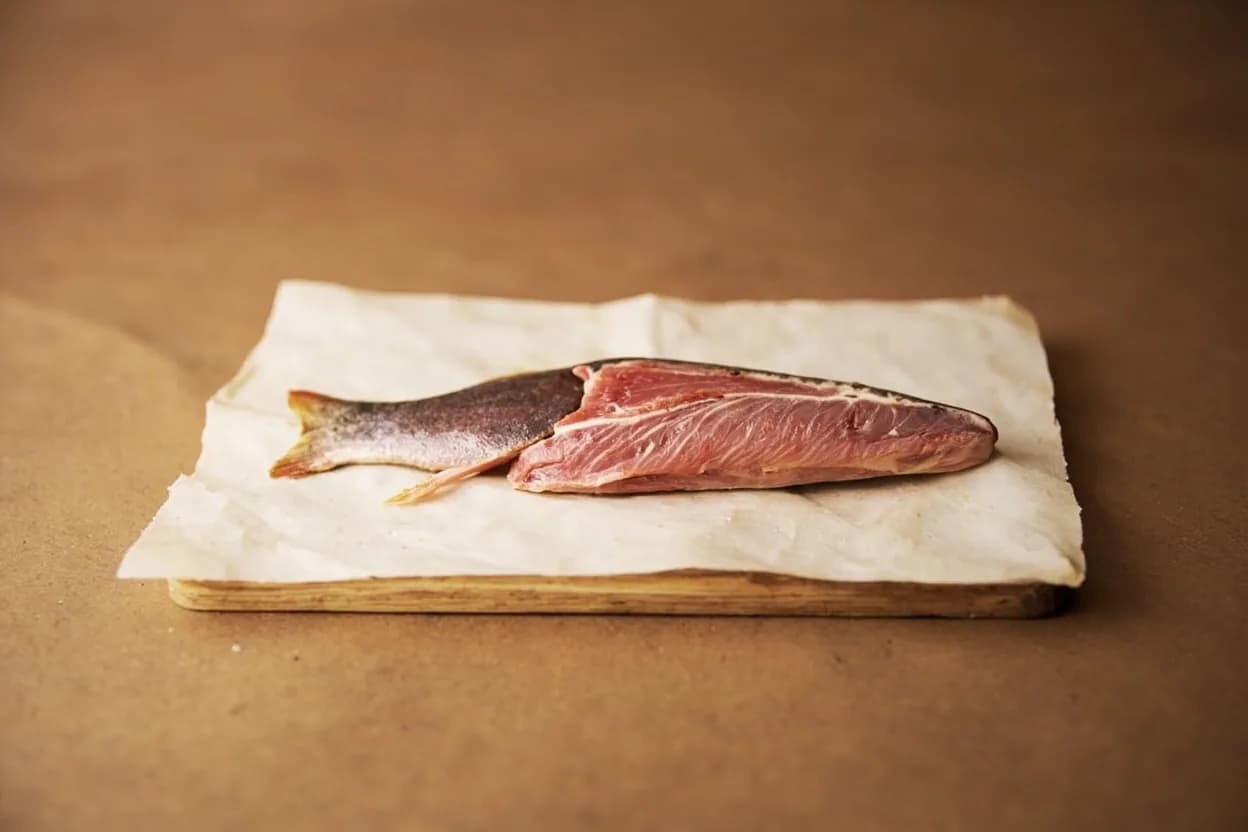
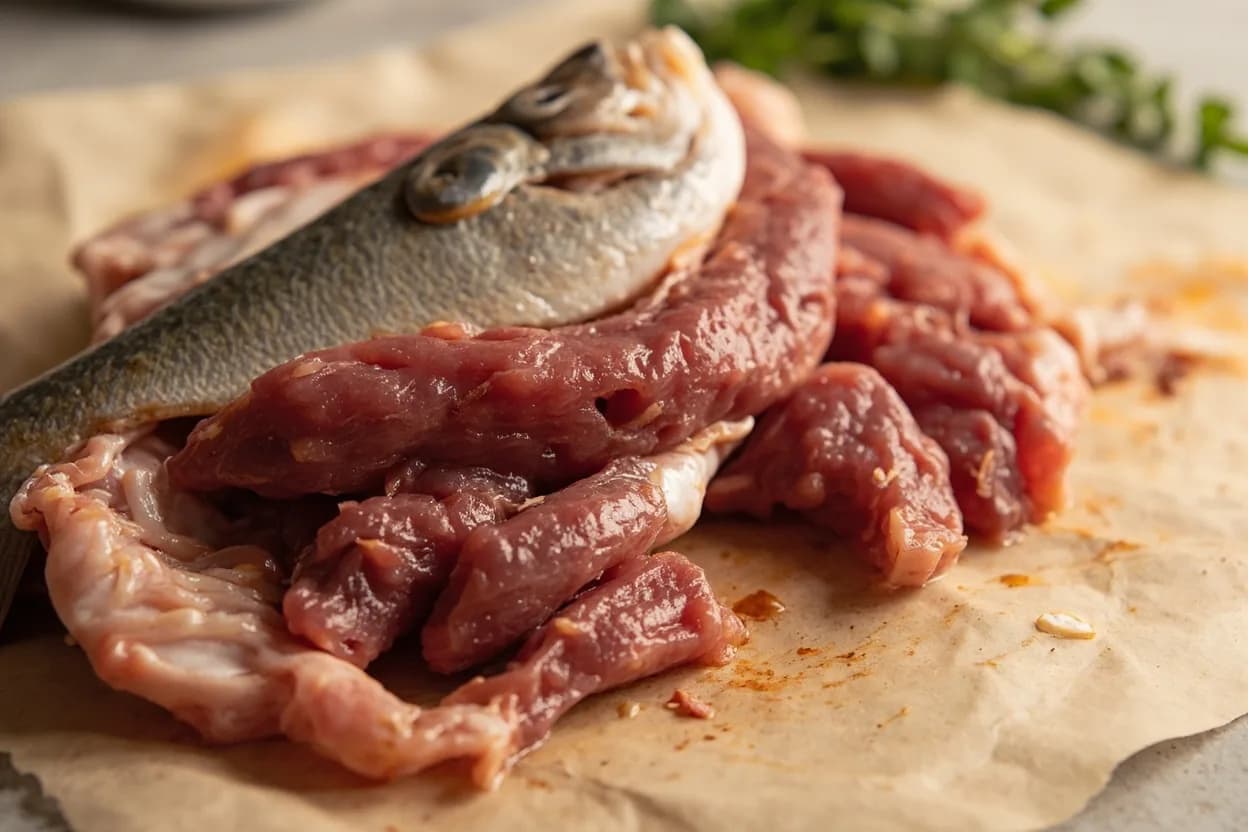
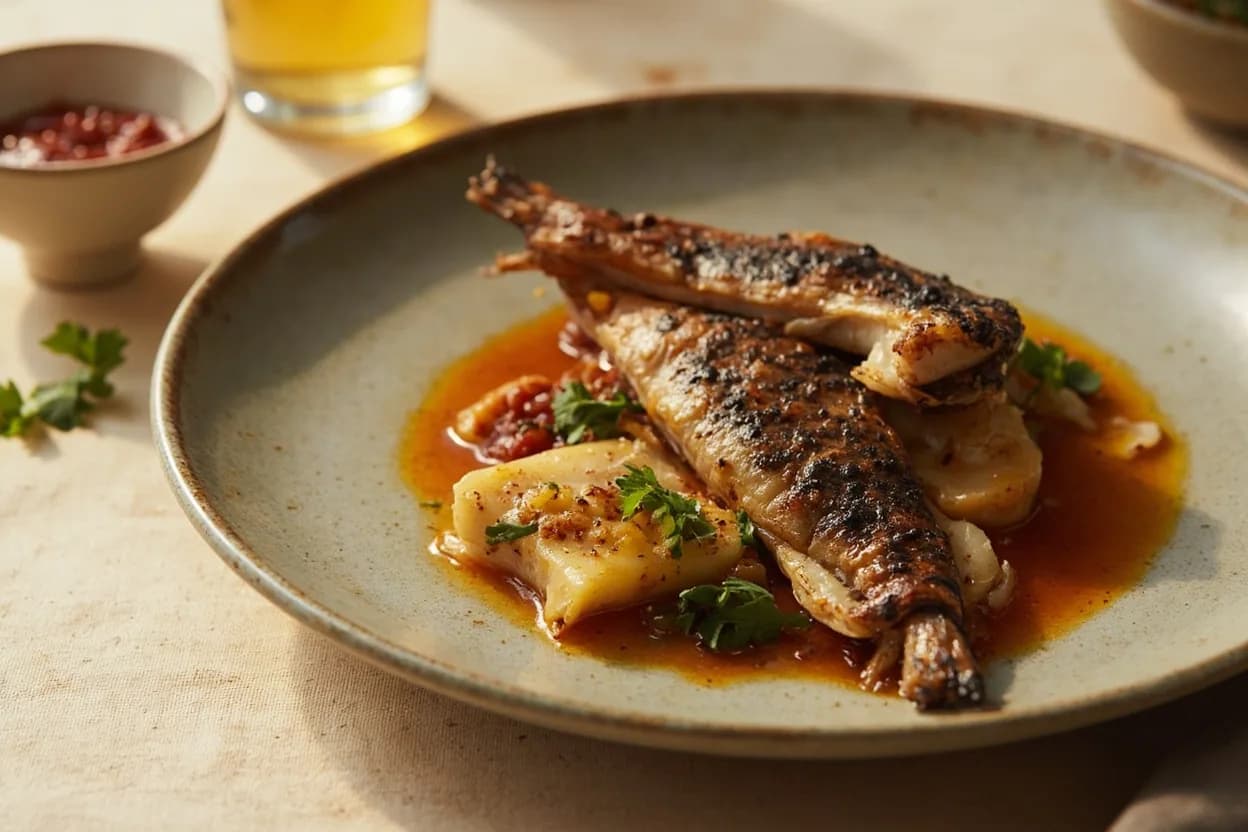
The pectoral collar cut from coastal East African fish — removed as a prized fatty portion for grilling over charcoal, valued for its high fat content and collagen-rich cartilage.
The fish collar (the section comprising the pectoral fins, clavicle bones, and the fatty flesh immediately behind the head) is recognized across East African coastal kitchens — particularly in Kenya, Tanzania, and Mozambique — as the single best piece on the fish for grilling. The collar is separated from the body by a cut just behind the gill plate and ahead of the first dorsal fin. It contains dense pockets of intramuscular fat, cartilage that crisps under heat, and cheek-adjacent meat that rewards attentive eating. In Swahili-speaking coastal kitchens, it is often the cook's cut — quietly reserved rather than sold.
In photos
Where it comes from
Cut from the anterior section of the fish, encompassing the pectoral girdle: the cleithrum, coracoid, and associated musculature. In large fish (grouper, emperor, kingfish, yellowfin tuna), the collar is substantial enough to serve as an individual portion. In smaller fish, collars are reserved and grilled in batches.
Best for
How to cook it
- 1After gutting and scaling the fish, position the knife at a 45-degree angle just behind the gill plate, angling the cut toward the head to maximize meat retention on the collar.
- 2Cut through the flesh to the spine on both sides, then sever the spine with a heavy knife or kitchen shears.
- 3Score the flesh in a crosshatch pattern (2–3 cuts per side) to allow marinade penetration and prevent the collar from curling under heat.
- 4Marinate in a paste of garlic, ginger, lime or tamarind, dried chili, and coconut milk for at least 30 minutes.
- 5Grill directly over hot charcoal, skin-side down first, for 4–6 minutes; flip once. The collar is done when the cartilage at the edge has crisped and the flesh flakes at the thickest point.
- 6Rest briefly and serve with ugali, kachumbari (tomato-onion-chili relish), and a wedge of lime.
Prep & butchery
- A sharp, heavy knife is essential — the collar cut requires severing cartilage and small bones; a thin fillet knife will bind.
- Remove the gills from the collar before grilling; they are bitter and can impart off-flavors.
- Pat the collar dry after marinating to promote browning rather than steaming on the grill.
- For large fish (grouper over 3 kg), the collar may be halved longitudinally for more manageable serving.
Substitutes
- Tuna collar (kama)
The Japanese equivalent — large, rich, and best grilled; the clearest parallel to this East African tradition.
- Salmon collar
Very high fat; works well but a different flavor register from tropical coastal fish.
- Snapper cheek
More readily available; smaller but similarly rich; lacks the cartilage element.
Related cuts
- Kama (Japanese tuna collar)
The most celebrated collar cut globally — a direct cultural parallel from a different ocean tradition.
- Fish head
The adjacent cut; often cooked together with the collar in brothy preparations.
- Whole fish breakdown — West African
Related breakdown tradition emphasizing bone-in cooking and scoring.
Appears in
References
- 1.The Africa Cookbook — Jessica B. Harris (1998)
- 2.Zanzibari Food and Cooking — traditional culinary documentation, Zanzibar Cultural Centre
- 3.Fish Cookery of the World — Alan Davidson (Oxford Companion to Food cross-reference)
- 4.The Oxford Companion to Food — Alan Davidson (3rd ed., 2014)
Confidence: medium
Notes
The collar as cook's reward
In many East African coastal households and fish-fry stalls, the collar is not the piece a customer orders — it is what the cook eats. Its richness is understood intuitively: more fat means more flavor, and the collar delivers both. At upscale Swahili restaurants in Mombasa and Dar es Salaam, this once-humble cut has been elevated to menu prominence, often priced at a premium over fillets.
Charcoal is non-negotiable
Coastal East African fish grilling culture is built around jiko charcoal stoves, and the collar benefits uniquely from real charcoal heat: the infrared radiation crisps the cartilage edges while the smoky convection flavors the fatty meat. Gas grill versions are acceptable but lose the char-and-smoke dimension that makes this cut transcendent.