Fish — Fabrication & Breakdown
Fish Fillet vs. Darne vs. Pavé
Also: French fish portion cuts, fish portioning classification, fillet darne pavé suprême
The three classical French categories for fish portion cuts: fillet (boneless, flat), darne (bone-in round-fish steak), and pavé (thick, square, boneless block) — each with distinct geometry, cooking behavior, and service context.
French professional cookery organizes fish portion cuts into a compact classification system that determines how a fish is broken down and how the portion behaves on heat. The three primary categories are: (1) Fillet — a boneless, flat slab removed parallel to the spine; (2) Darne — a bone-in cross-section steak cut perpendicular to the spine of a round fish; and (3) Pavé — a thick, square or rectangular boneless block cut from a fillet. A fourth category, the Suprême, is sometimes listed separately: it is a thick, bias-cut boneless portion from a large fillet. Understanding which category a cut falls into immediately communicates its cooking time, plating approach, and acceptable saucing methods.
In photos
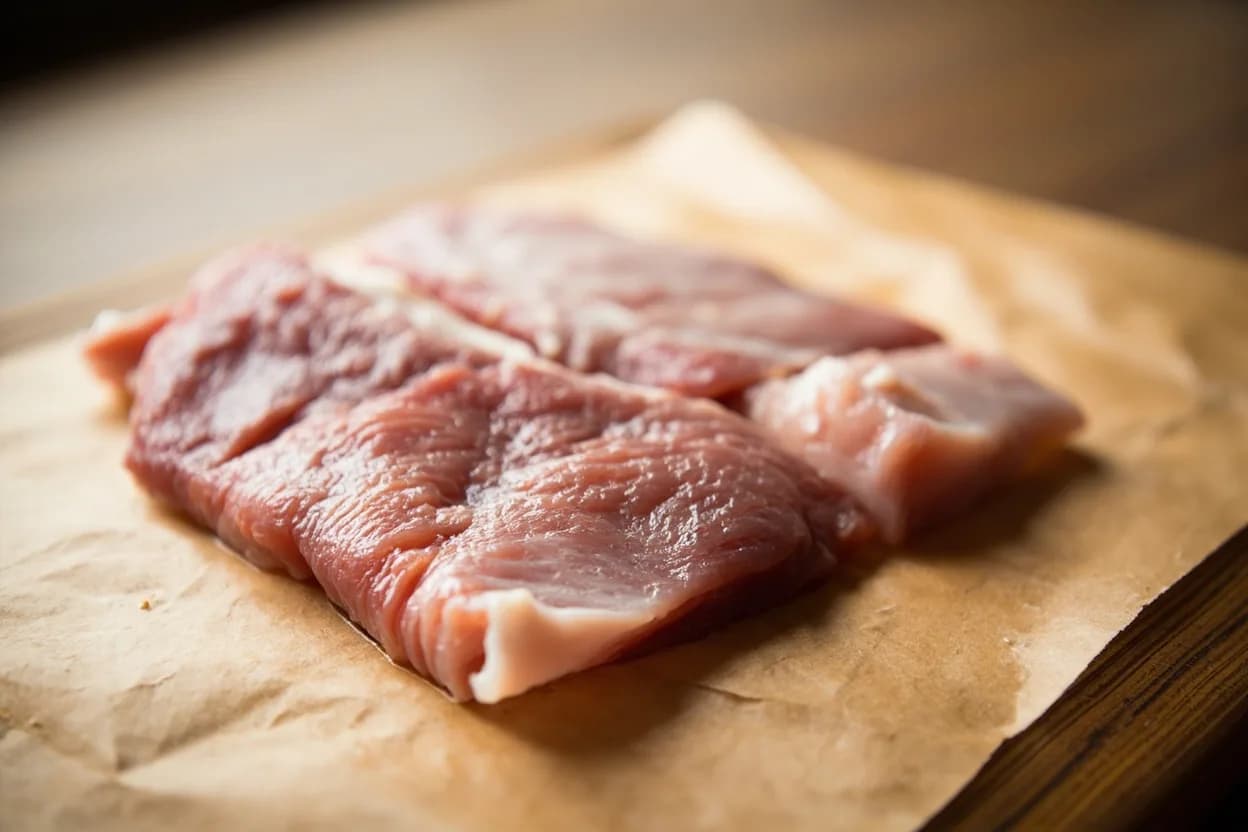
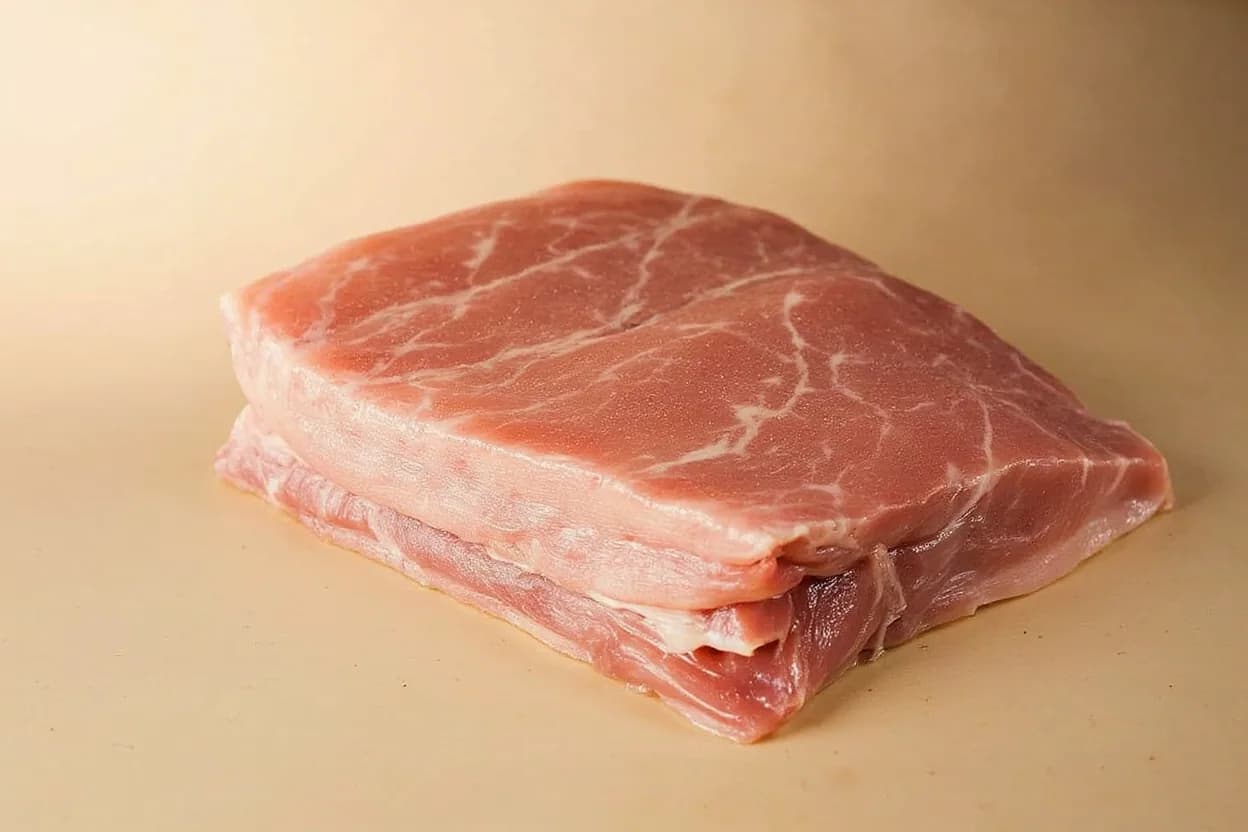
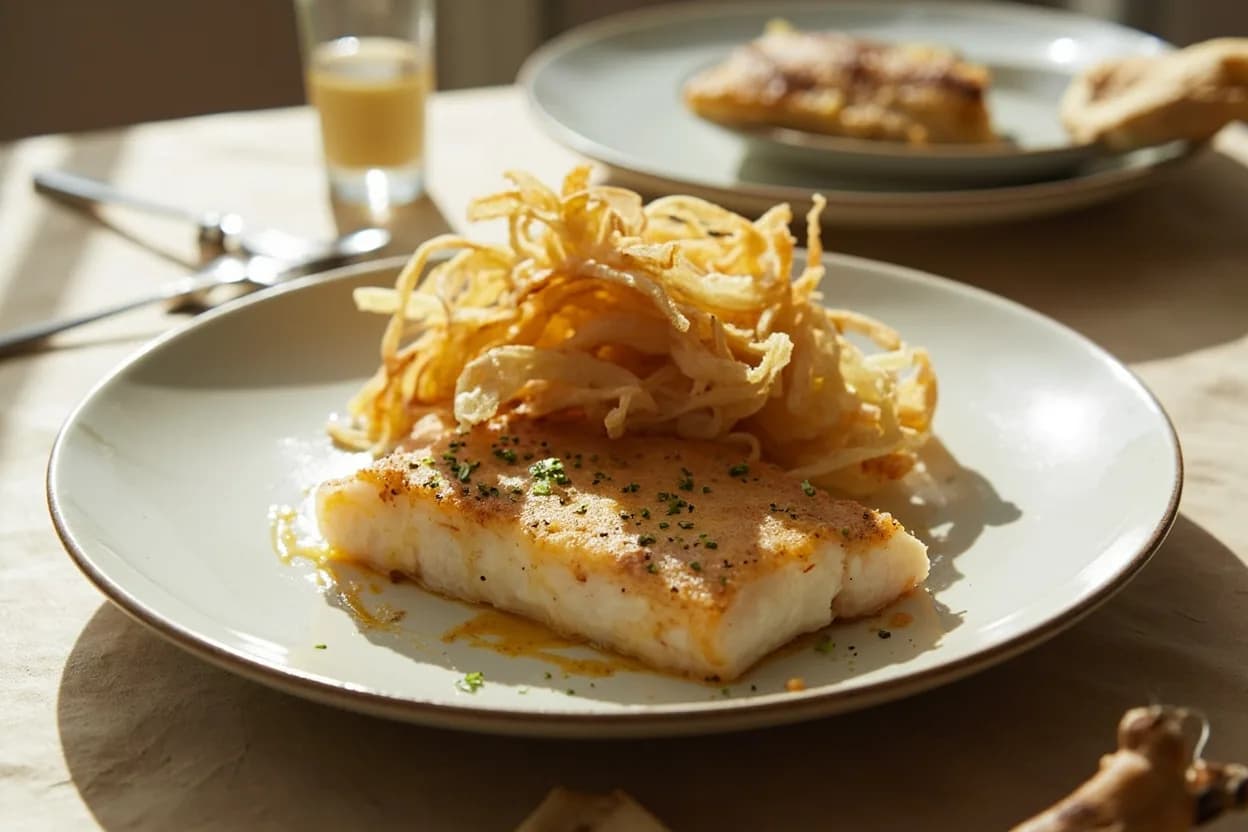
Where it comes from
These are fabrication categories, not anatomical regions. All four can come from the same fish (e.g., a large salmon): darnes from the midsection, suprêmes or pavés from the upper fillet lobes, and thin fillets from the belly or tail.
Best for
How to cook it
- 1FILLET: Flat and thin — high heat, short time. 150–180 g fillet in a hot pan cooks in 2–3 minutes per side. Risk: drying out on the edges before the center is done. Solution: thicker fillets (2 cm+) with skin-on.
- 2DARNE: Bone-in, thick — medium-high heat, longer time. Season aggressively (bone absorbs), sear flat faces, finish in oven. Allow 10–12 minutes total for a 3 cm steak. Check doneness by pressing near the bone — flesh should release from spine.
- 3PAVÉ: Square, thick, boneless — designed for even browning. Press lightly on the pan to maximize full-face contact. Sear to form a crust (2–3 minutes), flip, oven-finish at 180°C. Ideal thickness: 4–5 cm, weight 160–200 g.
- 4SUPRÊME: Bias-cut, thick boneless wedge — place the widest face down in the pan. The angled cut means the portion is self-correcting for thickness. Skin-side first in hot oil; flip once; rest. Internal temp 52°C for salmon, 58°C for white fish.
- 5GENERAL RULE: Bone-in cuts are more forgiving of timing; boneless cuts require precision. Thicker cuts need oven-finishing; thin fillets can be stove-only.
Prep & butchery
- FILLET: Remove with a flexible filleting knife following the spine and rib cage; keep strokes long and smooth. Pin-bone removal with tweezers is essential before portioning.
- DARNE: Heavy knife or fish scimitar; single downward stroke through the spine. Mark uniform thickness before cutting to ensure consistent cooking across covers.
- PAVÉ: Start with a clean, boneless fillet; cut straight down with a heavy chef's knife in a grid pattern — length and width equal. French brigade standard is 5 cm × 5 cm × 4 cm high.
- SUPRÊME: Angle knife 30–45° away from vertical; single drawing stroke; each cut starts at the thickest (backbone) side of the fillet.
- All cuts benefit from being made on a chilled fillet (not frozen, not room temperature) — the flesh holds its shape and cuts cleanly.
Substitutes
- Suprême for pavé
Bias-cut suprême and square-cut pavé are near-equivalent in cooking method; suprême has more surface area, pavé has cleaner plate geometry.
- Darne for tronçon
Round-fish steak for flat-fish steak — different visual profile but nearly identical cooking approach; acceptable swap when the specified fish is unavailable.
- Pavé for fillet
A thick pavé can replace a standard fillet in most preparations; adjust cooking time up by 50–70% for the added thickness.
Related cuts
The fourth canonical French category — bias-cut thick boneless portion; sometimes grouped with pavé.
The bone-in round-fish steak — the darne in detail.
The flat-fish variant of the darne — cross-cut from turbot or brill.
Pre-fabrication dispatch technique that determines the quality ceiling for all downstream portion cuts.
Appears in
References
- 1.Auguste Escoffier, 'Le Guide Culinaire,' Flammarion, 1903 — fish cut classification and brigade terminology
- 2.Joël Robuchon, 'Larousse Gastronomique,' Hamlyn, 2001 — definitions of fillet, darne, pavé, suprême
- 3.The Culinary Institute of America, 'The Professional Chef,' 9th ed., Wiley, 2011 — fish fabrication chapter
- 4.Jacques Pépin, 'La Technique,' Times Books, 1976 — practical fish butchery demonstrations
Confidence: high
Notes
The four-category system in practice
In brigade service, the expediting chef communicates each order using these cut names: 'deux darnes, un pavé' leaves no ambiguity about portion geometry, cooking time, or plating format. This is the system's power — it collapses complex fabrication decisions into a shared vocabulary. The suprême is sometimes treated as a sub-category of fillet (a thick, angled fillet), while other texts give it equal standing with darne and pavé. Contemporary kitchens generally use all four terms.
Pavé — literal and culinary meaning
Pavé means 'cobblestone' in French — the square block shape is the naming reference. The same term is used in pastry for a square molded chocolate confection, and in meat fabrication for a thick square steak. The common thread is the precise, architectural geometry: uniform all sides, clean right-angle corners. In fish cookery, this geometry is achieved with a sharp knife and a ruler, not with a mold.
Fillet vs. the others — versatility trade-off
The fillet is by far the most common retail and restaurant portion globally because it is boneless (no guest skill required) and fast-cooking. The darne, tronçon, and pavé are less common outside professional kitchens but each offers something the fillet cannot: the darne and tronçon contribute bone gelatin to their cooking medium; the pavé's thick uniform block allows a full crust with a rare-to-medium center — a 'fish steak' experience closer to beef than to typical fish.