Fish — Fabrication & Breakdown
Darnes (Cross-Cut Fish Steak)
Also: darne, fish steak, round-fish steak, bone-in fish steak
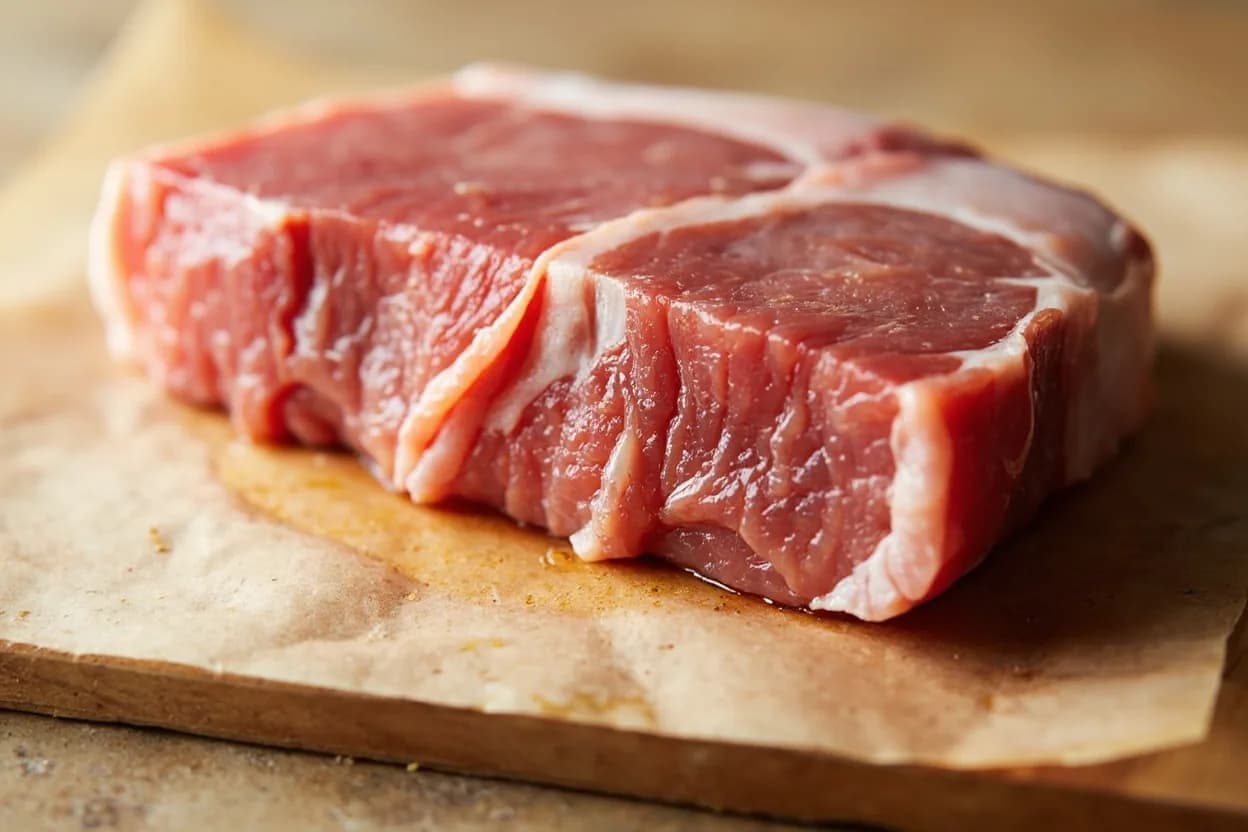
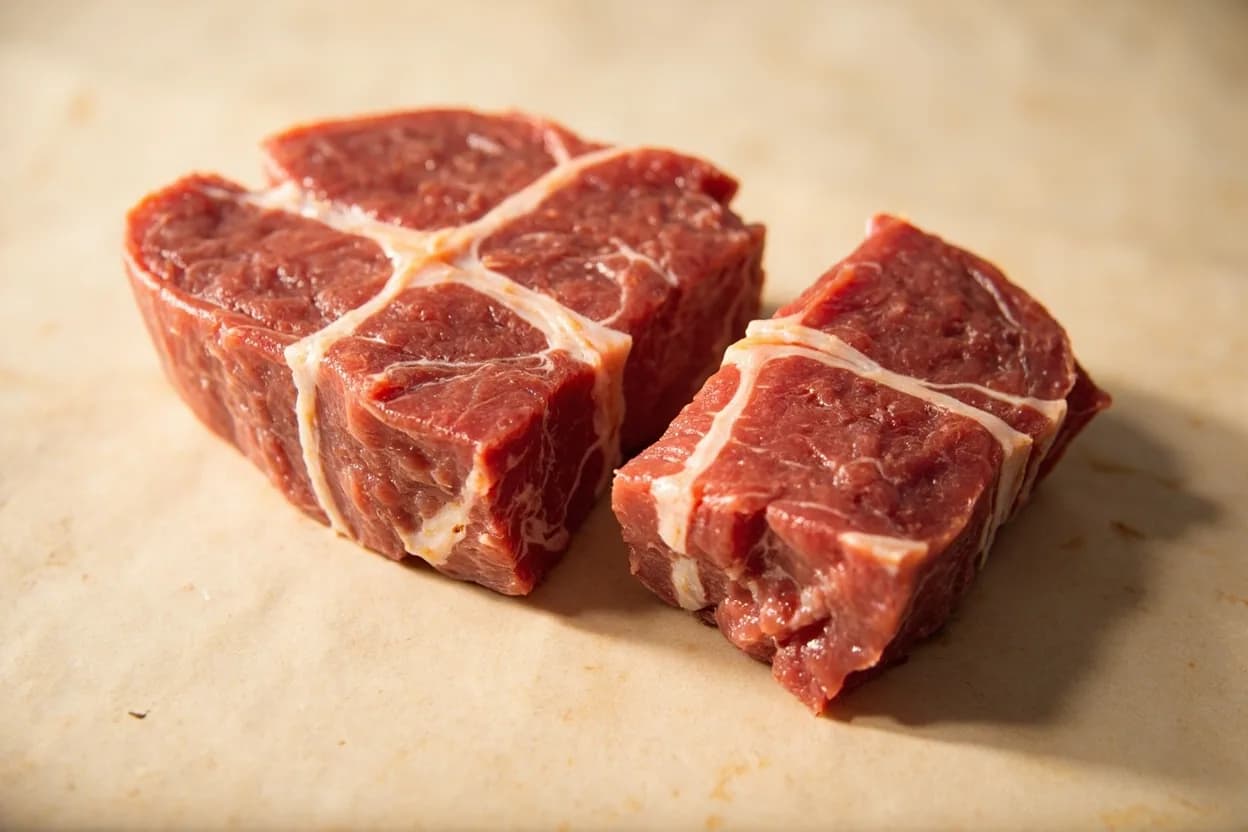
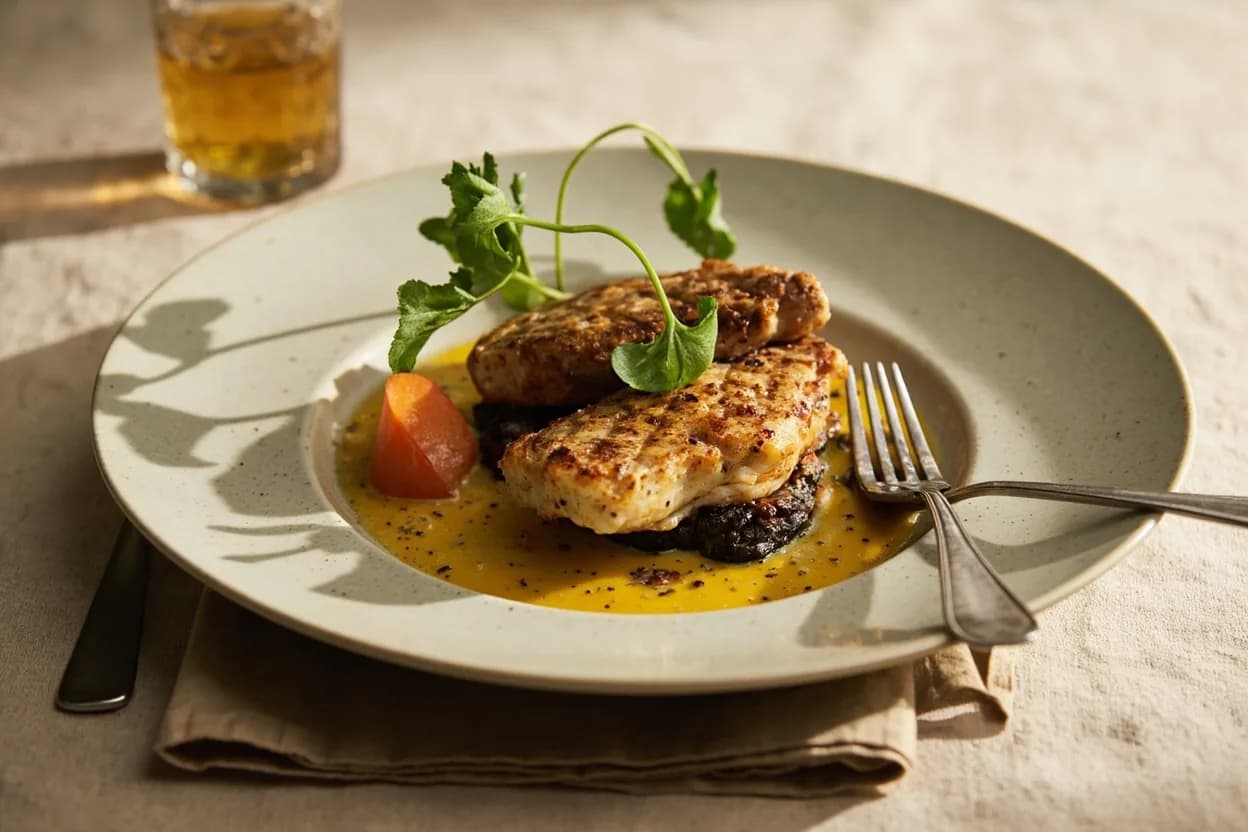
A bone-in, skin-on cross-section steak cut perpendicularly through a whole round fish, yielding a medallion-shaped portion with central spine and riblets intact.
A darne is the French term for a steak cut made by sawing or slicing cleanly through a dressed round fish (head and entrails removed) in a plane perpendicular to the spine. The result is a disk-shaped or oval steak with the backbone at center, two lobes of flesh flanking it, and skin encircling the perimeter. The bones serve as a natural cooking scaffold, conducting heat inward and helping the flesh retain moisture.
In photos
Where it comes from
Cut from the thicker mid-section of any large round fish — salmon (the most classic darne), cod, tuna, swordfish, striped bass, mahi-mahi, or large trout. The head, collar, and tail taper are typically excluded. Each fish yields 4–8 darnes depending on desired thickness (2.5–4 cm is standard).
Best for
How to cook it
- 1Dry the darne well and season generously — the large bone mass absorbs heat and requires slightly longer cooking than an equivalent boneless portion.
- 2For grilling: oil the grate and the steak; cook over direct medium-high heat 3–4 minutes per flat face, then 1 minute on each curved skin edge if thickness allows. Resist moving the steak to allow grill marks to set.
- 3For pan-searing: start in a hot, oiled pan on the flat cut faces; finish in a 200°C oven for 5–8 minutes for a 3 cm steak.
- 4For poaching: simmer in seasoned court-bouillon at 75–80°C; allow 8–10 minutes per 2.5 cm of thickness. The bones signal doneness — flesh releases cleanly from the spine when properly cooked.
- 5Rest 2–3 minutes before serving; internal temperature should reach 52–55°C for salmon, 58–62°C for cod.
- 6To eat: diners separate the two lobes from the central spine at the table; provide a small fork or fish knife.
Prep & butchery
- Use a sharp, heavy chef's knife or a fish scimitar; the goal is to cut through the spine in one or two clean strokes, not saw through it repeatedly (which frays the flesh).
- Dress the fish first (remove gills, gut, and rinse the cavity); scales may be left on or removed depending on whether you plan to serve the skin.
- Mark the fish at regular intervals (2.5–4 cm) before cutting; use a ruler for restaurant consistency.
- Remove pin bones before serving if present by running pliers along the lateral line after cutting — some cooks prefer to remove them before cutting, which is more difficult but cleaner.
- For presentation-grade work, trim ragged belly skin with scissors after cutting.
Substitutes
Boneless bias-cut portion — faster to cook, no bone-navigation at table, but lacks the structural cooking advantages and rusticity of the darne.
- Pavé (fish)
Thick square boneless cut — similar thickness but fully boneless; more refined, less character.
- Tronçon
The flat-fish equivalent — bone-in cross-cut from turbot or brill; same concept, different fish geometry.
Related cuts
- Tronçon
Flat-fish cross-cut steak — the darne's flat-fish counterpart.
Boneless bias-cut portion — the refined alternative to the darne's rustic bone-in format.
The French classification that defines darne as the bone-in steak category.
Appears in
References
- 1.Auguste Escoffier, 'Le Guide Culinaire,' Flammarion, 1903 — fish fabrication terminology
- 2.Jacques Pépin, 'La Technique,' Times Books, 1976 — darne cutting demonstration
- 3.Richard Olney, 'Simple French Food,' Atheneum, 1974 — fish preparations
- 4.The Culinary Institute of America, 'The Professional Chef,' 9th ed., Wiley, 2011
Confidence: high
Notes
Etymology
The French word darne derives from Breton 'darn,' meaning a piece or portion — a reminder that this cut predates classical French codification and originates in Atlantic fishing communities where bone-in steaks were the practical, everyday way to portion large fish.
Thickness standards
Classical French brigade service specifies darnes at 2.5–3 cm for individual service and up to 5 cm for tableside carving presentations. Below 2 cm the steak is fragile and prone to falling apart; above 5 cm cooking becomes uneven without oven-finishing.