Fish — Fabrication & Breakdown
Daimyo Oroshi (Single-Stroke Fillet for Small Fish)
Also: daimyo, daimyo-oroshi, 大名おろし, single-stroke filleting, lazy man's cut
The Japanese high-speed filleting method for small round fish — a single decisive stroke runs from head to tail along the spine to free each fillet, sacrificing a small amount of yield for dramatic efficiency.
Daimyo oroshi (大名おろし, 'feudal lord's cut') is a simplified variant of sanmai oroshi in which each fillet is freed from the spine in a single, full-length pulling stroke rather than the graduated multi-pass approach used for larger fish. The name is a sardonic reference to feudal extravagance: a daimyo doesn't bother with careful economy — he takes what he wants in one swipe and leaves flesh on the bone. In practice, daimyo oroshi is the professional standard for small fish (aji, iwashi, sanma, shishamo, small saba) where the spine is slender enough for a single knife pass to clear it entirely, and where the time saved across high-volume prep outweighs the marginal yield loss.
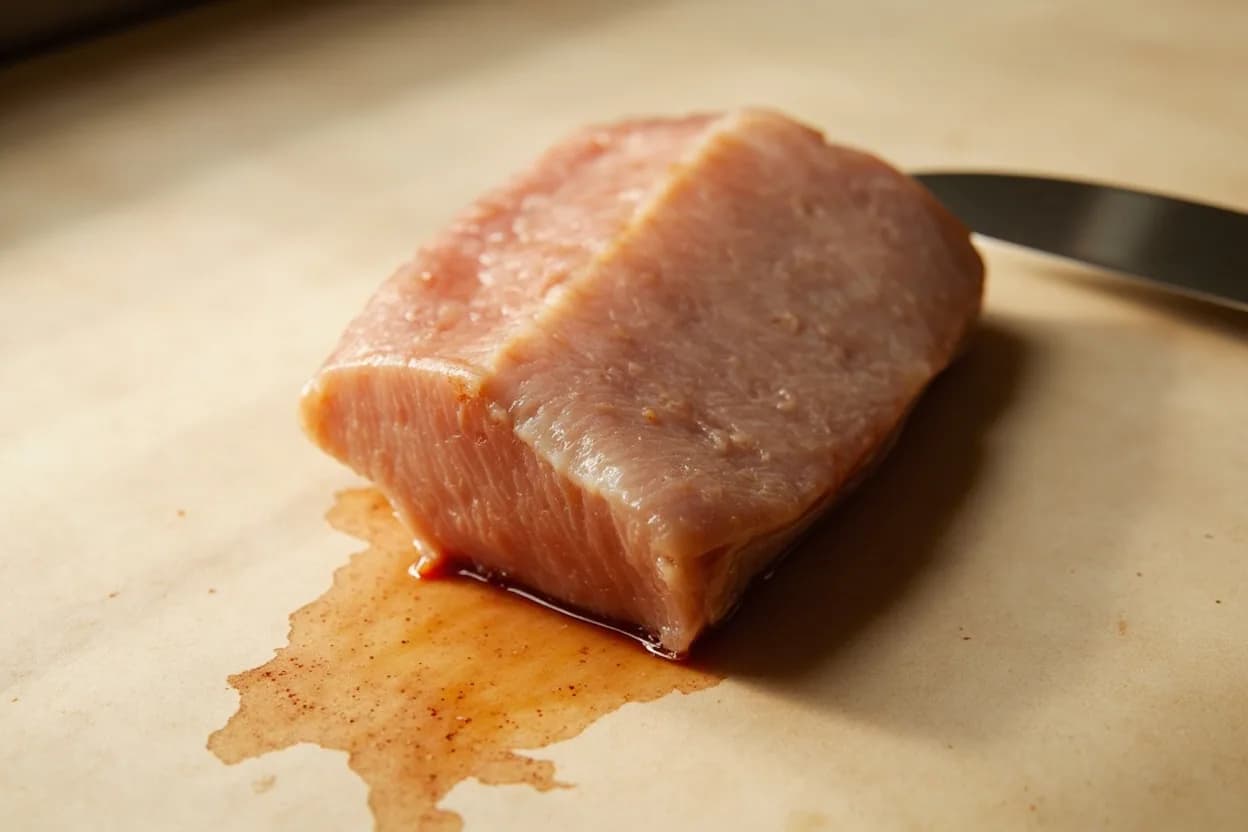
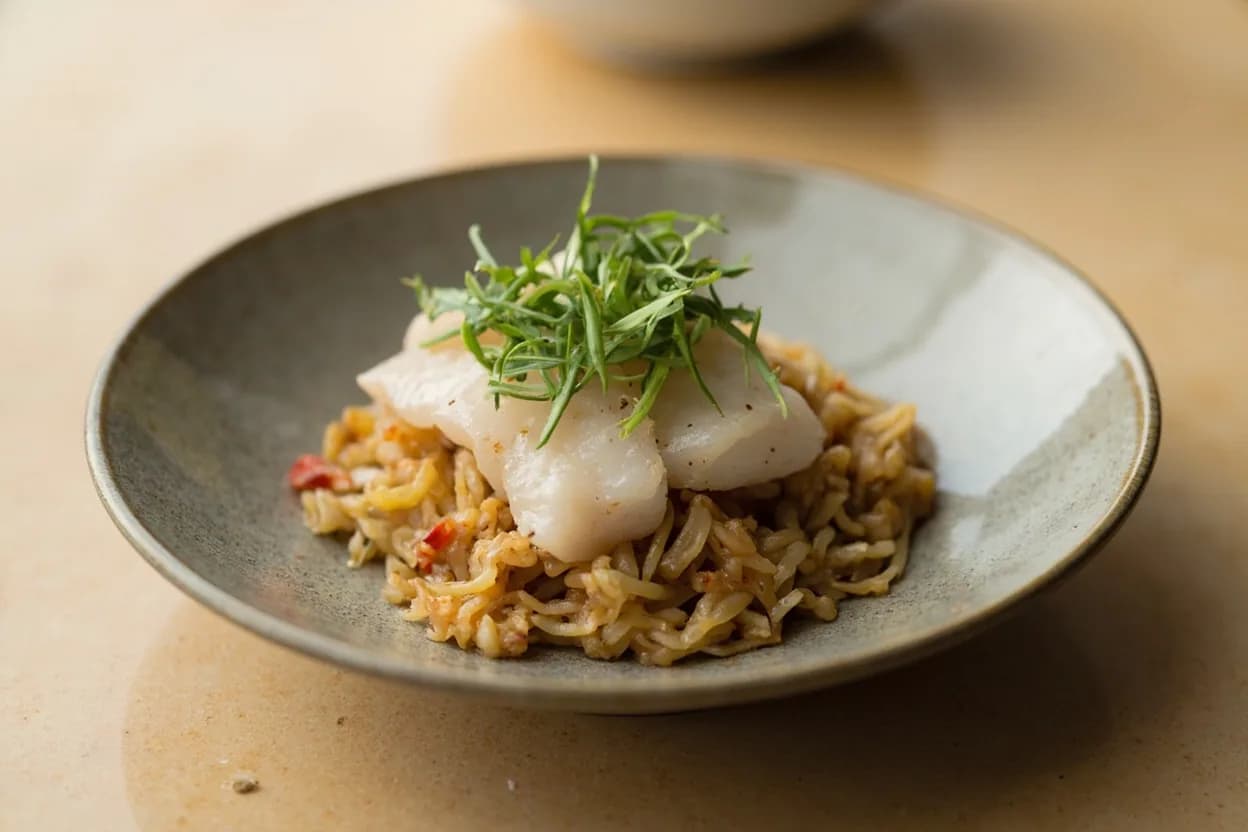
In photos

Where it comes from
Applied to small round fish, generally under 30 cm and 300 g, where the vertebral column is thin enough to be cleared in one pass: aji (horse mackerel, Trachurus japonicus), iwashi (sardine, Sardinops melanostictus), sanma (Pacific saury, Cololabis saira), shishamo (capelin), ko-aji (small young horse mackerel), and small saba (mackerel). Not appropriate for fish over 400 g — flesh loss on thicker spines becomes economically wasteful.
Best for
How to cook it
- 1Scale, gut, and rinse the fish. Remove the head with a diagonal cut behind the pectoral fin if desired (for aji, removing the hard scute line — the lateral bony ridge — is also standard at this stage).
- 2Lay the fish flat, dorsal side facing you. Place the deba or ko-deba at the base of the head incision with the blade riding on top of the spine.
- 3In a single, fluid pulling stroke, draw the knife from the head end to the tail along the spine, keeping the blade pressed firmly against the backbone to minimize flesh on the bone. This frees the first fillet.
- 4Flip the fish and repeat the single stroke on the second side.
- 5Remove the rib cage from each fillet (suki-biki) with a shallow upward-angled cut under the ribs.
- 6For aji: remove the hard scute (if not already done) and kobone. Skin by gripping the tail skin and pulling toward the head — aji skin is thin and peels easily by hand after a brief salting.
Prep & butchery
- Knife sharpness is especially critical for daimyo oroshi: the single stroke must clear the spine cleanly in one pass, which requires a razor edge. A dull knife will catch, deflect, or tear the delicate flesh of small fish.
- Use a ko-deba (small deba) for fish under 20 cm — the weight of a full deba is disproportionate and reduces control on thin, fragile specimens.
- For aji specifically, removing the lateral scute (zeigo, ぜいご — a line of hard, pointed scales along the lateral line toward the tail) is a prerequisite; these bony scales will deflect any knife stroke if left in place.
- Professional fish butchers in Japan can execute daimyo oroshi on aji at a rate of 20–30 fish per minute in high-volume izakaya prep.
Substitutes
- Sanmai oroshi (graduated multi-pass)
Higher yield, better for raw preparations and larger specimens; use when precision or yield matters more than speed.
- Tebiyake (hand-splitting for very small sardines)
For tiny iwashi, the thumb can split the fish along the backbone entirely by hand — no knife required; useful for home cooks and extremely small fish.
Related cuts
- Sanmai Oroshi
The graduated three-piece method that daimyo oroshi shortcuts; the reference technique against which yield loss is measured.
- Gomai Oroshi
The five-piece flatfish breakdown; shares the philosophy of complete fish utilization but requires multiple passes by definition.
- Aji Fillet
The most common output of daimyo oroshi in Japanese restaurant prep; used across fried, grilled, and raw aji dishes.
- Nambanzuke
A classic preparation for daimyo-filleted small fish: lightly floured, fried, then marinated in sweet vinegar with onion and chili.
Appears in
References
- 1.Japanese Cooking: A Simple Art — Shizuo Tsuji (1980)
- 2.The Sushi Experience — Hiroko Shimbo (2006)
- 3.Washoku: Recipes from the Japanese Home Kitchen — Elizabeth Andoh (2005)
- 4.Izakaya: The Japanese Bar Food Cookbook — Mark Robinson (2008)
Confidence: high
Notes
The etymology of extravagance
The name daimyo oroshi is a gentle professional joke. A feudal daimyo would not trouble himself with economical, labor-intensive fish-breaking — he would demand his meal quickly, leaving the scraps for others. In a busy izakaya kitchen, this is high praise: the technique is a mark of speed and confidence, not sloppiness. However, the name also serves as a reminder that this method is not appropriate when yield matters — for expensive fish, or for any specimen over about 400 g, the sanmai multi-pass approach is obligatory.
The zeigo problem
Horse mackerel (aji) are one of the most common targets of daimyo oroshi, but they present a unique obstacle: the zeigo, a row of hard, keeled scales (scutes) running along the lateral line from roughly mid-body to the tail. These must be removed before any knife stroke — they will snag the blade, deflect the cut, and leave bony fragments in the fillet. Zeigo removal is done first, either by running a knife against the grain of the scutes (like descaling) or by trimming the lateral line strip with shears.