Knife Cuts — Regional & Global
Daikon Julienne for Tsukemono
Also: sengiri daikon, daikon sengiri, shredded daikon, daikon strips
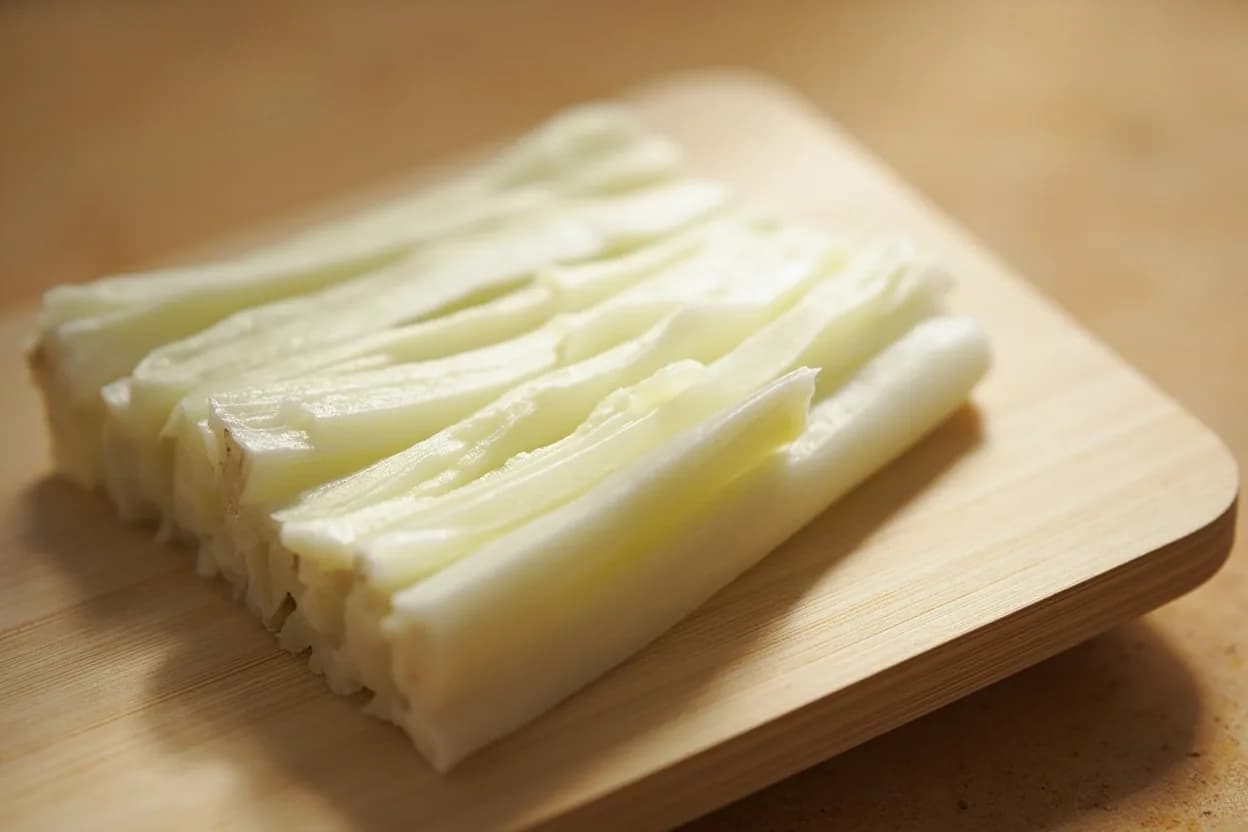
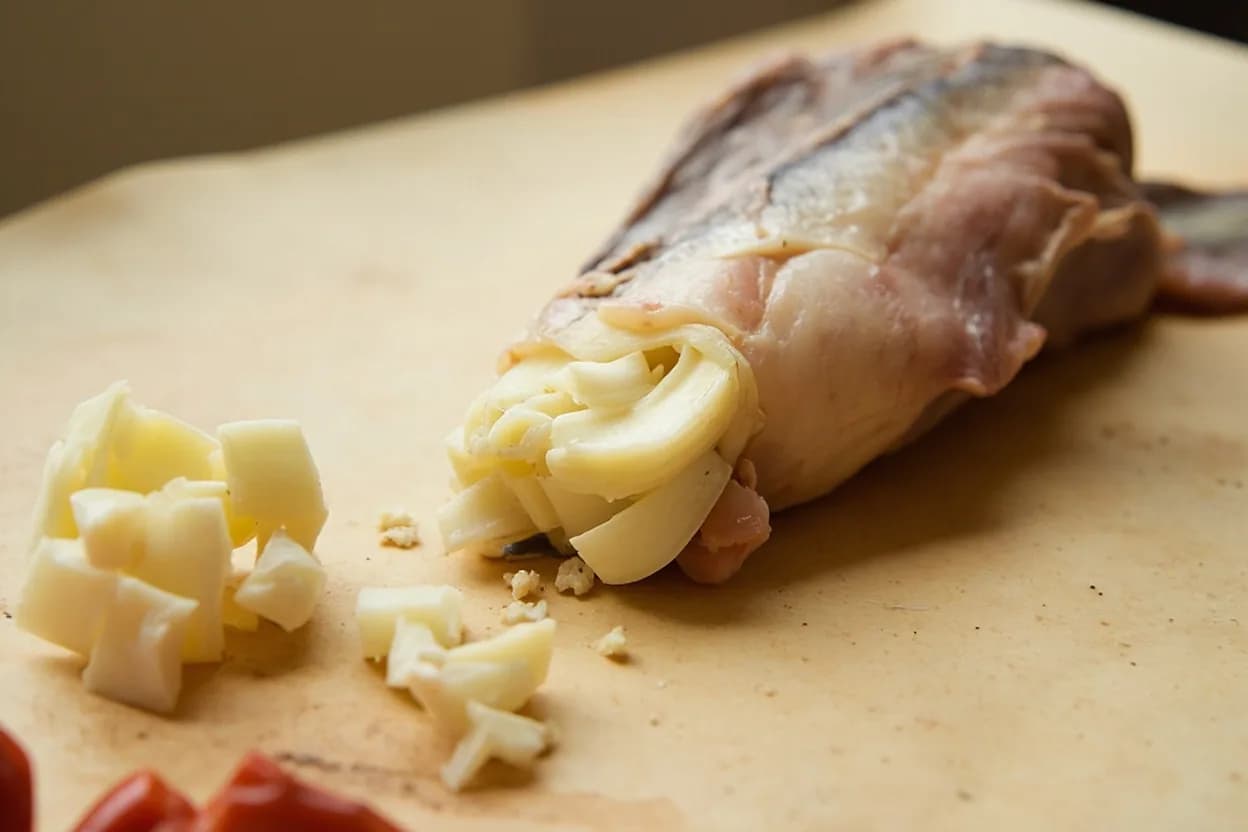
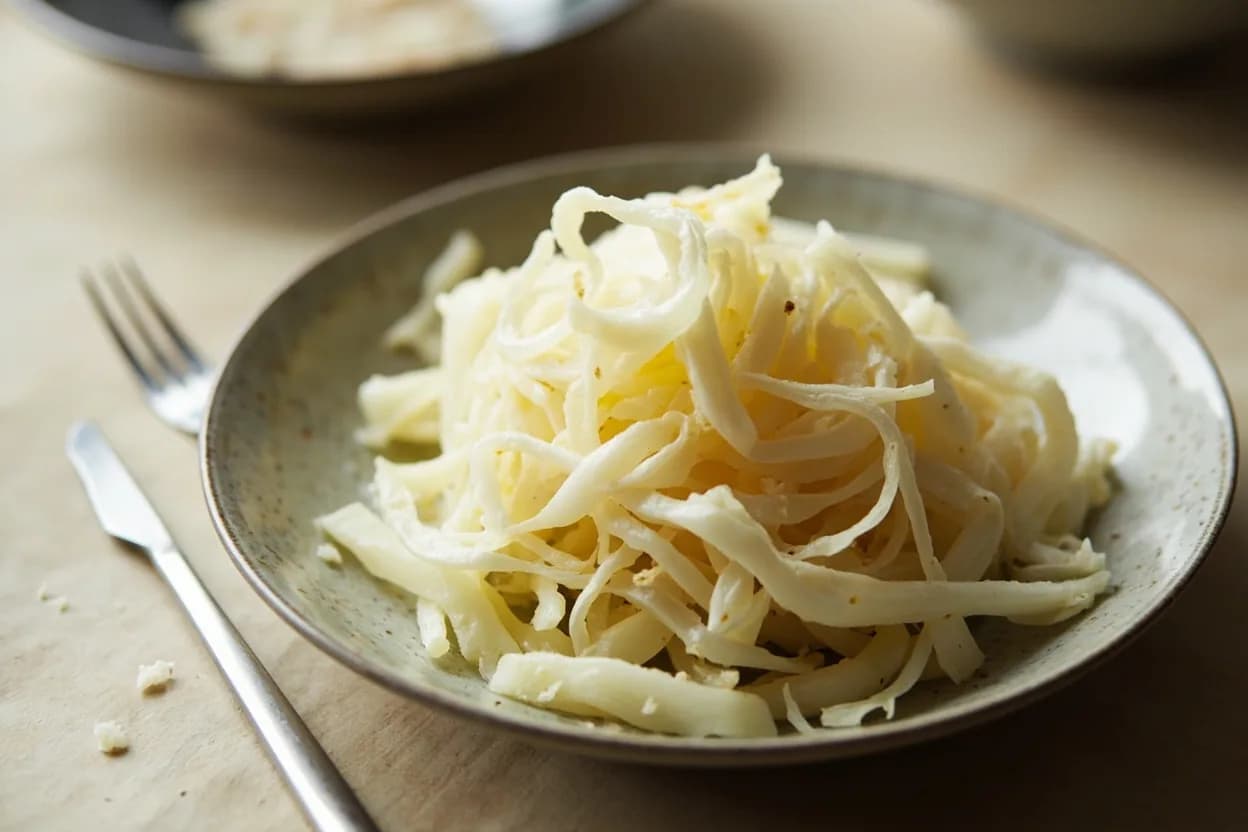
Razor-thin daikon sheets peeled on a mandoline or by katsura-muki, then stacked and cut to fine matchsticks for Japanese pickles where brine penetration and snap-crunch texture are paramount.
Tsukemono julienne is a two-stage process: first the daikon is peeled into a continuous thin sheet (katsura-muki), or a mandoline is used to produce uniform sheets; the sheets are then stacked and sliced lengthwise into sengiri (千切り) — fine matchstick strips 1.5–2 mm wide and 4–6 cm long. The extreme thinness accelerates salt-wilt and brine penetration while preserving a residual crunch absent from thicker cuts.
In photos
Where it comes from
Daikon radish (Raphanus sativus var. longipinnatus) — the mid-body section gives the most uniform diameter and least pithy texture. Avoid the neck (too fibrous) and the tip (too spicy and thin-walled).
Best for
How to cook it
- 1Select a firm, heavy daikon without hollow core (tap it — dull thud indicates pith).
- 2Peel with a vegetable peeler, removing a generous layer to get past the slightly bitter outermost flesh.
- 3Katsura-muki method: hold the daikon vertically and rotate it slowly away from the blade while pressing the knife at a very low angle, peeling a continuous sheet 1–2 mm thick. Alternatively use a mandoline set to 1.5 mm.
- 4Stack the sheets 3–4 high and slice lengthwise into matchsticks 1.5–2 mm wide, cutting with one smooth forward stroke rather than a sawing motion.
- 5Toss with 2% salt by weight, mix well, and let stand 20–30 minutes. The daikon will release significant water.
- 6Squeeze firmly in a clean cloth to expel the draw liquid — this removes raw bitterness and pre-compresses the cells so the brine penetrates faster.
- 7Transfer to brine: rice vinegar + sugar + salt for sunomono; nuka paste for nukazuke. Pickle time ranges from 30 minutes (quick sunomono) to 24+ hours (nukazuke, takuan).
- 8Rinse lightly before serving if oversalted; serve chilled.
Prep & butchery
- A sharp yanagiba or nakiri produces cleaner sengiri than a Western chef's knife — the single-bevel edge requires less rocking.
- Consistency of thickness matters more than speed: uneven strips salt-wilt at different rates, producing a mix of mushy and raw-tasting pieces.
- Salt and squeeze before pickling — skipping this step results in watery, diluted brine and poorly seasoned pickles.
- Lengths of 4–6 cm are traditional; longer strips tangle and are harder to serve; shorter ones feel rustic rather than refined.
Substitutes
- Turnip julienne
Similar water content and crunch; milder flavor; substitute 1:1
- Kohlrabi julienne
Firmer, slightly sweeter; holds crunch longer in brine
- Jicama julienne
Retains crunch almost indefinitely but lacks daikon's peppery note; good for quick sunomono
Related cuts
- Katsura-muki sheet
The continuous-sheet peeling technique that precedes sengiri
- Hyoshigi-giri
Thicker rectangular sticks (1 cm × 1 cm) for hearty simmered dishes, not pickles
Diagonal shaving cut used for gobo; shares the spirit of maximizing surface area for pickling and simmering
Appears in
References
- 1.Japanese Farm Food — Nancy Singleton Hachisu (Andrews McMeel, 2012)
- 2.The Japanese Kitchen — Hiroko Shimbo (Harvard Common Press, 2000)
- 3.Preserving the Japanese Way — Nancy Singleton Hachisu (Andrews McMeel, 2015)
- 4.Tsukemono: Japanese Pickled Vegetables — Kay Shimizu (Shufunotomo, 1993)
Confidence: high
Notes
Katsura-muki vs. mandoline
Katsura-muki is the artisan technique: the continuous sheet is thinner and more uniform in texture than a mandoline can achieve with a large, tapering root. However, the mandoline is consistent for home cooks and produces excellent sengiri. The sheet thickness should be 1–2 mm — thinner than this and the strips shred rather than slice; thicker and they remain raw-tasting in a short pickle.
Salt-wilt logic
The salt step is not just seasoning — it is structural. Salt draws free water out of the cell vacuoles (osmosis), partially collapses the turgor of the cell walls, and opens micro-channels that allow brine to penetrate more rapidly and evenly. Skipping the squeeze leaves dilution water in the pickle vessel that weakens the brine ratio and produces unpredictable fermentation.
Length for different pickles
Sunomono strips are typically 4–5 cm — short enough to pick up with chopsticks in one bite. Nukazuke strips can be slightly longer (5–6 cm) since they are eaten as a side dish. For takuan the daikon is traditionally left whole or halved, not julienned; sengiri is a shortcut version for the home cook.