Knife Cuts — Regional & Global
Curry Leaf — Sprig vs. Torn
Also: kadi patta sprig, karivepallai tempering
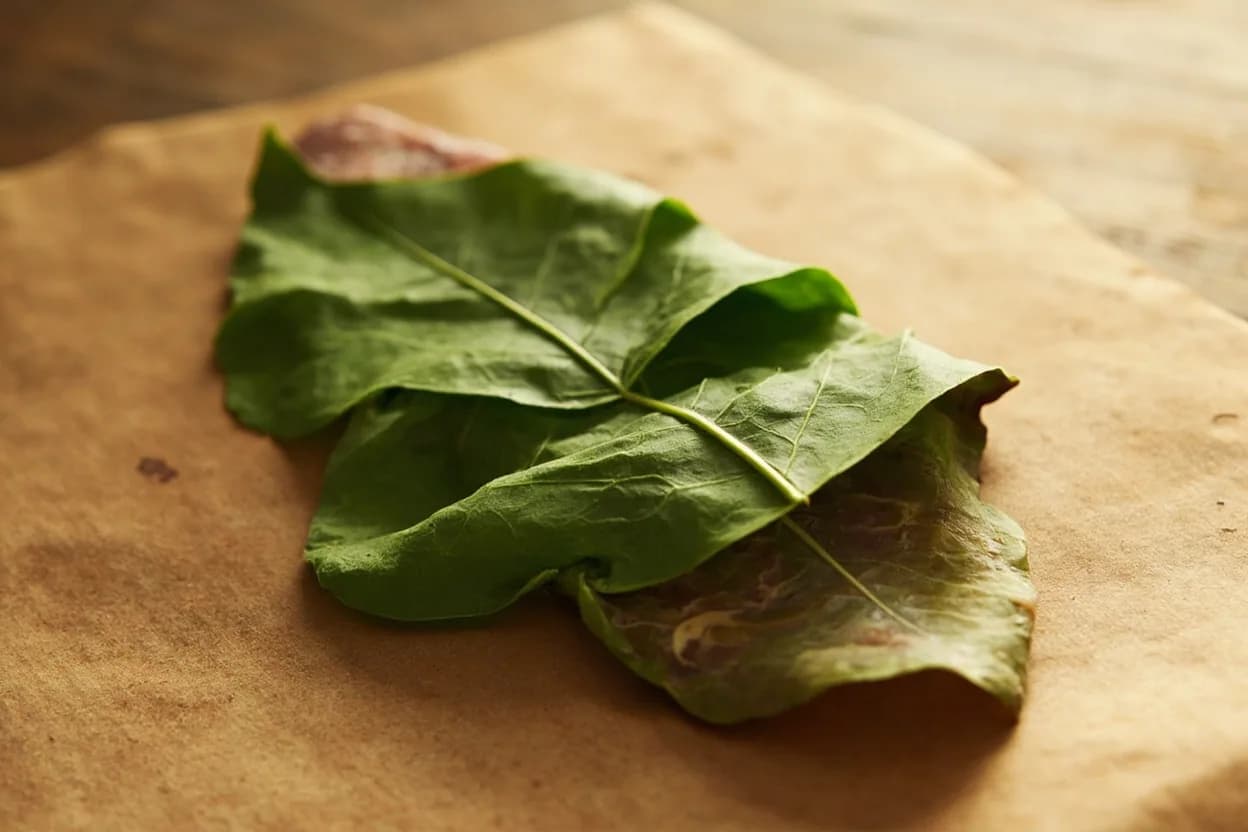
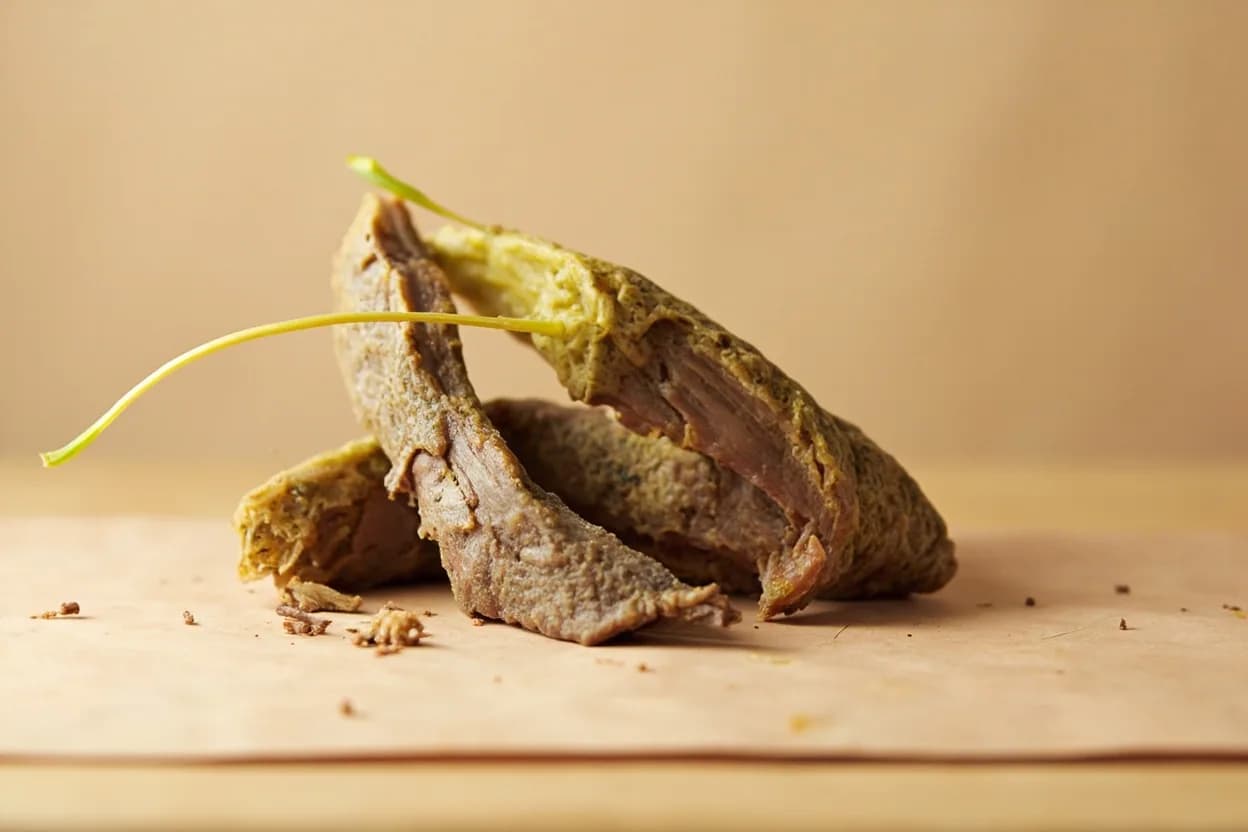
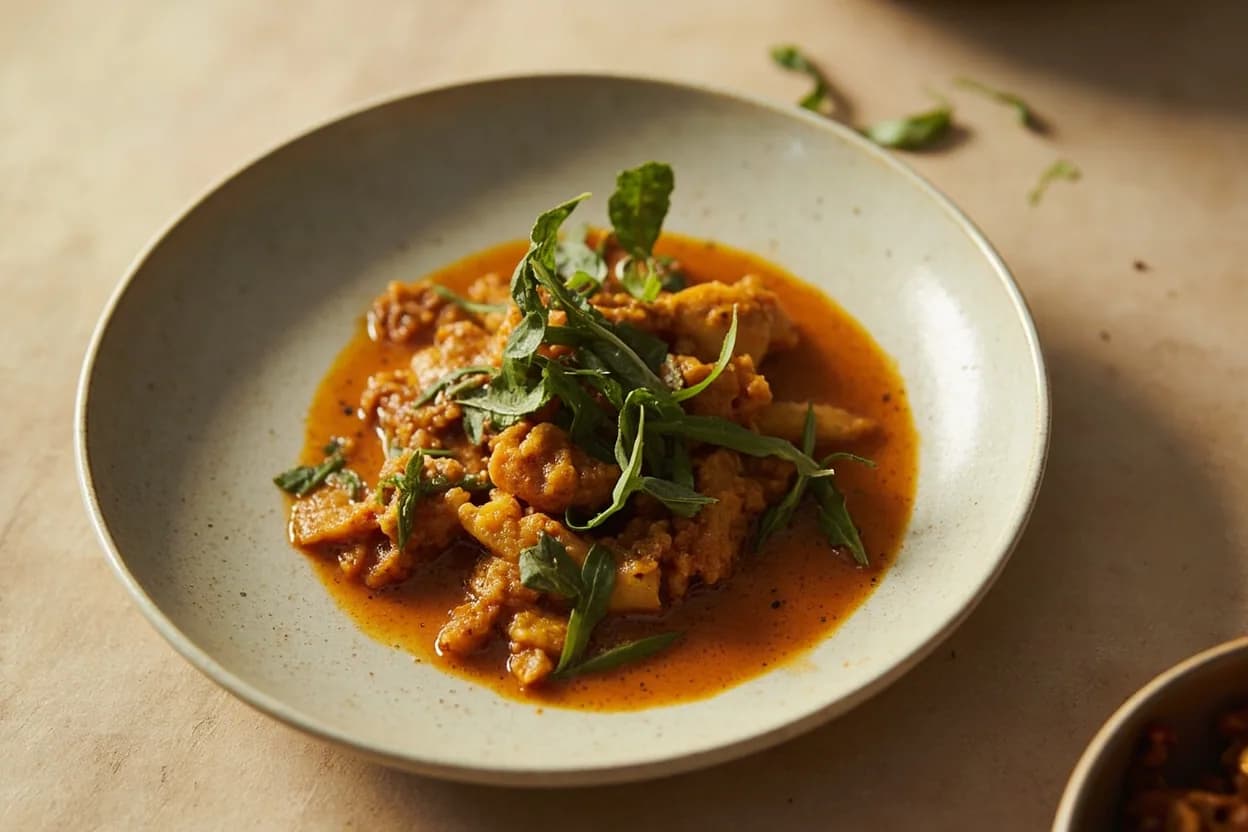
Whole sprigs release aroma gradually into hot oil; individual torn leaves expose more cell surface for an immediate, sharper hit.
Two distinct handling techniques for fresh curry leaves (Murraya koenigii) that control aromatic intensity and timing. Adding an intact sprig to hot oil keeps the leaves attached to the central stem, allowing a slow, diffuse release of volatile compounds — primarily linalool, citronellol, and mahanimbine alkaloids — as the leaves sizzle and curl. Tearing individual leaves from the stem and adding them to the pan breaks cell walls before heat is applied, releasing aromatic oils immediately and producing a more concentrated, forward fragrance with a slightly toasted character.
In photos
Where it comes from
Curry leaves are the pinnate leaflets of the curry leaf tree (Murraya koenigii). A sprig is a section of the compound leaf stem bearing 9–17 individual leaflets. Tearing means pulling each leaflet free by hand or folding and pinching it.
Best for
How to cook it
- 1Heat oil (coconut, sesame, or neutral) until shimmering — around 180–190 °C — before adding the leaves; too cool and they steam rather than fry.
- 2For a sprig: grip the stem end and lower the whole sprig into the oil, releasing it quickly to avoid steam burns. Let sizzle 10–15 seconds until the sputtering subsides and leaves turn glossy.
- 3For torn leaves: strip leaves from the stem, tear each one once, and drop into oil in the same manner. Aromatic release begins within 5 seconds.
- 4Add remaining tempering ingredients (mustard seeds, dried chili, asafoetida) in the correct sequence — curry leaves are usually added after mustard seeds have popped.
- 5Pour the entire tempering oil and leaves over the finished dish, or build the curry in the same pan immediately.
Prep & butchery
- Buy on the stem; leaves degrade faster once stripped.
- Rinse and shake dry — excess water causes dangerous oil spatter.
- Fresh curry leaves keep refrigerated on the stem, loosely wrapped, for up to 2 weeks; freeze whole sprigs for longer storage with minimal flavor loss.
- Do not chop curry leaves; the knife bruises cell walls without the targeted rupture of tearing, and they become bitter.
Substitutes
- Dried curry leaves
Lower aromatic potency; add earlier in cooking and in larger quantity — roughly 1.5× the fresh amount.
- Makrut lime leaves (torn)
Different flavor profile (citrus-floral rather than savory-herbaceous) but comparable cell-rupture aromatic technique.
Related cuts
- Mustard seeds — whole vs. ground
Parallel tempering decision: whole seeds pop in oil for texture; ground integrates invisibly into paste.
- Dried chili — whole vs. broken
Same South Indian tadka context: whole gives oil-infused warmth; broken exposes seeds for sharper heat.
Appears in
References
- 1.Dakshin — Chandra Padmanabhan
- 2.The Food of Southern India — Das Sreedharan
- 3.Curry: A Tale of Cooks and Conquerors — Lizzie Collingham
- 4.On Food and Cooking — Harold McGee (volatile compound release in aromatics)
Confidence: high
Notes
Why the sprig stays on the stem
The stem acts as a scaffold that spaces the leaves in the oil, preventing clumping and ensuring each leaflet gets direct contact with hot fat. Removing them from the stem before frying clusters the leaves and can lead to uneven crisping.
Edibility
Unlike bay leaves, properly fried curry leaves are fully edible and desirable — they provide texture as well as flavor. In many South Indian households, finding a curry leaf on your plate is considered a sign of a well-made dish.