Knife Cuts — Regional & Global
Cucumber Score-and-Press Cut for Quick Pickles
Also: smashed cucumber cut, patted cucumber, pai huang gua cut, tataki kyuri cut
Scoring a cucumber lengthwise before cracking it with the flat of the blade to shatter the flesh into jagged pieces that absorb brine in minutes rather than hours.
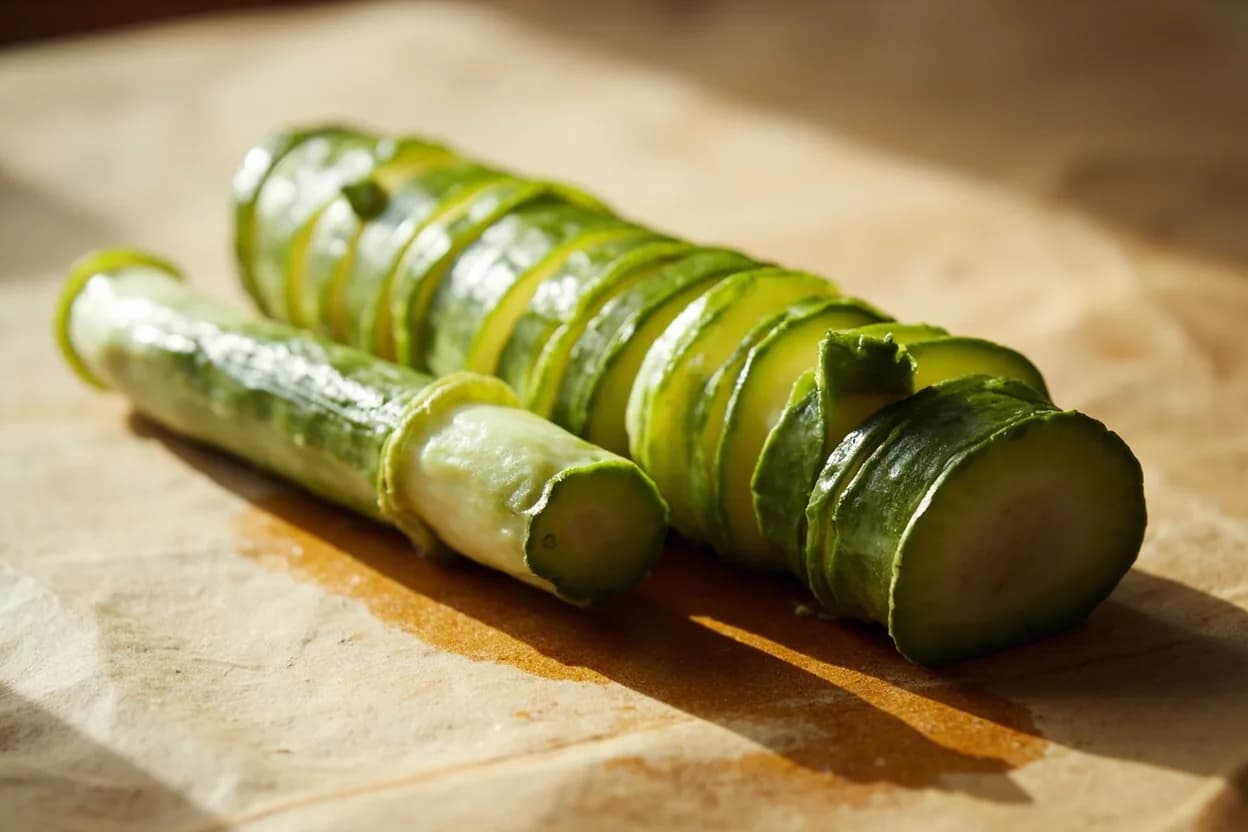
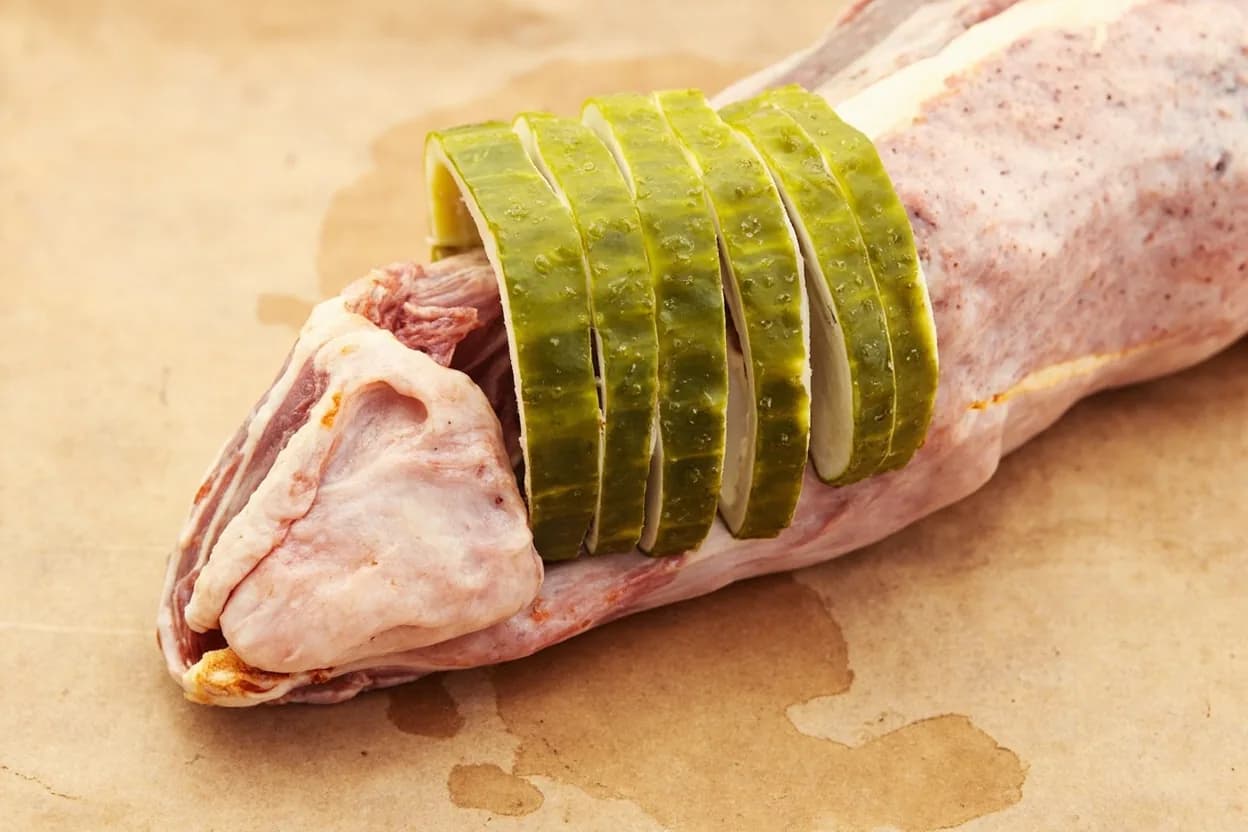
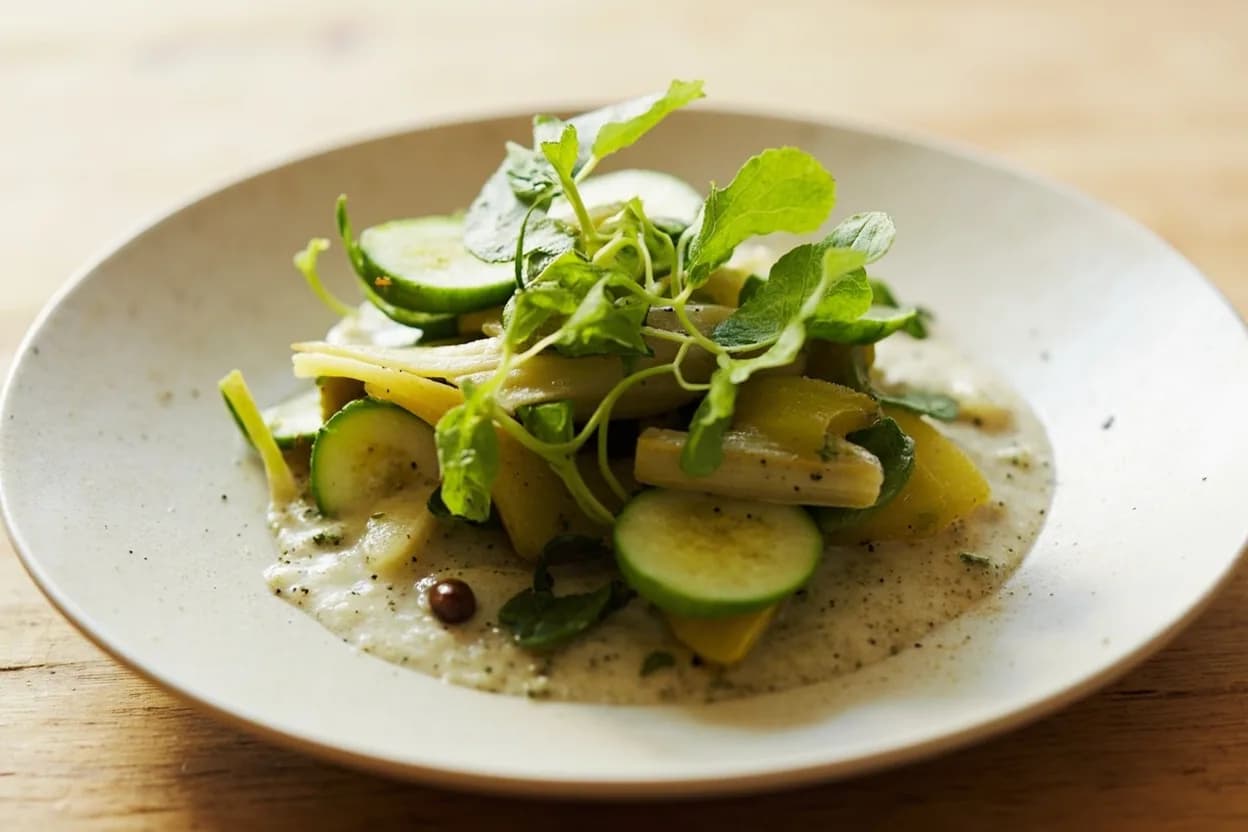
A two-step produce preparation: the cucumber is first scored with one or more lengthwise incisions (typically quarter to half depth), then struck firmly with the flat side of a cleaver or chef's knife along its length to crack and split it into irregular, rough-edged shards. The broken surface architecture — far rougher and more porous than a smooth slice — allows brine, salt, vinegar, and aromatics to penetrate the cucumber flesh almost immediately, yielding a fully pickled texture in 10–20 minutes.
In photos
Where it comes from
Applied to whole cucumbers (most commonly Japanese kyuri, Persian, or thin-skinned Chinese varieties) immediately before pickling. The technique is central to Chinese pai huang gua (拍黄瓜), Japanese tataki kyuri, and Korean oi muchim preparations.
Best for
How to cook it
- 1Trim both ends of the cucumber; no need to peel.
- 2Score lengthwise: for a small cucumber, make 2–4 shallow cuts (about one-third of the way through) running the full length; for larger specimens, make 4 cuts quartering it before cracking.
- 3Lay the cucumber on the board and strike it firmly along its length with the flat side of a heavy knife or cleaver; the cucumber will crack open along the score lines into 4–8 rough shards.
- 4Cut the shards crosswise into 3–5 cm irregular pieces.
- 5Toss generously with salt (about 1 tsp per medium cucumber) and let stand 10 minutes to draw out water; squeeze gently and pour off the liquid.
- 6Dress immediately with your brine, oil, vinegar, or aromatics — the cucumber is now ready to absorb them fully within 5–10 minutes.
Prep & butchery
- Use a heavy knife or Chinese cleaver for the cracking blow — a thin flexible blade may flex rather than transmit force cleanly.
- Keep the cucumber cold for a crisper result after pressing; room-temperature cucumbers can turn flaccid quickly.
- Do not score too deeply before cracking or the pieces will separate completely and lose their size; one-third depth is optimal.
- After salting and squeezing, pat pieces dry on a cloth or paper before dressing so aromatics are not diluted by residual water.
Substitutes
- Thin bias-slice
Smooth edges absorb brine more slowly; requires longer salting time or thinner slices to compensate for lower surface area.
- Mandoline 2 mm slice
Extremely quick brine absorption due to thinness, but loses the textural contrast and rustic character of the scored-and-cracked method.
- Spiralized cucumber
High surface area but loses the natural crack texture; better suited to salad applications than chunky pickle preparations.
Related cuts
- Smashed garlic
Same flat-of-blade cracking principle applied to garlic cloves to release allicin and ease peeling
Contrasting method — smooth precision cuts used when cucumber is dressed as garnish rather than pickled for absorption
- Oblique / roll cut
Another irregular Chinese vegetable cut that maximizes exposed surface for quick cooking or pickling
Appears in
References
- 1.Every Grain of Rice — Fuchsia Dunlop
- 2.The Food of Japan — Shirley Booth
- 3.Koreatown — Deuki Hong & Matt Rodbard
- 4.Japanese Cooking: A Simple Art — Shizuo Tsuji
Confidence: high
Notes
The physics of the crack
A cucumber's cell structure is a hydrostatic system: cells packed with water and held in tension by the skin. Scoring releases that tension along a guided path, so the subsequent blow follows the score lines rather than fragmenting randomly. The resulting surfaces are intracellular rather than intercellular — they expose the watery interior of each ruptured cell directly to the brine, which is why absorption is near-instantaneous.
Salt before dressing, always
Salting and draining after cracking is not optional: it removes the cucumber's own dilute water, which would otherwise water down any dressing applied. The step also partially collapses the cellular structure, giving the finished pickle a pleasantly softened — but not mushy — bite.